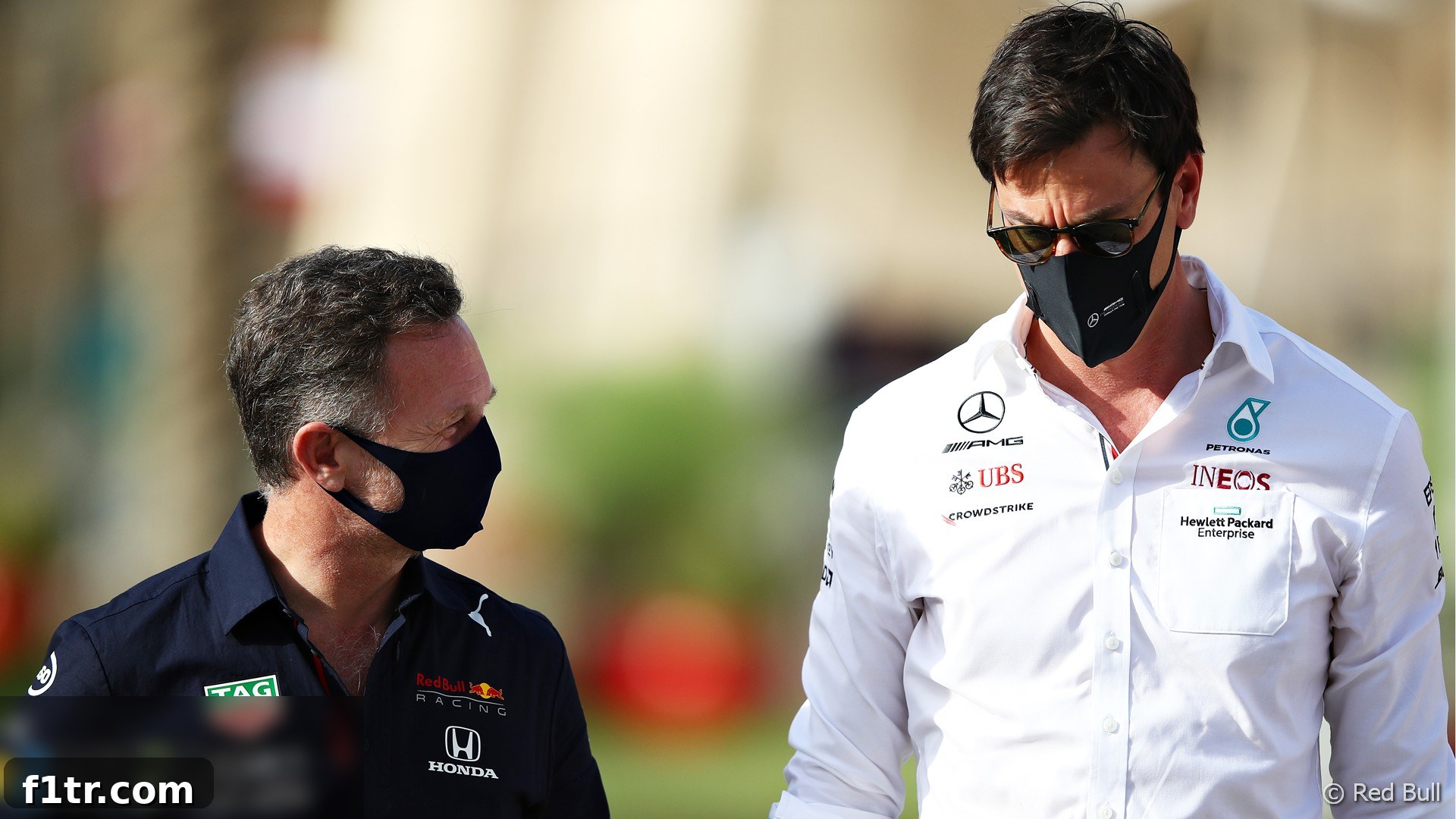
Red Bull team principal Christian Horner has voiced his profound satisfaction with the FIA’s recent decision to prohibit Formula 1 team members from approaching or attempting to influence stewards during critical decision-making processes. This significant clarification from the sport’s governing body marks a crucial step towards upholding the integrity and impartiality of race adjudication, a principle Horner passionately advocates for.
The impetus for this policy shift largely stems from a contentious incident at the British Grand Prix, where Horner openly criticized his Mercedes counterpart, Toto Wolff, for visiting the stewards while they were deliberating over a penalty for Lewis Hamilton’s collision with Max Verstappen. This event ignited a fierce debate within the paddock regarding the transparency and fairness of the stewardship process, prompting Red Bull to formally seek a review of the incident.
Upholding Sporting Integrity: The Core of Horner’s Stance
Christian Horner’s concerns were not merely rooted in the immediate outcome of a specific race incident but extended to the fundamental principles governing fair competition in Formula 1. The 2021 British Grand Prix, a pivotal event in that year’s championship calendar, saw a high-stakes collision between title rivals Lewis Hamilton and Max Verstappen. The incident, which resulted in Verstappen’s high-speed crash and subsequent retirement, left Red Bull feeling deeply aggrieved, especially after Hamilton received a relatively minor 10-second penalty and ultimately went on to win the race.
The subsequent deliberation by the F1 stewards became a focal point of controversy when it emerged that Mercedes team principal Toto Wolff had visited the stewards’ office. Horner, speaking post-event, vehemently articulated his unease regarding this interaction, emphasizing that such direct engagement could potentially sway the independent judgment of the adjudicators. He famously likened the stewards to a “jury,” stressing the imperative that they remain insulated from external pressures or biased presentations of data while forming their conclusions.
This analogy succinctly captured the essence of Red Bull’s contention: just as a judicial jury must deliberate without undue influence, Formula 1 stewards must be allowed to assess incidents purely on the evidence and regulations, free from advocacy from interested parties. The perceived lack of insulation, even if unintentional, threatened to undermine confidence in the impartiality of the judicial process within the sport, especially at a time when the championship battle was reaching unprecedented levels of intensity and animosity between the two leading teams.
The British Grand Prix Catalyst: A Deep Dive into the Controversy
The 2021 British Grand Prix was a defining moment in one of Formula 1’s most electrifying championship seasons. The clash between Lewis Hamilton and Max Verstappen at Copse corner was not just a racing incident; it was a flashpoint that escalated the already intense rivalry between Mercedes and Red Bull to new heights. Verstappen’s aggressive opening lap and Hamilton’s equally determined response led to contact, sending the Red Bull driver into the barriers at immense speed. While Hamilton continued, albeit with damage, Verstappen’s race was over, and the championship gap between the two titans narrowed significantly.
The immediate aftermath saw Hamilton handed a 10-second time penalty, a decision that Red Bull considered insufficient given the severity of the crash and its championship implications. It was during the stewards’ review of this incident that Toto Wolff’s visit occurred. This interaction, which was even broadcast via radio exchanges between Wolff and FIA Formula 1 Race Director Michael Masi, immediately drew the ire of Christian Horner. While Wolff’s presence was reportedly at the invitation of Masi, Horner viewed it as an unacceptable breach of protocol, suggesting it created an environment where one team could present its case directly to the decision-makers while deliberations were ongoing, potentially skewing perceptions or influencing the final verdict.
The core of Horner’s argument was not necessarily about malicious intent but about the integrity of the process itself. For the sport to maintain its credibility, particularly in highly charged situations involving title contenders, the process of adjudication must be seen as unequivocally fair and insulated from any perception of lobbying. The incident at Silverstone, therefore, served as a stark reminder of the need for clearer guidelines on interactions between team personnel and stewards during critical junctures of a race weekend, ensuring fair play and robust F1 regulations.
Red Bull’s Unsuccessful Review Bid and FIA’s Noteworthy Concerns
Following the British Grand Prix, Red Bull Racing formally sought a right of review, presenting what they believed to be “new evidence” that warranted a reconsideration of Hamilton’s penalty. This strategic move underscored the team’s profound dissatisfaction with the initial ruling and their determination to explore all avenues to ensure what they perceived as justice. However, the F1 stewards ultimately rejected Red Bull’s bid, concluding that the presented evidence did not meet the stringent criteria for a “new significant element” as required by the sporting regulations.
Significantly, in their official communiqué rejecting Red Bull’s petition, the stewards also stated they “note, with some concern, certain allegations made” by Red Bull in their submission. Christian Horner later clarified that these “allegations” pertained directly to the process of team principals approaching the stewards during an ongoing incident review – specifically, Toto Wolff’s earlier interaction. Horner reiterated that Red Bull’s submission highlighted concerns about the integrity of the process rather than questioning the stewards’ ultimate decisions themselves, emphasizing the importance of objective decision-making within Formula 1.
This sequence of events placed immense pressure on the FIA to address the procedural ambiguities. The fact that the governing body itself acknowledged “concerns” within Red Bull’s submission acted as a pivotal catalyst for clearer guidance. It signaled that the FIA understood the gravity of the issues raised concerning impartiality and the potential for perceived influence, paving the way for the subsequent clarification that Horner now emphatically welcomes.
FIA’s Clarification: A Step Towards Enhanced Impartiality in Formula 1
In response to the growing discourse and Red Bull’s formal concerns, the FIA has taken decisive action to clarify the protocols surrounding communication and interaction between team personnel and race stewards. This crucial clarification, which Christian Horner explicitly welcomed, aims to prevent future scenarios where team principals or other team members might inadvertently or intentionally influence stewards’ decisions while investigations are underway. This move is designed to ensure F1 regulations are applied consistently and fairly.
The essence of the new guidance is to reinforce the independence of the stewards’ panel. The FIA seeks to ensure that decisions are made solely based on the evidence presented to them through official channels, free from direct lobbying, personal appeals, or real-time presentations of data by interested parties. This policy is crucial for maintaining the credibility of the sport’s officiating and ensuring a level playing field for all competitors, thereby safeguarding the integrity of Formula 1.
Horner articulated his satisfaction with this development, stating, “I think the FIA have obviously subsequently clarified the process for that now which we’re fine with and pleased for that clarification.” He further emphasized the preventative nature of this new approach: “I think with the clarifications moving forward, as well, it just prevents that scenario even becoming a possibility in the future.” This forward-looking perspective highlights the long-term benefits of such a policy – fostering an environment where all teams can trust in the impartiality of the system, irrespective of the intensity of on-track rivalries in the F1 championship battle.
Horner’s Reassurance and the Pursuit of Objective Justice
Despite the initial disappointment of Red Bull’s review bid being unsuccessful, Christian Horner conveyed confidence that the review process itself had been conducted objectively. His primary concern, consistently highlighted throughout the controversy, was the potential for objectivity to be compromised by external influence during deliberations, a concern he now firmly believes has been adequately addressed by the FIA’s new guidelines concerning lobbying and interactions with stewards.
“The one point we did raise was the objectivity could be prejudiced if you’re influenced by having a competitor go in with data prior to a decision being made,” Horner explained. “I think that we were assured that had no influence on the decision-making.” While he respects the FIA’s assurance that the earlier interaction did not affect the Silverstone decision, the subsequent clarifications are seen as a vital safeguard against similar occurrences in the future, reinforcing faith in the F1 regulatory framework.
For Horner and Red Bull, the FIA’s updated stance brings a much-needed sense of closure and confidence in the judicial process of Formula 1. The commitment to ensuring that stewards operate in an untainted environment where their focus remains solely on the facts, without the added pressure of direct lobbying from contending teams, is a significant victory for sporting integrity. This regulatory enhancement is expected to contribute positively to the competitive landscape of Formula 1, ensuring that championship battles are decided purely by performance on the track and fair adjudication off it, cementing the FIA’s role in maintaining impartiality.
Related F1 News & Analysis
- Ocon congratulated by past French F1 aces after breakthrough win
- Alpine doubt first win signals a performance breakthrough
- Vettel disqualification hearing to take place on Monday
- Why no one received a Grosjean-style race ban for the Hungarian GP pile-up
- Ocon’s “beautiful” late-stint pace was other key to Alpine’s breakthrough win
Browse all 2021 Hungarian Grand Prix articles