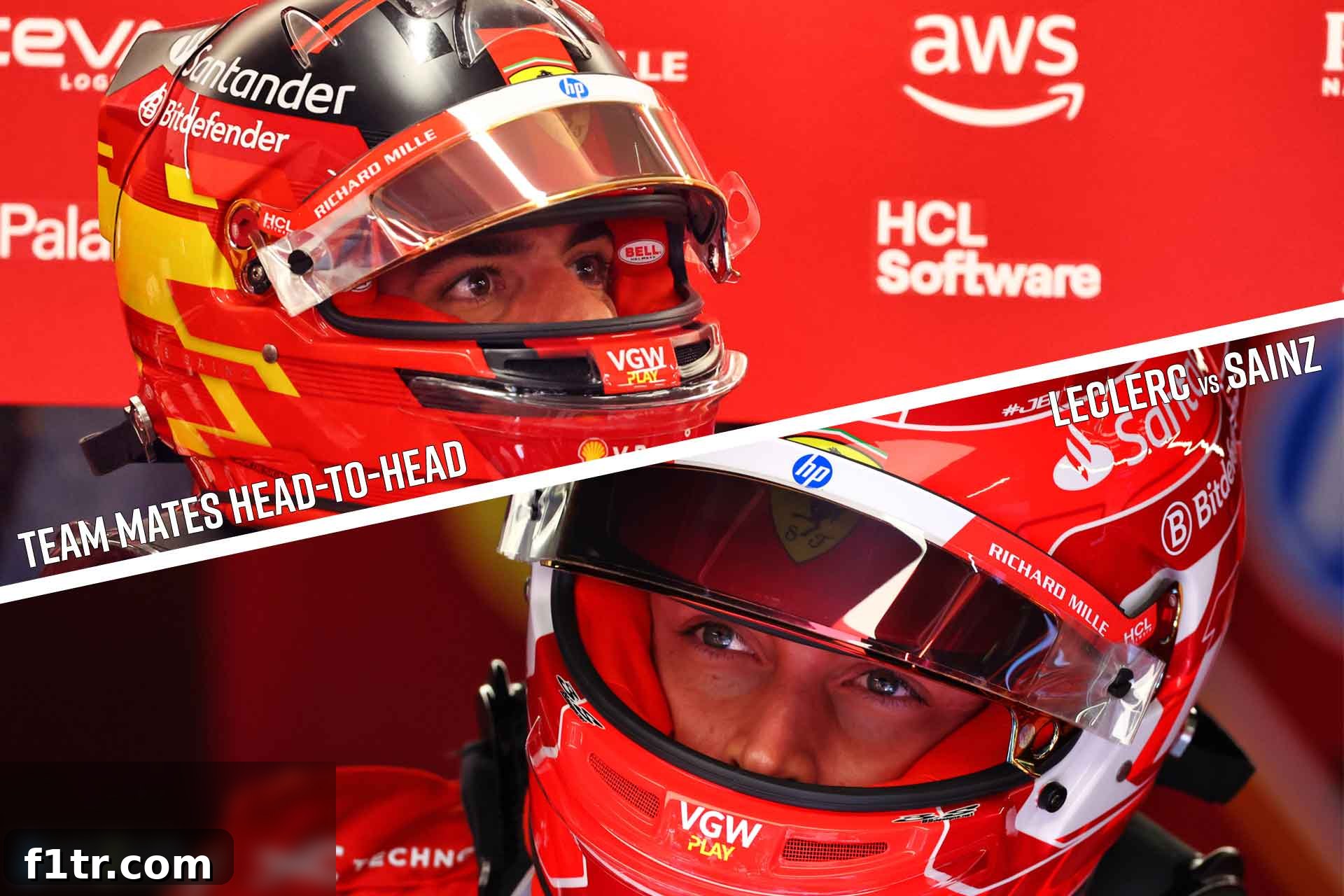
As the Formula 1 season progresses, the paddock bids a bittersweet farewell to a driver who has profoundly impacted one of the sport’s most legendary teams. Carlos Sainz Jnr recently concluded his final season with Scuderia Ferrari, a tenure marked by resilience, strategic acumen, and memorable victories. Next year, Sainz will embark on a new chapter, transitioning from the iconic red of Ferrari to the historic blue of Williams, a move that signals a significant shift in his illustrious career.
Ferrari’s decision to part ways with Sainz, making room for seven-time World Champion Lewis Hamilton, was undoubtedly a challenging one. However, despite the team’s strategic realignment, it would be disingenuous to suggest any dissatisfaction with Sainz’s contributions. Over his four seasons alongside teammate Charles Leclerc, Sainz consistently demonstrated his mettle, often exceeding expectations and proving himself to be an invaluable asset to the Maranello-based squad.
His inaugural season with Ferrari in 2021 saw Sainz narrowly outscore his highly-rated teammate, a testament to his immediate adaptation and consistent performance. This early success set a precedent, showcasing his ability to deliver under pressure and integrate seamlessly into a new team environment. Even in the competitive 2023 season, Sainz maintained his strong form, leading Leclerc in the drivers’ standings right up to the final race, a clear indicator of his unwavering commitment and competitive spirit.
Throughout his time at Ferrari, Sainz amassed an impressive 89% of Leclerc’s total points tally over their four seasons together. This remarkable consistency is particularly noteworthy given that he missed a race earlier this year due to an unforeseen appendicitis operation. His recovery and subsequent return to form were nothing short of spectacular, demonstrating his extraordinary resilience and determination.
The Australian Grand Prix, marking his return from surgery, served as a dramatic testament to his fighting spirit. Sainz defied expectations, delivering a superb victory in Melbourne, a true Cinderella story that resonated with fans worldwide. This triumphant comeback underscored his ability to perform at the highest level even after significant setbacks. Before the year concluded, Sainz added another valedictory win for the team he was set to leave, confidently showing Leclerc a clean pair of heels in Mexico City, further solidifying his reputation as a formidable competitor.
While Sainz’s individual brilliance was often on display, his partnership with Leclerc wasn’t without its challenges. As is common in highly competitive environments, there were instances where the two drivers met on-track, leading to intense wheel-to-wheel battles that sometimes required team intervention. The Spanish Grand Prix, for example, highlighted moments of fierce intra-team rivalry. Ferrari’s management of these situations was sometimes scrutinized, particularly during the Las Vegas Grand Prix, where controversial editing of broadcasted radio messages by FOM regrettably portrayed Sainz in an unfairly negative light, masking the full context of his actions and communications.
Despite his undeniable achievements and consistency, it would be an oversimplification to suggest that Sainz consistently held the upper hand over his teammate. Charles Leclerc’s raw speed, particularly in qualifying, often remained intact, and he frequently possessed the race pace to back it up. Leclerc’s exceptional talent, especially over a single lap, is well-documented, making him one of the sport’s most exciting prospects. Therefore, while Sainz’s departure is significant, few could argue that Ferrari made the wrong choice in pursuing a driver of Lewis Hamilton’s caliber to lead their future charge.
When examining core performance metrics, Leclerc’s raw speed often stands out. However, Sainz’s overall package, combining consistency, strategic thinking, and superb tire management, arguably represented considerably better value for money. His ability to extract maximum performance without necessarily having the fastest car in every session made him a strategic asset. Moreover, his predecessor, Sebastian Vettel, was famously outscored by Leclerc in 2020, highlighting the challenge of partnering the Monegasque driver. Sainz’s unique strengths were also evident in adverse conditions; Leclerc could undoubtedly learn a lot from how Sainz and his race engineer adeptly responded to variable weather conditions, often making the right calls when grip was at a premium.
It’s easy to understand why Team Principal Frederic Vasseur felt compelled to seize the opportunity to sign Lewis Hamilton, a seven-time world champion and one of Formula 1’s most iconic figures. The chance to bring such a formidable talent to Maranello was an offer too good to refuse, representing a bold statement of intent from Ferrari. However, this decision inevitably raises pertinent questions about Sainz’s standing in the current driver market.
Firstly, with the likely exception of the dominant Max Verstappen, would Sainz have lost his coveted Ferrari seat to any other driver on the grid? Based on his strong performances, consistent points finishes, and multiple victories, it’s difficult to argue that he deserved to be ousted. His track record speaks volumes about his skill and dedication, positioning him among the top tier of F1 drivers.
Secondly, what more could Red Bull Racing have possibly needed in a partner for Max Verstappen that Sainz seemingly didn’t possess? Despite his consistent high-level performances and proven race-winning capability, Red Bull’s apparent refusal to rehire their former junior driver speaks volumes about their internal priorities, team dynamics, or long-term strategies. Their decision, as hinted at by Christian Horner, suggests factors beyond mere on-track speed and consistency are at play in their driver selection process, perhaps emphasizing team cohesion or a desire for a specific driver profile to complement Verstappen.
Carlos Sainz Jnr and Charles Leclerc: A Detailed Performance Review (2021-2024)
The four seasons Carlos Sainz spent at Ferrari alongside Charles Leclerc provided a fascinating study in intra-team rivalry and contrasting driving styles. While detailed race-by-race comparisons would fill volumes, a broad overview highlights a compelling narrative. Sainz consistently brought a meticulous, analytical approach, often excelling in race management and strategic decision-making. Leclerc, conversely, displayed flashes of raw, breathtaking speed, particularly in qualifying, frequently extracting the absolute maximum from the car on a single lap. Their points tallies remained remarkably close, reflecting Sainz’s unwavering consistency even when Leclerc might have had a slight edge in ultimate pace.
Leclerc vs Sainz: Season Summaries
2021 Season Highlights
The 2021 season marked the debut of the Leclerc-Sainz pairing at Ferrari. Sainz quickly adapted, demonstrating remarkable consistency and often outperforming expectations. While Leclerc showcased his blistering qualifying speed, Sainz’s ability to maximize points on Sundays and his strong racecraft allowed him to finish ahead in the drivers’ championship, signaling his immediate impact within the team.
2022 Season Highlights
The 2022 season saw Ferrari introduce a highly competitive car, allowing both drivers to fight for victories. Leclerc started strong, establishing an early championship lead, often dominating qualifying sessions. However, Sainz grew into the season, securing his maiden F1 victory at Silverstone. Despite Leclerc’s initial pace advantage, Sainz consistently challenged, contributing crucial points to Ferrari’s constructors’ effort and demonstrating his capability as a race winner.
2023 Season Highlights
The 2023 campaign presented Ferrari with new challenges, yet both drivers continued to push hard. Sainz delivered a standout performance, securing Ferrari’s only victory of the season in Singapore, a masterclass in strategic driving under immense pressure. He often led Leclerc in the points standings towards the latter half of the year, showcasing his strong form and consistency even when the car wasn’t the absolute fastest. Their close battle in the championship further underlined Sainz’s sustained competitive edge.
2024 Season Highlights (as of departure)
The early part of the 2024 season saw Sainz continue his strong performances, notably recovering from an appendectomy to secure a sensational victory in Australia. This incredible feat, coupled with another strong showing in Mexico, underscored his remarkable resilience and ability to perform under duress. His final races for Ferrari solidified his reputation as a top-tier driver capable of seizing opportunities and delivering unexpected results, leaving the team on a high note before his move to Williams.
Leclerc vs Sainz: Qualifying Dynamics
The qualifying battle between Charles Leclerc and Carlos Sainz Jnr was consistently one of the most intriguing intra-team rivalries in Formula 1. Leclerc often demonstrated a slight, yet significant, edge in raw, outright qualifying speed, particularly over a single lap. His ability to extract the absolute maximum from the car, pushing the limits with aggressive precision, often resulted in pole positions or higher grid slots. Sainz, while still a formidable qualifier, frequently relied on a more methodical approach, building pace consistently through the session. His strength lay in maximizing his potential weekend after weekend, even if Leclerc occasionally found that extra tenth of a second in critical moments. This dynamic created a fascinating contrast, with Leclerc often leading the charge in pure qualifying performance, while Sainz consistently delivered solid starting positions.
Unrepresentative comparisons (e.g., due to mechanical issues or significant track variations) are omitted from these broader observations to provide a clearer picture of their head-to-head qualifying performance. Generally, a negative value would indicate Leclerc was faster, while a positive value would suggest Sainz Jnr had the edge.
As Carlos Sainz embarks on his next chapter with Williams, his legacy at Ferrari will be one of a consistently performing, strategic, and resilient driver who delivered memorable victories and pushed his highly-rated teammate. His ‘Smooth Operator’ persona is backed by a keen intellect and exceptional race craft, making him one of the most sought-after talents on the grid. His move to Williams offers an exciting prospect for both driver and team, providing Sainz with a new challenge and Williams with a proven race winner to lead their charge back towards the front of the grid.
Stay Informed with the Latest Formula 1 News
Never miss a moment from the thrilling world of Formula 1. Get a daily email with all our latest stories and exclusive insights – no marketing, no ads, just pure F1 content. Subscribe now to keep up with every twist and turn of the championship and the incredible stories from behind the scenes.
Please ensure you check your junk email folder to guarantee you receive our updates.
More Formula 1 Insights
Delve deeper into the world of Grand Prix racing with our comprehensive articles:
- Verstappen loathes F1’s new generation of cars – but what do his rivals reckon?
- The ‘throwback weekend’ is back in fashion. But it’s a flawed concept – especially for F1
- Is Formula 1’s double race cancellation a blessing in disguise?
- Todt admits Schumacher crashed on purpose – but did it really cost him two titles?
- 25 of the most memorable radio exchanges from the ‘Max and GP show’
Browse all Formula 1 articles