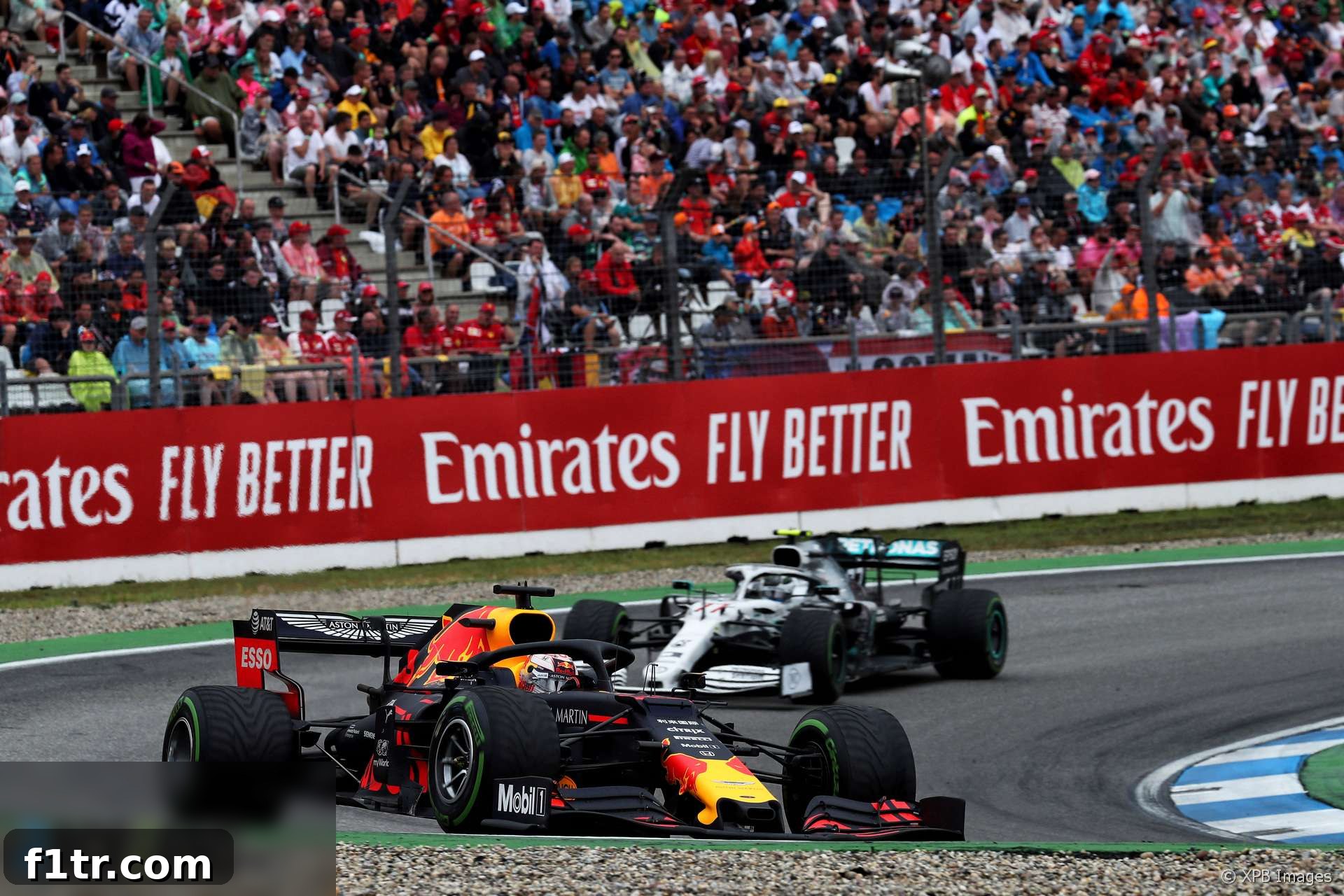
In the high-stakes world of Formula 1, where every fraction of a second and every strategic decision can alter the course of a championship, Lewis Hamilton, the reigning champion and one of the sport’s most astute observers, has publicly voiced his growing concern over the escalating threat posed by Red Bull Racing. With the summer break behind them and a crucial stretch of the season ahead, Hamilton anticipates a formidable challenge from the Milton Keynes-based squad, particularly at circuits traditionally less suited to their package, such as Monza and Spa-Francorchamps. This assessment marks a significant shift, signaling that Red Bull, powered by their Honda engine, has closed the performance gap to Mercedes, especially in critical areas like straight-line speed and overall power delivery.
Hamilton’s apprehension stems from a clear observation: Red Bull’s recent strides have transformed them into genuine contenders across a broader spectrum of track characteristics. The Mercedes driver specifically highlighted the long straights of circuits like Spa in Belgium and Monza in Italy – two power-hungry venues that often favor engines with superior grunt – as potential battlegrounds where Red Bull could truly shine. This prediction underscores a profound evolution in Red Bull’s capabilities, moving beyond their previous reliance on high-downforce, twisty tracks to leverage a more rounded performance profile.
Red Bull’s Resurgence: A Deep Dive into Power and Performance
“Sometimes a car’s better in [different] places,” Hamilton remarked, acknowledging the inherent variability in Formula 1 car performance across diverse circuits. He elaborated, “A car is not always the best through a whole season.” This nuanced perspective highlights that while Mercedes may hold an overall advantage, Red Bull has developed a package that is exceptionally potent under specific conditions and at particular venues. The Austrian Grand Prix, for instance, served as a stark demonstration of Red Bull’s burgeoning strength. “In Austria, the Red Bull was the better package for that circuit. It worked well in the temperatures and everything. Even compared to us it was a good car, and against Ferrari,” Hamilton recalled, emphasizing the comprehensive nature of their competitor’s performance.
The Honda Power Unit: A Game Changer
Central to Red Bull’s resurgence is their partnership with Honda for their power units. This collaboration has yielded significant performance gains, addressing what was previously a key vulnerability for the team. Hamilton himself pointed out the transformative impact: “When we get to the longer places like Monza this year it could be different this year now they have a new power unit, they’re not lower than us in power, in some places they’ve got more power than us. So it’ll be interesting to see how they go in those races.” This statement is a powerful endorsement of Honda’s progress, suggesting that they have not only caught up to but, in certain operational windows, even surpassed the power output of rival manufacturers, including Mercedes. The implication for circuits defined by their long straights, such as Spa’s iconic Eau Rouge-Raidillon complex leading into the Kemmel Straight, or Monza’s legendary Parabolica leading onto the main straight, is profound. Superior power delivery becomes paramount, and if Red Bull now holds a competitive, or even an advantageous, position in this regard, their prospects on these tracks dramatically improve.
The journey for Red Bull and Honda has been one of consistent, incremental improvement. After enduring years with less competitive power units, the Honda engine has matured into a reliable and potent force, capable of challenging the established front-runners. This technological leap has allowed Red Bull to fully exploit the aerodynamic brilliance of their chassis, creating a truly fearsome combination that can contend for victories and championships.
Adrian Newey’s Engineering Masterpiece
Beyond the power unit, Hamilton was quick to praise the enduring strength of Red Bull as a complete racing entity. “What people need to remember is that it’s a multi-championship-winning team. They’ve always had a very good car. They’ve got Adrian Newey there who’s one of the best designers there is in the sport,” he stressed. Adrian Newey’s reputation as one of Formula 1’s most brilliant and innovative aerodynamicists is legendary. His designs have consistently produced race-winning and championship-contending cars across multiple eras and regulations. Even during periods when Red Bull lacked outright power, Newey’s chassis designs often allowed them to punch above their weight, especially on circuits that rewarded aerodynamic efficiency and mechanical grip over sheer engine power.
The synergy between a powerful Honda engine and a Newey-designed chassis represents a potent formula for success. While Red Bull experienced a “slump with a little bit less power” in the early years of the V6 hybrid turbo era, they also had “a period of time where they had a little bit less downforce than most people.” However, as Hamilton observed, “They’ve definitely crept back up and started to utilise this car more.” This signifies a comprehensive effort across all departments – from engine development to aerodynamics and overall car integration – culminating in a package that is now more finely tuned and optimized to extract maximum performance.
Driver Performance and Strategic Implications
The effectiveness of Red Bull’s machinery is further amplified by the performance of its drivers. “Both drivers are now starting to put in good performances, the second driver’s had good performances. So they’re there. It is clearly a very good car. We’re in obviously a period of time where it suits them,” Hamilton noted. While Max Verstappen has consistently proven himself to be a formidable talent, capable of extracting every ounce of performance from any car, the rising consistency and strong showings from his teammates (who at various points included Pierre Gasly and Alexander Albon during the 2019 season) further underscore the car’s inherent competitiveness. A strong second driver is crucial for constructors’ championship points and strategic flexibility, putting additional pressure on rival teams like Mercedes.
This period of heightened competitiveness for Red Bull forces Mercedes to remain constantly vigilant and to push their own development efforts even harder. The dynamics of the championship battle become more complex, requiring flawless execution and innovative strategies from the Silver Arrows. No longer can Mercedes rely solely on their historical dominance; they must now meticulously analyze every race, every upgrade, and every tactical decision, knowing that a resurgent Red Bull is capable of capitalizing on any misstep.
Crucial Tracks and Future Battles
Hamilton’s specific mention of Monza and Spa-Francorchamps is particularly insightful. These circuits, with their unique blend of high-speed sections and challenging corners, serve as ideal proving grounds for a car’s all-around capabilities. Spa, with its sprawling layout and unpredictable weather, demands excellent aerodynamic balance and engine power. Monza, the “Temple of Speed,” is a pure power circuit, where even minor horsepower advantages can translate into significant lap time gains. For Red Bull to be considered a threat on these tracks marks a crucial turning point, indicating their engine is no longer a limiting factor.
Conversely, Hamilton also predicted that “Singapore will be strong for them.” The Marina Bay Street Circuit is a high-downforce, low-speed track that often rewards chassis agility and mechanical grip over sheer straight-line speed. Red Bull’s traditionally strong aerodynamic package, coupled with Max Verstappen’s precision and aggression on street circuits, makes Singapore a natural hunting ground for them. This demonstrates the broad applicability of Red Bull’s current package – from power-sensitive circuits to twisty, technical tracks.
Ultimately, Hamilton’s assessment paints a clear picture: Red Bull Racing is no longer a peripheral threat but a central contender. Their journey from a period of relative struggle in the early hybrid era to their current resurgence is a testament to persistent development, strategic partnerships, and unwavering ambition. As the season progresses, the battles between Mercedes and Red Bull, and specifically between Hamilton and Verstappen, promise to be some of the most captivating spectacles in Formula 1 history, challenging both teams to deliver their absolute best under immense pressure.
Related F1 Content from the 2019 F1 Season
- Crying in the Melbourne car park at 2019 grand prix was my career low – Ocon
- McLaren Racing reports reduced £71 million loss in 2019
- Kvyat: Hockenheim podium last year was “my biggest achievement” so far
- How the FIA’s new encrypted fuel flow meter targets Ferrari’s suspected ‘aliasing’ trick
- “He smashed my office door”: 23 must-see moments from ‘Drive to Survive’ season two
Browse all 2019 F1 season articles