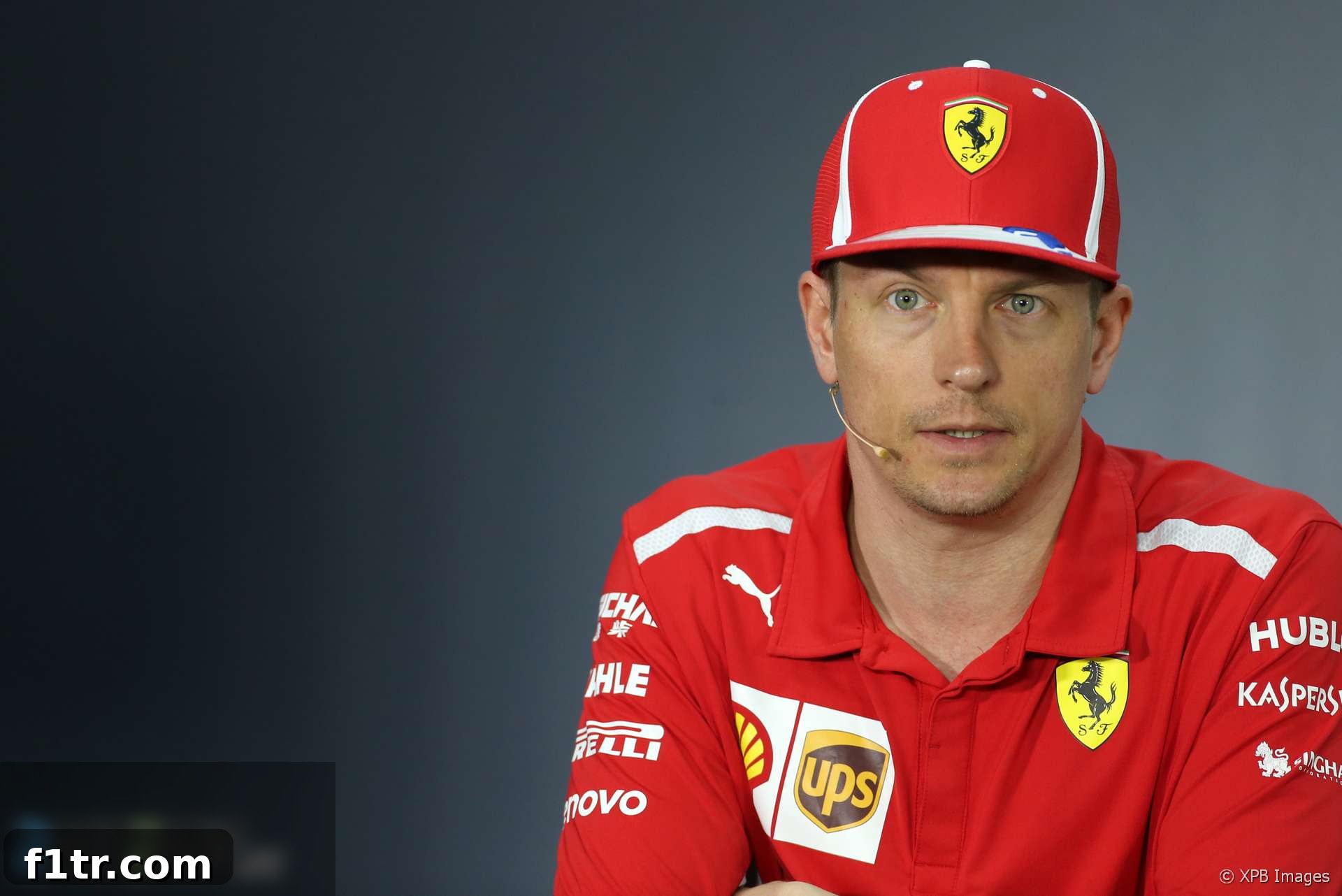
Kimi Raikkonen Remains Indifferent to Liberty Media’s Post-2020 F1 Vision, Citing Imminent Retirement
Formula 1 legend Kimi Raikkonen has unequivocally stated his disinterest in the intricate details of Liberty Media’s long-term strategic plans for the sport beyond the 2020 season. The veteran Finnish driver, known affectionately as “The Iceman” for his cool demeanor, candidly admitted that his lack of concern stems from a strong personal belief that he will no longer be an active competitor in Formula 1 by the time these proposed changes are implemented. This perspective offers a fascinating glimpse into the mindset of a driver nearing the twilight of a storied career, contrasting sharply with the broader discussions surrounding the sport’s future trajectory under new ownership.
The impending unveiling of Liberty Media’s extensive proposals by Formula One’s managing director of motorsport, Ross Brawn, has been a hotly anticipated event. Brawn is set to present his comprehensive vision for future modifications encompassing the sporting rules, technical regulations, and, crucially, the income distribution structure to all participating teams. This presentation marks a pivotal moment for Formula 1, signaling a potential paradigm shift in how the sport operates both on and off the track. The reforms are expected to address critical areas such as cost control, engine regulations, aerodynamic design, and the overall spectacle of racing, aiming to foster a more competitive and sustainable environment for all stakeholders.
Speaking during the official FIA press conference preceding the Bahrain Grand Prix, Raikkonen articulated his detachment with characteristic bluntness. He emphasized that the strategic direction of Formula 1 ultimately lies outside the purview of the drivers, firmly placing the onus on the sport’s commercial rights holders. “In the end, it’s not our decision; it’s up to them,” Raikkonen stated, underscoring the hierarchical structure within the sport. “It’s their business; they make plans and decisions based on what they feel is correct for the future of Formula 1.”
Raikkonen continued to elaborate on his lack of engagement with the unfolding discussions, revealing minimal awareness and even less enthusiasm. “I don’t know what they’re doing; I know very little about it, and I’m not interested either,” he confessed. His rationale is simple and pragmatic: “We’ll see tomorrow what they propose. It’s still many years away, and I highly doubt that I’ll still be competing in Formula 1 by then, so it doesn’t really bother me at all.” This candid outlook highlights the temporal reality of a professional athlete’s career, where long-term strategic changes often extend beyond their immediate horizon. For a driver of Raikkonen’s stature, whose focus remains squarely on the present race weekends and season objectives, delving into distant regulatory frameworks is perceived as an expenditure of energy with no direct benefit.
Further pressing on his reasoning, Raikkonen dismissed the notion of engaging with such discussions as an unproductive exercise. He argued that contemplating Liberty Media’s potential plans would be an absolute waste of his valuable time and mental energy, given his limited influence. “I don’t have the power to influence these decisions, so what’s the point in wasting my thoughts on it?” he questioned, articulating a philosophy centered on practical engagement. He further elucidated, “I don’t understand what the point is for me to provide a list of suggestions or concerns because, in the end, I have zero power. We, as drivers, don’t make the rules; that’s my fundamental point. So, what’s the rationale even for turning this into a significant story from my perspective?” Raikkonen’s statements underscore the clear distinction between the roles of competitors and administrators within the pinnacle of motorsport, emphasizing a driver’s primary responsibility to drive, not to legislate.
In stark contrast to Raikkonen’s stoic indifference, two-time world champion Fernando Alonso offered a more involved and hopeful perspective on the potential reforms. Alonso, a vocal proponent for enhancing the competitive nature of Formula 1, expressed his earnest desire that one of Liberty Media’s paramount objectives would be to cultivate a more balanced and exciting racing landscape. “I think it could certainly lead to a closer battle on track, and that would always be a welcome development for the sport,” Alonso articulated, reflecting a widely held sentiment among fans and drivers alike. He acknowledged, however, that the ebb and flow of competitive dominance has always been an inherent characteristic of Formula 1 throughout its history.
Alonso drew upon historical parallels to illustrate his point, recalling nostalgic views of past eras. “I remember watching old races on television just last week, specifically from 1990 and 1989, and apart from the leading four cars, almost everyone else was lapped,” he recounted. “Yet, we often recall those years as a ‘golden era,’ associated with legendary names and iconic moments.” This observation highlights a crucial nuance: while past eras might be romanticized, the reality of competitive disparity has frequently existed. However, Alonso’s core concern remains the current predictability that often dampens the excitement for contemporary viewers.
The Spanish driver passionately advocated for a future where the outcome of a race remains uncertain until its climactic conclusion, citing other motorsport series as exemplars. “I think if you look at other series now, or if you watch a race like IndyCar or similar championships, that unpredictable result, often decided in the final 10 laps, keeps you absolutely captivated in front of the television,” Alonso explained. He then delivered a poignant critique of modern Formula 1’s current state of competitiveness: “And now, unfortunately, we can often predict and write down the qualifying order for a race right here on Thursday, even before a wheel has truly turned. That, for me, is undeniably a little bit sad for the sport.” Alonso’s remarks serve as a powerful plea for rule changes that prioritize genuine on-track spectacle and reduce the prevalence of dominant teams, thereby fostering an environment where every driver and team has a more tangible chance at victory.
The divergent viewpoints of Raikkonen and Alonso beautifully encapsulate the varied perspectives within the Formula 1 paddock concerning its future. While Raikkonen, pragmatic and focused on his immediate racing career, sees little personal relevance in the long-term strategic shifts, Alonso champions a vision for the sport that prioritizes inherent competitiveness and fan engagement. Ross Brawn’s upcoming presentation is thus tasked with the monumental challenge of reconciling these differing aspirations, aiming to forge a path forward that secures Formula 1’s appeal for generations of drivers and fans to come, ensuring the sport remains at the pinnacle of global motorsport entertainment.
2018 F1 Season: A Look Back and Forward
The discussions surrounding Liberty Media’s plans for post-2020 Formula 1 underscore the constant evolution and challenges faced by the sport. The 2018 season, while not directly impacted by these future rules, served as a backdrop for these critical conversations. It was a season that witnessed fierce battles, technological advancements, and ongoing debates about the sport’s direction. The lessons learned and the experiences gained in seasons like 2018 continue to inform the strategic decisions being made for Formula 1’s future. The pursuit of greater competition, improved financial stability for smaller teams, and more engaging racing spectacles are themes that resonate deeply with both past and present F1 narratives.
As Formula 1 strives to maintain its position as a leading global sport, the insights from drivers like Raikkonen and Alonso, alongside the strategic directives from figures like Ross Brawn, are essential. Balancing the legacy of the sport with the demands of a modern audience requires careful consideration of every aspect, from engine design to prize money distribution. The goal remains to create a championship that is both technologically advanced and inherently thrilling, offering unforgettable moments and truly unpredictable results that keep fans on the edge of their seats, much like the “golden eras” Alonso fondly remembers, but with an eye firmly fixed on the future.
- F1 Feared “Death Knell” for Drive to Survive After Ferrari and Mercedes Snub
- McLaren Staff Told Us We Were “Totally Crazy” to Take Honda Engines in 2018 – Tost
- ‘It Doesn’t Matter If We Start Last’: How Red Bull’s Junior Team Aided Honda’s Leap Forward
- Honda’s Jet Division Helped F1 Engineers Solve Power Unit Problem
- McLaren Racing Losses Rise After Honda Split
Browse All 2018 F1 Season Articles