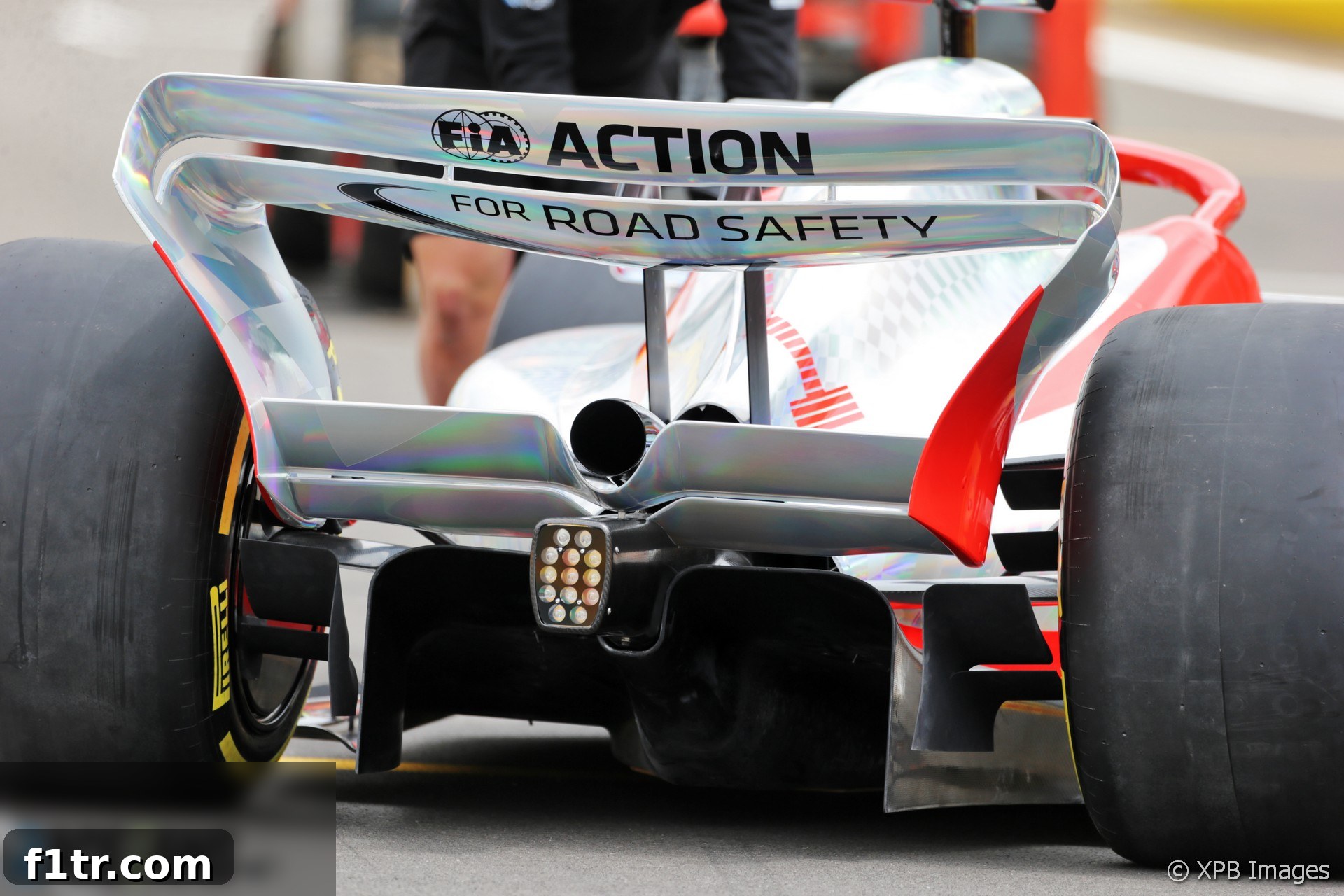
As Formula 1 prepares to unleash the biggest shake-up of its aerodynamic regulations in decades, teams across the paddock are keenly aware of the high stakes involved, wary of missing a crucial trick with their 2022 car designs that could define their season.
Advert | Become a Supporter & go ad-free
The cautionary tale of the Brawn BGP-001 stands as a powerful reminder of this risk. For the 2009 season, F1 introduced another of its drastic rule overhauls, specifically aimed at significantly reducing the aerodynamic power of the cars. The intention was to make cars easier to follow, promote closer racing, and ostensibly level the playing field by limiting downforce. However, three astute teams – including the eventual championship-winning Brawn GP – discovered an ingenious method of generating far more downforce than the rule makers had ever anticipated, turning a perceived limitation into a decisive advantage.
The Genesis of a Game-Changer: Brawn GP and the Double Diffuser
Brawn GP’s entry into Formula 1 was a story of last-minute survival and remarkable ingenuity. The team emerged from the ashes of Honda’s sudden departure from the sport shortly before the 2009 season began, spearheaded by the shrewd leadership of Ross Brawn. Alongside competitors Toyota and Williams, Brawn’s engineers had meticulously exploited a subtle quirk within the newly implemented regulations. This allowed them to design diffusers with significantly greater volumes, a concept that became famously known as the “double diffuser.” This design innovation provided a superior aerodynamic performance that far exceeded what was expected from the 2009 generation of F1 cars under the restrictive new rules.
The outcome of that season could have been drastically different. Several months prior to Honda’s bombshell decision to withdraw, Ross Brawn had subtly hinted at his discovery to rival teams during a technical working group meeting. He cautioned that the stated goal of cutting downforce by 50 percent through the new 2009 regulations hadn’t quite worked as intended.
Brawn later recounted this pivotal conversation in his insightful book, Total Competition. He recalled stating, “We have brought in rules to reduce the downforce by 50 percent in 2009. But I know from what I am seeing, as we develop our car for 2009, that is not the case. So we are not achieving our objectives. Do we want to revisit the rules or are we all clear that we have not achieved our objectives?” His remarks were a veiled warning, a test of his competitors’ understanding of the rulebook, and a demonstration of his team’s advanced development.
Brawn, ever the strategist, was meticulous in his approach, careful not to explicitly reveal the specific aerodynamic breakthrough his team had made. However, as he later explained, his confidence in Honda’s (and subsequently Brawn GP’s) development program was so profound that he wasn’t overly concerned about other teams independently discovering the double diffuser trick. He was equally unperturbed by the possibility of them exploiting it to the same degree, or even attempting to get it banned by the FIA. He knew they had a significant head start.
Remarkably, his dropped hint was largely ignored and dismissed by his rivals. “Several people accused me of scaremongering, that it wasn’t true, the rules were achieving their objectives,” he recalled with a hint of amusement. “When it was raised everyone said ‘up yours’. I thought, ‘thank god for that’.” This underestimation proved to be a critical error for the rest of the grid.
Despite the immense financial challenges posed by Honda’s withdrawal, Brawn’s team, operating on a shoestring budget, went on to clinch both the Drivers’ and Constructors’ championships that year. This monumental achievement was thanks in no small part to the substantial performance advantage they enjoyed in the opening races. While their rivals scrambled to ban (unsuccessfully) and then copy (eventually successfully) the double diffuser, Brawn GP capitalized on their early lead. More than a decade later, this extraordinary experience has profoundly impacted how today’s F1 teams approach major regulation changes, leaving them acutely wary that a similar ‘silver bullet’ could be hidden deep within the intricately detailed 2022 rule book.
Advert | Become a RaceFans supporter andgo ad-free
2022 Regulations: A New Era, Familiar Fears
The 2022 Formula 1 aerodynamic regulations represent the most profound overhaul in decades, promising a radically different breed of F1 car designed to improve racing by significantly reducing turbulent air for following cars. However, with any such seismic shift, the specter of unintended consequences looms large. AlphaTauri technical director Jody Egginton articulated this inherent tension to RaceFans, stating, “With any regulation change there’s always a risk and reward. Someone could find something, a sweet spot most likely with the aero concept, as they have done in the past – the double diffuser being one.” This sentiment echoes throughout the pit lane, as teams invest hundreds of millions into designs that could either propel them to glory or leave them struggling in the midfield.
Enhanced Scrutiny and the Evolving Rule-Making Process
Despite the persistent apprehension, there are crucial differences between the 2009 and 2022 regulation changes. The incoming 2022 rules have undergone an unprecedented level of detailed development and scrutiny, overseen ironically by Ross Brawn himself in his capacity as F1’s Motorsport Director. Furthermore, these regulations benefited from an additional year of refinement, as the global Covid-19 pandemic necessitated their postponement from 2021 to 2022, allowing more time for analysis and adjustments.
Egginton highlighted this significant shift in the development process: “The amount of debate and the amount of work that’s gone into it from F1 and the FIA is at a far more detailed level than it ever [was] previously. More scientific as well. The teams have probably put it under more scrutiny and there’s been a lot more debate and the gestation period’s been longer – even without considering the pandemic.” This collaborative and exhaustive approach aims to minimize the chances of a glaring loophole remaining unnoticed. However, he quickly added a caveat: “As a counter-argument, for every one person looking at it in F1 or the FIA there’ll be 10 in each team. But honestly, it’s possible, the teams will be working hard to do it.” The sheer volume of engineering talent and resource dedication within each F1 team means that even the most thoroughly drafted regulations are subject to intense interpretation and potential exploitation.
Evolving Attitudes Towards Loophole Exploitation
The landscape of Formula 1 rule enforcement has also evolved significantly since 2009. The FIA’s increased readiness to introduce mid-season technical directives (TDs) to ‘clarify’ ambiguous areas of the rules means that development resources ploughed into areas that the governing body does not approve of could easily be wasted. This proactive stance fundamentally alters the risk-reward calculation for teams. Egginton suspects that attitudes towards exploiting gray areas have indeed changed dramatically since the era of the double diffuser.
“The game is now, if a team finds something that they think is a loophole, they’ve got a decision to make: Do we want to try and exploit it? Are we sure? Or do we want to get it closed? And I think that ratio changes. The double-diffuser was a no-brainer for the teams who spotted it,” Egginton explained. In 2009, the reward for the double diffuser far outweighed the risk, prompting teams to push the boundaries aggressively. Today, the immediate threat of a technical directive shutting down a costly development path makes teams think twice before gambling on a contentious interpretation.
Consequently, any Brawn-esque veiled remarks or ‘throwaway comments’ made in today’s Technical Advisory Committee (TAC) meetings are now scrutinized with extreme diligence. “Now I think people are very careful in TAC meetings to follow the throwaway comment,” Egginton noted. Teams are acutely aware that any hint of a potential loophole could trigger a deeper investigation by rivals or the FIA, leading to premature closure of a development path they hoped to exploit.
The Unpredictability of Innovation and Design
Despite all the meticulous planning, extensive development, and enhanced scrutiny, the unpredictable nature of Formula 1 car design means that surprises are almost inevitable. With every team designing entirely new aerodynamic concepts from a blank slate for 2022, there remains the very real possibility that someone will either uncover a performance advantage or, conversely, have a nasty surprise when the 2022 cars finally roll out for the first time next year. “Someone could just get it wrong as well,” Egginton thoughtfully adds. “You can have a clear view ‘this is going to be fantastic’ and it might not work.” This underscores the inherent challenge and excitement of Formula 1: a perfect design on paper does not always translate to performance on track, and vice-versa.
As the countdown to the 2022 season continues, the ghost of the Brawn GP double diffuser looms large, serving as both a warning and an inspiration. While the rule-making process has become far more sophisticated, the relentless pursuit of competitive advantage by F1 teams ensures that the initial races of the 2022 season will be watched with bated breath, eager to see which team, if any, has uncovered the next elusive ‘sweet spot’ in Formula 1’s ever-evolving technical landscape.
Advert | Become a RaceFans supporter andgo ad-free
2021 F1 season
- Masi ‘basically gifted the championship’ to Verstappen says 2021 FIA steward Sullivan
- Las Vegas race backers looking to extend F1 deal beyond 2025
- Why Mercedes put ‘a reminder of joy and pain’ on display in their factory lobby
- Verdict on error in GT race suggests Mercedes would have lost 2021 Abu Dhabi GP appeal
- Title ‘stolen’ from Mercedes made us ‘underdogs people cheer for’ – Wolff
Browse all 2021 F1 season articles