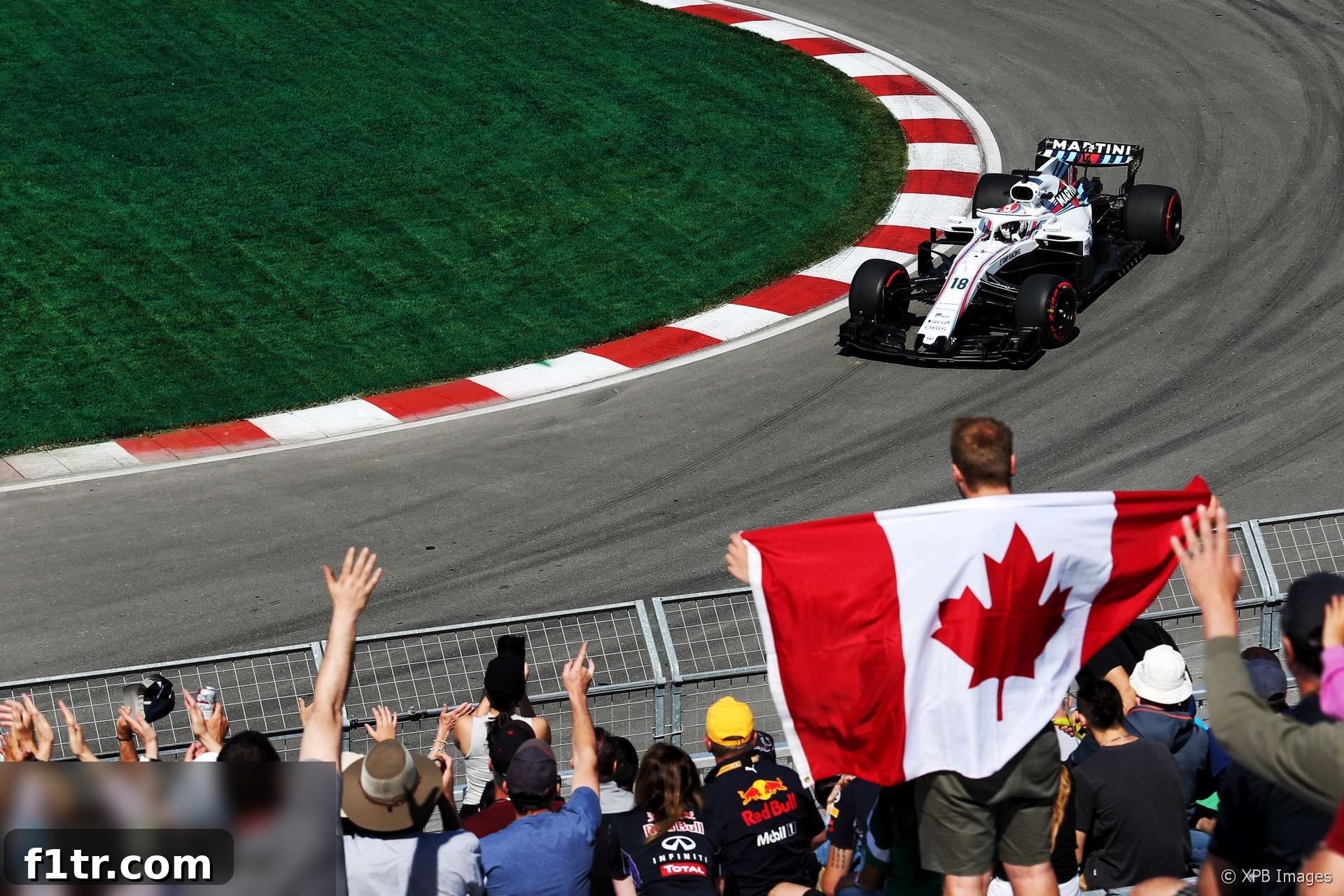
In the high-octane world of Formula 1, where fortunes can shift with every race, the 2018 season presented a particularly stark challenge for a team steeped in a glorious history: Williams. Despite a torrid start that saw them languishing at the very bottom of the constructors’ championship, Deputy Team Principal Claire Williams steadfastly asserted that the team would not “write off” its campaign. This declaration, made amidst immense pressure and dwindling points, underscored the spirit of resilience that has long defined the Grove-based outfit.
The legendary Williams Racing, a name synonymous with multiple world championships and groundbreaking innovation, found itself in an uncharacteristic predicament in 2018. With only a single points-scoring finish recorded across the initial six races, the scale of the challenge was undeniable. The FW41, their challenger for the season, was proving to be a difficult car, suffering from fundamental aerodynamic issues that severely hampered its performance. This placed an immense burden on the team’s two young drivers, Lance Stroll and Sergey Sirotkin, who struggled to extract competitive pace from the machinery at their disposal.
Claire Williams, leading the team through these turbulent times, addressed the mounting concerns with a resolute message during an FIA press conference. “We’ve never said we’re going to write this season off,” she stated emphatically. “In no way would we ever say that at Williams.” This sentiment was not merely a defiant gesture but a testament to the deep-rooted pride and fighting spirit embedded in the team’s DNA. For a team with such a rich legacy, giving up was simply not an option, regardless of the immediate difficulties. The competitive landscape of Formula 1 demands unwavering commitment, and Claire Williams made it clear that her team was prepared to demonstrate exactly that.
The journey through a Formula 1 season is a marathon, not a sprint, a point Claire Williams was keen to emphasize. “We’re only a third of the way through this year. There are a lot of races left to go,” she explained. While acknowledging the disappointment of their initial performance – “scoring four points is not where we want to be” – she maintained a focus on the future. The complexities of developing a competitive F1 car mean that significant turnarounds rarely happen overnight. It requires meticulous analysis, strategic planning, and countless hours of dedicated work from every member of the team, from aerodynamicists to mechanics.
Turning around the performance of a struggling Formula 1 car is an arduous task, particularly when the issues are as deep-seated as those affecting the FW41’s aerodynamics. Claire Williams highlighted this reality, stating, “But the guys are doing a good job. It does require a little bit of patience. It’s not easy turning things around that fast.” The aerodynamics of a Formula 1 car are its lifeblood, dictating how it performs through corners, its top speed on straights, and crucially, its tire degradation. A fundamental flaw in this area can cascade into a myriad of other problems, making the car unpredictable and challenging for drivers to control consistently.
The technical team at Grove was working tirelessly to diagnose and rectify the FW41’s shortcomings. Early indications suggested that a substantial improvement might not materialize until the German Grand Prix at the earliest. This timeline reflected the extensive process involved in F1 car development: identifying the problem, conceptualizing solutions, designing new components, rigorous simulation using Computational Fluid Dynamics (CFD), testing in the wind tunnel, manufacturing the parts, and finally, integrating and testing them on track. Each stage is time-consuming and resource-intensive, making rapid, wholesale changes a rarity in modern F1.
Despite the long road ahead, Williams was not idle. Development work was ongoing, with a clear focus on addressing the core aerodynamic deficiencies. “We’ve got a lot of work to do, particularly on the aerodynamics side of things, and that takes time,” Williams affirmed. “We’ll be bringing updates to forthcoming races, we’ll have to see how they pan out.” The introduction of updates is a critical phase for any F1 team. While new parts promise improved performance, their effectiveness is only truly proven once they are subjected to the unforgiving environment of race conditions. Sometimes, even carefully designed components fail to deliver the expected gains, or worse, introduce new unforeseen issues. This inherent uncertainty adds another layer of challenge to the development process.
The ultimate goal, as articulated by Claire Williams, was to see the team return to its rightful place further up the field. “It’s just a case of working hard and keeping everything crossed so that we deliver the performance that we need to do, so that by the end of the year we’re back up to the front of the field, but that’s going to be hard work for us.” This ambition, while appearing lofty given their current position, embodies the relentless pursuit of excellence that defines Formula 1. The gap to the mid-field, let alone the front-runners, was significant, and closing it would demand an extraordinary effort from every individual associated with the team. It underscored the fierce competition where every tenth of a second is hard-fought and every improvement a testament to sheer dedication.
The financial implications of poor performance in Formula 1 are also substantial, affecting prize money, sponsorship attractiveness, and overall team stability. Therefore, beyond the sporting pride, there was a pressing practical need for Williams to improve. Claire Williams’ steadfast leadership during this challenging period was crucial in maintaining morale and focus within the team. Her message of patience, hard work, and unwavering belief served as a guiding principle as Williams navigated one of its most difficult seasons in recent memory.
Historically, Williams Grand Prix Engineering has been a cornerstone of Formula 1, renowned for its innovative engineering and a legacy that includes nine Constructors’ Championships and seven Drivers’ Championships. From the dominant cars of the 1980s and 90s to the legendary figures who raced for them, the team built an incredible reputation for pushing boundaries. The struggles of 2018 were a stark reminder of how challenging it is for independent teams to compete against the vast resources of manufacturer-backed giants in the modern era of Formula 1. Despite this, the inherent spirit of racing and the commitment to improvement remained undimmed.
The 2018 Formula 1 season was a defining moment for Williams, a period that tested the very fabric of the team. Claire Williams’ refusal to concede defeat, even in the face of overwhelming odds, became a symbol of the team’s enduring resolve. Her emphasis on patience, meticulous development, and sheer hard work highlighted the only path forward in a sport that rewards tenacity above all else. While the immediate results were disappointing, the foundational work and the resilience demonstrated during this difficult season were crucial in the team’s ongoing journey in the fiercely competitive world of Formula 1. The commitment to engineering excellence and the pursuit of performance, no matter how challenging, remained the unwavering goal for Williams Racing.
2018 F1 season
- F1 feared “death knell” for Drive to Survive after Ferrari and Mercedes snub
- McLaren staff told us we were “totally crazy” to take Honda engines in 2018 – Tost
- ‘It doesn’t matter if we start last’: How Red Bull’s junior team aided Honda’s leap forward
- Honda’s jet division helped F1 engineers solve power unit problem
- McLaren Racing losses rise after Honda split
Browse all 2018 F1 season articles