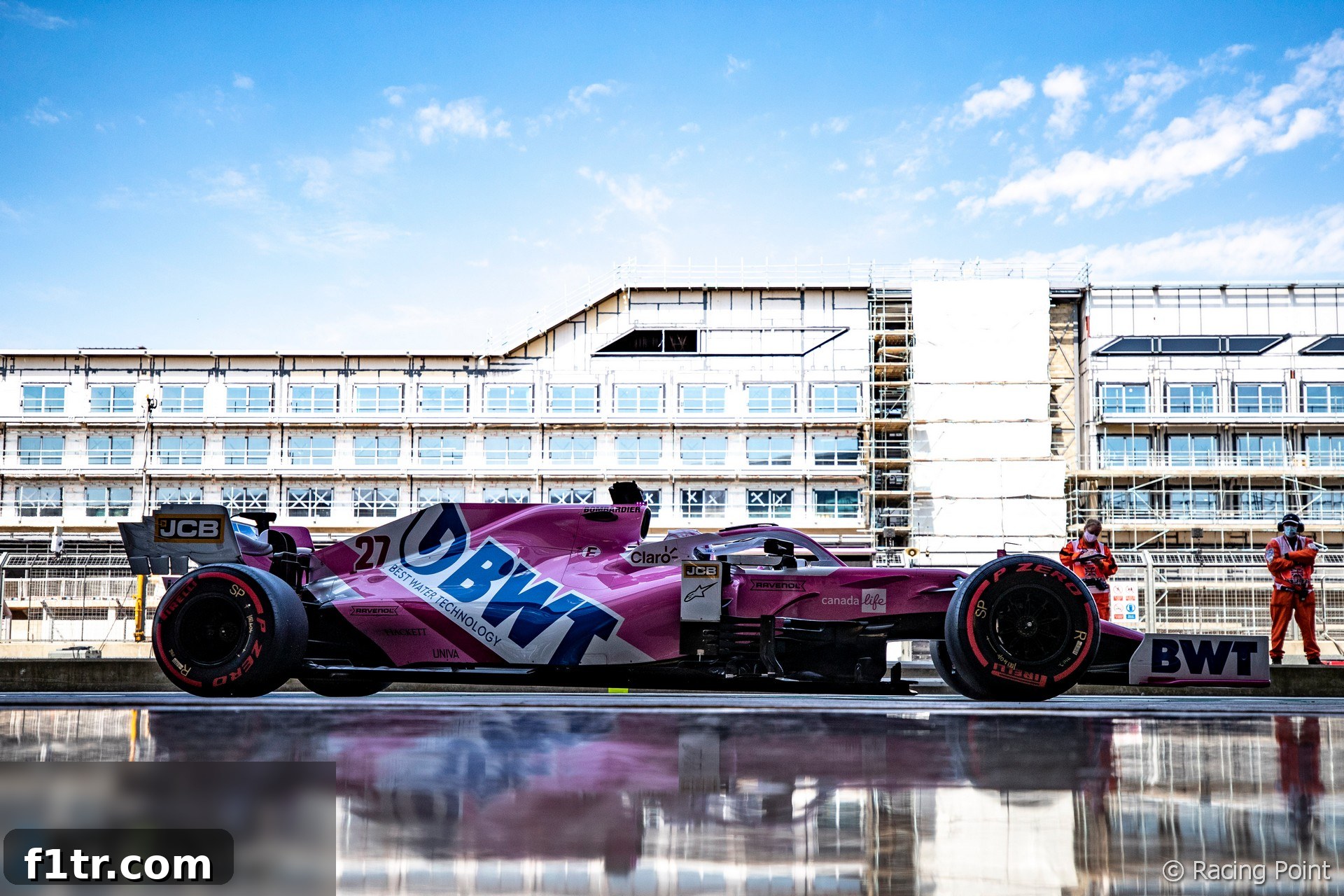
In the highly charged atmosphere of a Formula 1 season, the protracted ‘copying’ dispute between Renault and Racing Point reached a critical juncture. On a pivotal Friday, the FIA stewards’ panel delivered a definitive judgment, ruling emphatically against Racing Point and substantiating the protest lodged by its French rival, Renault. This landmark decision ignited a cascade of events, thrusting the core values and the very definition of a Formula 1 constructor into the spotlight, promising to redefine the sport’s technical landscape.
The FIA’s Initial Verdict and its Controversial Aftermath
The stewards’ investigation meticulously detailed how Racing Point, colloquially dubbed ‘Tracing Point’ by some in the paddock for its overt emulation of the Mercedes W10, had indeed received direct assistance from Mercedes. The findings confirmed that Mercedes, from its Brackley base, had supplied crucial CAD models and brake duct designs to Racing Point for use in the 2020 season. This exchange became highly contentious, particularly as these specific parts had transitioned in status from ‘unlisted’ to ‘listed’ components between the 2019 and 2020 regulations, meaning they could no longer be freely shared or copied directly from another team’s design.
The intricate background to this saga, including the initial surfacing of accusations in March, was thoroughly covered as it unfolded. Subsequently, the in-depth analysis of the stewards’ Friday verdict provided extensive scrutiny of its implications, foreshadowing the widespread debate that was to follow.
The consequence for Racing Point was a substantial penalty: a €400,000 (£360,000) fine coupled with a 15-point deduction from their constructors’ championship tally. Yet, the ruling contained a deeply perplexing element for many observers: the very rear brake ducts deemed illegal were, inexplicably, declared permissible for continued use in future races. This particular aspect of the judgment sparked widespread criticism, with many arguing that while the team’s guilt was established, the penalty seemed insufficient and inconsistent with the gravity of the infringement. The stage was set for an immediate escalation, and appeals were not just likely but inevitable.
True to expectations, within the regulatory 24-hour timeframe, both Racing Point and Renault formally lodged their notices of intention to appeal. Significantly, Ferrari, McLaren, and Williams swiftly aligned themselves with Renault, signaling a unified front against Racing Point and, by extension, the perceived ambiguities in the FIA’s ruling. This broad support underscored the profound concern within the paddock regarding the precedent being set.
Mercedes’ Controversial Role and Public Defense
In this burgeoning controversy, Racing Point found a powerful, albeit singular, ally: Mercedes. The German manufacturer’s staunch defense was publicly championed by its motorsport boss, Toto Wolff, whose close personal ties to Racing Point owner Lawrence Stroll — a shareholder in Stroll’s Aston Martin venture — were well-known. Throughout the ensuing race weekend, Wolff vehemently asserted Mercedes’ innocence, declaring, “there is zero worry on our side. And when I say zero, I mean zero, that we were in any breach.” His robust defense, however, was perceived by some rivals, paraphrasing Shakespeare, as protesting “too much, methinks,” suggesting an underlying nervousness.
Despite Wolff’s confident assertions, the stewards’ formal conclusion presented a conflicting account. Article four of their findings explicitly stated that the acknowledged transfer of parts from Mercedes to Racing Point on January 6th, 2020, did indeed constitute a breach of the ‘listed parts’ regulations. Curiously, this breach was deemed “not one worthy of censure… as the parts in question were not used.” This nuanced interpretation struck many as a glaring loophole, akin to a team being caught with illicit technical data but escaping significant penalty by arguing the data was merely stored and not actively implemented. The rationale behind such a distinction fueled considerable skepticism within the F1 community.
Both Wolff and Racing Point CEO Otmar Szafnauer offered a further explanation, claiming the parts were “supplied in order to possibly fill a gap for testing.” This justification, however, was met with widespread incredulity, especially considering that the transfer date predated the commencement of pre-season testing by more than six weeks. The apparent discrepancy in timelines prompted several influential team principals to formally request that the FIA launch a thorough investigation into Mercedes’ precise involvement and complicity in the affair.
Christian Horner, the outspoken team principal of Red Bull, directly challenged the logical inconsistency of the verdict. He questioned how Racing Point could be found guilty of receiving illicit parts without the supplying team, Mercedes, also being deemed in breach of regulations. Horner articulated his concerns, stating, “Regarding Mercedes I’m sure questions will get asked, because if the team in question are guilty of receiving, surely the team that has provided has been also in breach of those regulations? And that’s something for the FIA to look into.” Guenther Steiner, the Haas team principal—a team that famously pushed the boundaries of legal parts sharing upon its 2016 F1 entry via a Ferrari deal—echoed these calls for clarification. Steiner expressed his hope that the Court of Appeal would conduct a more detailed investigation than the stewards, adding that he was entirely unsurprised by Wolff’s defensive stance. This tense and politically charged atmosphere enveloped the teams as they left Silverstone for Spain, following a weekend marked by intense mud-slinging, not only concerning the protest but also the ongoing negotiations for the new Concorde Agreement.
Political Maneuvering and the Concorde Agreement’s Influence
In a surprising post-race interview, Toto Wolff informed Sky TV that he had been approached – allegedly by both sides of the dispute – to act as a mediator in the escalating Racing Point matter. This revelation was met with considerable derision among well-placed sources within the F1 paddock. One insider scoffed, “Yes, he was invited to a meeting of teams to discuss the matter, but there was no talk of him as mediator. How could he mediate given his conflict?” Another team principal speculated that Wolff’s mediation overtures stemmed from a deep-seated apprehension that “Mercedes’ role could be exposed if it goes on appeal, then he could be in real trouble with Ola [Källenius, Mercedes chairman and CEO].” Despite Wolff’s insistence on enjoying Källenius’s full support, any prospects of his mediation swiftly vanished as events accelerated.
Immediately following the race weekend, Lawrence Stroll embarked on a proactive lobbying campaign, engaging extensively with the sport’s key decision-makers. Sources indicated that Stroll reached out to Luca de Meo, Renault’s new CEO – who had only been in his role for just over a month and possessed limited motorsport experience – hoping to broker a deal. Stroll reportedly also contacted Ferrari’s top brass and McLaren’s Bahraini owners, seeking to defuse the situation and garner support for Racing Point’s position.
By Monday, the dispute had transcended the initial focus on illegal rear brake ducts, CAD models, or pattern parts supplied from Brackley to Racing Point’s Silverstone factory. The core issue had broadened dramatically to encompass the fundamental principle of reverse-engineering an entire Formula 1 car. The four protesting teams delivered an unequivocal message to Stroll: unless the systematic practice of complete car copying ceased, they were resolute in their intention to seek relief and justice through the FIA International Court of Appeal.
Loopholes in the Token System and Forthcoming Engine Mode Regulations
Adding another layer of complexity to the contentious debate, a significant collateral issue arose concerning perceived loopholes in the chassis upgrade token system, which was introduced for the 2021 season as a cost-saving measure. This system inadvertently allowed Racing Point to upgrade the rear end of its 2020 car (effectively a 2019 Mercedes design) to later specifications without incurring any token penalty. In stark contrast, McLaren, which had finalized a deal to switch engine suppliers before the global impact of Covid-19, would be forced to spend two precious tokens to integrate the same power unit as Racing Point. Ferrari and Renault, both deeply invested in their independent constructor models, also voiced considerable discontent over this perceived inequitable advantage.
Simultaneously, another highly complex area of technical regulation, engine modes, became a focal point. The FIA announced its firm intention to clamp down on the practice of utilizing different engine settings for maximum outright speed in qualifying versus optimized race pace. This particular area was one where Mercedes had historically enjoyed a significant competitive edge. Unsurprisingly, the four Mercedes-powered teams – comprising the factory Mercedes outfit, Racing Point, Williams, and McLaren from 2021 onwards – collectively expressed their opposition to such a regulatory change.
The overarching message from various influential factions was clear: the token system required urgent revision. Teams signaled their willingness to withdraw their appeals, but only under specific conditions: Racing Point’s acceptance of the stewards’ guilty verdict, and, crucially, if the FIA concretely followed through on its commitment to outlaw comprehensive car copying. This commitment had been articulated by Nikolas Tombazis, the governing body’s head of single-seater racing, and formally reinforced in a letter dispatched to all teams by FIA Secretary-General Peter Bayer.
Go ad-free for just £1 per month>> Find out more and sign up
Bayer’s letter, whose contents were widely corroborated by multiple team sources, outlined the FIA’s broad strategy to amend Article 22.3 (Listed Team Components) of the 2021 Technical Regulations. The primary objective was to definitively prevent car copying, whether achieved through photographic methods, direct pattern part acquisition, or advanced ‘reverse engineering’ techniques. The letter unequivocally stated the FIA’s conviction that copying on an “industrial scale” must be prohibited. However, the FIA was navigating a delicate balance. Due to the significant cost reductions necessitated by the COVID-19 pandemic’s impact on F1, the introduction of the ‘new era’ cars had been postponed until 2022. This meant that the existing cars would carry over for an additional year with only minor upgrades, hence the token system. The FIA also expressed reluctance to immediately alter the token system due to concerns that teams had already invested significant development resources under its current framework. Despite these considerations, it was widely understood that the situation remained fluid and unresolved.
The New Governance Process and Strategic Voting Dynamics
With the 2021-2025 Concorde Agreement on the cusp of finalization, Formula 1’s revised governance process, previously detailed, was poised to come into effect. Under this restructured framework, the FIA and Formula 1 Management each wield 10 votes, while every individual team holds a single vote. The timing of proposed motions dictates the required voting thresholds:
- For changes proposed before the end of April for the following season, a simple majority is required (25 out of 30 votes).
- For proposals made after April until the end of December of the preceding year, a super-majority is necessary (28 out of 30 votes).
- For ‘in-season’ changes, defined as January 1st to the end of December of the corresponding year, unanimous agreement is mandatory.
Given the carry-over rules dictating the use of evolved 2020 cars for the upcoming season, it was acknowledged that any immediate amendments to Article 22.3 might have limited medium-term impact on the ‘copy cars’ already in existence. Nevertheless, the strategic implications were profound: the four original appellant teams (subsequently reduced to two) recognized these political levers as powerful bargaining tools in their quest to amend the token system and, more broadly, to safeguard the fundamental integrity of genuine constructor teams.
Any proposed votes for the 2021 season would fall within the ‘super-majority’ category. Assuming the FIA and F1 leadership voted as a united block in favor of change, they would require the support of eight out of the ten teams to achieve the necessary 28 votes. Crucially, with only Mercedes and Racing Point advocating for the ‘engineering by photocopier’ approach, they would be significantly outvoted by the remaining eight teams. This strategic alignment indicated that the required super-majority was attainable, potentially securing a victory in the ‘token battle,’ even if it didn’t immediately resolve the entire ‘copy car’ war.
Appeals Withdrawn: A Shifting Dynamic in the Paddock
When these intricate factors were tabled and thoroughly discussed during a series of crucial meetings and calls held on Monday and Tuesday, the overall temperature of the situation underwent a dramatic transformation. Ultimately, only Ferrari and Renault formally confirmed their appeals by the stipulated deadline. McLaren and Williams, in significant developments, issued official statements confirming their withdrawals. Both teams explicitly referenced the initiatives undertaken by the FIA to address their fundamental concerns regarding constructor integrity.
McLaren Racing articulated its stance, stating, “McLaren Racing is pleased that the FIA will further clarify the sporting and technical regulations to protect Formula 1 as a sport where teams are clearly defined as constructors, and removes the potential that the Formula 1 world championship includes cars that are, in effect, copies of other competitors.” This powerful statement clearly underscored the Woking-based team’s paramount concern regarding the sport’s definition of a genuine constructor.
Williams expressed similar sentiments, reinforcing the critical importance of a constructor’s role: “After careful consideration, Williams have elected not to proceed with the formal appeal. We believe the FIA’s decision to seek the prohibition of extensive car copying for 2021 onwards addresses our most fundamental concern and reasserts the role and responsibility of a constructor within the sport, which is fundamental to Formula 1’s DNA and Williams core beliefs and principles.” These strategic withdrawals significantly altered the landscape of the appeal process, reducing the number of opposing parties.
An FIA spokesperson subsequently confirmed to RaceFans that an appeal had indeed been officially received from Racing Point, indicating their continued challenge to the stewards’ initial verdict.
The Road Ahead: Safeguarding the Integrity of a Constructor Sport
The pivotal question remained: what were the realistic chances of the appeal process proceeding, and what steps would be required to resolve this deeply divisive issue conclusively? The answer, frankly, hinged significantly on the actions and attitudes of Racing Point and its technical partner, Mercedes. Acknowledging guilt, as determined by the stewards’ initial ruling, would represent a crucial first step towards reconciliation and a resolution acceptable to the broader paddock. Following this, both teams would need to actively embrace the proposals to amend the Technical Regulations, specifically those designed to unequivocally outlaw ‘copy cars’ and to comprehensively overhaul the token system to eliminate any perceived inequitable advantages.
While changes to the power unit regulations could theoretically be enacted without Mercedes’ explicit consent, any form of constructive agreement and collaboration from the reigning champions would undoubtedly enhance their standing within the paddock. It is an undeniable fact that the perceived arrogance often associated with Mercedes, particularly in its public statements and interactions, had not endeared the team to its rivals across various levels within the sport. A display of genuine humility and, perhaps, even an apology for certain past remarks – such as referencing rival team bosses as being “up the arse” of Liberty Media – would go a considerable way towards repairing fractured relationships and fostering a more collaborative and respectful environment. The gravity of the situation clearly transcended mere technicalities.
In the final analysis, this wasn’t solely about specific rear brake ducts fitted to a ‘pink Mercedes.’ Rather, it represented a far more profound and intricate battle for the very technical soul of Formula 1; a clash between purists championing independent design and development, and those perceived as arrivistes leveraging existing designs. It was a fundamental contest over F1’s enduring status as the premier constructor series in global motorsport. Ironically, this significant battle reached its climax on the eve of the sport’s 70th-anniversary celebrations. Perhaps this timing will prove to be fitting, serving as a powerful catalyst for Formula 1 to reaffirm and once again wholeheartedly embrace the original intention and spirit behind the constructors’ championship, a prestigious title first introduced way back in the 1950s. The ultimate resolution of this saga would undoubtedly play a crucial role in shaping the future identity of the sport, solidifying its commitment to innovation, originality, and fair competition among its esteemed constructors.
RacingLines: Further Insights into Formula 1’s Political Landscape
- The year of sprints, ‘the show’ – and rising stock: A political review of the 2021 F1 season
- The problems of perception the FIA must address after the Abu Dhabi row
- Why the budget cap could be F1’s next battleground between Mercedes and Red Bull
- Todt defied expectations as president – now he plans to “disappear” from FIA
- Sir Frank Williams: A personal appreciation of a true racer
Browse all RacingLines columns