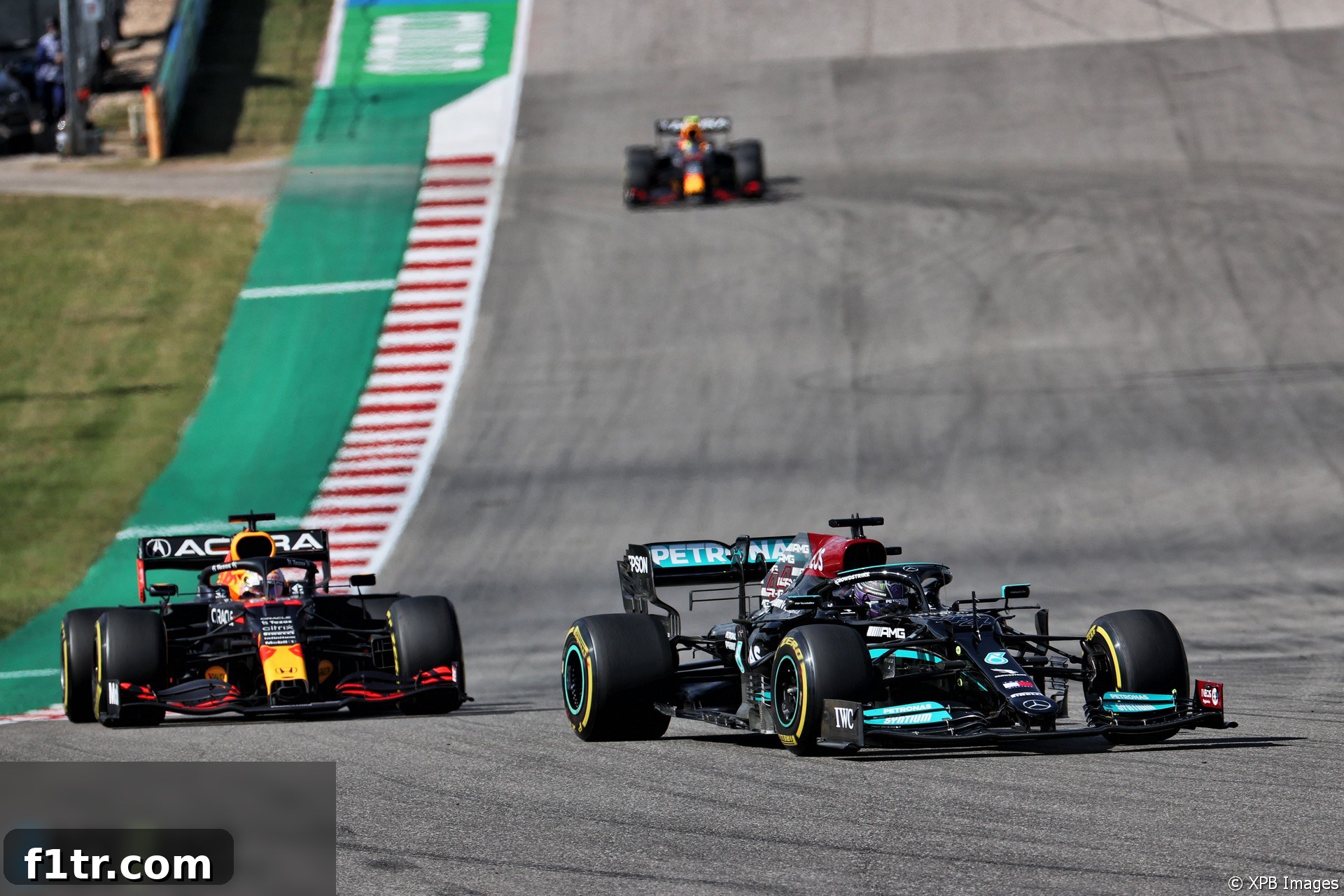
The 2021 Formula 1 season was a truly captivating spectacle, defined by an intense championship battle between two titans: Lewis Hamilton and Max Verstappen. The United States Grand Prix at the Circuit of the Americas (COTA) in Austin, Texas, stood out as a pivotal moment in this thrilling rivalry. While Mercedes driver Lewis Hamilton delivered a commendable performance, ultimately finishing second to Verstappen, the strategic decisions made during the race have been a subject of extensive post-race analysis. Andrew Shovlin, Mercedes’ esteemed trackside engineering director, candidly admitted that an earlier first pit stop for Hamilton could have dramatically altered the outcome, potentially securing a victory for the Silver Arrows.
According to Shovlin, the optimal window for Hamilton’s initial tyre change might have been as early as lap eight. This aggressive approach, he speculated, could have been the key to converting Hamilton’s strong start and initial lead into a race win. Hamilton had brilliantly overtaken Verstappen at the very start of the race, seizing track position and putting Mercedes in a prime position. However, capitalizing on this advantage required a bold strategic call that, in the heat of the moment and without the benefit of hindsight, proved too risky for the team to make.
The dilemma for Mercedes was multi-faceted. Surrendering the lead that Hamilton had meticulously gained at the start, especially against a fierce competitor like Verstappen, would have been a profoundly daring move. Formula 1 strategy often revolves around the delicate balance between maintaining track position and optimizing tyre performance. An early pit stop, while potentially offering fresher tyres and the chance to “undercut” a rival (pitting earlier to gain pace on new tyres before the competitor pits), also means giving up the lead and potentially rejoining traffic. Mercedes was acutely aware of the implications of such a decision, weighing the immediate loss of position against a speculative long-term gain.
Adding to their strategic caution was the team’s struggles with the medium compound tyres during the opening laps of the race. The performance degradation on this compound was a significant concern, creating uncertainty about the overall race pace. Furthermore, the team wasn’t entirely confident about how well their hard compound tyres would perform over extended stints. This lack of certainty regarding tyre longevity and performance made an aggressive, early pit stop strategy feel like a gamble that could compromise the entire race, rather than a calculated risk. Verstappen, in contrast, made his first pit stop on lap 10, while Hamilton continued for three more laps, finally pitting on lap 13. This difference in timing ultimately played a crucial role in the race’s unfolding narrative.
Shovlin’s reflections confirm that the full potential of an aggressive strategy only became clear in retrospect. “Given that we were struggling on the mediums on such a short stint, we’d have never been brave enough to do that [pit early], just to hold the lead. It would have felt like we were going to compromise the whole race,” Shovlin explained. He acknowledged that with the benefit of hindsight, an early stop could have been managed through to the finish, keeping Verstappen at bay. This highlights the inherent challenges of real-time race strategy, where teams must make split-second decisions based on limited, evolving data, often with high stakes.
The Mercedes team’s journey through the United States Grand Prix weekend itself was a fascinating study in performance fluctuations and strategic recalibrations. The weekend commenced on a highly optimistic note for Mercedes. During the first free practice session (FP1), the Silver Arrows demonstrated blistering pace, clocking laps almost a second faster than any other car on the grid. This initial dominance led to a sense of genuine excitement and confidence within the team, suggesting they might have a clear advantage over their rivals, Red Bull Racing.
However, Shovlin later clarified that this seemingly insurmountable lead was somewhat misleading. He attributed the impressive FP1 performance to a combination of factors: Mercedes running their Power Unit (PU) in a more aggressive, “turned up” mode, typically reserved for qualifying simulations, and the specific track conditions prevalent at the time. Furthermore, Max Verstappen had encountered significant traffic issues during his key laps in FP1, preventing him from demonstrating Red Bull’s true pace. These combined elements created an “overly optimistic” picture for Mercedes, as Shovlin candidly admitted. The initial strong showing, while encouraging, did not fully represent the underlying competitive landscape.
As the weekend progressed, the true picture began to emerge. By the second free practice session (FP2), Red Bull Racing showed their hand, demonstrating a slight but noticeable speed advantage over Mercedes. This session provided a much clearer and more realistic assessment of the pecking order. “What we saw in FP2 was a more clear picture of where our place actually was,” Shovlin noted. This shift in performance wasn’t necessarily due to Mercedes making poor setup decisions; rather, it was intricately linked to the evolving track conditions. As the Austin weather became hotter and windier, these changes appeared to favor the Red Bull car’s characteristics more, while simultaneously exposing certain vulnerabilities in the Mercedes W12 package.
The Circuit of the Americas, known for its challenging layout and undulating terrain, presents unique demands on car setup and tyre management. Changes in ambient temperature directly impact tyre grip and degradation, while increased wind can significantly affect a car’s aerodynamic balance, especially in high-speed corners. These environmental factors, combined with the inherent strengths of the Red Bull chassis in specific conditions, meant that the initial advantage Mercedes enjoyed in FP1 quickly dissipated. The FP2 performance, therefore, became the benchmark for the remainder of the weekend, accurately reflecting the competitive dynamic that played out through Saturday’s qualifying and Sunday’s race.
The United States Grand Prix served as a stark reminder of the fine margins that define Formula 1 success. Every strategic decision, every car setup adjustment, and every environmental variable can have profound implications for the final result. For Mercedes, the Austin race was a valuable learning experience, reinforcing the importance of dynamic strategy and understanding how track conditions can influence performance in real-time. While a victory eluded them on this occasion, the insights gained undoubtedly contributed to their ongoing championship battle against Red Bull Racing, pushing both teams to constantly innovate and refine their approaches.
In the context of the highly competitive 2021 season, where every point mattered immensely for the championship, retrospective analysis like Shovlin’s is crucial. It allows teams to dissect decisions, understand their consequences, and refine their future strategies. The US Grand Prix exemplified the strategic chess match at the heart of Formula 1, where brave calls and precise execution are often the difference between second place and standing atop the podium.
2021 United States Grand Prix
- Mercedes encouraged despite ‘toughest race for a long time’ in Austin
- For the sake of the title fight, F1 must get a grip on its track limits problem
- Pit stop problems costing Ferrari “quite a lot of points” – Sainz
- Sold-out crowd of 380,000 at COTA shows F1 can add third US race – Brawn
- While the pressure’s off I can “push myself” more – Russell
Browse all 2021 United States Grand Prix articles