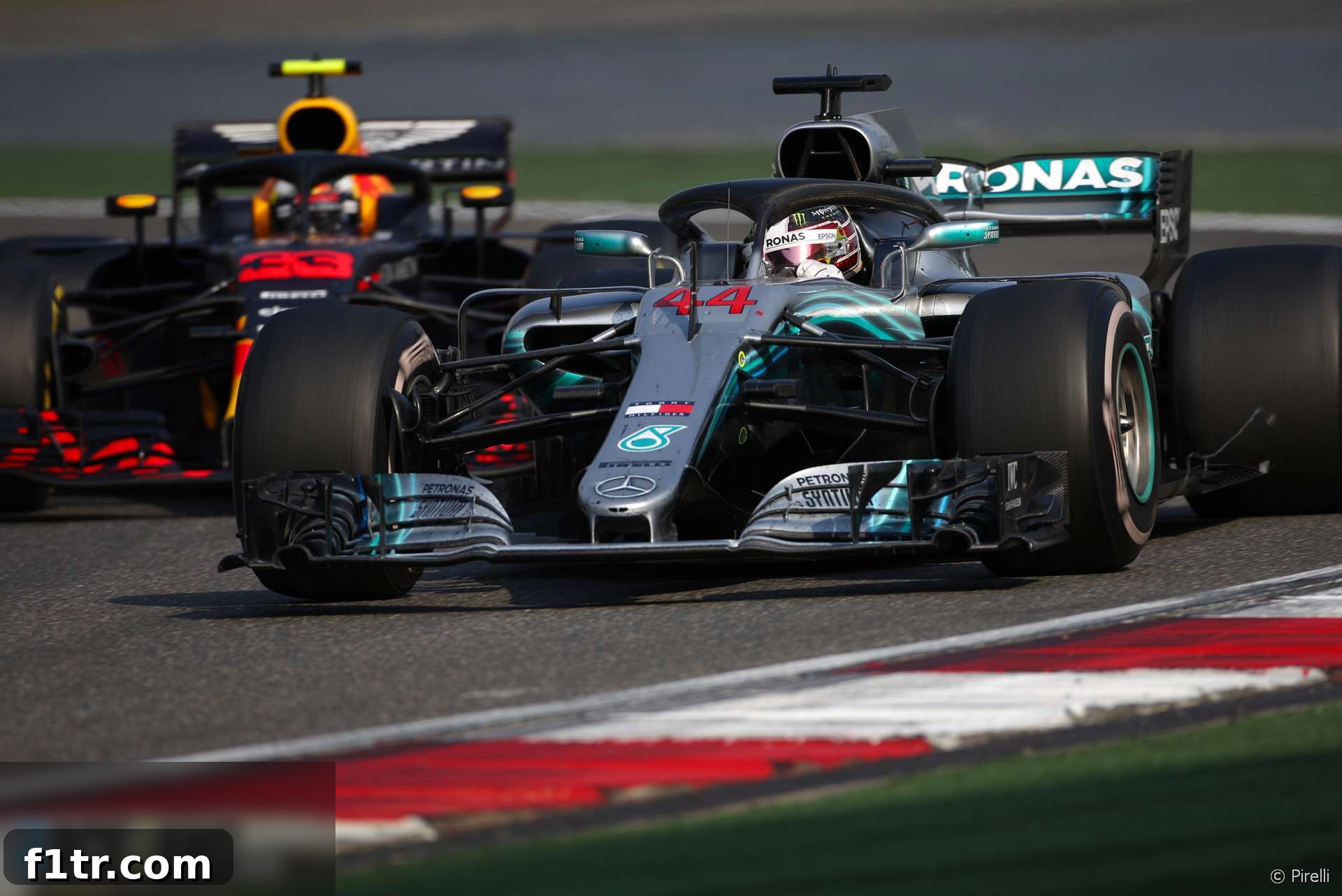
Max Verstappen Unapologetic: Defending Aggressive Overtake on Lewis Hamilton at 2018 Chinese Grand Prix
The high-octane world of Formula 1 is perpetually defined by audacious maneuvers, split-second decisions, and the unyielding will to win. At the 2018 Chinese Grand Prix, a memorable on-track skirmish between two of the sport’s modern titans, Max Verstappen of Red Bull Racing and Lewis Hamilton representing Mercedes-AMG Petronas F1 Team, captivated fans and ignited discussions. Following an ambitious yet ultimately unsuccessful overtake attempt, Verstappen staunchly defended his actions, asserting that his approach was entirely justified and reflective of the cut-throat nature of elite motorsport. He provocatively suggested that had their roles been reversed, he would have employed the exact same defensive tactics that Hamilton demonstrated against him. This incident not only underscored the contrasting driving philosophies of these two formidable competitors but also offered an early glimpse into the intense rivalry that would escalate in subsequent seasons, shaping the narrative of Formula 1 for years to come.
The critical moment unfolded at the Shanghai International Circuit, specifically within the demanding confines of Turn 7. Verstappen, a driver renowned for his aggressive and sometimes controversial driving style, launched a bold attack, attempting to sweep around the outside of Hamilton’s Mercedes. However, the move culminated with the Dutchman running wide off the racing line, losing precious track position and momentum. Despite this outcome, which saw him fall behind his then-teammate and eventual race winner Daniel Ricciardo, Verstappen remained unfazed, expressing absolute confidence in his racing choices and showing no apprehension about future encounters with the reigning world champion. “Lewis is a great driver, he knows how to overtake and defend,” Verstappen remarked with characteristic composure, highlighting a respect for his competitor’s abilities. “It’s racing, we’ll just race again.” This pragmatic statement epitomizes the competitive ethos at the pinnacle of motorsport, where every intense battle is viewed as a fundamental part of the sport, not a personal conflict.
Verstappen’s Perspective: A “Fair Chance” and No Regrets
Max Verstappen’s detailed justification for his audacious overtake attempt on Lewis Hamilton provides a fascinating window into the mind of a driver operating at the absolute limit. Despite the maneuver resulting in a loss of track position, Verstappen vehemently defended his decision, categorizing it as a “fair chance” to gain a significant advantage. His explanation meticulously detailed his thought process during the high-speed, split-second moment that defines Formula 1 racing.
The Red Bull driver elaborated on the nuances of the battle, drawing a parallel between his aggressive attacking style and Hamilton’s defensive measures. “What Lewis did, I would’ve done the same as Lewis,” Verstappen declared, offering a telling insight into his own racing philosophy. “In the middle of the corner, he just ran me a bit more wide. I went a bit more on the marbles while being flat-out, and then as soon as you have to make a correction, it’s easy to lose your car. It was a fair racing moment.” This statement underscores Verstappen’s understanding and acceptance of assertive yet legitimate defensive driving. He acknowledged Hamilton’s action of pushing him wider as a valid tactic to defend the racing line, even if it forced Verstappen onto the treacherous “marbles” – rubber debris that accumulates off the ideal line, drastically reducing grip and increasing the risk of an incident.
Verstappen further elaborated on the genesis of his overtake attempt, pinpointing the critical advantage he gained in the preceding section of the track. “I had better traction out of the corner before, so I had a bit of a run on him,” he explained, detailing how a superior exit allowed him to close the gap rapidly. “I knew he was not flat in that corner and I was. I went around the outside, it didn’t work out this time, it was a good try.” This breakdown illustrates the calculated risk-taking that has become synonymous with Verstappen’s driving identity. Identifying a crucial speed differential – his ability to take the corner “flat-out” where Hamilton had to lift – he seized the opportunity. The phrase “it was a good try” perfectly encapsulates his pragmatic approach: not every bold move yields immediate success, but the relentless pursuit of every possible advantage is fundamental to his competitive spirit. For Verstappen, the attempt itself, driven by pure racing instinct, was as important as the outcome.
Lewis Hamilton’s Perspective: Unaware and Unperturbed
In stark contrast to Max Verstappen’s detailed recollection and robust justification, Lewis Hamilton’s account of the incident painted a picture of genuine surprise and a distinct lack of awareness. The Mercedes driver’s initial reaction suggested he was largely oblivious to the audacious maneuver unfolding on his outside, only fully grasping the context of Verstappen’s attempt after reviewing replays.
“I didn’t even see him there,” Hamilton commented, a statement that profoundly illustrates the narrow field of vision and intense focus required to navigate a high-speed corner at the absolute limit. For Hamilton, his primary objective was to execute the corner optimally, a task that demands his undivided attention, making it incredibly challenging to track every potential challenger, particularly when they are attempting to pass on an unconventional or extremely wide line. “I was doing the corner normally, and when I watched the replay… I don’t understand what he was up to there, but it wasn’t a problem for me.” This response from Hamilton is particularly revealing; it implies that from his vantage point in the cockpit, Verstappen’s move was either so far off the conventional racing line or so unexpected that it simply didn’t register as an immediate threat to his position or his control of the car. The concluding remark that it “wasn’t a problem” for him further underscores the perceived ineffectiveness of Verstappen’s attempt from the defending driver’s perspective, suggesting he was never truly under pressure.
Hamilton further provided crucial insights into the specific characteristics of Turn 7 at the Shanghai International Circuit, shedding light on why Verstappen’s chosen line was inherently fraught with peril. “There’s actually a really dirty line on the outside of Turn 7,” Hamilton added, explaining the compromised grip. “It’s a very fast corner, very long. I don’t think any top driver’s been overtaken on the outside before.” This observation from a driver with unparalleled experience on circuits worldwide is highly significant. The “dirty line” refers to areas of the track beyond the primary racing groove where rubber debris and dust accumulate, drastically reducing grip. Attempting an overtake on such a line, particularly in a high-speed, long-radius corner like Turn 7, exponentially increases the risk of losing control. Hamilton’s assertion that an outside pass at this particular corner is unprecedented among top drivers further emphasizes the extreme difficulty and the ambitious nature of Verstappen’s attempt, suggesting it was a move against established racing wisdom and conventional track limits.
The Shanghai International Circuit’s Turn 7: A Tactical Battlefield
The Shanghai International Circuit is celebrated for its unique and challenging layout, featuring an intricate blend of demanding corners and expansive straights. Turn 7, in particular, stands out as a long, sweeping right-hander that directly precedes a significant straight, making a strong exit paramount for achieving optimal lap times and creating subsequent overtaking opportunities. Its high-speed nature and extended radius mean that drivers carry immense momentum through the corner, rendering any deviation from the optimal racing line exceptionally precarious. These inherent characteristics, while making it a technically rewarding corner for drivers, simultaneously make it extraordinarily difficult for daring overtakes, especially on the outside.
As Lewis Hamilton keenly observed, the outer edge of Turn 7 is notoriously “dirty.” Throughout a race weekend, as Formula 1 cars lay down rubber on the ideal racing line, fine particles of rubber and other debris are inevitably pushed towards the edges of the track. These accumulations, colloquially known as “marbles,” drastically diminish the available grip, transforming a normally grippy tarmac into a treacherous, slippery surface akin to driving on ball bearings. For a driver like Max Verstappen, who was attempting to maintain maximum speed (“flat-out”) while navigating this dirty line, the margin for error became virtually non-existent. The slightest twitch, a minor steering correction, or even an unexpected gust of wind could easily lead to a catastrophic loss of traction, sending the car wide and off track, precisely as it happened in this incident.
Verstappen’s ambition to take the corner flat, where Hamilton couldn’t, perfectly encapsulates the razor-thin margins that define success in F1. While gaining a fractional speed advantage in one sector, converting that into a successful overtake on a highly compromised line demands not just exceptional skill but also a considerable degree of fortune. The defending driver, Hamilton, by simply adhering to his optimal racing line and hitting his usual apex, inadvertently (or perhaps instinctively) forced Verstappen into the most treacherous part of the track. This defensive strategy effectively neutralized the Red Bull driver’s aggressive attack without requiring Hamilton to make any overtly aggressive blocking moves. This incident serves as a textbook illustration of how the inherent design and characteristics of a circuit can profoundly influence racing strategy and ultimately dictate the outcome, demonstrating how even an unintentional defensive action can prove highly effective against an overly ambitious offensive.
The Philosophy of Aggressive Overtaking in Formula 1
The intense encounter between Max Verstappen and Lewis Hamilton at the 2018 Chinese Grand Prix touches upon a fundamental and enduring debate within Formula 1: the acceptable boundaries of aggressive racing. F1 is built on the spectacle of close competition and breathtaking overtakes, yet there exists a delicate equilibrium between daring skill and potentially reckless abandon. Drivers are perpetually pushing the limits, relentlessly seeking every millisecond of advantage and every inch of available track – a philosophy vividly embodied by Max Verstappen’s “no compromises” approach. His willingness to attempt an outside move at a corner where such maneuvers are historically rare underscores his unwavering belief in capitalizing on every conceivable opportunity, even if it entails significant risk.
The “let them race” philosophy, frequently championed by race stewards, teams, and the global fanbase, encourages drivers to engage in spirited on-track battles without excessive intervention from officialdom. This incident, despite resulting in Verstappen running wide, was widely perceived as a racing incident rather than a punishable offense, thereby aligning with this overarching philosophy. Both drivers offered their perspectives, acknowledging the intrinsic risks and potential rewards associated with such high-stakes maneuvers. Verstappen, undeterred by the failed attempt, undoubtedly gained invaluable experience, further refining the aggressive craft that would eventually establish him as one of the most prolific and formidable overtakers in the sport’s illustrious history. Hamilton, by maintaining his composure and executing his normal racing line, showcased the composed and highly effective defensive driving characteristic of a seasoned, multi-world champion.
Such moments are not mere isolated events; they contribute significantly to the rich narrative and enduring excitement of Formula 1. They serve as a powerful showcase for the raw talent, mental fortitude, and insatiable competitive fire that distinguish the good drivers from the truly great ones. While some might criticize Verstappen’s move as overly ambitious or even naive given the prevailing track conditions, many others would undoubtedly laud it as a prime example of pure racing instinct and the unwavering desire to secure victory at all costs. It is precisely these contrasting interpretations and the ensuing passionate discussions that continuously fuel the F1 fanbase, elevating these seemingly isolated incidents into memorable and enduring chapters of the sport’s captivating history.
An Early Glimpse into an Evolving Rivalry
While the 2018 Chinese Grand Prix incident between Max Verstappen and Lewis Hamilton might, in hindsight, appear to be a relatively minor skirmish within the grand tapestry of their respective and illustrious careers, it served as a potent and early indicator of the profound and intense rivalry that would spectacularly ignite in subsequent Formula 1 seasons. In 2018, Lewis Hamilton was still largely enjoying a period of dominance, and while Max Verstappen was clearly a prodigious talent, he was yet to fully mature into the consistent championship contender he would definitively become. This particular encounter, however, remarkably encapsulated many of the defining traits that would later characterize their epic battles: Verstappen’s relentless, aggressive, and opportunistic driving style juxtaposed against Hamilton’s calculated, defensive prowess and unparalleled track intelligence.
The significantly differing accounts of the incident—Verstappen’s detailed and unwavering justification contrasting sharply with Hamilton’s bewildered denial of awareness—foreshadowed the communication challenges and often diametrically opposing perceptions that would frequently characterize their later interactions. It powerfully highlighted how two drivers, operating simultaneously at the absolute limits of human and mechanical performance, could interpret the very same on-track event so fundamentally differently. This early clash, though entirely devoid of the championship stakes that would later exponentially amplify their rivalry, quietly laid some of the foundational groundwork for what would soon evolve into one of Formula 1’s most captivating, contentious, and historically significant head-to-head duels. It unequivocally demonstrated that even when one driver’s bold move was initially deemed “not a problem” by the other, the underlying competitive fire, distinct driving philosophies, and inherent clashes of approach were already simmering beneath the surface, poised to ignite when the stakes were inevitably raised to unprecedented levels.
Conclusion: The Enduring Spirit of F1 Competition
The 2018 Chinese Grand Prix incident involving Max Verstappen and Lewis Hamilton stands as a powerful testament to the thrilling, often uncompromising, and consistently captivating nature of Formula 1 racing. It perfectly captured the essence of two exceptionally skilled competitors relentlessly pushing the boundaries of what is possible, each guided by a distinct and unwavering philosophy on how to achieve victory. Verstappen, driven by his aggressive pursuit of every available advantage, steadfastly justified his daring outside pass at Turn 7, perceiving it as a legitimate and fair opportunity, even if it ultimately did not yield the desired immediate success. Hamilton, conversely, maintained his characteristic composure and adhered meticulously to his racing line, professing a genuine unawareness of the audacious move and crucially highlighting the inherent difficulties and dangers of attempting such an overtake on the circuit’s notoriously dirty outer edge.
Such moments, far from being mere footnotes in the annals of motorsport history, become profoundly integral to the overarching narrative of a racing season and, indeed, to the enduring legacies of the drivers involved. They passionately fuel discussions and debates among the vast global fanbase, provide rich and compelling material for in-depth analysis by pundits and experts, and ultimately contribute to defining the unique character and appeal of the sport itself. The unwavering willingness of drivers like Verstappen to attempt the seemingly impossible, coupled with the unparalleled defensive mastery of champions like Hamilton, consistently ensures that Formula 1 remains an unrivaled spectacle of human skill, cutting-edge engineering brilliance, and relentless, gladiatorial competition. As both drivers continue to meticulously carve their indelible paths into F1 history, this particular encounter at Shanghai will undoubtedly be remembered as an early, yet telling, chapter in their storied and evolving rivalry, serving as a stark and exciting reminder of the fine, exhilarating line between outright triumph and a valiant, unforgettable attempt.
2018 F1 Season: Related Articles
- F1 feared “death knell” for Drive to Survive after Ferrari and Mercedes snub
- McLaren staff told us we were “totally crazy” to take Honda engines in 2018 – Tost
- ‘It doesn’t matter if we start last’: How Red Bull’s junior team aided Honda’s leap forward
- Honda’s jet division helped F1 engineers solve power unit problem
- McLaren Racing losses rise after Honda split
Browse all 2018 F1 season articles