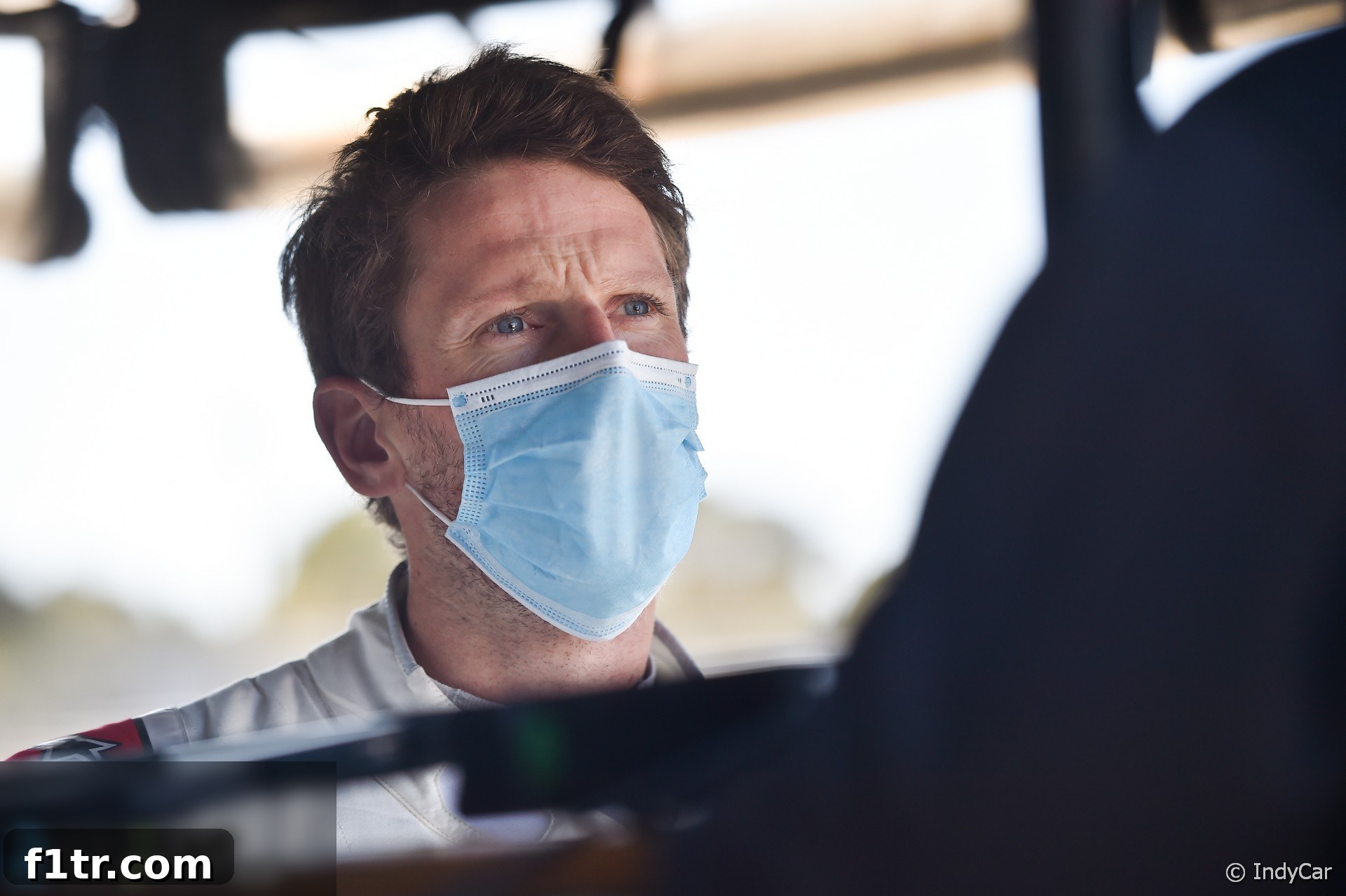
In a poignant chapter of his remarkable motorsport career, Romain Grosjean has completed a crucial seat fitting, signaling the imminent execution of his long-awaited farewell Formula 1 test. This highly anticipated event, a compassionate gesture from the reigning constructors’ champions, Mercedes-AMG Petronas F1 Team, promises to provide Grosjean with the closure he was denied following his terrifying accident at the 2020 Bahrain Grand Prix.
A Symbolic Return: Grosjean’s Journey Back to an F1 Cockpit
The news of Grosjean’s seat fitting was discreetly unveiled by James Gay-Rees, the executive producer behind Netflix’s acclaimed docu-series “Drive to Survive,” during an interview for the In The Fast Lane podcast. This revelation instantly ignited excitement among Formula 1 enthusiasts and underscored the profound emotional weight attached to Grosjean’s return to the F1 environment. For a driver whose career in the pinnacle of motorsport ended abruptly and dramatically, this test represents far more than just a drive; it’s an opportunity for a proper, dignified goodbye.
The Aftermath of Bahrain: A Fiery Escape and Unfinished Business
Romain Grosjean’s journey to this farewell test is inextricably linked to the harrowing events of November 29, 2020. At the Bahrain International Circuit, on the opening lap of what was meant to be a routine Grand Prix, Grosjean’s Haas car veered off track, pierced through a steel barrier, and erupted into a ferocious fireball. Miraculously, after spending nearly 28 seconds engulfed in flames, he emerged from the inferno with serious burns to his hands but, incredibly, no life-threatening injuries. This incident served as a stark reminder of the inherent dangers of motorsport, while also showcasing the monumental advancements in Formula 1 safety, particularly the life-saving Halo device.
The severity of his injuries unfortunately prevented Grosjean from competing in the final two races of his Formula 1 career. This meant his F1 chapter concluded not with a planned farewell or a final checkered flag, but with a terrifying accident. The emotional toll of this abrupt end, coupled with the physical pain of his burns, left a lingering sense of unfinished business for the seasoned French-Swiss driver. The prospect of returning to an F1 car, especially one as revered as a Mercedes, offers a unique chance to rewrite that final narrative, allowing him to leave the sport on his own terms.
Mercedes’ Compassionate Offer: A Testament to F1’s Spirit
The initiative for this remarkable test came from none other than Mercedes-AMG Petronas Team Principal Toto Wolff. In a moving display of sportsmanship and empathy, Wolff publicly confirmed last December that his team was prepared to offer Grosjean a car. “If we are allowed to do this and nobody else within his universe of teams that he raced would provide him with such an opportunity, we would do it,” Wolff stated, highlighting Mercedes’ commitment to ensuring Grosjean received a fitting send-off. This unprecedented gesture from a rival team resonated deeply within the motorsport community, underscoring the camaraderie and human element that often transcends fierce competition in Formula 1.
For Mercedes, a team typically focused on securing championships, this offer was a powerful statement. It demonstrated that beyond the relentless pursuit of performance and victory, there is a profound respect for the drivers and their well-being. Wolff’s willingness to extend this opportunity showcased a side of Formula 1 that prioritizes driver safety, respect, and the human story above all else. It offered Grosjean not just a drive, but a recognition of his resilience and contributions to the sport over many years.
Finalizing the Plans: From Conversation to Cockpit
Following Wolff’s initial offer, Grosjean confirmed in February that he had engaged in discussions with Mercedes, stating he was “finalising the plan” for the test. This period involved intricate logistical planning, factoring in Grosjean’s new commitments and Formula 1’s stringent testing regulations. While a spokesperson for the world champions understandably declined to confirm specifics regarding Grosjean’s recent factory visit for the seat fitting – a standard practice to maintain operational privacy – the very act of the fitting confirms that these detailed plans are now moving into their execution phase.
A seat fitting is a crucial step in preparing a driver for any car, especially a high-performance Formula 1 machine. It ensures optimal comfort, safety, and control, allowing the driver to feel fully integrated with the vehicle. For Grosjean, this fitting represents a tangible step towards re-experiencing the unique sensations of an F1 cockpit, perhaps for the last time. It’s a moment steeped in anticipation, not just for him, but for countless fans eager to witness this symbolic return.
Navigating Regulations: The Complexities of an F1 Test
Executing an F1 test outside of official race weekends and pre-season trials is fraught with regulatory complexities, as outlined by the FIA. Teams are strictly forbidden from running their current-season cars for private tests. However, they are permitted to conduct tests using machinery from previous seasons. This regulation dictates that Grosjean will likely drive an older Mercedes F1 car, a testament to the team’s engineering excellence from past championships. While not the very latest machinery, an older Mercedes F1 car still represents the pinnacle of automotive engineering and will provide an unparalleled experience for Grosjean.
The choice of an older car, often referred to as a “legacy car” or “development car,” does not diminish the significance of the test. These vehicles are still incredibly fast, technologically advanced, and demanding to drive. The experience will be authentic, allowing Grosjean to push the limits and feel the raw power and precision that define Formula 1. The challenge for Mercedes will be to select a car that offers a relevant and rewarding experience within these regulatory constraints, balancing performance with the practicalities of preparation and running.
Scheduling Around New Horizons: IndyCar Commitments
Adding another layer of logistical challenge is Grosjean’s burgeoning career in the NTT IndyCar Series. Having made the significant leap to American open-wheel racing, he is fully committed to his new endeavors. Grosjean was due to make his debut for Dale Coyne Racing in the Grand Prix of Alabama at Barber Motorsport Park on April 18th, marking the start of a thrilling new chapter. This means the F1 farewell test must be meticulously scheduled around his demanding IndyCar calendar, ensuring no conflicts arise with his primary racing commitments. The dedication required to manage both schedules speaks volumes about Grosjean’s passion for racing and his determination to honor both his past and present commitments.
His move to IndyCar represents a fresh start, a new challenge, and a testament to his enduring love for motorsport. The physicality, speed, and competitive nature of IndyCar present a distinct set of demands, and Grosjean has embraced this transition with characteristic enthusiasm. Balancing his IndyCar debut with a high-profile F1 test further highlights his unique position in the global racing landscape, bridging different eras and disciplines of top-tier motorsport.
More Than a Test: Closure, Gratitude, and a Legacy of Resilience
This upcoming test transcends a mere technical exercise; it is an act of profound closure for Romain Grosjean. It offers him the opportunity to don an F1 race suit one last time, to strap into a car that represents the absolute pinnacle of motorsport, and to experience the thrill without the specter of his fiery crash hanging over him. It is a chance to say a proper goodbye to a sport that has been his life for so long, and to do so on his own terms, surrounded by the professionalism and respect of one of its most dominant teams.
The test also serves as a powerful expression of gratitude – from Grosjean to Mercedes for their incredible gesture, and from the wider F1 community to Grosjean for his courage and resilience. His story, from the terrifying accident to his remarkable recovery and subsequent move to IndyCar, has inspired millions. This farewell drive will undoubtedly be captured and shared, becoming a poignant symbol of human spirit and the unbreakable bond within the motorsport family. It reinforces the message that while competition is fierce, humanity and compassion remain at the heart of the sport.
Ultimately, Romain Grosjean’s farewell F1 test with Mercedes will not just be another lap time on a circuit. It will be a powerful narrative of courage, compassion, and closure, a fitting end to a Formula 1 career marked by both challenge and triumph, and a celebrated transition into an exciting new chapter of his racing life.