Haas F1’s Tyre Conundrum: Unpacking the VF-19’s Aerodynamic Struggles at Silverstone
The world of Formula 1 is a relentless pursuit of marginal gains, where every millisecond and every aerodynamic nuance can mean the difference between triumph and despair. For the Haas F1 team, the 2019 season with their VF-19 challenger became a perplexing journey into the depths of performance inconsistency, particularly grappling with a fundamental challenge: tyre temperature management. This deep-seated issue often left the team baffled, as their promising qualifying pace routinely evaporated into frustrating race-day struggles. A pivotal moment in their quest for understanding came at the British Grand Prix at Silverstone, where the team embarked on an unorthodox and telling experiment, running two different aerodynamic specifications on their cars to unravel the mystery.
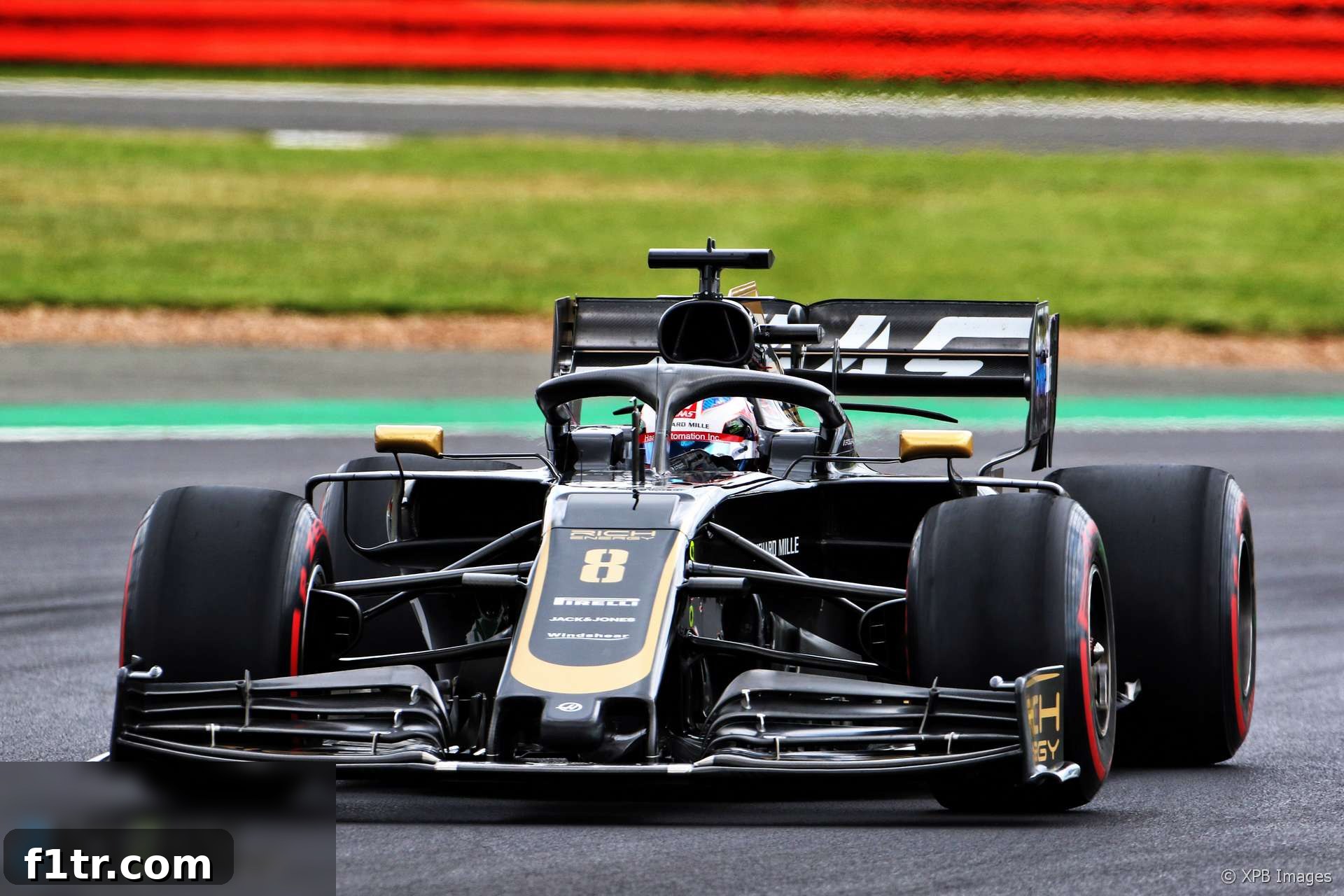
At the iconic Silverstone Circuit, a track renowned for its high-speed corners and demanding aerodynamic requirements, Haas took a bold step. Romain Grosjean’s VF-19 was notably equipped with an older aerodynamic specification – effectively a downgrade from the current package. The objective was clear: to establish a baseline, to understand precisely where the team had strayed from the performance window that had shown early promise in the season. Meanwhile, his teammate Kevin Magnussen continued with a slightly updated version of the VF-19, featuring a minor but potentially significant change to its floor design. This side-by-side comparison was intended to provide critical data, offering a clearer picture of which developmental path, if any, held the key to unlocking the car’s elusive pace.
The initial findings from this unique approach yielded some intriguing insights. Grosjean, in his older-spec car, managed to out-qualify Magnussen, a result that hinted at the complexity of Haas’s predicament. This outcome suggested that some of the “upgrades” introduced through the season might not have been delivering the expected performance, or worse, were actively detrimental to the car’s overall balance and tyre interaction. However, qualifying results often paint only a partial picture. The true test of an F1 car’s performance lies in its ability to maintain pace and manage its tyres over a full race distance, an area where Haas consistently faltered.
The Tyres: An F1 Team’s Greatest Ally and Foe
At the core of Haas’s struggles was an inability to consistently heat up the bulk temperature of their Pirelli tyres in race conditions. This seemingly technical detail is, in fact, the linchpin of modern Formula 1 performance. Tyres operate within a very narrow optimal temperature window; when they are too cold, they lack the necessary grip, causing the car to slide excessively. This sliding motion then dramatically increases the surface temperature of the tyre, leading to blistering, graining, and a further rapid degradation of performance. It’s a vicious cycle: cold tyres lead to sliding, sliding leads to overheated surfaces, and overheated surfaces lead to even less grip and slower lap times. The VF-19 seemed particularly susceptible to this phenomenon, turning what should have been a high-performance racing machine into a delicate balancing act on the edge of adhesion.
Throughout the season, the team experimented endlessly with various set-up configurations. They tried softer suspension, harder suspension, and countless adjustments to camber, toe, and ride height, all in a desperate bid to bring the tyres into their operating window. Yet, success remained elusive. The problems encountered at one circuit would often manifest differently at the next, leaving the engineers chasing their tails. This constant struggle and lack of consistent data led to the radical decision to revert to an early-season aerodynamic specification and set-up. The hope was to return to the baseline performance seen in Melbourne, where the car had shown glimpses of its potential, and from there, re-evaluate their development trajectory.
Aerodynamic Intricacies: The Silverstone Floor Upgrade
Beyond the overarching tyre issue, the British Grand Prix also saw Haas introduce a specific aerodynamic update to Magnussen’s car: a revised floor area ahead of the rear tyres. This is an incredibly sensitive and critical region of any Formula 1 car. The floor, in conjunction with the diffuser, is responsible for generating a significant portion of the car’s downforce, effectively sucking the car to the track. The interaction between the floor and the rotating rear tyres, in particular, is an area of intense aerodynamic development.
The update on Magnussen’s car featured a new metal bolt-in section, indicating the modular nature of this part of the F1 car’s floor. Teams can remove and replace specific sections without needing to manufacture an entirely new floor assembly, allowing for rapid iteration and experimentation. In this new specification, the old double fin arrangement was replaced by a longer, single fin (1), a subtle change with potentially significant implications for airflow. Additionally, the metal section incorporated a revised slot and a larger flap (2) formed on the corner of the floor.
These modifications are designed to manage the complex airflow around the rear tyres. The gap between the floor and the tyre is paramount for efficient diffuser operation. The fins and slots are meticulously shaped to direct airflow along the tyre’s inner sidewall, preventing the high-pressure air from “squirting” inboard off the spinning tyre. Such uncontrolled airflow can disrupt the critical flow into the diffuser, severely reducing downforce. Concurrently, the outer flap aims to increase “outwash,” a phenomenon where airflow is pushed away from the car’s central body. By doing so, it helps guide the turbulent wake generated by the front tyres around the rear tyres and away from the ‘coke bottle’ area of the car, which is crucial for maximizing the efficiency of the rear wing and diffuser.
A Weekend of Frustration: The First-Lap Crashes
Despite the meticulous planning and the promising initial data from qualifying, Haas’s efforts at Silverstone were tragically cut short. Both drivers, Romain Grosjean and Kevin Magnussen, were involved in separate incidents on the very first lap of the race, leading to a double retirement. This was, by all accounts, the last thing the team needed. A weekend that held so much potential for gathering crucial diagnostic data, for finally understanding the VF-19’s quirks, ended in a devastating blow. The crashes not only cost the team valuable points but, more importantly, deprived them of the race-long data they so desperately needed to troubleshoot their season-long performance woes.
Adding to their woes, the Silverstone weekend was already overshadowed by a bizarre and public row with one of their key sponsors. This off-track drama further compounded the pressure on the team, highlighting the mounting difficulties faced by Haas in what was quickly becoming a nightmare season. The confluence of poor on-track performance, technical enigmas, and external distractions created a turbulent atmosphere within the team, making the loss of race data at Silverstone even more bitter.
Steiner’s Candid Admissions: The Elusive Tyre Window
The complexities of Formula 1 were never more apparent than in Romain Grosjean’s qualifying experience. While happy with his older-spec car in Q1, he was utterly mystified by a sudden, drastic loss of grip in Q2. As team principal Guenther Steiner later revealed, the culprit was their familiar season-long bugbear: tyre temperature. “The first set was heated up wrongly,” Steiner explained, highlighting the incredibly fine margins involved in preparing the tyres for a performance run. Even a slight miscalculation in the heating process can throw the entire qualifying session off-kilter, illustrating the immense challenge teams face in optimizing these sensitive components.
Steiner further elaborated on the challenging conditions at Silverstone, which exacerbated their issues. “In qualifying, between the wind and the track changing, you needed to be out at the right minute of the day to get a good lap,” he noted. The constantly evolving track conditions – varying grip levels due to wind shifts, changing temperatures, and rubber laid down by other cars – make consistent performance incredibly difficult to achieve. “Our first [lap in Q1] was pretty good and we still have to understand why it went down in Q2,” Steiner admitted, underscoring the team’s ongoing struggle to predict and react to environmental factors.
Reflecting on the Q1 pace, Steiner was confident in the car’s potential. “I think from our Q1 time we would have started in the top 10 so it’s very strange where it was went but there was a few cars all over the place so I think we were not the only ones,” he added. His comments suggested that Haas wasn’t alone in grappling with the tricky conditions, but their particular susceptibility to tyre temperature fluctuations made them more vulnerable. “I think the track changed a lot,” he concluded, a simple statement that belies the profound impact such changes have on a finely-tuned F1 machine.
After the devastating double retirement, the frustration in Steiner’s voice was palpable. The fourth consecutive point-less weekend was painful enough, but the missed opportunity to gather crucial information about their problematic VF-19 was perhaps even more exasperating. “We got some data, not a lot today obviously,” he said afterwards. The brevity of their race, amounting to “four turns,” meant the diagnostic value was minimal, offering little insight into how their experimental setups would perform over a full grand prix distance. This lack of meaningful data left the team still largely in the dark, prolonging their arduous search for solutions.
Conclusion: The Enduring Puzzle of Performance
The Haas F1 team’s Silverstone saga with the VF-19 encapsulates the perpetual challenges of Formula 1. It highlights the intricate dance between aerodynamics, tyre physics, and environmental variables that dictate performance. The team’s bold decision to run both old and new specifications was a testament to their desperation to understand their car, a move that yielded some initial insights but was ultimately thwarted by the cruel hand of fate on race day. The core issue of tyre temperature, a seemingly straightforward problem, proved to be a complex beast, resisting all attempts at a simple solution. Guenther Steiner’s candid remarks painted a vivid picture of the relentless pressure and profound frustration faced by team principals in a sport where perfection is sought but rarely achieved.
Ultimately, the 2019 season for Haas F1 became a cautionary tale about the razor’s edge in F1 development. Even minor aerodynamic “upgrades” can disrupt a car’s delicate balance, especially its interaction with the tyres. The Silverstone experiment, though incomplete, reinforced the idea that sometimes, less is more, and understanding a car’s baseline characteristics is paramount before pushing forward with new designs. The quest for performance in Formula 1 is an unending puzzle, and for Haas, the VF-19 presented one of its most challenging pieces.
Further Reading on F1 Technology & Team Strategies
- Understanding F1 Tyre Management: Bulk vs. Surface Temperature
- The Aerodynamics of the F1 Floor and Diffuser: Generating Downforce
- Formula 1 Development Cycles: When Upgrades Go Wrong
- Team Principal Challenges: Navigating Performance Issues and Sponsor Relations
- Historical Case Studies of F1 Teams Reverting to Older Specs
Explore more F1 technical analysis and team insights