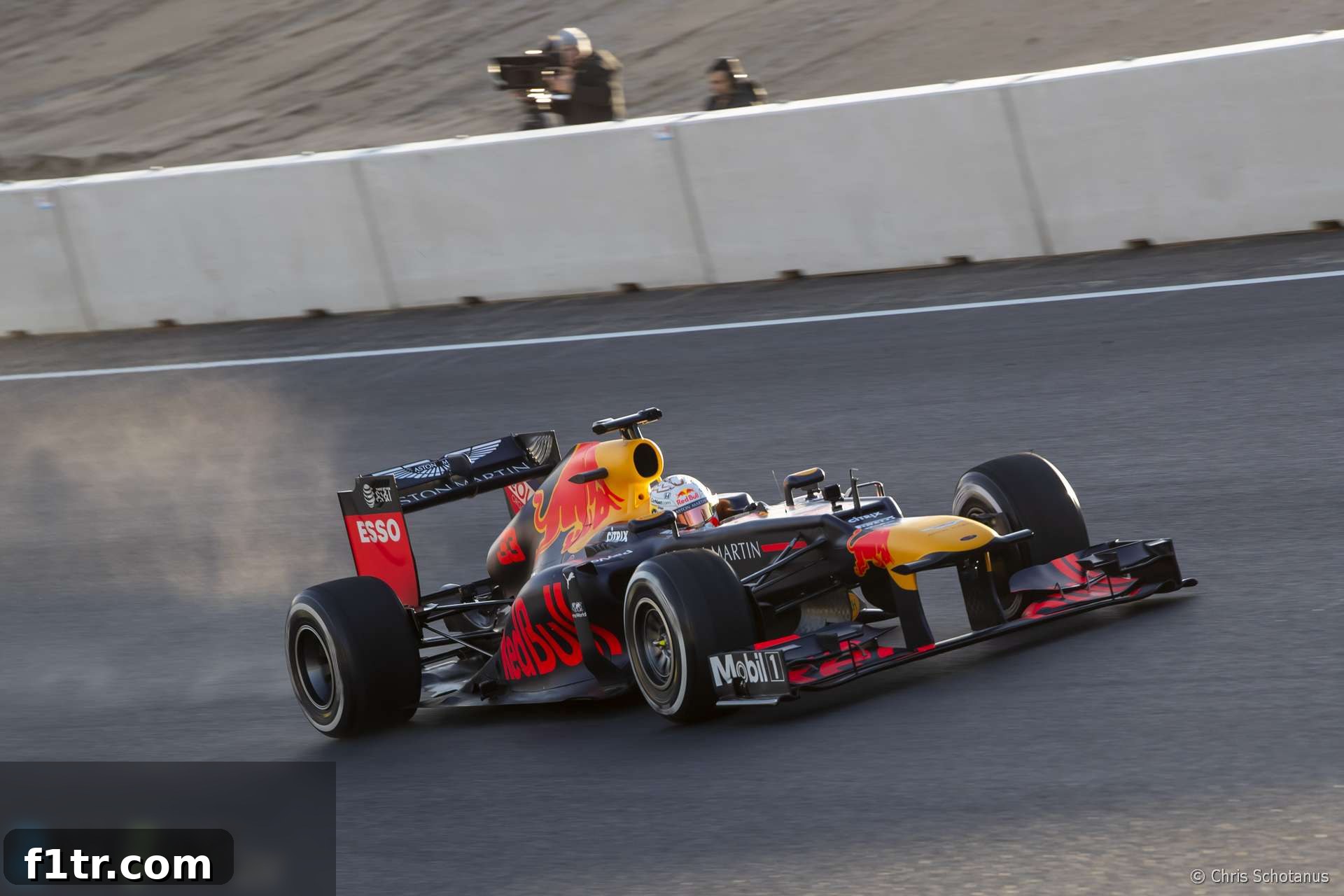
@Max33Verstappen rides with Max33Verstappen for the first lap of the new Zandvoort Circuit! 💪🇳🇱#DutchGP pic.twitter.com/qHSG1cyUBA
— Oracle Red Bull Racing (@redbullracing) March 4, 2020
In a moment that ignited the anticipation for the return of the Dutch Grand Prix, local hero Max Verstappen had the distinct honor of completing the inaugural lap of the extensively revised Zandvoort circuit in a state-of-the-art Formula 1 car. The demonstration run by the Oracle Red Bull Racing star was more than just a ceremonial drive; it was a powerful statement of intent and a tantalizing preview of what promises to be one of the most exciting additions to the F1 calendar.
The legendary Zandvoort circuit, nestled amidst the dunes of the North Sea coast, is preparing to host a round of the FIA Formula 1 World Championship, marking a triumphant return after a decades-long hiatus. The last time the roaring engines of F1 graced its hallowed tarmac for a championship event was in 1985, a time when legends like Niki Lauda and Alain Prost battled for glory. Since then, the circuit has seen numerous changes, adapting to evolving safety standards and motorsport demands.
Zandvoort’s Rich History and Evolution in Formula 1
The history of Zandvoort is deeply intertwined with the heritage of Formula 1. Opened in 1948, the circuit quickly established itself as a challenging and popular venue on the Grand Prix calendar. Its original layout was a classic European road course, featuring fast, flowing corners and demanding sections that tested the mettle of the world’s finest drivers. Iconic corners such as Tarzanbocht, a sweeping banked hairpin, and the high-speed Scheivlak, quickly became synonymous with the circuit’s unique character. These corners, known for their ability to challenge both car and driver, were thankfully retained in the most recent significant redesigns, ensuring that Zandvoort’s soul remains intact.
However, the circuit’s journey has not been without its challenges. Following its departure from the F1 calendar in 1985, Zandvoort underwent a series of revisions, primarily driven by financial constraints and the evolving safety requirements of international motorsport. The track was significantly shortened from its original 4.193 km length, and portions of the original layout were either abandoned or reconfigured. Despite these changes, the spirit of Zandvoort endured, continuously hosting national and international racing series and maintaining its status as a beloved venue for Dutch motorsport enthusiasts. The dream of bringing Formula 1 back to its dunes never faded, fueled by a passionate local fanbase and the rising global stardom of Max Verstappen.
Advert | Become a Supporter & go ad-free
Engineering the Future: Significant Track Revisions for F1’s Return
Ahead of its much-anticipated return to the Formula 1 calendar, the Zandvoort circuit has undergone a comprehensive and ambitious redevelopment project. While the fundamental, flowing layout that makes Zandvoort so distinctive has been largely preserved, critical enhancements were made to meet modern F1 standards, improve safety, and, crucially, enhance the spectacle for both drivers and fans.
The most striking and discussed changes involve the introduction of significant banking on two key corners: Turn 3, known as Hugenholtzbocht, and Turn 13, the Arie Luyendijkbocht. Hugenholtzbocht now features a dramatic banking of 18.7 degrees, transforming it into a thrilling, high-speed corner that presents a unique challenge to drivers. This aggressive banking is designed to create multiple racing lines, potentially opening up overtaking opportunities as cars can carry more speed through the corner. Similarly, the final corner, Arie Luyendijkbocht, leading onto the main straight, boasts an equally impressive 17.7-degree banking. This particular change is strategic, allowing cars to maintain higher speeds into the pit straight, which could boost slipstreaming effectiveness and make for more exciting starts and battles into Tarzanbocht.
These banked corners are not merely aesthetic; they represent a significant engineering feat and pose a formidable technical challenge. For context, the banking at Zandvoort surpasses that of iconic venues like the Indianapolis Motor Speedway, which features a 9.2-degree banking. The sheer gradient at Zandvoort puts immense lateral forces on the cars and, critically, on the tyres, pushing the boundaries of vehicle dynamics and driver endurance. The design philosophy behind these changes was to create a circuit that is not only fast and flowing but also incredibly demanding, rewarding precision and bravery in equal measure.
Advert | Become a RaceFans supporter andgo ad-free
Pirelli’s Tyre Challenge: Adapting to Zandvoort’s Unique Demands
The extreme banking introduced at Zandvoort presented a unique challenge for Formula 1’s official tyre supplier, Pirelli. The unprecedented lateral loads generated by sustained high speeds through these steeply inclined corners necessitated a re-evaluation of tyre construction. Pirelli embarked on a comprehensive development and testing program to create special, more resilient front tyres specifically designed to withstand these immense forces without compromising safety or performance.
The banking places extraordinary stress on the tyre sidewalls and carcass, far exceeding what is typically encountered on flatter circuits. To mitigate the risk of structural failure or excessive degradation, Pirelli’s engineers focused on reinforcing the tyre’s internal architecture, ensuring it could endure the prolonged periods of high-stress cornering. While the decision on whether to deploy these specially designed constructions for the race was still pending at the time of Verstappen’s demo run, Pirelli definitively confirmed that they would bring their hardest available tyre compounds to the Dutch Grand Prix. This choice of hard, durable compounds underscores the expected severity of the forces and temperatures the tyres will experience, promising an intriguing strategic element to the race weekend.
The selection of the hardest tyre allocation means teams will have less flexibility in compound choices, likely leading to more consistent performance but potentially fewer strategic variations based on tyre degradation. Drivers will need to manage these robust tyres carefully, especially during long stints, as pushing too hard could still lead to thermal degradation despite the harder construction. This adds another layer of complexity to an already challenging circuit, ensuring that the Dutch Grand Prix will be a true test of engineering, driving skill, and race strategy.
Max Verstappen’s Historic First Lap: A Preview of the Dutch Grand Prix
The sight of Max Verstappen guiding his Red Bull F1 car through the newly reconfigured Zandvoort circuit was a thrilling spectacle, offering a tantalizing glimpse into the future of the Dutch Grand Prix. As the first driver to truly unleash an F1 machine on the revised tarmac, Verstappen’s demonstration run was not just for the cameras; it provided invaluable initial feedback on the track’s feel, flow, and the impact of the new banked corners.
For the Dutch sensation, driving his home circuit in a Formula 1 car holds immense personal and national significance. The atmosphere during the demonstration was electric, despite it not being a competitive session, with local fans eagerly watching every move. Verstappen’s characteristic aggressive yet precise driving style seemed perfectly suited to Zandvoort’s demanding layout, particularly the rapid changes in elevation and the high-speed corners. His initial impressions, though typically understated, hinted at a challenging and exhilarating experience, confirming the circuit’s potential to deliver exciting racing.
The demonstration run highlighted how the new banking could influence racing lines and car dynamics. Traversing Hugenholtzbocht and Arie Luyendijkbocht at speed showcased the dramatic visual and physical effect of the steep gradients. This initial taste served to amplify the already sky-high anticipation for the Dutch Grand Prix, promising a truly unique challenge on the F1 calendar that blends historic charm with modern engineering marvels.
Pictures: Max Verstappen’s demonstration run at Zandvoort
Advert | Become a RaceFans supporter andgo ad-free
Anticipation Builds for the Dutch Grand Prix
The return of the Dutch Grand Prix to the Formula 1 calendar, coupled with the dramatic redevelopment of the Zandvoort circuit, represents a monumental moment for motorsport. The combination of a historic venue, a passionate local hero in Max Verstappen, and innovative track design promises an unforgettable race weekend. Zandvoort’s unique character, with its fast, flowing sections and the added dimension of the new banked corners, sets it apart from many modern F1 tracks. It harks back to an era of circuits that demanded absolute commitment and rewarded driver skill above all else.
Beyond the technical challenges, the return of the Dutch Grand Prix signifies a huge boost for the sport in the Netherlands. The “Orange Army” of Max Verstappen fans is renowned globally for their unwavering support and vibrant presence, and their opportunity to cheer on their idol at his home race will undoubtedly create an electric atmosphere. This event is expected to attract significant tourism, generate substantial economic activity, and further cement Formula 1’s growing popularity worldwide.
With the track now ready and Max Verstappen having given his seal of approval, albeit informally, the stage is set for a thrilling spectacle. The Dutch Grand Prix at Zandvoort is poised to become a highlight of the Formula 1 season, offering a blend of nostalgic charm and cutting-edge racing that will captivate fans globally. Drivers will face a demanding circuit that requires precision, bravery, and intelligent tyre management, ensuring a truly unpredictable and exciting race day.
Further Reading: 2020 F1 Season Highlights and Updates
- Grosjean to make F1 test return tomorrow for first time since Bahrain horror crash
- Pictures: Wrecked chassis from Grosjean’s Bahrain fireball crash to go on display
- Bottas vs Rosberg: Hamilton’s Mercedes team mates compared after 78 races each
- F1 revenues fell by $877 million in Covid-struck 2020 season
- Hamilton and Mercedes finally announce new deal for 2021 season
Browse all 2020 F1 season articles