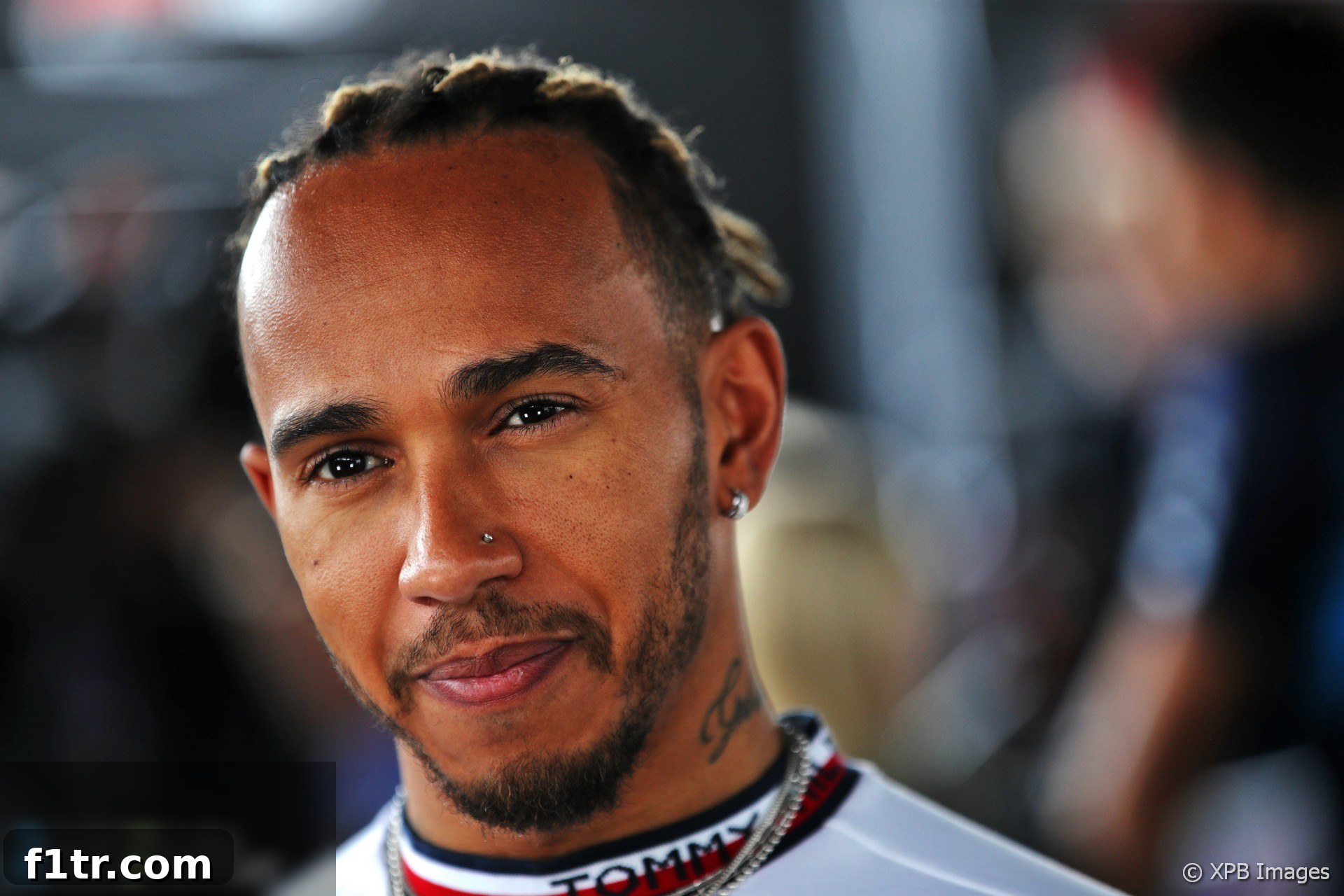
Lewis Hamilton, a prominent figure in Formula 1, has firmly rejected the notion that merely increasing a car’s ride height offers a straightforward solution to the pervasive issue of porpoising. This stance directly challenges claims made by rivals such as Max Verstappen, who has suggested that teams experiencing this aerodynamic phenomenon could resolve it by adjusting their car’s height, albeit at the cost of performance.
Advert | Become a Supporter & go ad-free
Understanding Porpoising: An Unforeseen Aerodynamic Challenge
The 2022 Formula 1 season marked a significant shift in technical regulations, reintroducing ground-effect aerodynamics with the aim of promoting closer racing and more overtaking opportunities. However, an unintended consequence of this design philosophy has been the dramatic return of ‘porpoising’ – an unsettling, high-frequency vertical oscillation of the car at high speeds. This phenomenon occurs when the airflow under the car rapidly attaches and detaches from the undertray, causing a cyclical loss and regain of downforce, making the car bounce violently.
Porpoising is not a new concept in F1; it was prevalent in the ground-effect era of the late 1970s and early 1980s. Its resurgence has presented teams with a complex engineering puzzle, balancing performance with driver comfort and, more critically, safety. Beyond the aesthetic inconvenience, the intense and sustained bouncing can severely impact a driver’s ability to control the car, compromise visibility, and inflict significant physical strain.
Hamilton’s Detailed Rebuttal: Beyond Simple Ride Height Adjustments
The debate intensified following the FIA’s announcement of a technical directive aimed at mitigating severe porpoising. While some, like Red Bull team principal Christian Horner and driver Max Verstappen, expressed reservations about mid-season rule changes, suggesting affected teams could simply raise their car’s ride height, Lewis Hamilton offered a nuanced and technical counter-argument. Hamilton emphasized that for Mercedes, increasing the ride height is not a magic bullet, as the problem’s roots lie deeper within the car’s aerodynamic design.
“In the last race and previous races, we have raised the car, and we still have bouncing,” Hamilton stated, debunking the simplistic view. He elaborated that porpoising is fundamentally “more about the flow structure underneath the car.” His team’s experience further illustrates this complexity: “We ran the car very high most of the season and it’s not until Barcelona that we decided to go a little bit lower. We had no bouncing for the first time in Barcelona except in the high-speed corners, and then it appeared again in Monaco and in Baku, so we have to raise the car again. But even when we raise the car, this thing still bounces.” This practical feedback from diverse circuit characteristics highlights that the interaction between the car’s floor, diffuser, and the track surface creates a highly sensitive aerodynamic environment. Mercedes has reached a point where further elevation is constrained by the car’s suspension limits, demonstrating the lack of a simple mechanical fix. Losing performance by raising the car, yet still enduring porpoising, underscores the profound challenge posed by the disruptive airflow.
The FIA’s Intervention and the Safety Imperative
The FIA’s decision to issue a technical directive, intended to reduce the severe bouncing drivers have experienced, underscores the gravity of the situation. This intervention reflects a growing concern within the governing body for driver welfare and long-term health. While Max Verstappen voiced criticism, arguing against mid-season rule changes that could potentially disrupt the competitive order, Hamilton presented a powerful argument prioritizing safety above all else. He subtly hinted at a disparity between public statements and private concerns among drivers regarding the issue.
“It’s always interesting seeing people’s perspectives and opinions in different light,” Hamilton mused. “Obviously in front of you is one thing and in the background sometimes people say different things.” His comments suggest that the true extent of driver discomfort and safety worries might be more widely acknowledged behind closed doors. Hamilton firmly believes that “safety is the most important thing.” He acknowledged that a complete resolution won’t happen overnight but stressed the importance of the FIA’s proactive approach. Given that the current generation of ground-effect cars will remain largely unchanged for several years, addressing porpoising comprehensively is crucial. “It’s not about coping with the bouncing for the next four years,” he declared, “it’s about completely getting rid of it and fixing it so that in future drivers, all of us don’t have back problems moving forwards.” This long-term vision emphasizes a collective responsibility to safeguard the health and careers of all F1 competitors.
Advert | Become a RaceFans supporter andgo ad-free
The Alarming Physical Toll on Drivers
The physical impact of porpoising on drivers has been a significant point of concern, with Lewis Hamilton himself detailing the severe consequences he faced, particularly during the Azerbaijan Grand Prix. The relentless, high-frequency vertical loads experienced inside the cockpit translate into considerable pain and strain on the human body, especially the spine and neck. Hamilton described a noticeable increase in “bruising in the body after the races nowadays,” requiring “most of the week generally to recover.” This extended recovery period is a stark indicator of the intensity of the forces drivers are subjected to.
Hamilton highlighted the extreme G-forces involved: “when you’re experiencing 10Gs on the bounce on a bump up to 10Gs – which is what I experienced in the last race – that’s a heavy, heavy load on the lower part and the top part of your neck as well.” Such repeated, violent impacts can lead to acute discomfort and raise serious questions about potential long-term health issues. Furthermore, Hamilton revealed a more insidious concern: “In terms of micro-concussions, I’ve definitely been having a lot more headaches in the past months.” While he hasn’t sought specialist medical advice and has been managing symptoms with painkillers, the very mention of micro-concussions points to the potential for neurological damage over time. This aspect of driver safety adds another critical dimension to the porpoising debate, far surpassing mere performance considerations and highlighting the urgent need for a definitive solution to protect the athletes.
Collaborative Solutions for an Unforeseen Challenge
Hamilton firmly believes that the problem of porpoising was largely unforeseen during the development of the 2022 technical regulations. These regulations, designed to foster closer racing and enhance the spectacle for fans, inadvertently created conditions conducive to this intense aerodynamic bouncing. “They looked at a lot of stuff, but they didn’t anticipate this coming,” he acknowledged, indicating that even with advanced simulations and engineering expertise, certain real-world dynamics can prove unpredictable.
Given this unexpected challenge, Hamilton stressed the paramount importance of a unified approach involving all stakeholders. “So we need to work together with all the teams, the FIA need to work with all teams, to progress forward and when it’s on safety grounds, it means everyone needs to move.” This call for collaboration transcends competitive rivalries, positioning porpoising as a collective safety issue that requires shared responsibility and innovation. The future integrity of Formula 1, both in terms of competitive fairness and driver well-being, hinges on finding a sustainable solution to this complex aerodynamic puzzle.
Advert | Become a RaceFans supporter andgo ad-free
2022 Canadian Grand Prix
- Alfa Romeo see “great future in F1” for Zhou after best result so far
- Ocon has “big hopes” for Alpine’s Silverstone upgrade package
- Hamilton’s Canada podium especially satisfying after run of “bad luck” – Wolff
- Verstappen urges Red Bull to find more pace after close win in Canada
- More confident Sainz is now a contender for wins – Binotto
Browse all 2022 Canadian Grand Prix articles