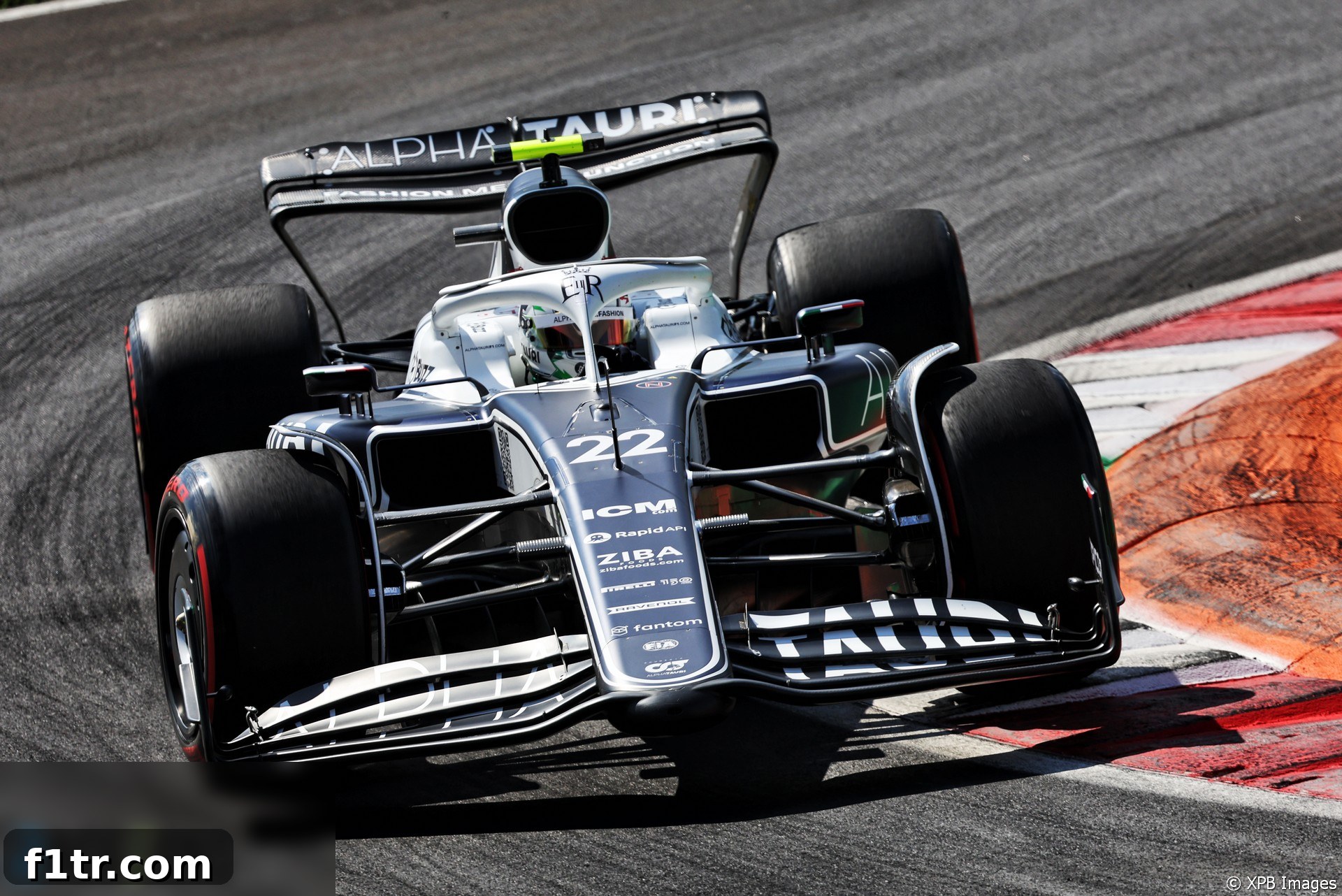
In the high-stakes world of Formula 1, every detail matters, and even seemingly minor infractions can culminate in significant penalties. This was vividly demonstrated ahead of the 2022 Italian Grand Prix, where Yuki Tsunoda, the spirited AlphaTauri driver, found himself facing a challenging 10-place grid drop. This penalty, stemming from an accumulation of five reprimands over the season, marked a notable moment in the sport’s regulatory landscape, making Tsunoda the first driver to reach this revised threshold.
Advert | Become a Supporter & go ad-free
Tsunoda’s situation was compounded by the fact that his car was also fitted with a new power unit for the Monza race, exceeding his seasonal allocation of components. This separate infraction automatically relegated him to the very back of the grid, effectively rendering the 10-place reprimand penalty somewhat redundant in terms of his starting position for this particular race. Nonetheless, the reprimand saga itself drew attention to the FIA’s evolving enforcement of track discipline and driver conduct.
The rule governing reprimands had seen a recent revision, shifting the critical threshold from three reprimands in a season to five before triggering an automatic 10-place grid penalty. Under the stricter previous limit, very few drivers ever reached the point of incurring such a penalty. The most prominent example cited was Mark Webber in 2013, highlighting the rarity of this particular form of sanction. The increase in the threshold suggests an intent to allow for minor errors without immediate severe consequences, while still maintaining a clear deterrent against a pattern of repeated infringements.
“It’s a shame that I got reprimanded,” Tsunoda commented, expressing his regret over the situation. He added, “This situation, I couldn’t control it much,” a sentiment that hints at the complexities drivers face on track, particularly when navigating the nuances of new interpretations of regulations by the race stewards.
The collection of Tsunoda’s reprimands paints a picture of various infringements, some more common than others. His most recent reprimand was issued at the Zandvoort circuit for driving with his seatbelts loose – a critical safety concern that is taken very seriously by the FIA. Prior to this, he received a reprimand for driving too slowly on an in-lap at Albert Park, a common issue where drivers can inadvertently impede faster cars during crucial practice or qualifying sessions. The remaining three reprimands, forming the bulk of his tally, were all for impeding rivals during various practice sessions.
Tsunoda offered valuable context for these impeding penalties, suggesting they were largely concentrated in the early part of the season. This period coincided with a significant change in the FIA’s race directorship, with Niels Wittich and Eduardo Freitas stepping into the roles previously held by Michael Masi. The transition brought with it an expected period of adjustment, not just for the race directors in establishing their interpretation and enforcement style, but also for the drivers adapting to these new officiating nuances.
“Most of the reprimands I got were in the first half of the season, which most of the time were free practice traffic things,” Tsunoda elaborated. He further explained that at the time, “the rule was not set” clearly, implying a degree of ambiguity or a lack of established precedents. “The new race directors came and they were finding the kind of line for the penalty and just I got a lot of reprimands at that point.” This perspective highlights the dynamic nature of F1 rule enforcement, where even seasoned drivers must quickly adapt to the prevailing standards set by the officials. The initial phase with new race directors often involves a period where both drivers and officials are, in a sense, ‘feeling out’ the boundaries of acceptable conduct and the thresholds for various penalties. For a young driver like Tsunoda, this learning curve was steeper, leading to an unfortunately high accumulation of minor warnings.
While acknowledging the unfortunate circumstances, Tsunoda also maintained a pragmatic outlook. “So it’s not ideal, of course, but it is what it is and at least I can reset those reprimands for the second half, so I’m okay.” This ‘reset’ refers to the understanding that while the grid penalty is served, the slate for future reprimands essentially clears, allowing drivers to start fresh without the immediate threat of another cumulative penalty looming over them for subsequent minor errors.
The system of reprimands serves as a crucial component of the FIA’s regulatory framework, aiming to maintain fair competition and driver safety. Unlike more severe penalties that involve time losses or immediate grid drops, reprimands are essentially official warnings. They are issued for infractions that are not deemed severe enough for an immediate performance penalty but are serious enough to warrant formal acknowledgment and a clear message to the driver that such conduct is unacceptable. Examples range from failing to follow race director instructions to minor procedural errors or unsafe practices that don’t directly cause an incident but carry inherent risks.
The shift from three to five reprimands as the trigger point for a grid penalty reflects a broader discussion within F1 about balancing strict adherence to rules with allowing drivers to race competitively without undue fear of minor slips leading to disproportionately harsh punishments. The rarity of drivers hitting the three-reprimand limit in the past suggests that it was a very tight margin. Increasing it to five potentially provides a slightly larger buffer for drivers to learn and adapt, especially in a long and demanding season. However, Tsunoda’s case proves that even with this expanded margin, consistent minor infringements will eventually lead to significant consequences, underscoring the importance of driver discipline and awareness throughout the race weekend.
AlphaTauri’s decision to fit a new power unit to Tsunoda’s car for the Italian Grand Prix meant that his 10-place grid penalty for the reprimands became a less impactful factor in his starting position. A power unit change beyond the allocated allowance invariably leads to a back-of-the-grid start, effectively overshadowing any other grid penalties. Nevertheless, the reprimands still stand as a blot on his disciplinary record for the season, serving as a reminder of the constant scrutiny F1 drivers are under. This dual penalty scenario highlights the multi-faceted challenges drivers and teams navigate, where strategic decisions regarding component changes intersect with on-track conduct and regulatory compliance.
Advert | Become a RaceFans supporter andgo ad-free
2022 Italian Grand Prix: Further Insights and Developments
The 2022 Italian Grand Prix was a race that generated considerable discussion, not least because of various penalties and strategic elements. Tsunoda’s situation was one piece of a larger narrative that included intense championship battles and a season-long examination of FIA officiating. The cumulative nature of penalties, from grid drops for technical infringements to those for on-track conduct, consistently shapes the competitive landscape of Formula 1. Drivers are not just battling each other on track; they are also constantly navigating a complex web of regulations designed to ensure fairness, safety, and the integrity of the sport. Tsunoda’s experience at Monza serves as a pertinent example of how even a series of minor errors can eventually lead to significant consequences, forcing teams and drivers to adapt and maintain rigorous standards throughout the season. This incident also sparked broader conversations among fans and pundits about the consistency of stewarding decisions and the impact of rule interpretations on the racing spectacle.
- Helmet rows, hot mics and more forgotten motorsport stories from 2022
- McLaren ‘surprised two teams found more performance than everyone else’ in 2022
- Alpine confident for Singapore and Suzuka races after “massive” floor upgrade
- Red Bull’s RB18 suits Verstappen more than Perez now – but that’s not by design
- “We’ll have four racing laps’: How F1’s Safety Car confusion unfolded at Monza
Browse all 2022 Italian Grand Prix articles