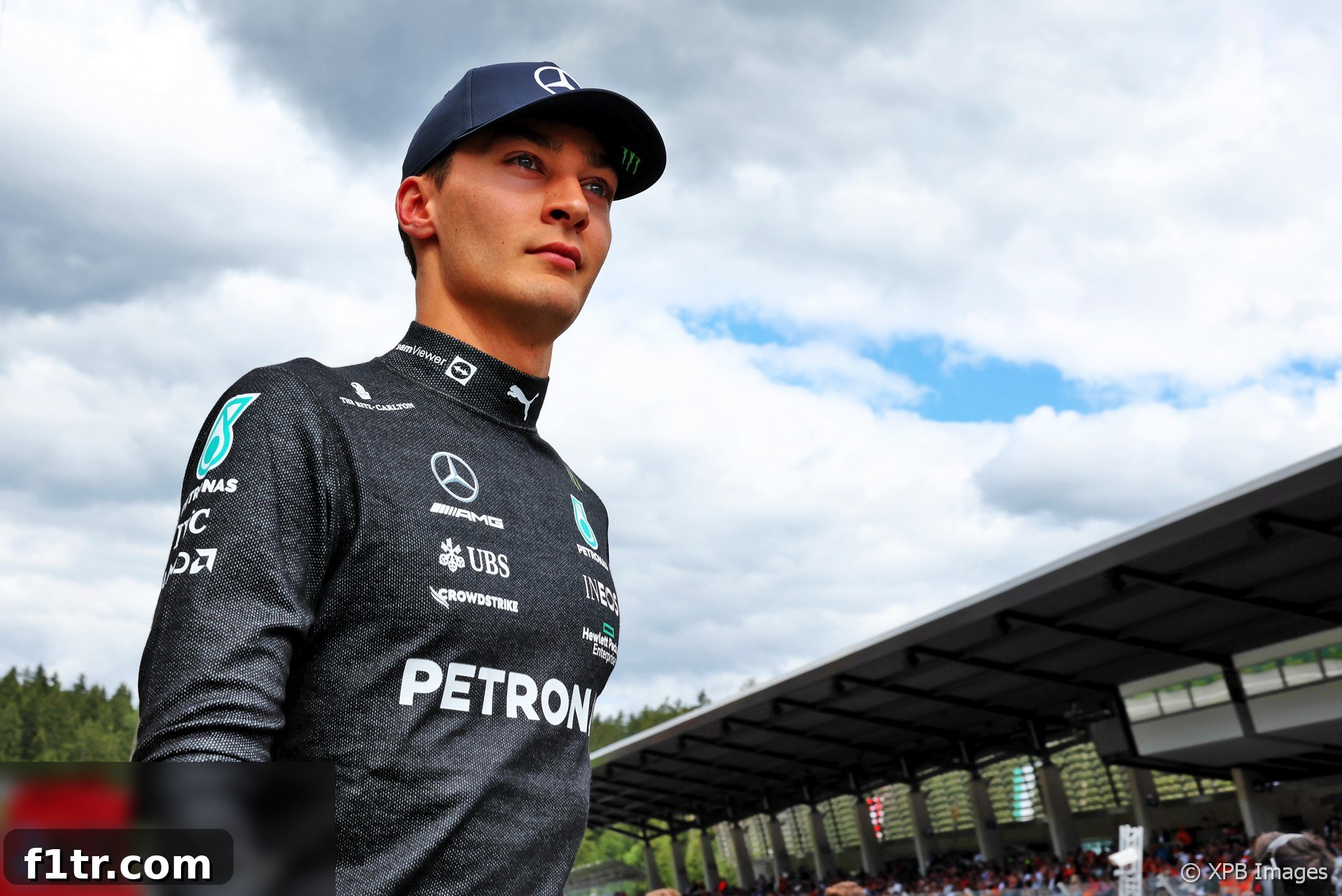
George Russell Demands Accountability: The Growing F1 Race Director Dilemma
The high-octane world of Formula 1 thrives on precision, speed, and, crucially, consistent regulation. However, a significant debate has emerged regarding the governance of the sport, particularly concerning the FIA’s system of rotating race directors. George Russell, a prominent voice among the drivers and a director of the Grand Prix Drivers’ Association (GPDA), has openly criticized this current arrangement, arguing that it leads to a critical lack of “accountability” within the FIA and its stewarding processes. His remarks underscore a simmering tension between the competitors and the sport’s governing body, highlighting fundamental issues that threaten the perceived fairness and clarity of racing decisions.
The Genesis of a Dual System: A Post-Abu Dhabi Response
The 2022 Formula 1 season marked a significant shift in race management following the controversial conclusion of the 2021 championship at the Abu Dhabi Grand Prix. The dramatic events of that race, which saw then-Race Director Michael Masi make highly contested decisions regarding safety car procedures, led to his removal. In response, the FIA introduced a new structure: appointing two race directors, Niels Wittich and Eduardo Freitas, to share the demanding responsibilities throughout the season. This initiative aimed to alleviate the immense pressure on a single individual and theoretically enhance oversight through a dual approach. However, as the 2022 season progressed through its initial ten rounds, this shared role has increasingly come under scrutiny from both drivers and team principals, who question its effectiveness in delivering the consistency that Formula 1 demands.
The intention behind dividing the role was clear: to prevent burnout and ensure fresh perspectives in race management. Yet, the practical application has evidently fallen short of expectations for many within the paddock. Instead of fostering greater consistency, the alternating directorship appears to have introduced an element of unpredictability, leading to divergent interpretations of regulations and, consequently, frustration among those directly impacted by these decisions on track.
Russell’s Call for Consistency: The Accountability Gap
George Russell’s critique is rooted in a fundamental principle of effective governance: accountability. As a director of the GPDA, his perspective carries significant weight, representing the collective concerns of his fellow drivers. Russell emphatically stated his belief that Formula 1 “needs to stick with one race director” to achieve the much-needed consistency in stewarding decisions. The core of his argument centers on the transitory nature of the current system, where the stewards officiating one event are often not present at the subsequent one. This rotational aspect creates a void where explanations and justifications for past decisions become elusive.
Russell articulated the problem succinctly: “We come to the following event and often the stewards from the previous event are not there. So there’s no accountability, no explanations of decisions and we ask questions and it’s difficult to get a straightforward answer because – I wouldn’t say the ‘blame’, but almost the blame – is being put on to somebody else who wasn’t there. So, yes, it’s tricky, everybody’s got their own interpretations.” This breakdown in the feedback loop means that drivers and teams struggle to understand the rationale behind penalties or non-penalties, making it challenging to adapt their driving or strategic approaches for future races. The lack of a consistent panel of decision-makers means that interpretations of the sporting regulations can vary from one Grand Prix to the next, fostering an environment of uncertainty rather than clarity.
The Drivers’ Frustration: Sebastian Vettel’s Walkout
The mounting frustration among drivers visibly boiled over during a Friday evening drivers’ meeting, an incident that saw four-time world champion Sebastian Vettel reportedly leave the briefing prematurely after “expressing frustration” at the proceedings. While Russell didn’t delve into the specifics of Vettel’s departure, he confirmed that the underlying sentiment among drivers stemmed from perceived inconsistencies in the application of racing rules. This public display of dissatisfaction by an experienced and respected figure like Vettel underscored the gravity of the situation and the depth of the drivers’ concerns regarding the FIA’s operational methods.
Such an incident highlights the significant strain placed on the relationship between the governing body and its athletes. When drivers, who are central to the spectacle of Formula 1, feel their concerns are not being adequately addressed or that the rules they race under are not consistently enforced, it can erode trust and impact morale. The drivers’ briefing is a crucial forum for dialogue and clarification, and any breakdown in its effectiveness signals deeper systemic issues that need urgent attention.
Navigating the Grey Areas: Inconsistent Rule Application
The challenge of applying racing rules consistently is multifaceted. Russell acknowledged the inherent difficulty for both the FIA and the drivers, particularly with “borderline decisions or manoeuvres” throughout the season. These include contentious issues such as defending positions on track and, perhaps most frequently, track limits. The British driver referenced the previous week’s events at Silverstone as a prime example of where the interpretation and enforcement of rules in a racing scenario have led to widespread debate. While no one wishes for a deluge of penalties for every minor infraction, Russell stressed the imperative for “an element of consistency somewhere,” advocating for a closer examination of the “root cause of the issues.”
The problem is not merely about whether a penalty is given, but whether similar incidents are treated similarly across different races and by different stewarding panels. This inconsistency creates a sense of unfairness and makes it difficult for drivers to understand the precise boundaries of what is permissible. It can influence how drivers attack corners, defend positions, and even plan overtakes, potentially leading to a more cautious or, conversely, overly aggressive approach, depending on their interpretation of the prevailing “rules of engagement” for that specific weekend.
The Root Cause: Circuit Design and Track Limits
A significant portion of the inconsistency, particularly concerning track limits, according to Russell, lies not just with the officials but with the very design of the circuits themselves. He firmly believes that “we’re never going to solve this issue until you solve the circuit.” Russell drew a clear contrast: “Turn four here in Austria, you will never have that issue. But you compare that with turn one here or Silverstone last week you will always have the issue.” This insight highlights a crucial point: some corners on the Formula 1 calendar are designed in a way that naturally punishes exceeding track limits, often through gravel traps or significant drops, whereas others with vast tarmac run-off areas invite drivers to push the boundaries, making consistent monitoring and penalization a logistical nightmare for race control.
When circuits feature expansive asphalt run-off areas, drivers can gain a time advantage by running wide without immediate consequence, forcing stewards to police these limits rigorously and often controversially. Conversely, natural deterrents, such as gravel or grass, inherently regulate track limits. Russell’s argument suggests a need for a more holistic approach, where circuit design principles are revisited to reduce the necessity for subjective official intervention, thus streamlining the enforcement of rules and enhancing consistency.
The Broader Implications for Formula 1
The issues raised by George Russell and the broader driver community extend beyond mere procedural concerns; they touch upon the very integrity and appeal of Formula 1. A sport built on intense competition and the pursuit of perfection relies heavily on a level playing field and transparent decision-making. Inconsistent stewarding decisions can lead to accusations of bias, undermine driver confidence, and, perhaps most critically, confuse and alienate fans. Spectators want to understand why decisions are made and have faith that the rules are applied fairly to all competitors, regardless of their team or standing. When accountability is perceived to be lacking, the sport’s credibility can suffer.
Furthermore, the high stakes of Formula 1—championship points, career trajectories, and multi-million-dollar investments—mean that every decision by race control carries immense weight. The absence of clear, consistent guidelines and a unified interpretation creates an environment where uncertainty can directly impact sporting outcomes, potentially distorting the championship battle and leading to frustration for teams who feel they have been unfairly treated.
Towards a Sustainable Solution: A Path Forward
Addressing the challenges outlined by Russell will require a concerted effort from the FIA, F1 management, and the teams. The immediate call from drivers for a return to a single, consistent race director appears to be a logical first step towards re-establishing a clear line of authority and accountability. Such a move would allow for the development of a unified interpretation of the rules and ensure that decisions, and their explanations, are consistent from one event to the next. Alongside this, the FIA could consider implementing a more stable panel of stewards, perhaps even an independent body, to ensure that the individuals making critical race decisions are present consistently and can provide continuity in their judgments and feedback.
Beyond personnel, there is a strong case for reviewing the sporting regulations themselves, refining them to minimize ambiguity, especially concerning areas like track limits and aggressive defending. Collaborative workshops between drivers, team principals, and FIA officials could help forge clearer, mutually agreed-upon guidelines. Finally, as Russell suggested, a long-term strategy involving circuit designers and event promoters to implement natural deterrents for track limit violations could significantly reduce the need for intrusive official intervention, allowing the racing itself to be the primary arbiter of driver conduct.
The Grand Prix Drivers’ Association (GPDA) Role
As a director of the GPDA, George Russell’s statements are not merely personal opinions but reflect a collective sentiment among the drivers. The GPDA serves as a vital channel for drivers to voice their concerns and collectively advocate for improvements in safety, fairness, and the overall sporting spectacle. Their involvement in discussions with the FIA and Formula 1 management is crucial for ensuring that the athletes’ perspectives are heard and considered in the ongoing evolution of the sport. Russell’s public comments underscore the GPDA’s commitment to pushing for a more consistent and accountable regulatory framework that benefits all stakeholders in Formula 1.
Conclusion: A Call to Action for Formula 1’s Future
George Russell’s candid assessment of Formula 1’s rotating race director system and the subsequent lack of accountability is a crucial alarm bell for the sport. The issues of inconsistent stewarding, unclear explanations, and the fundamental problems posed by certain circuit designs threaten the very essence of fair competition. While the FIA’s post-2021 reforms aimed to improve race management, they appear to have inadvertently introduced new challenges. The path forward demands a serious re-evaluation of the current structure, with a strong emphasis on re-establishing a single point of authority for race direction and cultivating an environment where accountability and consistent application of rules are paramount. For Formula 1 to maintain its status as the pinnacle of motorsport, trust, transparency, and consistency must be at its core, ensuring a level playing field for all competitors and a clear, understandable spectacle for fans worldwide.
2022 Austrian Grand Prix Related Articles
- FIA affirms three sprint races on 2023 Formula 1 calendar
- “Oh, so unlucky!” How Alonso’s cursed Austrian Grand Prix unfolded on his radio
- Ferrari believe their performance deficit to Red Bull is now “negligible”
- Another fan’s experience of harassment last weekend – and why F1 must act
- AlphaTauri “desperately” need upgrades after “disaster” weekend, urges Gasly
Browse all 2022 Austrian Grand Prix articles