Haas F1 Team Penalized: A Deep Dive into the Hungarian Grand Prix ‘Driver Aids’ Controversy
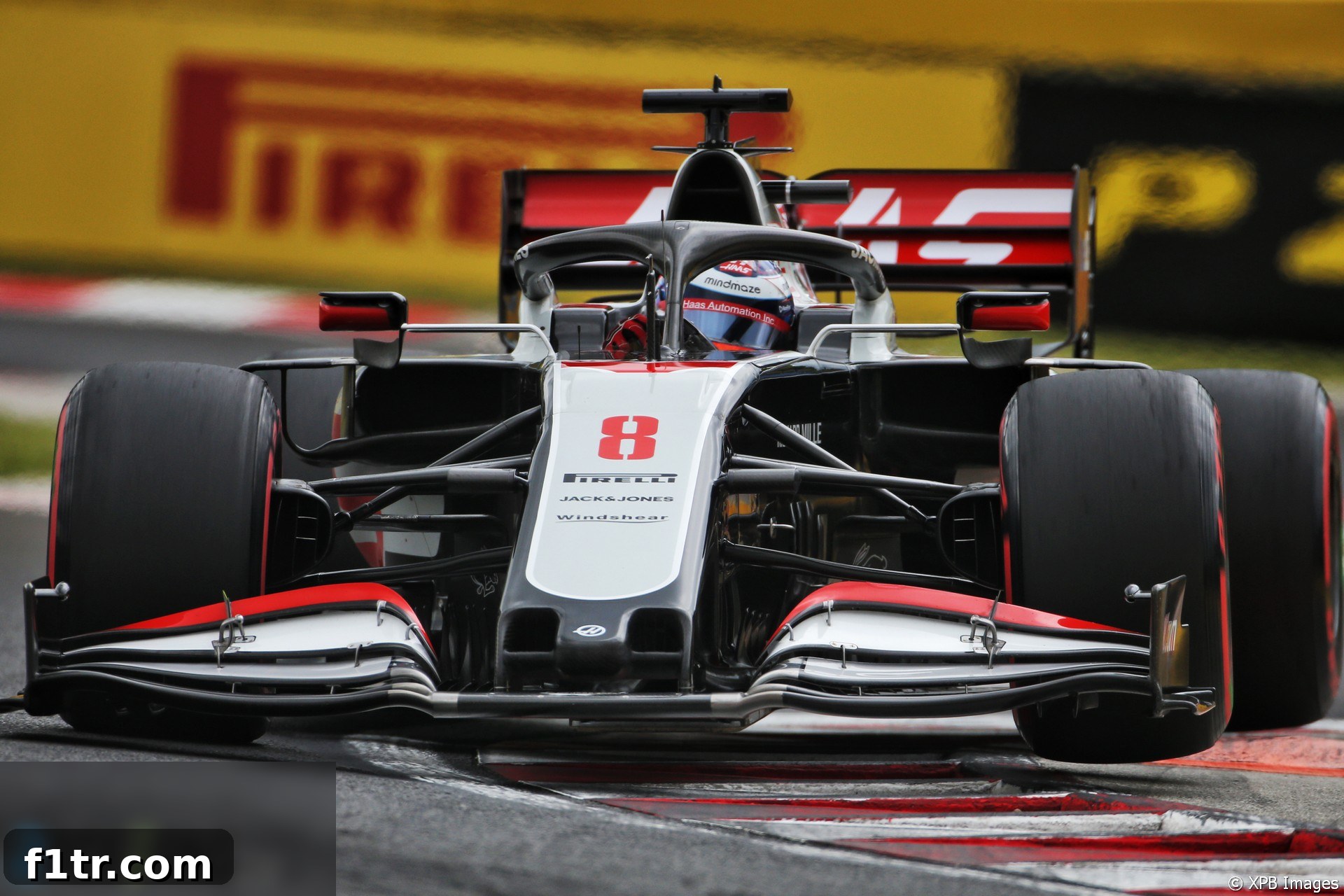
The 2020 Formula 1 Hungarian Grand Prix saw more than just thrilling on-track action; it concluded with a significant controversy involving the Haas F1 Team. Both Haas drivers, Kevin Magnussen and Romain Grosjean, were hit with penalties after race stewards determined the team had violated strict regulations prohibiting the use of “driver aids” during the crucial formation lap. This incident highlighted the often-fine line teams must walk when communicating with their drivers, especially under rapidly changing race conditions, and underscored the FIA’s unwavering commitment to the sporting regulations.
Advert | Become a Supporter & go ad-free
The Pivotal Formation Lap: A Strategic Gamble Gone Wrong
The Hungarian Grand Prix began under challenging conditions, with a damp track that was rapidly drying. This presented a significant strategic dilemma for all teams: start on wet weather tyres and switch to slicks as the track dried, or gamble on a pit stop during the formation lap to immediately put on dry tyres. While several drivers contemplated the latter, Haas made the bold decision to instruct both Magnussen and Grosjean to pit for slick tyres before the race officially started. This call, though strategically sound given the evolving track, directly contravened the stringent rules governing communication during the formation lap.
The stewards thoroughly investigated the radio communications between the Haas pit wall and its drivers. Their verdict was clear: the team had issued direct instructions to the drivers regarding a pit stop, a communication deemed to be a forbidden driver aid. “Having considered the matter extensively,” the stewards stated, “the stewards determined that the team instructed the driver to pit. The team could not prove that one of the exemptions made under paragraph A. 2. a) to g) of the Technical Directive 011-17 was applicable.” This ruling confirmed a breach of Article 27.1 of the Sporting Regulations, which mandates that “the driver must drive the car alone and unaided.”
Understanding the “Alone and Unaided” Mandate in Formula 1
The concept of a driver competing “alone and unaided” is a cornerstone of Formula 1’s sporting regulations, designed to emphasize driver skill and decision-making over excessive team intervention. Article 27.1 specifically aims to prevent teams from providing any information that could constitute a direct instruction on how to drive the car or manage race strategy during certain critical phases. This rule has evolved over the years, with the FIA progressively tightening restrictions on radio communications, particularly during the formation lap and race itself.
Technical Directive 011-17, referenced in the stewards’ decision, further clarifies what constitutes permissible and impermissible radio communications. This directive outlines specific categories of information that can be relayed to a driver, primarily focusing on safety-critical messages or instructions to rectify mechanical issues. It expressly forbids instructions that aid a driver in driving the car or making strategic decisions, such as advising on brake balance, engine settings beyond predetermined modes, or indeed, when to pit for a change of tyres unless there’s an immediate safety concern.
The formation lap is particularly sensitive in this regard. It is a period where drivers assess track conditions, warm up tyres, and prepare for the start without external guidance on racing lines or strategic choices. Haas’s instruction to pit for slicks, while aimed at optimizing performance in the rapidly changing conditions, was judged to have crossed the line from providing information to issuing a direct driving instruction, thereby providing an impermissible aid to the drivers.
The Incriminating Radio Messages: A Glimpse into the Heat of the Moment
The evidence against Haas was compelling, drawn directly from the team’s radio transmissions to both Magnussen and Grosjean. While both drivers were aware of the track drying and expressed their own inclinations, the team’s subsequent directives left no room for ambiguity.
Kevin Magnussen’s Formation Lap Radio Exchange:
| Magnussen: | Ah, we’ve done the wrong thing. It’s already a dry line. |
| To Magnussen: | Understood, Kevin, understood. What do you want to do? |
| To Magnussen: | So we’ll do the start and then we’ll figure it out, Kevin. |
| Magnussen: | Copy that. |
| To Magnussen: | OK Kevin I think we’ll box now. Box now. |
| Magnussen: | Yeah I agree. Box now, box now. |
| Magnussen: | For dry, yeah? For dry? |
| Magnussen: | Box now for dry. |
| To Magnussen: | Yeah we’re boxing for dry. |
| Magnussen: | Box. Box for dry. |
Magnussen’s transcript shows an initial discussion where he voiced his observation about the drying track. However, the turning point came with the clear instruction from his race engineer: “OK Kevin I think we’ll box now. Box now.” This direct command, regardless of Magnussen’s agreement, was the basis for the stewards’ ruling that an instruction had been given, rather than merely an exchange of information or a question posed to the driver.
Romain Grosjean’s Formation Lap Radio Exchange:
| Grosjean: | Track is drying a lot already. |
| Grosjean: | I’m almost tempted to box and put slicks. |
| To Grosjean: | Box, Romain, box. |
| To Grosjean: | Box, Romain, box. |
Grosjean’s communication was even more succinct. While he expressed his thought about pitting, the team’s response was an immediate, unequivocal instruction: “Box, Romain, box.” This direct command, repeated twice, left no ambiguity about the team’s intent to direct his actions rather than engage in a discussion or provide information for his own decision. These exchanges were critical evidence, demonstrating a clear breach of the “alone and unaided” principle during the regulated formation lap period.
The Consequences: Revised Race Results and Championship Implications
Following the stewards’ decision, both Haas drivers received a 10-second penalty added to their final race times. This adjustment significantly impacted their finishing positions and, consequently, the points distribution for the race.
- For Kevin Magnussen, the penalty meant dropping from an impressive ninth place to tenth in the official classification. This demotion promoted Carlos Sainz Jnr to ninth place, earning him an additional championship point.
- Romain Grosjean’s penalty saw him fall from 15th place to 16th, placing him behind Kimi Raikkonen in the revised standings. While this change did not impact points-scoring positions, it still reflected a setback for the driver and team.
While the immediate championship implications for Haas were relatively minor in terms of lost points, the incident served as a stark reminder to all teams about the meticulous adherence required for Formula 1’s sporting regulations. Even a seemingly minor communication during a non-racing phase can lead to penalties that alter race outcomes.
Wider Implications for F1 Team Communication and Strategy
This incident at the Hungarian Grand Prix reinforced the FIA’s strict stance on driver aids and radio communication. It highlighted the ongoing challenge for teams to navigate the complex rulebook, especially under dynamic race conditions where strategic decisions must be made in milliseconds. While teams constantly push the boundaries of performance and strategy, the governing body remains vigilant in enforcing rules designed to maintain fairness and emphasize the driver’s role.
The Haas penalty served as a critical precedent, reminding competitors that the formation lap is indeed part of the regulated event, and any communication that could be interpreted as a strategic instruction on driving will be scrutinized. It prompts teams to refine their internal communication protocols, ensuring that messages to drivers, especially during restricted periods, are strictly within the bounds of permissible information and do not cross into forbidden ‘aid’. This commitment to rules enforcement ensures a level playing field and preserves the core principle of Formula 1: a competition of driver, car, and team, but with the driver ultimately at the helm, alone and unaided.
Advert | Become a RaceFans supporter andgo ad-free
Further Reading on the 2020 F1 Season and Beyond
- Grosjean to make F1 test return tomorrow for first time since Bahrain horror crash
- Pictures: Wrecked chassis from Grosjean’s Bahrain fireball crash to go on display
- Bottas vs Rosberg: Hamilton’s Mercedes team mates compared after 78 races each
- F1 revenues fell by $877 million in Covid-struck 2020 season
- Hamilton and Mercedes finally announce new deal for 2021 season
Browse all 2020 F1 season articles