Navigating the Crowded Motorsport Calendar: Jean Todt on Inevitable Clashes and Driver Welfare
The global motorsport landscape, vibrant and ever-expanding, presents a perpetual challenge for its governing body, the FIA. President Jean Todt has openly acknowledged the increasing difficulty in preventing calendar clashes between premier racing series, including the likes of Formula 1 and the World Endurance Championship. This candid admission highlights a complex issue at the heart of international motorsport: how to accommodate a growing number of high-profile events within a finite timeframe without creating direct competition for fans, broadcasters, and crucially, the athletes themselves. The conversation around scheduling conflicts has intensified as more championships vie for prime weekend slots, making seamless coordination an increasingly elusive goal. This article delves into the intricacies of motorsport calendar management, the FIA’s perspective, and the significant implications for teams and drivers.
The Inevitable Gridlock: Why Calendar Clashes Are Here to Stay
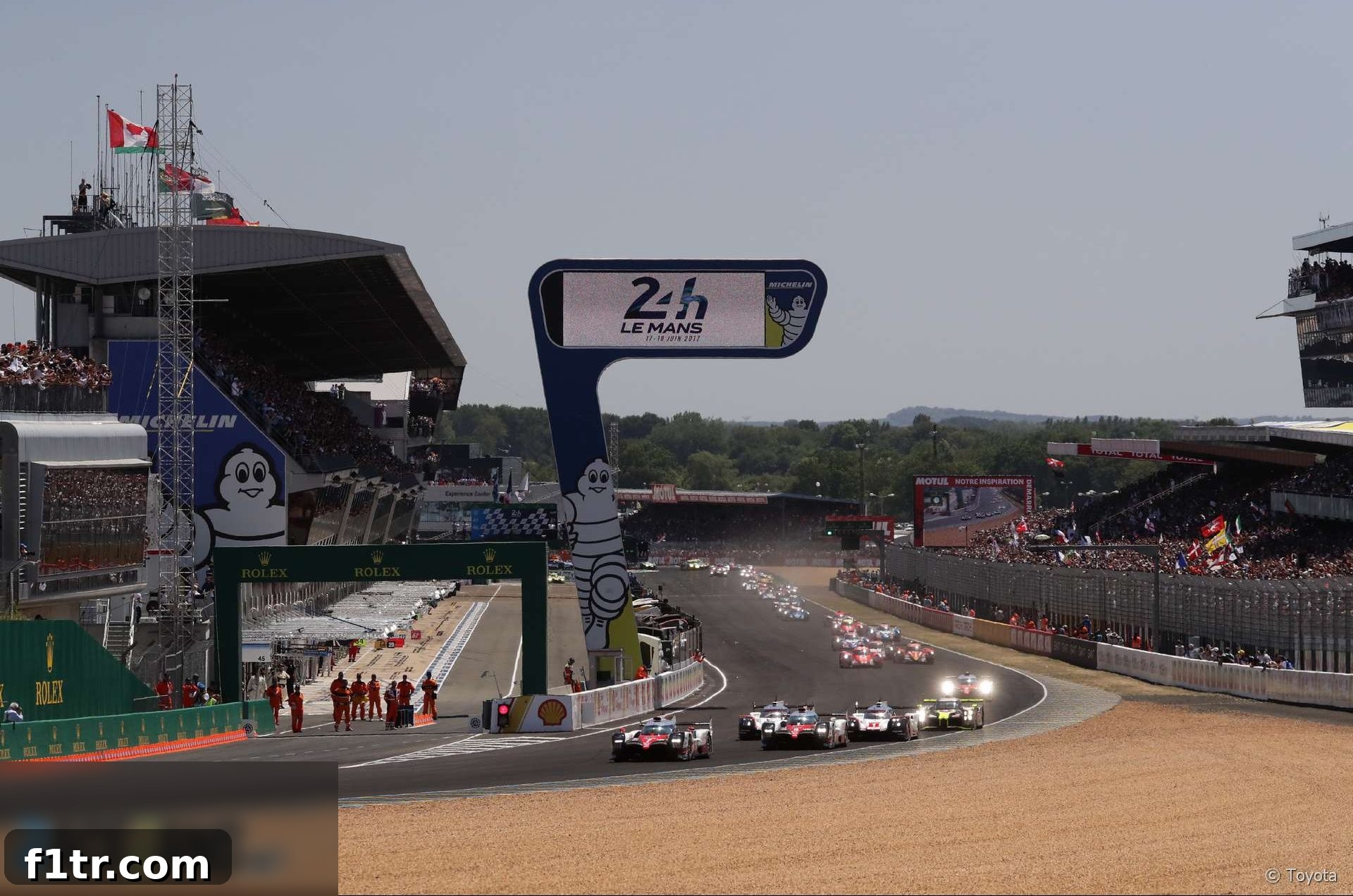
During a media conference at the prestigious Six Hours of Spa, President Todt addressed the persistent query regarding the scheduling of iconic events like the Le Mans 24 Hours, specifically its potential to avoid direct clashes with Formula 1 weekends. His response was pragmatic: “Ideally if you can avoid a clash it’s good but you must be realistic.” This statement underscores the core dilemma faced by motorsport organizers. The aspiration for an unblemished, conflict-free schedule is often confronted by the harsh realities of a packed international sporting calendar. The sheer volume of top-tier motorsport events under the FIA’s umbrella makes such an ideal scenario increasingly improbable, if not impossible.
Advert | Become a Supporter & go ad-free
Todt elaborated on the fundamental mathematical challenge: “You take each single FIA championship and if you add them you will have more than 52 [races]. And we only have 52 weeks.” This simple arithmetic vividly illustrates the problem. When considering that the active season for most major championships typically runs from approximately week 10 to week 47 or 48 – condensing the primary racing window into just 37 to 38 weeks – the scope for avoiding overlaps shrinks dramatically. It’s a compelling argument that debunks the notion of easy fixes. The expectation of a perfectly orchestrated calendar, free from any conflicts, becomes akin to expecting a “miracle,” as Todt put it. He acknowledged that while criticism is easy, the practicalities of scheduling often leave organizers with very limited choices, ultimately requiring a degree of acceptance for these unavoidable overlaps.
The ramifications of these calendar clashes extend beyond mere inconvenience. For fans, it often means having to choose between watching two highly anticipated races live, or relying on delayed broadcasts and highlights. For broadcasters, it presents logistical challenges and potential viewership dilution. Sponsors, too, might find their brand exposure fragmented across competing events. Furthermore, teams and personnel face increased travel demands and pressure, while the broader motorsport ecosystem grapples with the allocation of resources and attention. The growing global appeal of various motorsport disciplines – from open-wheel series to endurance racing and electric championships – has fueled this expansion, making the task of calendar harmonization more critical yet simultaneously more complex.
Navigating the Maze: Efforts in Calendar Coordination and F1’s Dominant Position
Recognizing the mounting pressure, representatives from the pinnacle of motorsport – Formula 1, the World Endurance Championship (WEC), and Formula E – convened in Monaco to engage in critical discussions aimed at improving calendar coordination. Such meetings are vital for fostering communication and exploring potential strategies to alleviate scheduling congestion. The goal is often to identify windows for major events, share long-term plans, and potentially establish guidelines for future calendar construction that minimize direct competition.
However, despite these collaborative efforts, a significant hurdle remains: the sheer commercial power and contractual obligations of Formula 1. It is widely understood within the industry that F1, as the sport’s global juggernaut, is highly unlikely to adjust its own race schedule solely to accommodate other championships. This stance is rooted in several factors, including pre-existing agreements with promoters, broadcasters, and sponsors, which often involve substantial financial commitments and strict scheduling clauses. F1’s immense global reach and established fanbase mean that other series often find themselves needing to adapt to the F1 calendar, rather than the other way around. This asymmetry in influence underscores the challenge for other championships seeking a clear run on the international stage.
The strategic planning of the F1 calendar involves intricate logistics, global travel considerations, and complex commercial agreements spanning multiple continents. Altering even a single race date can trigger a cascade of logistical and financial complications for its organizers, Liberty Media, as well as the teams, suppliers, and host venues. While cooperation is sought, the economic realities of modern motorsport dictate that F1’s calendar remains relatively inflexible, setting a challenging precedent for other championships striving to optimize their own global footprints. This dynamic often leaves smaller, albeit significant, series needing to navigate around F1’s immovable fixtures.
A Glimmer of Flexibility: The WEC ‘Super Season’ and the Alonso Effect
Amidst the general inflexibility, there have been instances where calendar adjustments were indeed made, often driven by unique circumstances. The World Endurance Championship (WEC) provides a compelling case study with its innovative ‘super season’ concept, introduced for the 2018-19 period. This initiative saw the WEC transition from an annual calendar to one spanning two calendar years, culminating in two editions of the Le Mans 24 Hours. As part of this significant restructuring, the WEC strategically reduced its race count from nine in the previous season to just five for the initial phase of the super season, aiming to optimize its schedule and perhaps create more breathing room.
A particularly notable example of calendar flexibility occurred with the Six Hours of Fuji. This event was initially slated to clash directly with a Formula 1 Grand Prix. However, the situation was resolved when Toyota Gazoo Racing, a prominent competitor in the WEC’s LMP1 category, expressed a strong desire for their star driver, Fernando Alonso, to participate in both championships. Alonso, a double F1 world champion, had embarked on an ambitious quest for the Triple Crown of motorsport, which includes winning the Monaco Grand Prix, the Indianapolis 500, and the Le Mans 24 Hours. His high-profile involvement in WEC brought significant media attention and prestige to the series.
Toyota’s request, driven by the commercial and sporting value of having a driver of Alonso’s caliber compete in their WEC entry, proved to be a pivotal factor. The WEC organizers, understanding the immense marketing potential and the narrative power of a top F1 driver crossing over, made the decision to reschedule the Fuji event. This move, while exceptional, demonstrated that when sufficient motivation and stakeholder alignment exist, even seemingly entrenched schedules can be altered. It highlighted the influence that marquee drivers and major manufacturers can wield in shaping the motorsport calendar, especially when their participation generates significant interest and exposure for a championship.
Beyond the Track: Driver Welfare and the Value of Diverse Racing Experiences
While calendar clashes pose logistical nightmares, they also touch upon a deeper aspect of motorsport: the professional development and personal well-being of its drivers. Historically, some teams have expressed reluctance to allow their primary drivers to compete in multiple championships simultaneously. Concerns often revolve around potential injury risks, divided focus, increased workload, and the perceived loyalty to their main series. However, FIA President Jean Todt, drawing from his extensive experience – particularly his highly successful tenure leading Ferrari in Formula 1 from 1994 to 2007 – holds a different perspective. He firmly believes that offering drivers opportunities to compete across various motorsport disciplines is “very healthy.”
Todt’s philosophy is rooted in the conviction that diverse racing experiences can enhance a driver’s skill set, maintain their passion for the sport, and ultimately make them more competitive. He went as far as to state that, during his time at Ferrari, he would have allowed his drivers the same freedom enjoyed by Fernando Alonso to pursue racing in other series, provided it didn’t negatively impact their primary commitments. This stance challenges the traditional view of exclusivity and champions a more holistic approach to driver development.
Advert | Become a RaceFans supporter andgo ad-free
He further elaborated on the psychological benefits, asserting that “it is essential if you want to have a driver very competitive and very happy you must try to make sure that he is in the most friendly surroundings.” Todt emphasized that a happy and supported driver, one who feels a strong sense of harmony and belonging within their team, will naturally possess more energy and perform at a higher level. This principle, he noted, extends beyond the realm of professional athletes to any profession: individuals thrive and perform better in environments characterized by support and positivity rather than constant conflict or discontent. This human-centric approach suggests that allowing drivers to follow their passion in different series could lead to increased motivation, improved performance, and a more fulfilling career path, ultimately benefiting both the driver and the sport as a whole. Such opportunities offer not only varied driving challenges but also unique learning experiences and exposure to different racing cultures and technologies.
Looking Ahead: Embracing Realism in Motorsport Scheduling
The intricate dance of motorsport calendar scheduling remains one of the FIA’s most formidable challenges. Jean Todt’s pragmatic acknowledgement of inevitable clashes serves as a critical reality check for the sport. While the desire for a perfectly coordinated calendar free from overlaps is understandable, the sheer volume of high-quality championships and events simply outstrips the available time slots. Efforts towards coordination, such as the Monaco meeting, are vital for open dialogue and exploring possible synergies. However, the dominant position of Formula 1 and the logistical complexities involved mean that other series will often need to adapt. Yet, as the case of the WEC’s Fuji race demonstrated, there is still room for flexibility when key stakeholders and marquee talents align. Ultimately, the future of motorsport scheduling will likely involve a continued balancing act: striving for coordination wherever possible, while also embracing a realistic acceptance of occasional overlaps, and prioritizing the overall health and appeal of the sport for its fans, teams, and, most importantly, its passionate drivers.
Further Reading: Insights into the World Endurance Championship
For those interested in delving deeper into the World Endurance Championship and related developments, explore the following articles:
- WEC cancels its Qatar season-opener due to US-Iran war
- Porsche to end WEC Hypercar programme after just three seasons
- Mercedes won’t return to Le Mans because “we don’t like Balance of Performance” – Wolff
- “Luck” needed to win Le Mans because of Balance of Performance – Verstappen
- McLaren finally confirms it will enter the World Endurance Championship in 2027
Browse all World Endurance Championship articles