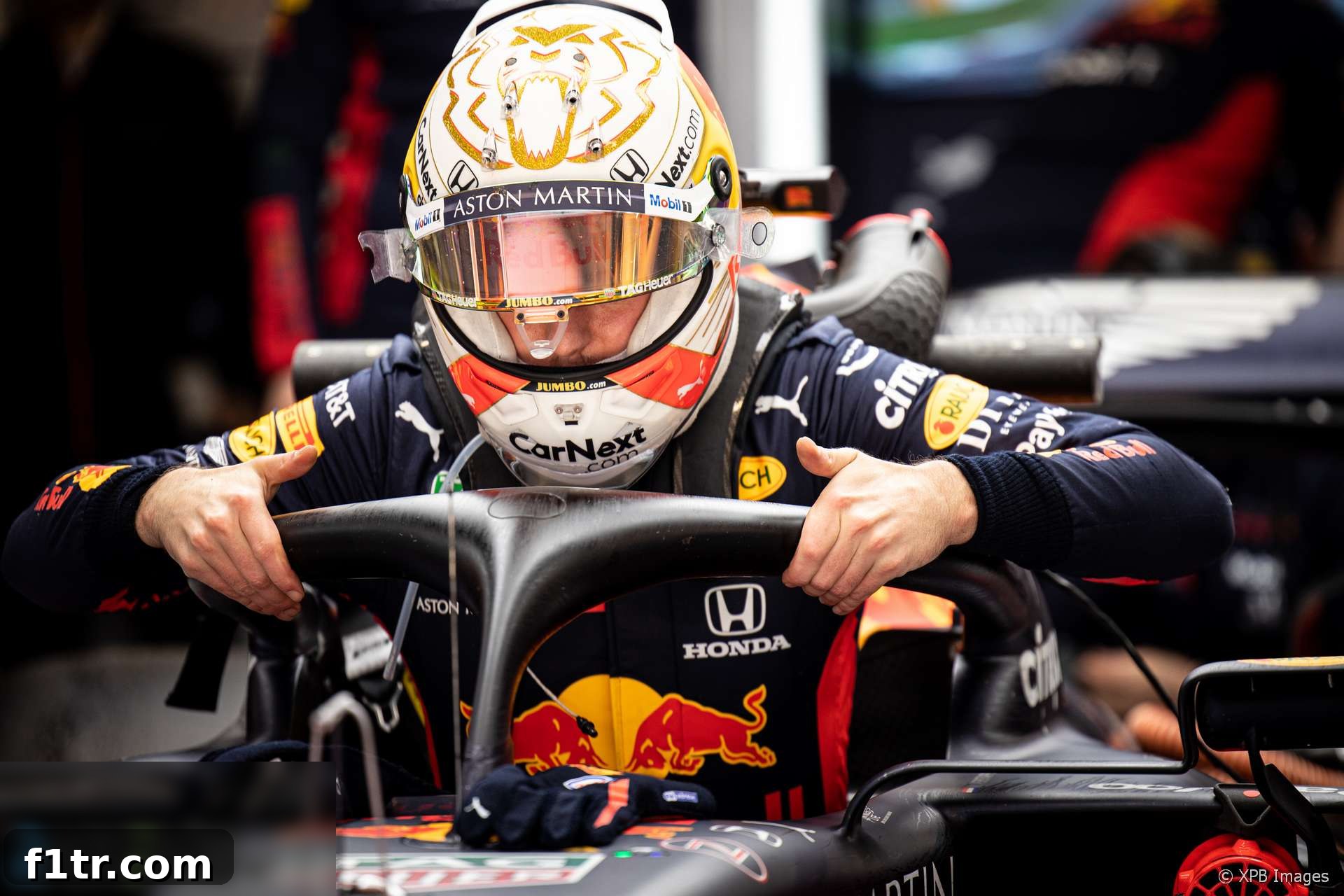
Red Bull Adopts Split Testing Strategy After Verstappen’s Marathon Session
Red Bull Racing has announced a strategic shift in its pre-season testing approach, opting to split car duties between its drivers for the remaining days of the crucial shakedown. This decision comes in the wake of Max Verstappen enduring an incredibly demanding workload on the first day of testing at the iconic Circuit de Catalunya, where the Dutch ace was reportedly ‘nearly worn out’ after completing a staggering number of laps.
The intensity of Formula 1 pre-season testing cannot be overstated. It’s a critical period where teams gather vital data, assess car reliability, and fine-tune setups ahead of a challenging season. For Red Bull, the initial days of testing highlighted both the immense capabilities of their new challenger and the physical toll such extensive running can take on a driver. Verstappen, known for his relentless pursuit of perfection, single-handedly completed an astounding 168 laps on Wednesday – a distance equivalent to more than two-and-a-half full 66-lap Grand Prix races. This monumental effort, while incredibly productive for data collection, underscored the need for a revised strategy to optimize both car development and driver welfare.
The Evolution of F1 Pre-Season Testing Strategies
Traditionally, teams have often assigned individual drivers full days in the car during pre-season testing. This approach allows a driver to develop a consistent rhythm, provide continuous feedback on car changes, and deeply familiarize themselves with the vehicle’s characteristics over an extended period. Engineers often prefer this continuity, as it can simplify data analysis and troubleshooting. However, with the ever-increasing mileage targets and the complexity of modern F1 machinery, a new trend has emerged: splitting test days between drivers. This allows both drivers to gain valuable seat time, share the physical burden, and provide diverse perspectives on the car’s performance.
Red Bull had initially followed the more traditional path for the first two days of testing last week, with each driver allocated a full day in the cockpit. However, following Verstappen’s marathon performance, the team confirmed that both Max Verstappen and Alexander Albon would share the car on each of the final three days of testing. This strategic pivot reflects a pragmatic adaptation to the demands of modern F1 testing and a recognition of the benefits that a shared approach can offer.
Verstappen’s Grueling Marathon: A Testament to Endurance
Max Verstappen’s 168-lap day was not just a remarkable feat of endurance but also the busiest for any individual driver during that specific test week. To put this into perspective, his lap count was just one shy of the highest single-day lap count recorded in the previous year, which was set by Sebastian Vettel in his Ferrari. Such extensive running demands peak physical and mental conditioning, as drivers are subjected to extreme G-forces, intense concentration, and constant decision-making at high speeds. Beyond the sheer physical toll, a driver’s ability to provide accurate and consistent feedback can diminish with fatigue, potentially impacting the quality of data gathered for car development.
Christian Horner, Red Bull Team Principal, acknowledged the herculean effort by Verstappen, stating during last week’s test, “The first day of testing had been really strong for the team. 170 laps, I think, is the most we’ve ever done on day one in Barcelona. We nearly wore the driver out. It’s almost three times a Grand Prix distance. But it was a very, very positive day.” This statement encapsulates the double-edged sword of such a high-mileage day: immensely valuable for car data, but at a significant cost to driver comfort and energy levels. The team’s initial goal was clearly to maximize track time and collect as much data as possible, pushing the boundaries of what a single driver could achieve.
Christian Horner’s Strategic Rethink: Continuity vs. Flexibility
Speaking to F1 TV during last week’s test, Christian Horner elaborated on the team’s initial preference and the reasons for their subsequent change of heart. He admitted that the team’s engineers “prefer having continuity over a whole day with just one driver in the car.” This preference stems from the desire for a stable testing environment where changes can be systematically evaluated without the added variable of a different driver’s style or feedback nuances. Horner explained, “Sometimes it can break the rhythm by switching drivers halfway through.” For complex setup changes or detailed aero evaluations, a consistent driver input over many hours can streamline the development process.
However, Horner also acknowledged the undeniable advantages of splitting driving duties, especially given the sheer volume of mileage modern F1 cars are designed to cover in pre-season. He stated, “But the kind of mileages these cars are doing now, you cram as much as you can into the two half-days. And therefore, having that flexibility and the ability to change your driver at lunchtime is a positive thing.” This flexibility is crucial for several reasons. Firstly, it allows both primary drivers to gain essential seat time, which is vital for their own preparation and for providing diverse feedback on the car’s handling and balance. Secondly, it helps manage driver fatigue, ensuring that both drivers are fresh and focused when behind the wheel, leading to higher quality data and more reliable feedback. Lastly, it offers strategic options for the team, allowing them to adapt their testing plan on the fly if weather conditions change or if unexpected issues arise with the car.
The Science of F1 Pre-Season Testing: Beyond the Laps
Pre-season testing is far more than just clocking laps; it’s a meticulously planned scientific endeavor. Teams like Red Bull approach these sessions with a multi-faceted agenda. High on the priority list is reliability – ensuring that all components of the new car can withstand the rigors of race distances. Aerodynamic correlation is another critical aspect, where data from on-track sensors is compared with simulations and wind tunnel results to validate the car’s aero package. Setup experimentation involves tweaking suspension, ride height, wing angles, and differential settings to find the optimal balance for various track conditions.
Tyre evaluation forms a significant part of the program, with teams assessing how different compounds behave over short and long runs, how they degrade, and how they influence strategy. Driver adaptation is equally important, as both Max Verstappen and Alexander Albon need to become intimately familiar with the car’s nuances, particularly how it responds to their specific driving styles. Split testing, despite the potential for minor continuity interruptions, ensures that both drivers contribute significantly to this data-gathering process. With limited testing opportunities throughout the year, maximizing every minute on track is paramount for championship contenders.
Looking Ahead to the 2020 F1 Season: Red Bull’s Aspirations
Red Bull Racing’s decision to embrace a split testing strategy underscores their commitment to optimizing every aspect of their preparation for the upcoming 2020 F1 season. With Max Verstappen firmly established as a championship contender and Alexander Albon showing promising development, ensuring both drivers are thoroughly prepared and the car is extensively validated is key to challenging Mercedes and Ferrari. The meticulous data gathered from hundreds of laps at Barcelona, combined with the refreshed approach to driver duties, will provide the engineering team with invaluable insights to refine the car before the season opener. This proactive adaptation demonstrates Red Bull’s dynamic approach to competition, always seeking an edge wherever possible.
The lessons learned from Verstappen’s exhaustive first day will undoubtedly shape not only Red Bull’s immediate testing plans but also potentially influence future pre-season preparations across the grid. As Formula 1 continues to push technological boundaries, the strategies employed during testing are as crucial as the car’s design itself. Red Bull’s willingness to adjust its approach mid-test highlights a focus on efficiency, driver well-being, and ultimately, a relentless pursuit of performance in what promised to be a highly competitive 2020 F1 season.
2020 F1 Season & Related Articles
- Grosjean to make F1 test return tomorrow for first time since Bahrain horror crash
- Pictures: Wrecked chassis from Grosjean’s Bahrain fireball crash to go on display
- Bottas vs Rosberg: Hamilton’s Mercedes team mates compared after 78 races each
- F1 revenues fell by $877 million in Covid-struck 2020 season
- Hamilton and Mercedes finally announce new deal for 2021 season
Browse all 2020 F1 season articles