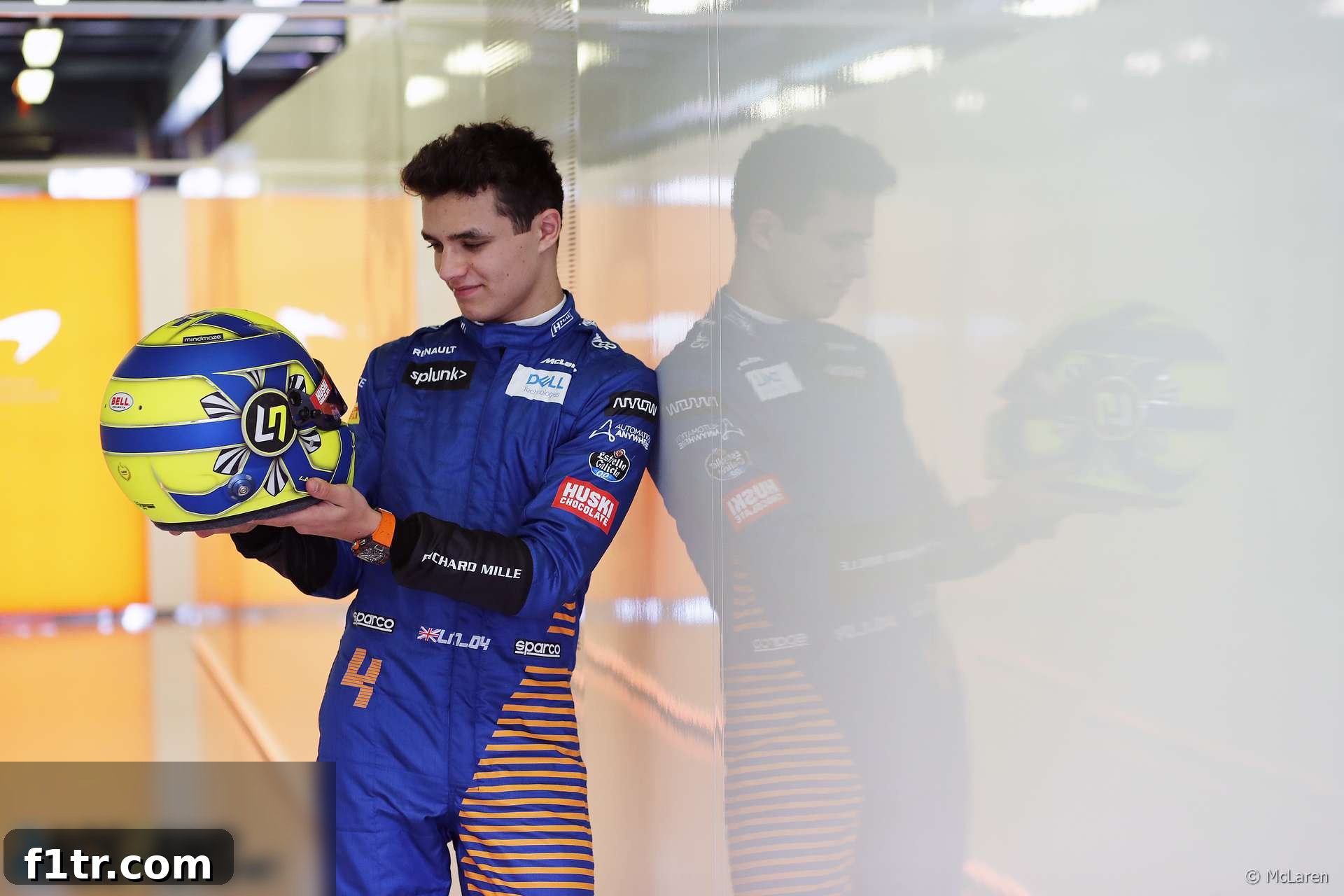
The Canvas of Speed: Lando Norris Unleashes Creativity with F1 Helmet Designs
Formula 1, a sport synonymous with speed, precision, and cutting-edge technology, has always offered its drivers a unique canvas for personal expression: the helmet. More than just vital safety equipment, these helmets have become iconic symbols, instantly recognizable by millions of fans worldwide. In a significant shift that promises to inject even more vibrancy into the sport, the governing body recently rescinded its controversial rule limiting how often drivers could change their helmet liveries. This decision has been met with enthusiasm across the paddock, but perhaps none more so than by McLaren’s charismatic young star, Lando Norris, who plans to introduce a plethora of “exaggerated” and custom designs throughout the season.
Lando Norris’s Vision: A Helmet for Every Race
For Norris, the lifting of the helmet livery restriction isn’t just a minor regulation change; it’s an opportunity to embrace artistic freedom and deepen his connection with each race event. “I’ve got a lot of planned,” the McLaren driver shared enthusiastically. “It’s one of the best things about this year.” His ambitious goal? To debut a new special helmet design at virtually every Grand Prix. This commitment to variety speaks volumes about his passion for design and his desire to commemorate each unique racing experience.
Norris revealed that his home walls are already adorned with a growing collection of helmet concepts, a testament to his dedication. “Soon they’re not going to be on the wall because I’m not going to have enough space,” he quipped, highlighting the sheer volume of his creative ideas. For him, each helmet serves as a tangible memory, a visual diary of his journey through the F1 season. “They’re one thing I get to remember every race by. So now we can mix it up a bit more, and I’ll have some more exaggerated designs and more custom and colourful and stuff like that.”
While exploring a broader spectrum of styles, Norris assures fans that his core identity will remain intact. “I’ll still be keeping with the same concept of what I have, that’s still me,” he explained. The familiar foundational elements of his design will persist, ensuring he remains identifiable on track. However, the surrounding artistry—the colours, schemes, and intricate details—will undergo a dramatic transformation. “How everything is done around it, the colours and schemes of everything, are hopefully going to be more dedicated to each race in the country and everything like that. So a bit more character to it.” This approach promises a dynamic visual narrative, with each helmet potentially reflecting the culture, history, or unique characteristics of the host nation, further enhancing fan engagement and adding a layer of depth to his racing persona.
The Evolution of F1 Helmet Regulations: From Restriction to Expression
To truly appreciate the significance of this rule change, it’s crucial to understand its origins and impact. The regulation, which stipulated that drivers must use “substantially similar” livery designs in each race, was originally introduced in 2015. The stated aim was to make it easier for fans, particularly new ones, to identify drivers by their helmet designs. Prior to this, some drivers had developed a habit of frequently changing their helmet liveries, leading to concerns about brand consistency and fan recognition.
However, the rule quickly became unpopular among both drivers and a significant portion of the fanbase. For many, it stifled creativity and personal expression, stripping away one of the few avenues drivers had to showcase their individuality in a highly regimented sport. Critics argued that in an age of high-definition broadcasting, advanced graphics, and team radio, driver identification was rarely an issue that a static helmet design could solve. Drivers felt restricted, unable to pay tribute to specific events, charities, or cultural moments through their most visible piece of equipment. The lifting of this regulation marks a welcome return to artistic freedom, acknowledging the evolving landscape of fan interaction and driver branding in modern Formula 1.
The Collaborative Canvas: Norris and His Designers
Lando Norris’s ambitious plans are not solitary endeavours; they are the result of collaborative artistry. He primarily works with MDM Designs, a partnership that dates back to his karting days. “I work with one designer mainly, MDM Designs, which is a guy who I’ve worked with since karting. He’s done everything for me,” Norris affirmed. This long-standing relationship forms the bedrock of his helmet designs, where ideas are conceived, translated into professional formats, and then brought to life by expert painters. “A lot of them can be his ideas, some of them are my ideas,” illustrating a dynamic creative synergy.
Beyond his established partnership, Norris is keen to broaden his artistic horizons. He actively seeks to collaborate with a diverse range of creators, encompassing “even more designers and illustrators, more random people basically.” A prime example of this innovative approach was his striking Japan helmet from the previous year. “My Japan helmet last year which was completely hand-painted. It was designed by a woman who then hand-painted it all and did it all in her own style rather than just being a normal spray paint kind of helmet.” This unique collaboration resulted in a truly bespoke piece of art that stood out significantly, demonstrating the potential for truly unconventional and personal designs. His desire is clear: “So it’s trying to just change it up and not having something that just always looks the same. But at the same time, I don’t always wanted to be my own design. I want other people to come up with their own versions and ideas and stuff like that.” This openness to external artistic influences not only promises a constantly evolving aesthetic for Norris but also offers a fantastic platform for emerging artists to showcase their talent on a global stage.
A Contrast in Philosophy: Charles Leclerc’s Approach
While Lando Norris is poised to become a rotating art gallery on wheels, not all drivers share his enthusiasm for frequent changes. Ferrari’s Charles Leclerc represents a more traditional approach, preferring consistency and immediate recognition over constant novelty. “I’ve never been so crazy about it,” Leclerc admitted regarding the rule change. “I don’t think it would change much for me.”
Leclerc’s preference stems from a desire for clear personal branding and easy identification on track. “I like to keep my own design and to be recognisable, if that’s the right word in English, on track with the same helmet design,” he explained. His philosophy prioritizes an established visual identity, allowing fans to instantly pick him out from the pack. While he’s not entirely against special editions, his plans are far more conservative than Norris’s. “So I’ll probably have two, three special editions that will be significantly different, but I won’t be a driver to have a different helmet every race.” This measured approach highlights the diverse perspectives within the F1 paddock regarding personal branding and artistic expression, offering fans two distinct philosophies to follow.
The Broader Impact: Driver Identity, Fan Engagement, and the Art of Racing
The relaxation of helmet regulations extends far beyond individual driver preferences; it has significant implications for Formula 1 as a whole. For the sport, it provides another layer of storytelling and visual spectacle. Each Grand Prix weekend could now offer a new reveal, a fresh talking point for commentators and fans alike. This increased dynamism can foster greater fan engagement, as supporters eagerly anticipate what new design their favourite drivers will showcase next, potentially leading to interactive elements like polls or design contests.
For drivers, the helmet becomes an even more powerful tool for personal branding and connection. In an era where athletes are increasingly building their own brands alongside their team affiliations, a unique helmet design for each race allows for hyper-localised marketing, charity promotion, or personal tributes. It offers a canvas for cultural exchange, allowing drivers to acknowledge the heritage of the countries they race in, thereby building stronger connections with local fanbases.
Historically, iconic helmet designs have transcended the sport itself, becoming cultural touchstones. Ayrton Senna’s vibrant yellow and green, Michael Schumacher’s bold red, and Jim Clark’s simple green stripe are instantly recognizable. While some drivers, like Leclerc, choose to uphold this tradition of a consistent, classic look, Norris’s approach opens the door for a new generation of visual legacies – ones built not on singularity, but on a rich, evolving tapestry of artistic expression. The meticulous craft involved in helmet painting, from the initial digital mock-ups to the intricate airbrushing and finishing, highlights the fusion of art and engineering that defines Formula 1.
The Future is Bright (and Colourful)
The return of creative freedom for F1 helmet designs heralds an exciting new chapter for the sport. It empowers drivers to express their individuality, connect with fans on a deeper level, and add an artistic dimension to the high-octane spectacle of Grand Prix racing. Whether drivers opt for a consistent, recognisable look or embrace a kaleidoscope of changing designs, one thing is certain: the helmets of Formula 1 will continue to be a fascinating blend of safety, speed, and compelling personal artistry. As Lando Norris and others prepare to unveil their ever-changing canvases, fans around the world eagerly await the visual feast that promises to unfold on tracks globally.