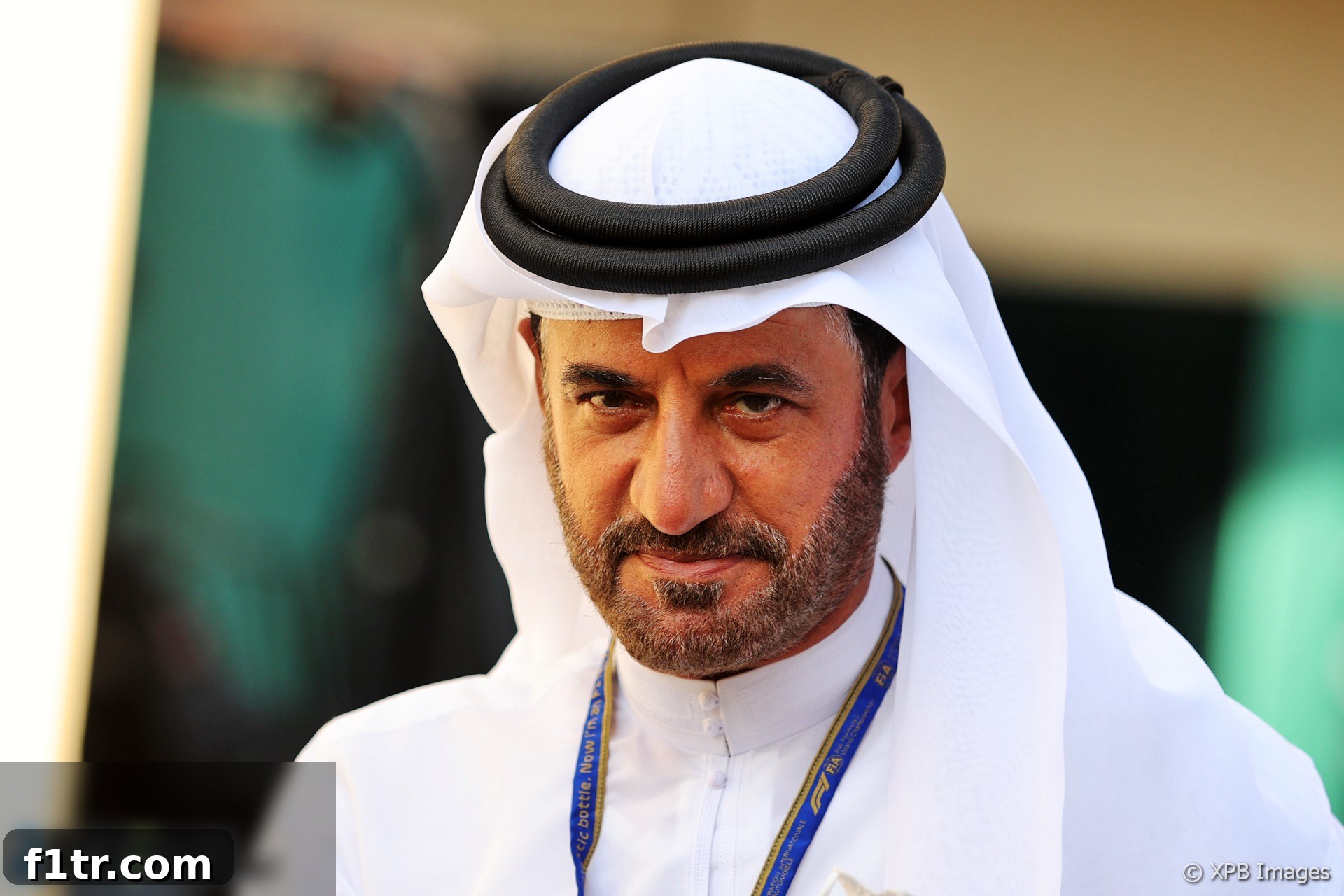
The global motorsport community is poised for a pivotal moment as the Fédération Internationale de l’Automobile (FIA) prepares to elect its new president. On Friday, members will cast their votes to determine who will succeed Jean Todt, the long-serving incumbent who steps down after completing an impressive three consecutive four-year mandates. This election marks a significant juncture for the world of motorsport and mobility, as it will usher in a new era of leadership for the 117-year-old organization.
The two prominent figures vying for this prestigious position are Britain’s Graham Stoker and the United Arab Emirates’ Mohammed Ben Sulayem. Both candidates bring distinct visions and experiences to the table, making this election one of the most closely watched in recent memory. While Stoker represents a degree of continuity, having served alongside Todt, Ben Sulayem campaigns on a platform of transformation and global diversification. The election process itself and the potential ramifications of each candidate’s leadership have been subjects of intense discussion within the racing world.
In previous analyses, we delved into the background and platform of Graham Stoker. Today, our focus shifts to his formidable challenger, Mohammed Ben Sulayem, exploring his journey, his ambitious agenda, and the team he has assembled to guide the FIA into its next chapter. The stage is set in Paris, where the fate of global motorsport’s governance will be decided tomorrow.
Who is Mohammed Ben Sulayem? A Profile in Leadership
Mohammed Ben Sulayem emerges from a distinguished and influential family in Dubai, United Arab Emirates. His brother, Sultan Ahmed, holds prominent positions as chairman of Dubai Port World and a major real estate developer, underscoring the family’s deep roots in international business and development. This background has undoubtedly provided Ben Sulayem with a profound understanding of large-scale organizations and global economic dynamics, crucial skills for leading an institution as expansive as the FIA.
Beyond his formidable family connections, Ben Sulayem is a celebrated figure in the annals of motorsport history. He is an illustrious 14-time Middle East rally champion, a testament to his exceptional skill and dedication as a competitor. His career also saw him campaign in the World Rally Championship (WRC), including high-profile drives with the factory Toyota team. This firsthand experience at the pinnacle of international rallying equips him with an intimate knowledge of competitive motorsport, its challenges, and its requirements, offering a valuable perspective that few administrators possess.
Following his successful active racing career, Ben Sulayem seamlessly transitioned into club administration, where he further honed his leadership capabilities. Since 2005, he has presided over the Automobile and Touring Club of the UAE (ATCUAE), transforming it into a leading national sporting authority. His commitment extends to the classic car community as well, where he serves as the Emirati representative for FIVA, the international governing body for historic vehicles. These roles highlight his comprehensive engagement with all facets of motoring, from competitive racing to heritage preservation.
Ben Sulayem’s involvement with the FIA deepened significantly from 2008 to 2013, during which he served on the FIA World Motor Sport Council, the primary legislative and judicial body for international motorsport. Subsequently, from 2013 to 2017, he held the crucial position of FIA Vice-President for Mobility and Tourism. This tenure provided him with extensive experience across the FIA’s twin pillars: sport and mobility. It also offered him invaluable insights into the diverse needs of member clubs globally, encompassing everything from road safety initiatives to sustainable travel solutions. This rich tapestry of experience across motorsport, mobility, and classic motoring activities forms a robust foundation for his presidential aspirations.
The ambition to lead world motoring’s top job has long been a driving force for Ben Sulayem. He initially contemplated a run for the presidency in 2013 but ultimately withdrew his candidacy. While the specifics of any understanding with then-incumbent Jean Todt remain speculative, his subsequent nomination to the key mobility and tourism office was, as he confided to associates, a strategic step to equip him with the necessary experience and global network for a future presidential bid. He strategically chose not to challenge Todt in 2017, instead conserving his resources and building momentum for the current election cycle, demonstrating a long-term vision and calculated approach to achieving his goal.
Despite residing in the UAE, Mohammed Ben Sulayem has firmly stated his commitment to maintaining the FIA’s headquarters in Paris. In an exclusive interview, he passionately declared, “I love Paris. I have a private jet and will commute.” This pragmatic approach to global leadership, while raising questions about its alignment with FIA sustainability pledges, mirrors practices occasionally adopted by his predecessor, Jean Todt. It underscores the challenges of leading a truly global organization that requires frequent international travel. On a lighter note, Ben Sulayem is also a renowned classic car enthusiast, boasting an exquisite collection that includes an impressive 21 Mercedes-Benz 600s – a testament to his profound appreciation for motoring heritage and engineering excellence.
What Does Ben Sulayem Stand For? A Vision for a Member-Led FIA
Mohammed Ben Sulayem’s campaign is anchored by the compelling slogan ‘FIA for Members,’ encapsulating his core philosophy: “Focused on delivering what the members want and need.” This commitment to a member-centric approach is the cornerstone of his manifesto, which is built upon extensive consultation with FIA member clubs worldwide. His platform outlines three ambitious yet critical pledges for the future of the FIA:
- **Double Motorsport Participation Worldwide:** This is a bold objective aimed at democratizing motorsport and expanding its global footprint. Ben Sulayem envisions a future where motorsport is more accessible, attracting new participants from diverse backgrounds and regions. This involves initiatives to support grassroots racing, facilitate talent identification, and reduce barriers to entry for aspiring competitors at all levels, from karting to national championships.
- **Strengthen Diversity and Inclusion:** Recognizing the critical importance of a more equitable and representative motorsport, Ben Sulayem is committed to fostering an environment where talent can thrive irrespective of gender, ethnicity, or socioeconomic background. This pledge seeks to break down historical barriers and create pathways for underrepresented groups within all areas of motorsport.
- **Be a Leading Opinion-Former on Sustainable Mobility:** As the world grapples with climate change and environmental concerns, the FIA has a crucial role to play in promoting sustainable practices. Ben Sulayem aims for the FIA to be at the forefront of this movement, advocating for innovative and environmentally responsible mobility solutions, and leveraging its global influence to drive positive change within the automotive industry and beyond.
“We set out to be a member-led team, and this manifesto is based on the actual, real needs as expressed by our members,” Ben Sulayem affirmed. “This is the members’ manifesto for the future of the FIA, and it is our unwavering commitment to implement it if elected.” This statement reflects his dedication to translating the aspirations of member clubs into tangible policies and actions, fostering a sense of ownership and collective progress within the organization.
To underscore his commitment to diversity and inclusion, Ben Sulayem commissioned a comprehensive study that informed a strategic framework built on three main pillars:
- **Talent Identification and Support:** Establishing robust programs to identify promising talent in emerging motorsport regions and providing them with the necessary resources, coaching, and opportunities to develop their skills and progress through the ranks.
- **Promotion of STEM Subjects:** Actively encouraging engagement in Science, Technology, Engineering, and Mathematics (STEM) among young people, particularly in key target areas. This initiative aims to cultivate the next generation of engineers, technicians, and innovators crucial for the sport’s technological advancement and broader societal impact.
- **Establishment of a Legacy Fund:** A groundbreaking proposal to create a dedicated fund, underwritten by a percentage of income from event promoters. This fund would be specifically designed to enable fans to transition from mere spectators to active participants, addressing financial barriers and fostering greater engagement at the grassroots level. This innovative funding mechanism could significantly expand the participant base and uncover untapped talent.
Ben Sulayem’s campaign strategically appeals to a broad coalition of emerging and developing countries, many of whom feel that the time is ripe for a paradigm shift in the FIA’s leadership. The notion of electing a non-European president for the first time in the organization’s 117-year history is a powerful and resonant election card. This sentiment gains considerable traction given that while Europe historically dominated motorsport, it now constitutes approximately 45% of the FIA’s voting membership, meaning over half of the members are situated outside the traditional founding territory. This demographic shift underlines the growing demand for global representation and leadership that reflects the diverse geographical landscape of international motorsport.
Furthermore, another compelling factor influencing this election is the undeniable rise of the Gulf region on the global stage. Fueled by booming energy prices and ambitious diversification strategies, the Gulf states are increasingly asserting their influence across various spheres and disciplines, including sports. Dubai boasts architectural marvels like the world’s tallest building, while Saudi Arabia hosts the world’s largest company. The region collectively holds more Grands Prix per capita than any other, demonstrating its significant investment and passion for motorsport. With Qatar hosting the FIFA World Cup, the question naturally arises: why should an Emirati not preside over the world’s motoring clubs? This burgeoning regional power, combined with the desire for a more diverse leadership, positions Ben Sulayem as a representative of this evolving global dynamic.
Who is in Mohammed Ben Sulayem’s Team? A Blend of Experience and New Perspectives
The FIA statutes mandate that presidential candidates nominate a comprehensive ‘slate’ of officials. This team typically includes a candidate for president, a deputy president for sport, a deputy president for mobility, a president of the senate, and a supporting cast of vice-presidents representing various global regions. Ben Sulayem has meticulously assembled a diverse and experienced team designed to bring a fresh yet knowledgeable approach to the FIA’s governance.
For the critical office of Deputy President for Sport, Ben Sulayem has nominated Robert Reid. A highly respected figure in motorsport, the 55-year-old Reid achieved international acclaim as the world champion co-driver to the late Richard Burns. Beyond his competitive success, Reid is recognized as a politically astute and seasoned motorsport administrator, bringing a deep understanding of the sport’s regulatory and operational complexities. His appointment signals a commitment to strong, principled leadership within the sporting arm of the FIA.
In the equivalent mobility role, Tim Shearman has been slated as the candidate for Deputy President for Mobility. As the CEO of the Canadian Automobile Association (CAA) and a current FIA Senate member, Shearman possesses extensive experience in the crucial areas of automotive services, road safety, and mobility advocacy. His leadership at a prominent national automobile club, coupled with his tenure on the FIA Senate, provides him with unique insights into the challenges and opportunities facing global mobility and tourism sectors.
The FIA Senate serves as the body’s ethics and financial watchdog, making the role of its president immensely important. Ben Sulayem has nominated Carmelo Sanz de Barros for this position. Sanz de Barros brings a wealth of experience, having previously administered Spain’s historic Jarama F1 circuit and currently serving as the president of RACE, the prestigious Spanish automobile club. His background in both circuit management and national club leadership provides him with a comprehensive understanding of the financial and ethical responsibilities inherent in overseeing the FIA’s governance.
The slate of candidate vice-presidents further exemplifies Ben Sulayem’s strategy of balancing established expertise with new perspectives and regional representation. This list includes long-serving motorsport administrators such as Abdulla Al Khalifa from Bahrain, who brings deep experience from a rapidly growing motorsport hub, and Anna Nordkvist from Sweden, representing European interests with a fresh outlook. A particularly notable nomination is that of Brazilian-born Fabiana Ecclestone, wife of former Formula 1 supremo Bernie Ecclestone. Having previously headed marketing for the Brazilian Grand Prix, Fabiana Ecclestone is nominated to represent South America. Her inclusion brings a blend of significant experience in commercial motorsport and a powerful connection to the sport’s global history, strategically aiming to garner support and leverage expertise from diverse corners of the world. This carefully curated team reflects Ben Sulayem’s vision for a globally representative, experienced, and forward-thinking FIA leadership.
Conclusion: A Defining Choice for the FIA’s Future
As the FIA membership prepares to cast its votes, the choice before them is clear and profound. As outlined from the very inception of this election cycle, the decision rests between two distinct paths: continuity, embodied by Graham Stoker, and transformative change, championed by Mohammed Ben Sulayem. The legacy of Jean Todt’s twelve-year presidency has been one of stability and growth, but the global landscape of motorsport and mobility is evolving rapidly, demanding new approaches and fresh perspectives.
Mohammed Ben Sulayem presents himself as a candidate for a more globalized, inclusive, and forward-thinking FIA. His extensive background as a competitor, an administrator, and a leader in both sport and mobility provides him with a unique blend of skills. His manifesto, ‘FIA for Members,’ with its ambitious pledges to double participation, strengthen diversity, and lead on sustainable mobility, resonates deeply with many clubs seeking greater engagement and relevance in the modern era. Furthermore, his appeal to emerging regions and his identity as the first non-European candidate carry significant weight in an increasingly interconnected world.
The fundamental question that the FIA membership must answer is whether it is ready to embrace such a significant shift. Is the organization prepared to break with tradition and elect a leader from outside its historical European stronghold, embracing a vision that prioritizes global expansion and a redefinition of its core mission? The outcome of this election will not merely decide a president; it will set the strategic direction for the FIA for years to come, shaping the future of motorsport and mobility for generations. The global motorsport community watches with bated breath, eager to witness which path the FIA will ultimately choose.