Welcome to our latest Formula 1 roundup, where we delve into the paddock’s most compelling stories, from drivers’ aspirations to the sport’s ongoing debates. This edition features candid insights from a rising star, a legendary champion’s humorous revelation, and crucial updates from the junior racing circuits. We also explore significant discussions shaping the future of motorsport, offering a comprehensive look at the world of speed and competition.
In Brief: Unpacking the Latest Motorsport Headlines
Lando Norris: The Drive for Merit Over Money in Formula 1
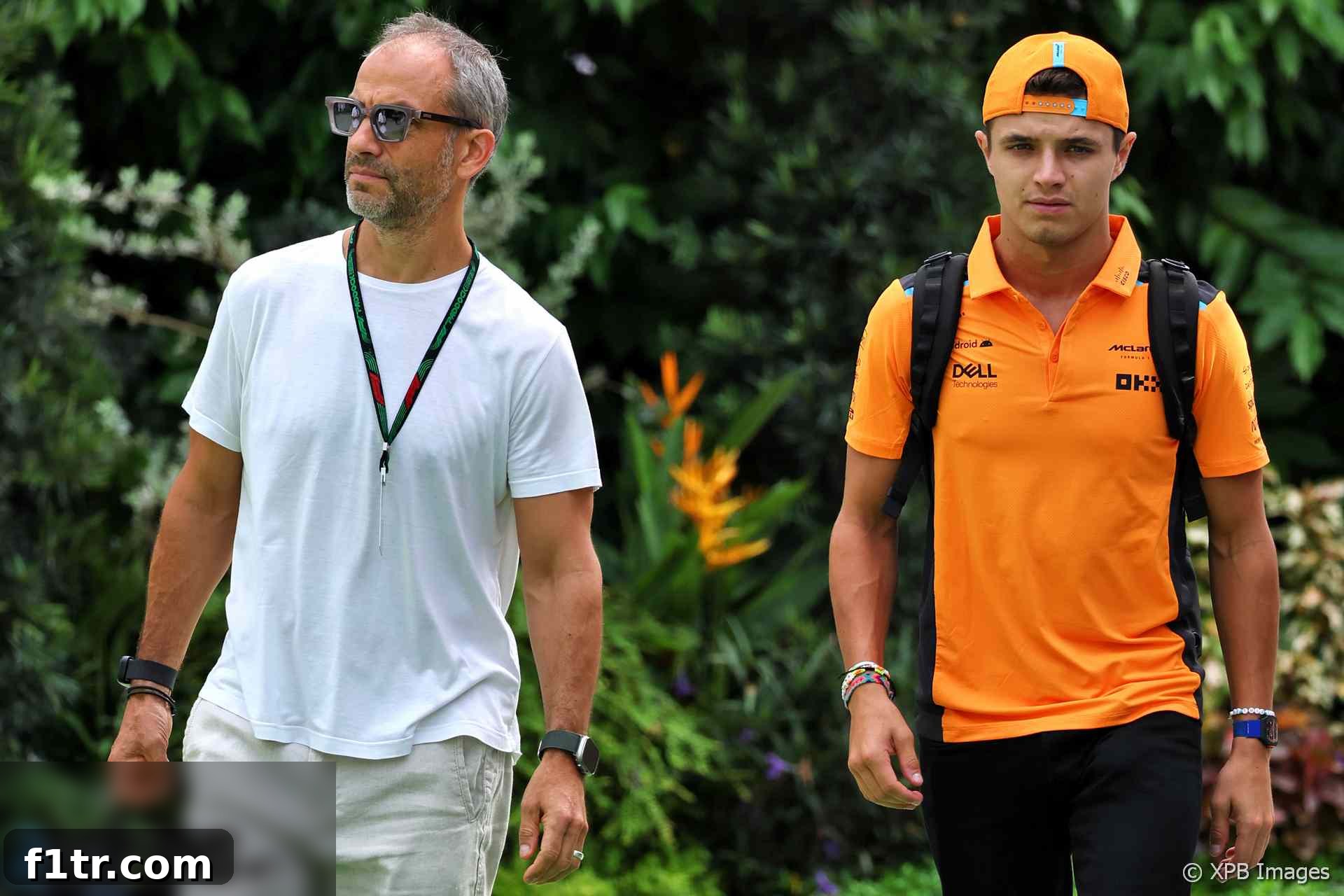
In a sport often criticized for its financial barriers, Lando Norris, one of Formula 1’s brightest talents, has openly spoken about his firm stance against buying his way into the pinnacle of motorsport. Despite his father, Adam Norris, possessing an estimated wealth of £200 million when Lando joined McLaren’s junior programme in 2017, the young Brit was resolute in his desire to earn his place on merit. This conviction highlights a critical discussion within F1: the ethical considerations and perceived fairness surrounding “pay drivers” versus those who climb the ranks purely through talent and dedication.
Norris’s journey through karting and junior formulas, including his impressive run in Formula 2, was indeed supported by his family. However, he consistently emphasized that this support was for opportunities and development, not for a guaranteed seat in F1 itself. “I never wanted him to pay for me to come into Formula 1,” Norris shared candidly on the High Performance Podcast. This deeply personal goal underscored his ambition to be recognized for his raw ability, free from any lingering suggestions that his position was solely due to financial backing. This mentality, he explained, was crucial for his self-worth and confidence within the highly competitive and often scrutinizing environment of Formula 1.
The distinction Norris makes between family support for progression through junior categories and outright purchasing an F1 seat is vital for understanding his perspective. Many promising young drivers face immense financial hurdles, and family wealth can provide the necessary foundation for progression up to a certain level. Yet, for Norris, the final, crucial step into Formula 1 had to be independently validated by a team based purely on performance and potential. “I feel much prouder to say that I’m here because McLaren brought me on and I was a McLaren junior driver,” he stated. This progression, from junior development programme to official race driver, provided a profound sense of achievement that he valued far more than any alternative path. It reinforced the notion that true success in F1 should be a testament to skill, dedication, and the belief shown by professional racing teams.
While acknowledging the fortune of having early career support, which many aspiring racers tragically lack, Norris’s narrative resonates powerfully with those who champion pure talent and meritocracy. His ascent serves as a powerful reminder that while finance opens doors in junior categories, the ultimate validation in Formula 1 should always come from raw speed and proven capability, not a chequebook. This perspective not only endears him to fans but also fuels the ongoing debate about accessibility, fairness, and the true meaning of achievement within elite motorsport.
Lewis Hamilton: A Champion’s Moment of Desperation on Track
Even for a driver of Lewis Hamilton’s calibre, a seven-time world champion with unparalleled experience, the physical and mental demands of Formula 1 racing can push the human body to its absolute limits. In a candid and somewhat humorous revelation, Hamilton recently admitted to succumbing to the urge to urinate in his F1 car on just one occasion during his extensive 340-race career. This rare moment of desperation occurred during the gruelling Singapore Grand Prix, a race renowned for its extreme heat, suffocating humidity, and challenging street circuit layout, making it one of the toughest on the calendar.
Hamilton’s confession highlights a lesser-discussed but critical aspect of driver endurance and race strategy. While most drivers utilize a drink system during races to stay hydrated, Hamilton revealed to Hot Ones that he typically avoids drinking much in the car, preferring to shed the extra weight of liquids. This personal preference means he rigorously manages his hydration before a race, visiting the restroom “as many times as possible right at the last minute.” His deep-seated reluctance to relieve himself in the car, stemming from a personal aversion, makes his Singapore incident all the more remarkable and indicative of extreme circumstances.
The unique and brutal circumstances of the Singapore Grand Prix, specifically the intervention of a Safety Car, created an unexpected lull that intensified Hamilton’s discomfort. “The Safety Car came out and I was like, ‘I’m dying’,” he recounted, illustrating the severity of the situation. The combination of a full bladder and the immense G-forces experienced during acceleration and braking in an F1 car can be incredibly distracting and uncomfortable, severely impacting a driver’s focus and concentration. Maintaining peak mental acuity is paramount in Formula 1, where fractions of a second can determine success or failure. Hamilton’s struggle underscores the incredible physical control and mental fortitude required to compete at the highest level, even when faced with basic human needs under such intense and relentless pressure. Luckily, for Hamilton, this was an isolated incident, allowing him to maintain his otherwise pristine record for the vast majority of his illustrious career.
Doriane Pin to Miss FREC Round and Le Mans Due to Injury
The demanding nature of motorsport was unfortunately underscored by the recent injury to rising talent Doriane Pin. The promising French driver will be forced to miss the upcoming Formula Regional European Championship (FREC) round at Zandvoort after sustaining fractured ribs during an incident at the challenging Spa-Francorchamps circuit. This setback not only affects her FREC campaign, where she is gaining crucial experience, but also means she will be unable to participate in the iconic Le Mans 24 Hours, a significant and disappointing blow for any endurance racer, particularly one with her aspirations.
Pin’s injury serves as a stark reminder of the inherent physical risks in competitive racing across all disciplines. Despite continuous advancements in safety technology and circuit design, high-speed impacts and the relentless forces exerted on the body can still lead to serious injuries, disrupting seasons and challenging drivers’ resilience both physically and mentally. For a young driver like Pin, who is actively competing in multiple high-profile series including F1 Academy and FREC, such an injury can be particularly impactful, potentially hindering crucial development and momentum during a pivotal stage of her career. Her participation in various championships showcases her versatility and ambition, but also naturally exposes her to increased track time and thus increased risk.
However, Pin remains remarkably optimistic about her return to action. She anticipates being back on track for the F1 Academy round, which supports the Spanish Grand Prix, demonstrating her remarkable determination and focus. This rapid expected return reflects the incredible recovery capabilities often seen in elite athletes and their unwavering commitment to their sport. Her journey back to competitive racing will be closely watched, as she represents a promising talent in the growing contingent of female drivers aiming for the highest echelons of motorsport. Her temporary absence highlights the fine line between pushing limits and potential injury, a constant consideration for every competitor in this thrilling yet dangerous sport.
Advert | Become a Supporter & go ad-free
Essential Motorsport Links and Insights
Stay informed with a curated selection of recent articles and reports from across the motorsport world. These links provide deeper dives into critical discussions, behind-the-scenes perspectives, and future developments shaping Formula 1 and beyond, ensuring you’re up-to-date with all the latest happenings.
Africa’s New F1 Fans: The Push for a Race on the Continent (BBC)
Explore the growing enthusiasm for Formula 1 across Africa and the complex challenges of bringing a Grand Prix to the continent. This BBC report highlights the political and logistical hurdles, including how local political events can inadvertently impact major international sporting ambitions. Toby Venter, head of the OT Venter group, which owns the Kyalami circuit, discusses how proposed high-profile political visits and geopolitical tensions inadvertently “scuppered the plans” for a potential race, demonstrating the complex interplay between sports and global politics on the grand stage.
Alex Jacques on the Joys and Challenges of F1 Commentary (Motorsport Broadcasting)
Dive into the captivating world of motorsport broadcasting with Alex Jacques, who shares his unique perspective on the exhilaration and immense responsibility of commentating on Formula 1. Jacques reflects on the emotional toll and professional duty during critical, unforeseen moments, specifically recalling the tragic incident involving Anthoine Hubert. He explains the mental discipline required to “push all the emotion out and just deal in the facts that you have available,” underscoring the demanding nature of live commentary, particularly when navigating sensitive and difficult situations.
Frederik Vesti: Unwavering Focus on Formula 1 (Formula Scout)
Frederik Vesti, a promising talent in the junior ranks, articulates his singular focus on reaching Formula 1. He discusses the crucial role of continuous development, even for reserve drivers, in preparing for the ultimate challenge. Vesti argues that actively engaging in various championships and staying “sharp driving on new tyres and challenging himself” is more beneficial than merely being a static reserve. He believes team principals would favor a driver who continuously seeks to “push the limits of a race car” and maintains mental acuity through diverse racing experiences, thereby consistently enhancing their skills for a potential F1 call-up.
Formula 4 Stars Ready for the FIA Motorsport Games Spotlight (FIA)
The FIA Motorsport Games provide an exciting and equitable platform for emerging talents in Formula 4. This initiative aims to level the playing field and foster competitive growth by making “data from the fastest car in each practice session… available to every driver in the field to study and review.” This unique approach encourages learning, strategic development, and greater accessibility among young drivers, offering invaluable insights and promoting a collaborative yet fiercely competitive environment for the stars of tomorrow as they hone their craft.
Advert | Become a Supporter & go ad-free
Nato on Shanghai Podium: “Feels Good After the Hard Work” (Formula E)
Norman Nato reflects on his recent podium finish in Shanghai, emphasizing the profound satisfaction derived from dedicated effort and strategic execution in Formula E. Looking ahead, Nato anticipates similar energy-saving races, particularly in upcoming events like Portland, stressing that “strategy will be really important.” His comments highlight the strategic depth of Formula E, where energy management, precise driving, and shrewd race tactics are often key determinants of success, offering a unique challenge distinct from many other forms of motorsport.
Mick Schumacher: WEC Offers “A Great Championship to Be Part Of” (FIA WEC)
Mick Schumacher shares his positive experience in the World Endurance Championship (WEC), praising it as a “great championship to be part of.” He describes the Alpine A424 Hypercar as a “very pointy race car” that responds well to an aggressive driving style. Schumacher expresses optimism about extracting even more pace from the car, highlighting its strong setup for various events and tracks. His insights underscore the unique technical and driving challenges presented by endurance racing, offering a different yet equally rewarding dimension to his career outside of Formula 1.
Pruett’s Cooldown Lap: Reflection on the Indy 500 (Racer)
Marshall Pruett’s post-race analysis of the Indy 500 often provides unique insights into driver personalities and professionalism beyond the track. He contrasts approaches to media engagements, noting how one driver’s genuine and sincere apology for being late made a significant impression, while another’s nonchalance did not. Pruett’s observations reveal the subtle yet important aspects of driver conduct and public relations in high-stakes environments like the Indy 500, offering a crucial glimpse into the human and professional side of elite racing.
We always endeavor to credit original sources and welcome contributions from our readers. If you have a tip for a link relating to single-seater motorsport that you believe would be of interest to our community and feature in the next RaceFans round-up, please send it to us via the contact form. We appreciate reader contributions to ensure our links section remains comprehensive and relevant to our dedicated audience.
Advert | Become a RaceFans supporter andgo ad-free
Social Media Pulse: Key Voices from the Motorsport World
Social media continues to be a vibrant hub for breaking news, team announcements, and immediate reactions in motorsport. Here’s a selection of notable posts from X (formerly Twitter) and other platforms, offering quick updates and unique perspectives from key figures and organizations within the F1 community and wider racing world.
A source tells me that Gene Haas has no intention to leave #F1 in wake of closure of #NASCAR team.
— Jenna Fryer (@JennaFryer) May 30, 2024
Incredible. 😍
400,000 LEGO bricks to build this life-size MP4/4!#Senna30 pic.twitter.com/ZNIXTPYaUC
— McLaren (@McLarenF1) May 30, 2024
Ex-US president Donald Trump, who was 20 days into a court case over falsifying his business records when he attended the #MiamiGP and was pictured with @FIA president @Ben_Sulayem and @McLarenF1’s @ZBrownCEO & @LandoNorris, has been found guilty of all 34 charges he faced.#F1 pic.twitter.com/YToAYY9ZTc
— RaceFans (@racefansdotnet) May 30, 2024
Advert | Become a RaceFans supporter andgo ad-free
- Find more official F1 accounts to follow in the F1 Twitter Directory, and join the conversation to stay connected with the pulse of the sport and engage directly with teams and drivers.
Comment of the Day: The Divisive Debate Around Balance of Performance (BoP) in Motorsport
Today’s featured comment dives into one of motorsport’s most contentious and hotly debated topics: Balance of Performance (BoP). This system, widely used in categories like the World Endurance Championship (WEC), IMSA, and various GT racing series, aims to equalize performance between diverse cars or manufacturers. The theoretical goal is to promote closer, more exciting racing by preventing any single car concept from dominating. However, as Max Verstappen and many purists argue, it often comes at the expense of pure sporting integrity and the spirit of innovation.
It’s supposed to be a sport, It’s supposed to be a competition not just between drivers but also the engineer’s, designers etc… The whole point of the sport is to design a car, engine etc… that is faster than the competition and to beat them by as big a margin as possible.
The BoP is just artificially manipulating the performance so that those who do a better job don’t get rewarded for it while those who aren’t able to produce a competitive package get artificially moved forward. It goes against the very essence of what the sport is supposed to be about.
But then modern fans have been indoctrinated by the show over sport Netflix nonsense so likely don’t even know what real racing and real sport is anymore. The great days of the past where it was a true sporting competition are long gone in the modern show over sport era of gimmicks and artificial nonsense.
You spend millions designing the best car and best engine only to then be handicapped to oblivion whenever the organisers feel like manipulating the results.
That is not a sport and it does nothing but make a mockery of what Le Mans used to be!
Lynn-m
Lynn-m’s passionate argument perfectly encapsulates the concerns of many traditional motorsport fans and purists. The core of their critique lies in the fundamental belief that racing should be a meritocracy, where innovation, engineering brilliance, and unadulterated driver skill are the sole determinants of success. When a team invests vast sums in designing a superior car or developing a groundbreaking engine, only to have its performance artificially curtailed or enhanced by BoP regulations, it fundamentally undermines the competitive spirit and the incentive for genuine technological advancement. This leads to a perception that the sport is no longer about outright, honest competition but about creating an “artificial spectacle” where outcomes are manipulated rather than authentically earned on track.
Proponents of BoP, on the other hand, argue that it is a necessary evil to maintain competitive grids, especially in categories where manufacturers field vastly different car concepts (e.g., hybrid powertrains vs. traditional combustion engines, different chassis designs and aerodynamic philosophies). Without BoP, they contend, a single manufacturer or design could achieve overwhelming dominance, leading to predictable and uninteresting races, which could ultimately drive away both fans and manufacturers. They suggest that BoP ensures that multiple teams have a genuine chance to win, fostering closer racing, enhancing the entertainment value, and making the sport more appealing for a broader, modern audience, which is crucial for commercial viability and growth in today’s sports landscape.
However, Lynn-m’s potent point about “show over sport” resonates deeply with purists who witnessed eras where technological advancements and competitive advantage were celebrated as the very essence of racing. They fear that the constant adjustments and subjective nature inherent in BoP dilute the engineering arms race that has historically been a cornerstone of motorsport innovation. For them, the pride of seeing a truly dominant machine, born from superior design, meticulous execution, and relentless development, outweighs the desire for every race to be an artificial photo finish. The comment starkly contrasts the perceived “gimmicks and artificial nonsense” of modern racing with the “true sporting competition” of the past, particularly in prestigious events like Le Mans, whose rich legacy they believe is inadvertently tarnished by the implementation of BoP.
The debate around BoP highlights a fundamental and ongoing tension in modern motorsport: balancing the purity of sporting competition and technological innovation with the crucial need for entertaining spectacles to ensure commercial viability and attract new audiences. While there are valid arguments on both sides, Lynn-m’s critique serves as a powerful reminder of the passion, principles, and historical context that underpin the sport for its most dedicated followers, underscoring why prominent drivers like Max Verstappen remain vocal critics of performance equalization.
Happy Birthday to Our Motorsport Enthusiasts!
A very special happy birthday goes out to The Dutch Bear and Duncf1! We hope you have a fantastic day filled with celebration, joy, and all things motorsport. Your unwavering passion for racing makes our community truly special and vibrant.
On This Day in Motorsport History
- Born today in 1959: Andrea de Cesaris, a charismatic and often spectacular Italian Formula 1 driver. De Cesaris famously held the unenviable record for the most Grand Prix starts without a victory, participating in an incredible 208 races before Nico Hulkenberg surpassed his tally earlier this year. Known for his aggressive and sometimes erratic driving style, which earned him the nickname “The Flying Donkey” due to his frequent crashes early in his career, de Cesaris was also renowned for his blistering one-lap pace and occasional flashes of brilliant performance, including multiple podium finishes and leading several races. His enduring presence in F1 across various teams from 1980 to 1994 cemented his place as a memorable, if often unlucky, figure in the sport’s rich history, a true character who left an indelible mark.