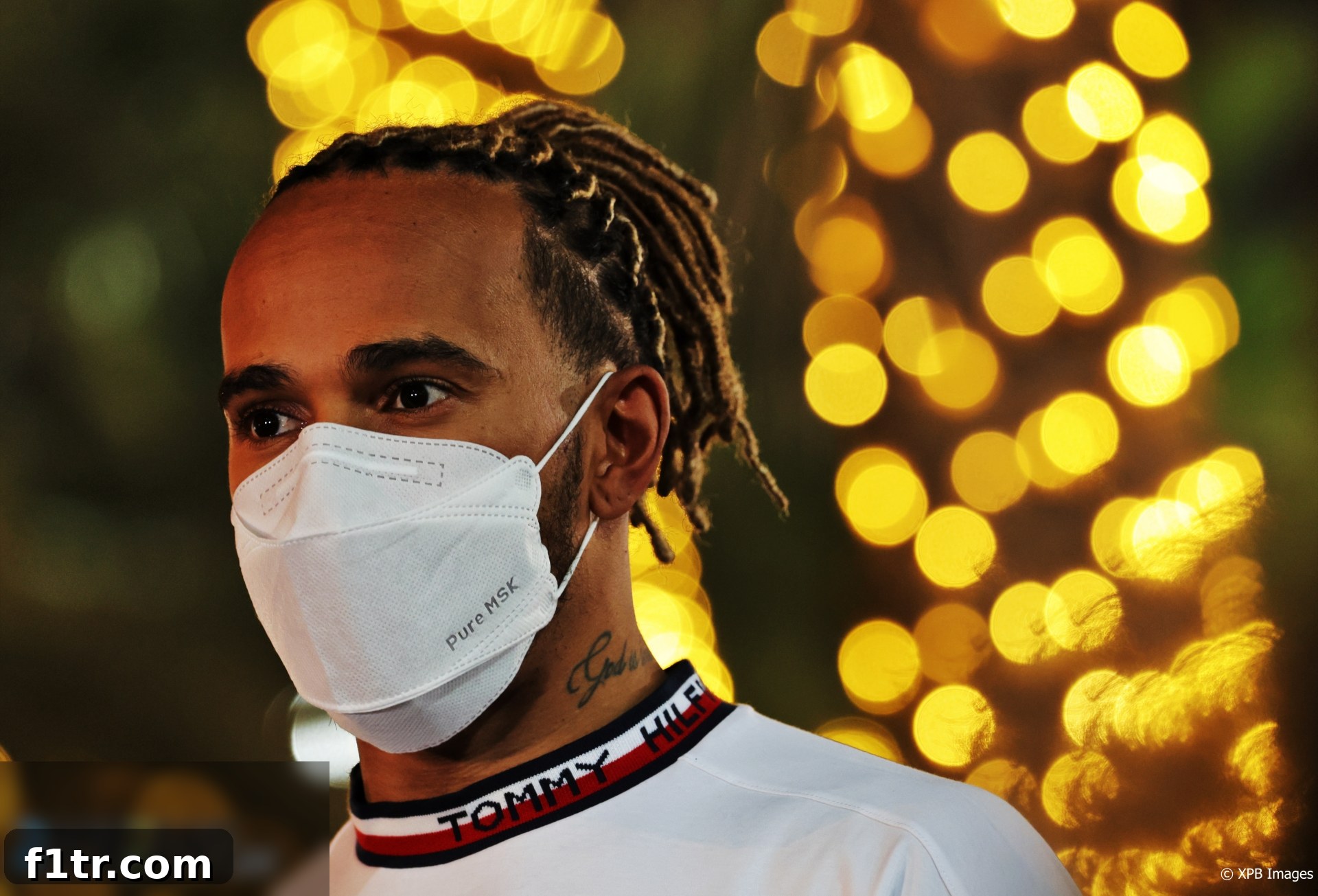
Lewis Hamilton, the seven-time Formula 1 world champion, has publicly expressed his welcome for the FIA’s candid admission regarding the errors made during the controversial conclusion of the 2021 championship-deciding Abu Dhabi Grand Prix. This acknowledgment marks a significant moment for the sport, providing a degree of closure after one of its most contentious finales.
The global governing body of motorsport, the FIA, today released a comprehensive seven-page executive summary detailing the findings of its thorough investigation. This report meticulously examined the disputed circumstances under which Hamilton ultimately lost the championship title to his rival, Max Verstappen, in the final moments of the 2021 season. The findings, delivered just minutes before the final practice session for the Bahrain Grand Prix, shed light on the intricacies of the race director’s decisions.
Crucially, the FIA’s report determined that the then-F1 Race Director, Michael Masi, failed to adhere strictly to Formula 1’s established sporting regulations. Specifically, the report highlighted Masi’s breach of protocol by immediately deploying the Safety Car after instructing only a select group of lapped cars to unlap themselves. Adding to the controversy, the FIA also attributed a “human error” to the fact that only five of the eight lapped cars – precisely those five cars that separated Hamilton from his championship contender, Verstappen – were permitted to regain the lead lap. This specific decision dramatically altered the grid order for the final racing lap, directly impacting the championship outcome.
Speaking to the media after the qualifying session for the Bahrain Grand Prix, Hamilton revealed that he had not yet had the opportunity to read the full report. “I’ll read it maybe after the weekend or something like that,” he stated, indicating his immediate focus remained on the ongoing race weekend. However, having been briefed on its core conclusions and the FIA’s acknowledgment of mistakes, Hamilton conveyed his satisfaction. He expressed pleasure that the authors of the report recognized the critical errors made by race direction in their handling of the final restart procedure, underscoring the importance of transparency in such high-stakes scenarios.
“I wasn’t expecting an apology, and it’s not really something I’m truly focused on,” Hamilton clarified, reflecting a pragmatic stance. “We know that’s the way it is, and that wasn’t going to probably happen. But the fact is that at least there is that transparency; I mean, it’s a human error, I think that’s a positive step.” His comments suggest a greater emphasis on the lessons learned and the future integrity of the sport rather than dwelling on past grievances or personal apologies. The admission of “human error” by the FIA signifies a critical step towards accountability, a sentiment widely echoed across the paddock and by fans.
The report explicitly reinforced that, despite the acknowledged errors, no existing mechanism within the FIA regulations allows for the alteration of the race’s outcome or the reversal of Verstappen’s championship triumph. This legal and procedural limitation means that while the circumstances are now clearer, the final result stands. “We can’t go back, unfortunately, and change the past,” Hamilton acknowledged, embracing a forward-looking perspective. “And so I just look at focusing on doing what I can do now and trying to shape the future, working with this team, trying to get this car into a window. We’ve got a bit of work to do.” His remarks underscored a commitment to his current team, Mercedes-AMG Petronas F1, and to overcoming the challenges presented by the new season’s regulations and car performance.
Mercedes team principal Toto Wolff mirrored Hamilton’s forward-thinking approach, stating, “I’ve not been thinking about Abu Dhabi anymore since our car has proven to be not competitive on the track for this year.” This comment highlights the immediate shift in focus for the team, from past controversies to the pressing performance issues of the new W13 challenger. However, Wolff was quick to commend the FIA for its courage in publishing the report’s findings, viewing it as a pivotal moment for the sport’s governance. “I think it’s a massive step change to what we’ve seen before,” he asserted, recognizing the FIA’s willingness to be transparent as a progressive move.
“Whether the report is complete or not, or weak or hard, I think to release it is a good step forward in terms of governance. And you can read it either way,” Wolff continued, emphasizing the broader significance of the transparency itself. “For us, there are the words that say ‘human error’. Human error and the acknowledgment of it is, I think, very important, and now we close the chapter.” This sentiment from the Mercedes boss indicates a desire to move on, seeing the FIA’s admission as a sufficient resolution to a painful episode, allowing the team to concentrate fully on the competitive demands of the current season.
The 2021 Abu Dhabi Grand Prix remains etched in Formula 1 history as one of the most divisive events. The controversy stemmed from the Safety Car period towards the end of the race, triggered by Nicholas Latifi’s crash. Initially, race control informed teams that lapped cars would not be allowed to unlap themselves, a standard procedure. However, a subsequent and unprecedented decision allowed only the five cars separating Hamilton and Verstappen to unlap, creating a direct one-lap shootout between the two title rivals. This decision, later acknowledged as a “human error” and a breach of regulations by the FIA, effectively stripped Hamilton of a seemingly assured eighth world title and handed it to Verstappen. The immediate aftermath saw widespread outrage, intense scrutiny of Masi’s role, and ultimately led to his removal from the Race Director position and a significant restructuring of race control operations for the 2022 season onwards.
The FIA’s investigation and its subsequent report serve as a crucial response to the need for accountability and improved governance within Formula 1. The acknowledgment of errors, coupled with the organizational changes in race control, aims to restore confidence in the consistency and fairness of officiating. Moving forward, the sport intends to operate with a more robust and transparent decision-making process, ensuring that such controversies are minimized. The appointment of new race directors and the implementation of a virtual race control room are among the key measures introduced to prevent a repeat of the 2021 finale’s events, solidifying the FIA’s commitment to sporting integrity.
As Formula 1 embarks on a new era with significantly revised technical regulations for 2022, the focus for teams and drivers has largely shifted. While the memories of Abu Dhabi linger, the competitive landscape and the challenge of adapting to the new generation of cars now dominate discussions. Mercedes’ early struggles with their new car, as referenced by Toto Wolff, exemplify this shift. The sport looks ahead, determined to provide thrilling, fair, and undisputed competition for its global fanbase, building on the lessons learned from a turbulent past.
2022 Bahrain Grand Prix and Beyond
- Nico Hulkenberg’s Resilience: A Look at His F1 Comeback Potential
- Alfa Romeo Tackles Start Line Woes for Bottas and Zhou in 2022
- Guanyu Zhou’s Historic Debut: China’s First F1 Points Scorer
- Verstappen’s Bahrain Frustration: An Unfiltered Race Radio Transcript
- Mercedes’ Speed Deficit Explained: Drag, Not Power Unit, Says Wolff
Browse all 2022 Bahrain Grand Prix articles and F1 news