Australian Grand Prix Shocker: Albon Crash Triggers Early Red Flag and Strategic Mayhem
The 2023 Australian Grand Prix delivered its customary blend of high-octane drama right from its nascent stages, as an early red flag brought the race to an abrupt halt after just eight laps. The cause? A significant crash involving Williams driver Alexander Albon, an incident that not only necessitated a full race suspension but also sent strategic ripples through the pit lane, reshaping the competitive landscape for a significant portion of the Grand Prix.
Albon’s Incident at Turn Seven: A Costly Misstep
The incident unfolded with startling speed at the notoriously challenging Turn Seven of the Albert Park Circuit. Albon, pushing his Williams FW45, lost control and spun off the track, making heavy contact with the barrier. The impact was substantial, causing considerable damage to his car and, crucially, scattering a significant amount of debris and gravel across the racing line. In the high-speed world of Formula 1, such track contamination poses an immediate and severe safety risk to all competitors, necessitating rapid intervention from race control.
Thankfully, despite the severity of the crash, Albon was quickly able to extricate himself from the damaged machine, appearing uninjured. His immediate safety was paramount, a testament to the continuous advancements in Formula 1 car design and driver safety protocols, which prioritize the well-being of drivers even in high-impact incidents. However, the debris field left in the wake of his crash created a dangerous environment that required a more stringent response than a mere Safety Car period.
From Safety Car to Red Flag: The FIA’s Crucial Decision
Initially, the Safety Car was deployed to manage the situation, a standard procedure for clearing minor incidents and controlling the pace of the race. However, upon closer inspection of the track conditions and the extent of the scattered gravel and carbon fiber fragments, FIA F1 race director Niels Wittich made the decisive call to issue a red flag. This decision, though impacting race strategy for many teams, was an unavoidable measure dictated by safety concerns.
An FIA spokesperson subsequently confirmed the rationale behind the suspension: “The race was suspended due to the amount of gravel and debris on the track that needs clearing.” The presence of loose gravel can significantly reduce grip, leading to further accidents, while sharp carbon fiber fragments pose a puncture risk, endangering both drivers and trackside personnel. A red flag allows marshals to thoroughly clean the circuit under completely safe conditions, ensuring that when racing resumes, the track is as safe as possible for the high-speed demands of Formula 1.
Strategic Fallout: Russell and Sainz’s Pit Stop Gamble Backfires
The sudden shift from a Safety Car to a red flag introduced an immediate and profound strategic dilemma, particularly for drivers who had opted for an early pit stop. George Russell, who had shown immense pace and taken the lead of the race, was one such driver. He had cleverly utilized the initial Safety Car period to dive into the pits for a fresh set of tires, aiming to gain a strategic advantage once the race returned to green flag conditions.
Similarly, Ferrari’s Carlos Sainz Jnr had also made the decision to pit during the Safety Car period. Their calculations, based on the expectation of a typical Safety Car restart, were instantly negated by the red flag. Under Formula 1 regulations, during a red flag period, all drivers are permitted to change their tires without penalty. This effectively ‘resets’ the tire strategy for the entire field, removing any advantage gained by those who had already pitted.
Sainz Jnr’s frustration upon learning of the red flag was palpable and entirely understandable. His bold strategic call, intended to propel him forward, had turned into a significant disadvantage, dropping him down the order while those who had stayed out received a ‘free’ tire change. Russell, who had been leading, also found his early advantage dissolved, setting up a challenging recovery drive for both drivers.
The Reshaped Grid: Hamilton and Verstappen Seize the Opportunity
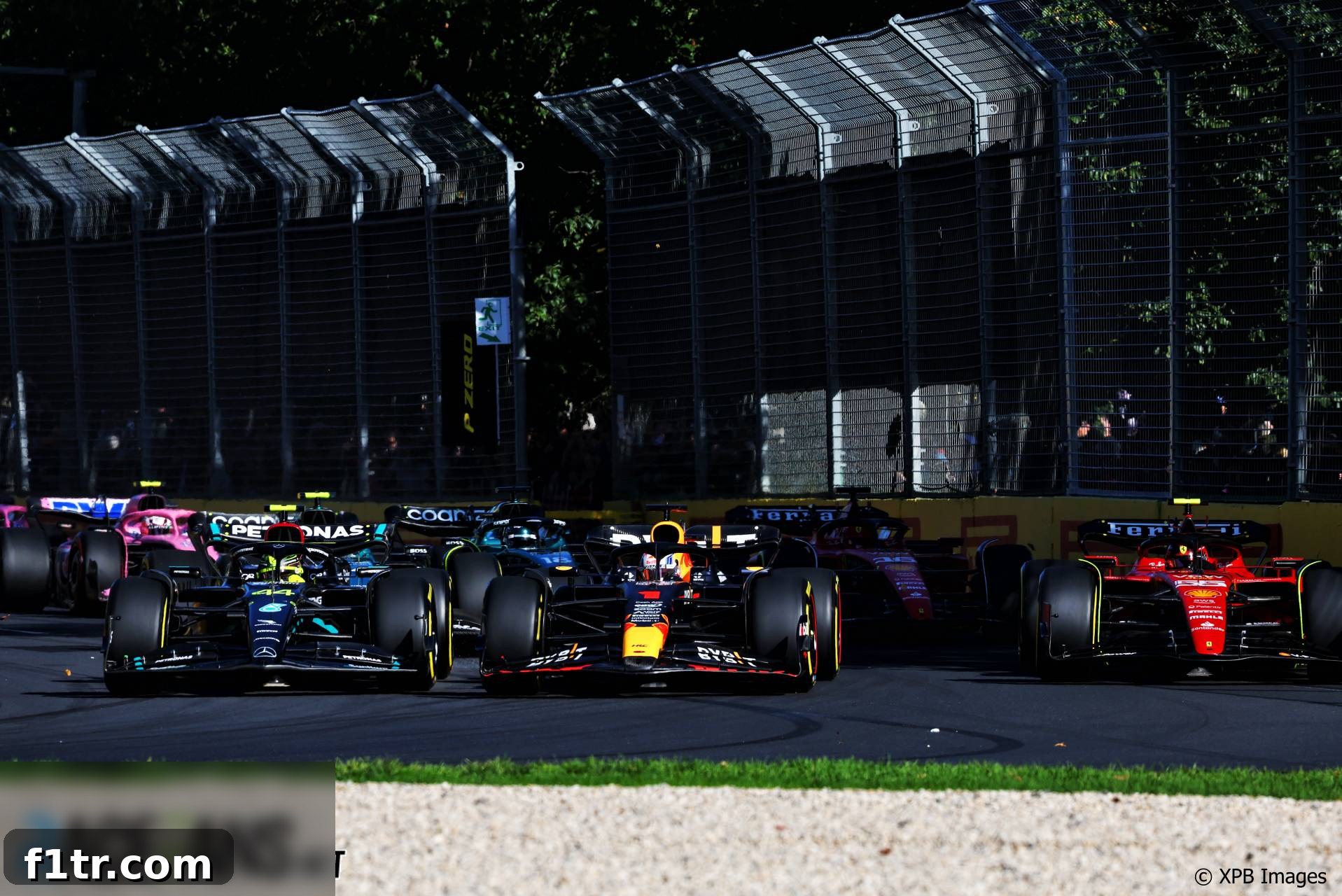
When the race prepared to restart, the grid order had been dramatically altered. Lewis Hamilton, who had not pitted under the Safety Car, found himself inheriting the lead, a prime position to capitalize on the restart. Trailing him closely was championship rival Max Verstappen, also benefiting from the red flag’s strategic reset. This unexpected shuffle set the stage for a mouth-watering battle at the front, featuring two of the sport’s titans vying for supremacy.
For Russell, the consequences were severe. Having led the race with confidence, he now found himself P7, facing an uphill battle to regain his lost positions. Sainz, even further back, dropped to P11, his race prospects significantly hampered by the turn of events. The red flag, therefore, served as a monumental strategic turning point, rewarding those who had initially decided to stay out and demanding exceptional performance from those who had pitted.
Albert Park’s Unpredictability: A Test of Skill and Strategy
The incident underscored the unpredictable nature of the Albert Park Circuit, a temporary street circuit renowned for its high-speed sections, challenging corners, and close proximity to barriers. Melbourne’s demanding layout often catches drivers out, particularly in the early stages of a race when tires are cold and the field is tightly packed. Albon’s crash was a stark reminder of the fine margins that define Formula 1, where a momentary lapse can have extensive repercussions for the entire Grand Prix.
The Australian Grand Prix, a beloved fixture on the F1 calendar, has a rich history of delivering unexpected drama. Incidents like Albon’s, while unfortunate, are a testament to the raw speed and inherent risks of motorsport, constantly pushing the boundaries of car and driver. The swift and decisive action by race control to issue a red flag further highlights Formula 1’s unwavering commitment to driver safety, ensuring that even in the heat of competition, safety remains the paramount concern.
The Road Ahead: A Race of Recovery and Redemption
With 50 laps remaining after the restart, the Australian Grand Prix was far from over. For drivers like Russell and Sainz, the red flag presented a daunting challenge but also an opportunity for a spirited recovery drive, showcasing their skill and determination to climb back through the field. For Hamilton and Verstappen, the focus shifted to consolidating their positions and battling for victory, knowing that any further incidents could once again rewrite the script.
The Albon incident and subsequent red flag created a truly captivating spectacle, transforming what might have been a straightforward race into a strategic chess match infused with high-speed action. It reinforced the notion that in Formula 1, nothing is certain until the chequered flag falls, and every decision, both on track and in the pit lane, carries immense weight. The 2023 Australian Grand Prix will undoubtedly be remembered not just for its winner, but for the early drama that reshaped its narrative and tested the mettle of every team and driver.
Related F1 Insights from the 2023 Australian Grand Prix
- Australian GP to forbid fans from entering track at end of this year’s race
- I only missed one chance to score points this year – Albon
- Formula 1’s stewards should listen to drivers less, not more
- Mercedes unsure whether gains seen in Melbourne were ‘track-specific’
- Why Ferrari saw a ‘real step forward in pure performance’ in point-less Australian GP
Browse all 2023 Australian Grand Prix articles