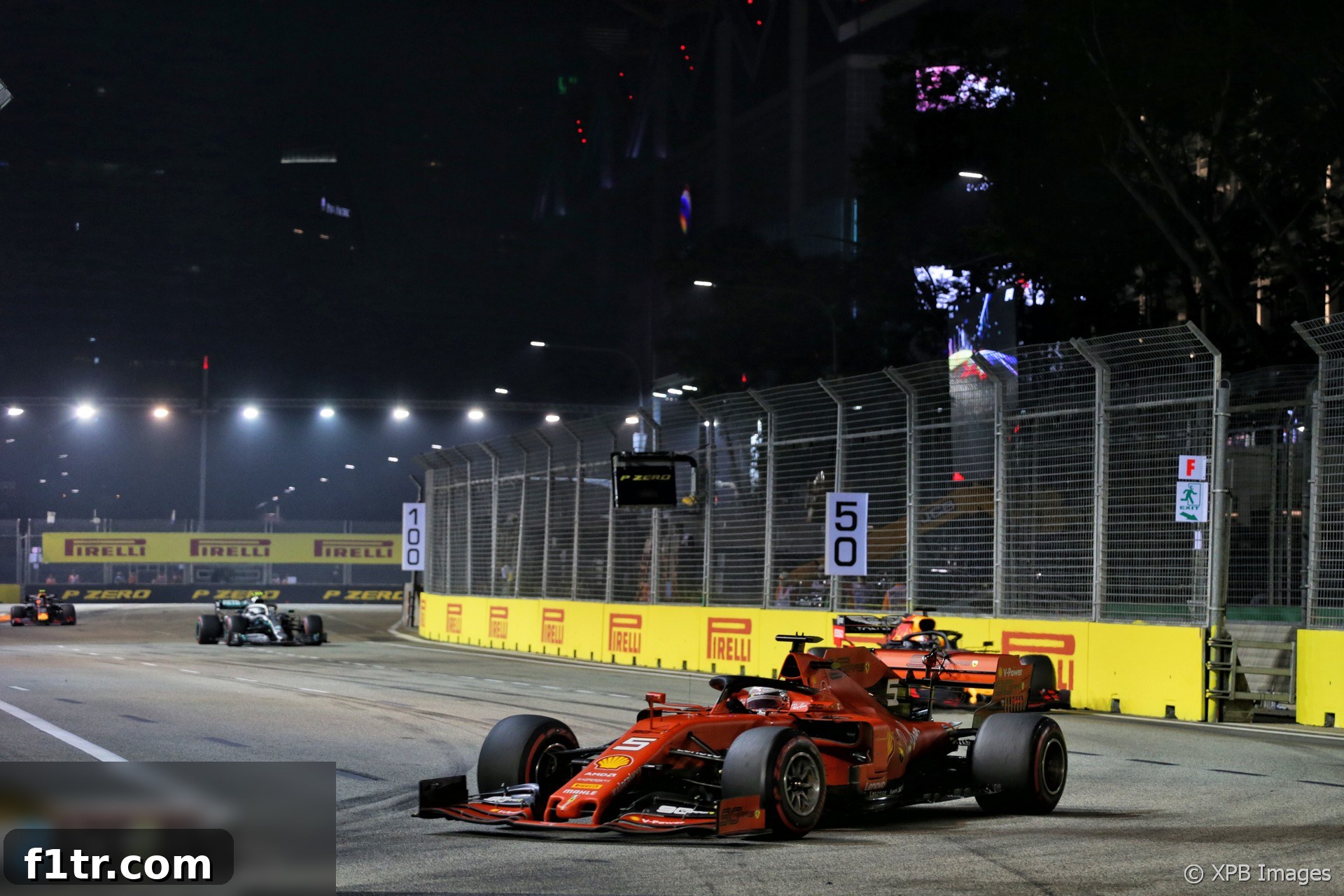
Sebastian Vettel Masterclass: Ferrari’s Strategic Triumph at the 2019 Singapore Grand Prix
The 2019 Formula 1 season delivered one of its most compelling narratives at the iconic Marina Bay Street Circuit, as Sebastian Vettel executed a brilliant strategy to claim a spectacular victory at the Singapore Grand Prix. This race wasn’t just another win; it marked a significant turning point for Ferrari, securing their third consecutive victory and their first 1-2 finish of the season, cementing their resurgence after a challenging start to the year.
Known for its demanding night conditions, tight corners, and high probability of safety car deployments, the Singapore Grand Prix often tests teams’ strategic prowess as much as drivers’ skill. The 2019 edition was no exception, unfolding into a captivating chess match that saw Ferrari outmaneuver their rivals, including the dominant Mercedes and the ever-present Red Bull, to clinch a memorable double podium finish.
The Build-Up: Ferrari’s Momentum and Qualifying Drama
Leading into Singapore, Ferrari had enjoyed a newfound surge in performance, with Charles Leclerc taking back-to-back victories in Belgium and Italy. The momentum was firmly with the Scuderia, but the street circuit nature of Marina Bay was expected to favour Mercedes and Red Bull more. However, in a surprising turn of events during qualifying, Leclerc once again demonstrated his exceptional single-lap pace, snatching pole position from Lewis Hamilton. Sebastian Vettel, despite showing strong pace through practice, could only manage third on the grid, behind Hamilton, setting the stage for a tense strategic battle.
The narrow, unforgiving circuit meant that track position would be paramount, and overtaking notoriously difficult. The prospect of a long, hot, and humid night race under the floodlights added another layer of complexity, demanding extreme focus from the drivers and robust reliability from their machinery. All eyes were on Ferrari, curious to see if they could convert their raw speed into a race victory on a track where strategy often dictates the outcome.
Race Day Drama: The Undercut Masterstroke
As the lights went out, Charles Leclerc held his lead, while Sebastian Vettel maintained third position, closely shadowing Lewis Hamilton. The initial laps saw minimal changes at the front, with drivers managing their tyres and waiting for the pit window. Mercedes, typically renowned for their strategic acumen, found themselves in a tricky situation, attempting to extend their first stint on the soft tyres, hoping for a late safety car or better tyre degradation than their rivals.
However, Ferrari made the bold move. On lap 20, they pitted Sebastian Vettel early for a fresh set of hard tyres. This ‘undercut’ strategy was perfectly executed. Vettel, with clear track ahead and new rubber, unleashed a blistering series of laps, closing the gap to the leaders dramatically. Mercedes reacted by pitting Hamilton a lap later, but it was too late. Vettel’s pace on the fresh tyres had been so strong that he leapfrogged both Hamilton and his teammate, Charles Leclerc, who was still out on older tyres. The audacity of the call, pitting the third-placed car before the leader, paid off handsomely.
Leclerc, understandably, voiced his frustration over the team radio, feeling that he had been sacrificed for his teammate’s gain. He eventually pitted on lap 21, rejoining the race behind Vettel and Max Verstappen. The strategic call put Vettel in the lead, a position he would not relinquish. This pivotal moment not only determined the race winner but also highlighted the intense internal dynamics within the Ferrari garage, as the team sought to manage the aspirations of both their championship-contending drivers.
Safety Cars and Red Bull’s Challenge
The Singapore Grand Prix is famous for its safety car periods, and the 2019 edition delivered crucial interventions that further shuffled the pack and reset strategic considerations. The first safety car was deployed on lap 35 after George Russell’s Williams made contact with Romain Grosjean’s Haas, leaving debris on the track. This incident bunched up the field, erasing any gaps that had been painstakingly built up.
Just a few laps later, on lap 43, another safety car was deployed when Sergio Pérez’s Racing Point suffered a puncture and subsequently an oil leak, forcing him to stop on track. These multiple caution periods added immense pressure on tyre management and saw some drivers opt for additional pit stops, hoping to gain an advantage in the closing stages. Later in the race, Kimi Räikkönen’s Alfa Romeo retired after an accident on lap 49, further emphasizing the demanding nature of the street circuit.
These safety car periods, rather than hindering Ferrari’s progress, actually played into their hands. Sebastian Vettel masterfully managed the restarts, maintaining his lead and fending off any attacks from his teammate and Max Verstappen. Red Bull’s Max Verstappen, having successfully jumped Lewis Hamilton during the pit stops, found himself in a strong third position. Despite his best efforts to challenge the Ferraris, the strategic advantage gained by Vettel and the challenges of the circuit made it difficult for him to make further inroads, ultimately securing a well-deserved podium finish.
Mercedes’ Frustration and Midfield Battles
For Mercedes, the Singapore Grand Prix was a race of missed opportunities and strategic setbacks. Lewis Hamilton, after losing track position to both Ferraris and Verstappen, spent much of the race trying to recover. Valtteri Bottas, too, struggled to make significant progress, with the team even slowing him down at one point to protect Hamilton from Alexander Albon behind. This race served as a stark reminder that even the most dominant teams can be caught off-guard by aggressive and well-executed strategies on a circuit where track position is king.
Further down the field, the midfield provided its usual dose of excitement. Lando Norris delivered another impressive performance for McLaren, finishing in a solid seventh place. Pierre Gasly, in his Toro Rosso, continued to rebuild his season with a strong eighth-place finish, showcasing his talent after his earlier demotion from Red Bull. Antonio Giovinazzi, for Alfa Romeo, scored a valuable point in tenth, demonstrating his potential on the challenging street circuit and briefly leading the race during the pit stop cycles. Daniel Ricciardo, despite a strong recovery drive after a qualifying penalty, ultimately finished outside the points, highlighting the competitive nature of the midfield pack and the difficulty of moving through the field at Marina Bay.
The Final Standings: A Ferrari 1-2 Triumph
After 61 demanding laps under the Singapore night sky, Sebastian Vettel crossed the finish line to claim his first victory of the 2019 season, a moment of immense relief and jubilation for the German driver and his team. Charles Leclerc followed him home in second, securing a crucial Ferrari 1-2 and marking a hat-trick of wins for the Scuderia. Max Verstappen rounded out the podium, confirming Red Bull’s strong pace and their ability to challenge the front-runners.
The race results table below provides a comprehensive overview of how each driver performed, including their time gaps and any retirements. It underscores the intense competition and the precise margins that define Formula 1 racing, especially on a circuit as challenging as Marina Bay, where every decision can dramatically alter the outcome.
2019 Singapore Grand Prix Race Results
| Pos | # | Driver | Car | Laps | Time/gap | Difference | Reason |
|---|---|---|---|---|---|---|---|
| 1 | 5 | Sebastian Vettel | Ferrari | 61 | 1hr 58m 33.667s | ||
| 2 | 16 | Charles Leclerc | Ferrari | 61 | 2.641 | 2.641 | |
| 3 | 33 | Max Verstappen | Red Bull-Honda | 61 | 3.821 | 1.180 | |
| 4 | 44 | Lewis Hamilton | Mercedes | 61 | 4.608 | 0.787 | |
| 5 | 77 | Valtteri Bottas | Mercedes | 61 | 6.119 | 1.511 | |
| 6 | 23 | Alexander Albon | Red Bull-Honda | 61 | 11.663 | 5.544 | |
| 7 | 4 | Lando Norris | McLaren-Renault | 61 | 14.769 | 3.106 | |
| 8 | 10 | Pierre Gasly | Toro Rosso-Honda | 61 | 15.547 | 0.778 | |
| 9 | 27 | Nico Hulkenberg | Renault | 61 | 16.718 | 1.171 | |
| 10 | 99 | Antonio Giovinazzi | Alfa Romeo-Ferrari | 61 | 27.855 | 11.137 | |
| 11 | 8 | Romain Grosjean | Haas-Ferrari | 61 | 35.436 | 7.581 | |
| 12 | 55 | Carlos Sainz Jnr | McLaren-Renault | 61 | 35.974 | 0.538 | |
| 13 | 18 | Lance Stroll | Racing Point-Mercedes | 61 | 36.419 | 0.445 | |
| 14 | 3 | Daniel Ricciardo | Renault | 61 | 37.660 | 1.241 | |
| 15 | 26 | Daniil Kvyat | Toro Rosso-Honda | 61 | 38.178 | 0.518 | |
| 16 | 88 | Robert Kubica | Williams-Mercedes | 61 | 47.024 | 8.846 | |
| 17 | 20 | Kevin Magnussen | Haas-Ferrari | 61 | 86.522 | 39.498 | |
| Not classified | |||||||
| 7 | Kimi Raikkonen | Alfa Romeo-Ferrari | 49 | 12 laps | 12 laps | Accident | |
| 11 | Sergio Perez | Racing Point-Mercedes | 42 | 19 laps | 7 laps | Oil leak | |
Want to stay informed about all the latest Formula 1 news and analysis? Become a RaceFans supporter and experience an ad-free browsing experience.
More from the 2019 Singapore Grand Prix
- Top ten pictures from the 2019 Singapore Grand Prix
- 2019 Singapore Grand Prix Star Performers
- Vettel lights up Singapore again as Ferrari keep Leclerc in the dark
- Ferrari score first hat-trick of wins for more than a decade
- Mercedes slowed Bottas to protect Hamilton from Albon
Browse all 2019 Singapore Grand Prix articles
The Impact and Legacy of Singapore 2019
Sebastian Vettel’s victory at the 2019 Singapore Grand Prix was more than just a single race win; it was a powerful statement. It demonstrated that Ferrari, despite early-season struggles and internal pressures, possessed the strategic acumen and raw pace to challenge the best. For Vettel, it was a much-needed morale boost, ending a winless streak that stretched back to the 2018 Belgian Grand Prix and reaffirming his status as a four-time world champion capable of delivering under immense pressure.
The race also ignited further discussions about team orders and driver dynamics within Ferrari, particularly concerning Charles Leclerc’s visible disappointment. While the undercut strategy undeniably worked for the team, securing maximum points, it also created a subtle tension that would continue to simmer throughout the remaining races of the season. This strategic decision by Ferrari underscored their commitment to optimizing their overall race result, even if it meant adjusting the positions of their drivers for the greater good of the team’s championship aspirations.
Beyond Ferrari’s internal drama, the 2019 Singapore Grand Prix was a classic F1 night race, filled with unexpected twists and turns, multiple safety car periods, and intense battles up and down the grid. It showcased the unique challenges of street circuits and the critical role that precise strategy and adaptable driving play in achieving success. It remains a memorable chapter in the 2019 Formula 1 season, highlighting the unpredictable nature of the sport and the sheer brilliance required to conquer the demanding Marina Bay circuit.