F1 Pre-Season Insights: Reliability Breakthroughs, Aerodynamic Mastery, and Strategic Tyre Management
The Formula 1 pre-season testing offered a crucial glimpse into the teams’ preparations for the upcoming championship. Key takeaways from Bahrain indicate significant progress for some, particularly in critical areas like reliability, aerodynamic efficiency, and strategic race management. Among the most encouraging news, Alfa Romeo’s Zhou Guanyu expressed considerable optimism regarding the substantial strides his team has made in bolstering their car’s reliability, a factor that plagued their 2022 campaign.
Pre-Season Headlines
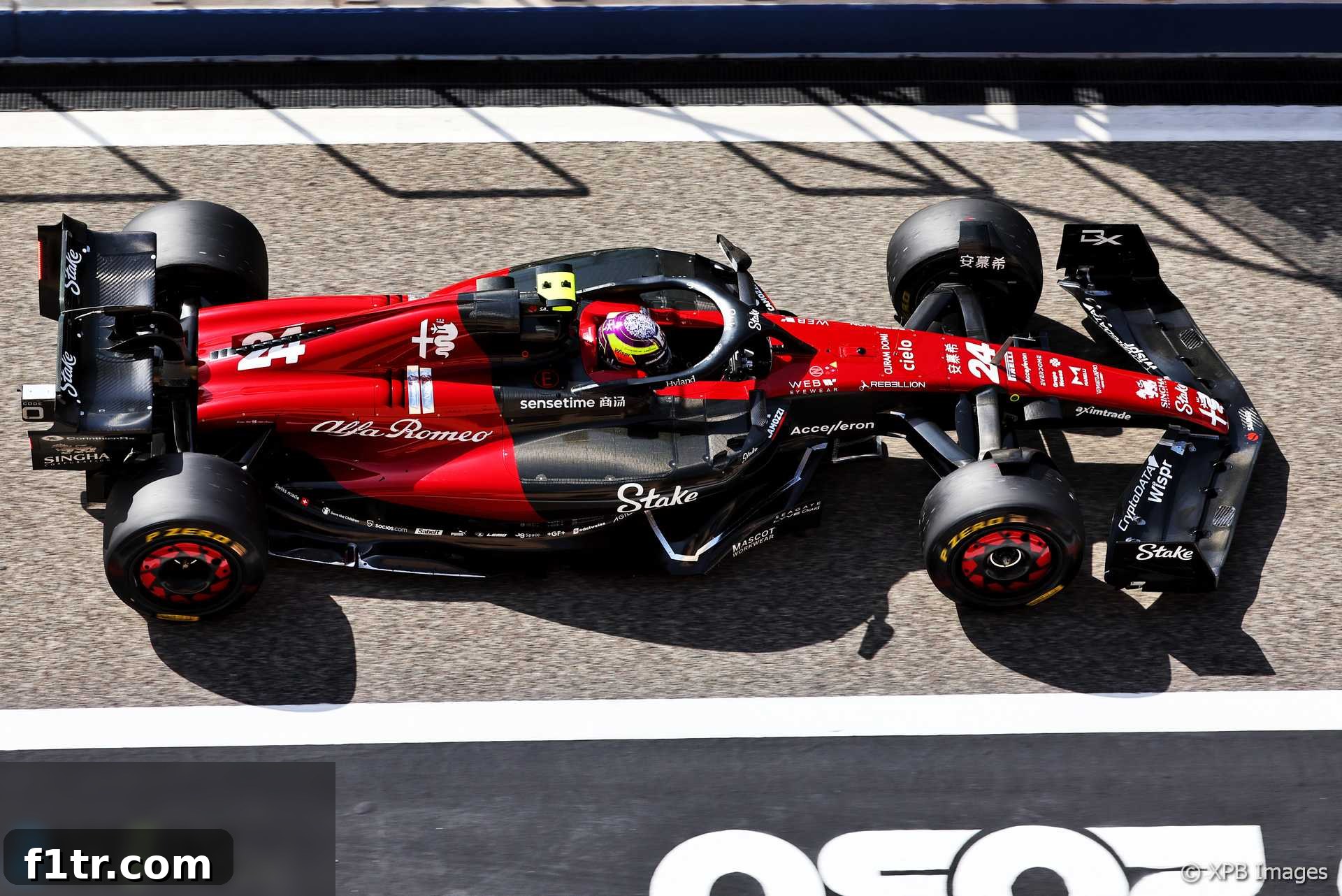
Alfa Romeo Takes “Massive Step” in Reliability, Asserts Zhou Guanyu
Alfa Romeo’s Zhou Guanyu has unequivocally stated that his team has achieved a “massive step” forward in car reliability. This positive assessment comes despite a couple of minor, albeit concerning, incidents that occurred during the demanding pre-season testing sessions. Zhou, who impressively topped the timing sheets on the second day of running, experienced a momentary issue that led him to abandon a practice start in the pit lane during the closing minutes of that day. Furthermore, his teammate, Valtteri Bottas, also encountered a suspected power unit problem, forcing him to stop on track during the early session of the final day.
Despite these isolated instances, which are not uncommon during the intensive testing phase where teams push their machinery to the absolute limits, Zhou remains confident. He firmly believes the team has vastly improved its reliability compared to the 2022 season, a year marred by persistent technical problems that frequently impacted both race weekends and practice sessions, resulting in a high number of retirements. This newfound robustness is a cornerstone for any team aiming for consistent points finishes in the highly competitive midfield.
Zhou elaborated on the contributing factors to this significant improvement: “We have done a massive step forward, together with also the Ferrari guys, in reliability issues. Firstly starting with the cooling system, which was kind of our main part that we tried to improve during the year. It also slowed our other package development throughout the season for other parts to gain downforce. So we were focusing on making the car finish to the line. So we’re definitely aiming for much less DNFs between the drivers, because last year we had quite a lot.” This highlights a strategic decision to prioritize reliability, particularly cooling, even if it temporarily impacted aerodynamic development. The partnership with Ferrari on power unit reliability is also a critical component, suggesting a broader improvement across the engine supplier’s offerings. For Alfa Romeo, a solid, reliable platform provides the foundation upon which future performance gains can be built, ensuring they convert potential into tangible championship points.
Advert | Become a Supporter & go ad-free
Alpine Maintains Downforce Despite Anti-Porpoising Regulations, Says Ocon
Alpine’s Esteban Ocon has provided encouraging news from the Enstone camp, asserting that the team has not suffered any loss of downforce despite the new technical regulations introduced by the FIA to mitigate the porpoising phenomenon. Porpoising, the severe high-speed aerodynamic bouncing effect experienced by F1’s current ground effect cars, became a significant concern for driver safety and car performance throughout the 2022 season.
In response, the FIA implemented several rule changes for the 2023 technical regulations, specifically designed to curb this bouncing. These measures included raising the car floors by 15mm, increasing the height of the diffuser throat, and introducing more stringent stiffness tests for the floor and diffuser. The expectation was that these changes would inherently lead to a reduction in aerodynamic efficiency and, consequently, downforce for all teams.
However, after three rigorous days of testing their new A523 chassis, Ocon confidently stated that Alpine has already managed to “claw back” the performance that would have naturally been lost due to these new measures. This indicates a highly effective response from Alpine’s aerodynamic department in adapting to the revised rulebook without compromising overall car performance. Ocon’s feedback was overwhelmingly positive: “If you take the regulations, we should have lost downforce and I don’t feel that’s been the case. So that’s pretty good.” He further added, “I feel a lot of all the different things between last year’s car and this year’s car in terms of how it handles, in terms of balance stability and braking stability as well, which is improved.” These improvements in handling, balance, and braking stability are critical, enhancing driver confidence and allowing them to extract maximum performance from the car. Alpine’s ability to maintain downforce levels while addressing the porpoising challenge bodes well for their competitive aspirations in the upcoming season.
Magnussen Advocates Sacrificing Qualifying for Superior Tyre Wear in Races
Kevin Magnussen, the experienced driver for the Haas F1 Team, has articulated a strategic philosophy centred on prioritising race-day tyre management over outright one-lap qualifying pace. He firmly believes that his team would benefit significantly from making its car inherently “easier on its tyres” during race conditions, even if it means compromising a fraction of performance during Saturday’s qualifying sessions.
During the pre-season testing, teams extensively evaluated all six of Pirelli’s dry tyre compounds. Magnussen highlighted that Haas specifically concentrated its efforts on the C1, C2, and C3 compounds, which are the harder blends earmarked for use in the highly anticipated Bahrain Grand Prix next weekend. This focused approach underscores the critical importance of understanding and managing tyre performance, particularly in high-degradation environments like Sakhir.
Magnussen explained the rationale behind this strategic trade-off: “We tried the compounds that we’re going to use at the race. I think that’s one area that you want to always improve on and try and get less degradation and look after the tyres in the race.” He continued, “You can even trade a bit of quali performance to try and get a better tyre management or an easier car on the tyres, because that’s the most important point in the race. So I think that would be one of the things we try and focus on.” This emphasis on reduced degradation and enhanced tyre longevity can translate into greater strategic flexibility during races, fewer pit stops, or simply the ability to push harder for longer. For a team like Haas, often battling in the competitive midfield, consistent race pace and effective tyre preservation can be the decisive factors in scoring valuable championship points, making this a potentially game-changing strategic direction.
Advert | Become a RaceFans supporter andgo ad-free
Essential Motor Racing Links and Insights
Stay informed with these interesting motor racing links from across the web:
Guenther Steiner Discusses Relationship with FIA Boss Amid Rising Tensions (Daily Express)
Haas team principal Guenther Steiner opens up about the dynamic between teams and the sport’s governing body. He emphasizes the need for collaboration: “We need to work together to make the sport. Now with the popularity of the sport we need to all work a job to do things right. We need to work together and I think that works. Sometimes that relationship is stronger than another one but in general I don’t think it’s as bad sometimes as it’s made out to be.” This perspective offers valuable insight into the underlying politics and cooperation essential for F1’s continued success.
Australian Grand Prix Cancels ‘Ladies Day’ as Female Attendance Soars (The Age)
The Australian Grand Prix makes a notable shift by cancelling its traditional ‘Ladies Day’, reflecting a broader demand for inclusive event experiences. This decision comes as female attendance at F1 events has dramatically increased: “Between our last two Formula 1 Australian grands prix in 2019 and 2022, female event attendees of all ages and all attendees aged between 18 and 34 have both grown by more than half, up from 24 to 38 per cent and from 26 to 40 per cent respectively.” This change signals a positive evolution in F1’s fanbase and event marketing strategies.
Opinion: FIA’s Ban on Political Statements – A Political Statement Itself (Source: Sports Gazette)
This thought-provoking piece argues that the FIA’s controversial ban on drivers making political statements is inherently a political act. The author criticizes the “escapism” argument: “The excuse that sport is a form of escapism dehumanises the athletes and performers. They are not circus animals plastered in front of our eyes solely for our entertainment and then caged back until the next race, match, tour, competition, etc. Once they get off those tracks they live in the same world that we do. Wealthy or otherwise, they are neither oblivious nor impervious to the prejudices and/or injustices that political structures may create, maintain, or refuse to dismantle in our societies.” It sparks a vital discussion about the role of athletes in social discourse.
Invicta Watch Group and Virtuosi Racing Announce New Partnership in FIA Formula 2 (Virtuosi Racing)
A significant commercial development in the junior categories sees the Invicta Watch Group partnering with Virtuosi Racing in FIA Formula 2. The multi-year agreement will see the team renamed Invicta Virtuosi Racing, with Invicta branding prominently featured across cars, race suits, and team apparel. “Invicta will also be investing significantly in marketing activities and activation in order to raise the profile of the team and Formula 2 alike,” indicating a robust commitment to enhancing the series’ visibility.
Formula 2 Seeks to Condense Gap Between Final Rounds (Formula Scout)
Formula 2 officials are keen to address the extended break between the penultimate and final rounds of its championship calendar. The current lengthy gap can diminish the excitement and relevance of the season finale: “I’m not happy with that (gap), because either we have a winner already three months before the end of the season, or otherwise we don’t have a winner, but everybody forgets in the meantime what’s at stake for the last race. So it’s not good. And that’s what we had already last year.” Shortening this interval aims to maintain competitive intensity and fan engagement throughout the season.
We always endeavour to credit original sources. If you have a tip for a link relating to single-seater motorsport to feature in the next RaceFans round-up please send it to us via the contact form.
Advert | Become a RaceFans supporter andgo ad-free
Social Media Highlights from the Motorsport World
Catch up on notable posts and updates from drivers and teams across social media platforms:
Lighting up the streets and skies of Qatar! 🎆✈️
F1 and @qatarairways launched their new partnership in style, with an F1 car roaring down Lusail Boulevard 😍🙌#F1 pic.twitter.com/5CZHNcwTaI
— Formula 1 (@F1) February 25, 2023
196 laps in the bank. first three days in my new office and overall good progress. pumped for the real thing next week! 🤠#f1 #F1Testing pic.twitter.com/4TjtWgm4xO
— Nico Hülkenberg (@HulkHulkenberg) February 25, 2023
Confused by some F1 drivers reluctance to ban tire warmers. It makes for better racing, it highlights the skill of driving on cold tires, and it saves a ton of money/pollution from freight and energy consumption. The argument that it’s dangerous has been disproven in many…(1/3)
— James Hinchcliffe (@Hinchtown) February 25, 2023
I’m very sad. Gonna miss my first Formula E race due to suspension issue
So sorry for our supporters, partners and the whole team that worked so hard to get the car here
We can fix it back at the factory and we will be back stronger for São Paulo ePrix🇧🇷
NEVER give up.
— Lucas Di Grassi (@LucasdiGrassi) February 25, 2023
Devastated…We’re forced to withdraw all cars from the remainder of the event due to Safety concerns. I was loving the energy from the home crowd and after a very positive FP2 we were looking great for Qualifying. Sorry to everyone, this is not the way I wanted to end the day… pic.twitter.com/0W167MshMr
— Kelvin van der Linde (@KelvinvdLinde) February 25, 2023
|@OconEsteban reveals he’s had some reliability problems – though not with his new @AlpineF1Team A523…#F1 pic.twitter.com/PirHswdlUI
— RaceFans (@racefansdotnet) February 25, 2023
Advert | Become a RaceFans supporter andgo ad-free
- Find more official F1 accounts to follow in the F1 Twitter Directory
Comment of the Day: The Tyre Warmer Debate
The contentious debate surrounding a potential ban on tyre warmers continues to be a hot topic in Formula 1 circles. With a crucial vote looming later in the season, prominent drivers like Lewis Hamilton have voiced strong criticisms, citing safety concerns and potential for increased incidents. However, as noted by community member @petebaldwin, not everyone fully agrees with these concerns, offering a different perspective on the matter.
I agree with his point about it not being greener – the energy usage from tyre warmers is already miniscule in the grand scheme of things and if they all do an extra warm-up lap in quali, that likely negates any benefit.
I don’t buy the safety issue though. I have no doubt that it’s less safe to drive with cold tyres but it’s not as unsafe as driving in the rain and I don’t see Lewis arguing that cars should only be raced in perfect conditions.
Ultimately I think it’s the same thing we see all the time in F1 – banning tyre warmers will not benefit Mercedes or Hamilton so therefore, they don’t want it and will use any sensible sounding argument to back up their case.
Pete Baldwin
Baldwin’s argument challenges the primary justifications for the ban. On the environmental front, he suggests that the energy savings from eliminating tyre warmers might be minimal and easily offset by cars performing additional warm-up laps, especially in qualifying. More controversially, he questions the severity of the safety argument. While acknowledging that driving on cold tyres is inherently less safe, he draws a parallel to racing in wet conditions, which presents its own significant safety risks but is an accepted part of the sport. This comparison highlights a perceived inconsistency in the safety discourse. Furthermore, Baldwin posits that the stance taken by drivers and teams might be influenced by their competitive interests; if a ban doesn’t offer a direct advantage or could even be detrimental to their performance, they are likely to oppose it using logical-sounding arguments. This perspective underlines the complex interplay of safety, environmental concerns, and competitive strategy in F1’s regulatory landscape.
Happy Birthday to Our Motorsport Community Members!
A very happy birthday goes out to Madbikerbob and Mitzi! We hope you have a fantastic day celebrating.
On This Day in Motorsport History
- Born on this day in 1955: Rupert Keegan, a notable Formula 1 driver who competed in the late 1970s and early 1980s.