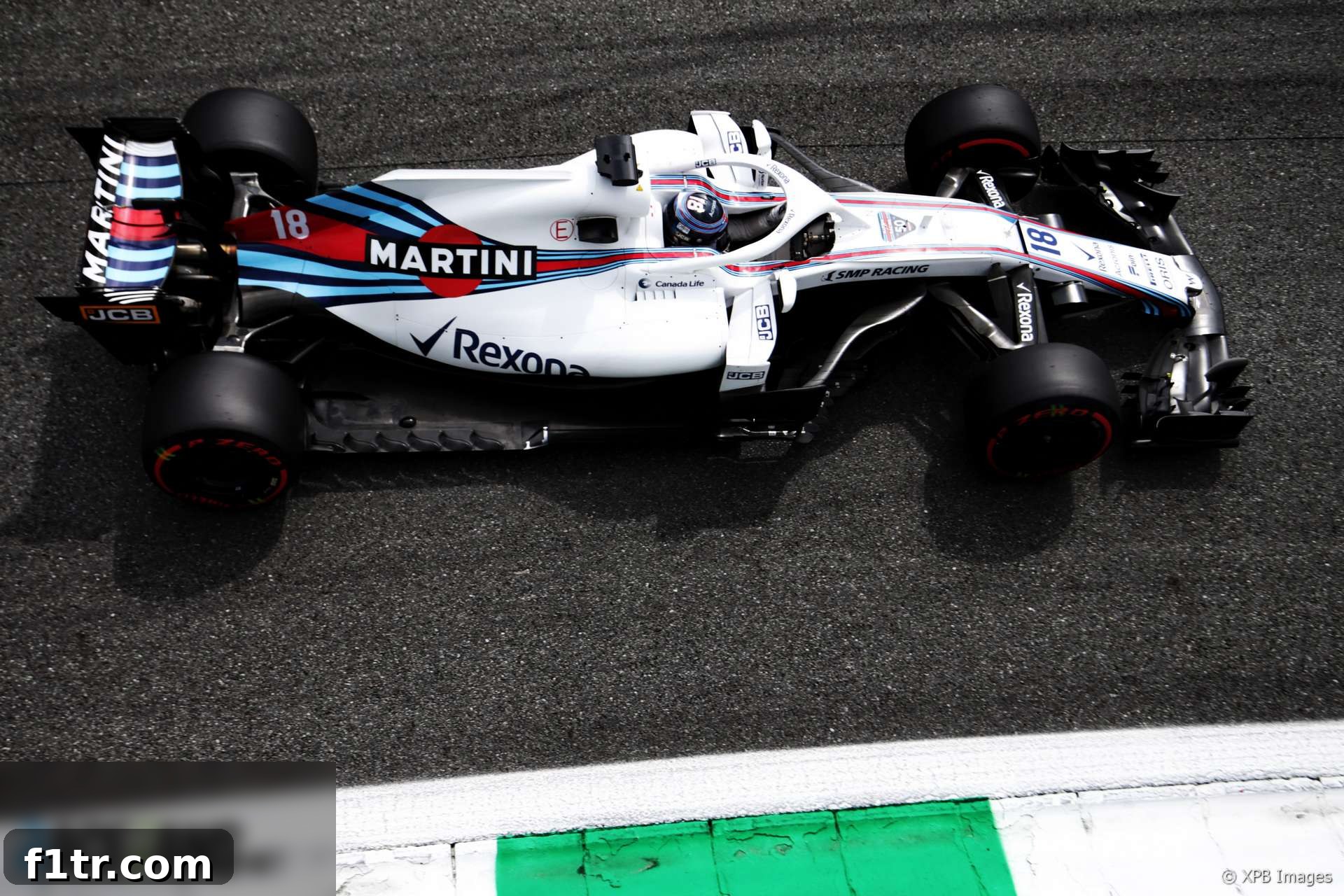
Williams Stays True to Its Engineering Roots: Forging Its Own Gearbox Path for 2019 F1 Season
In a significant declaration of independence and commitment to its engineering heritage, Williams Racing has confirmed its decision to continue manufacturing its own gearboxes for the upcoming 2019 Formula 1 season. This move comes after careful consideration and discussions regarding the potential adoption of units from its engine supplier, Mercedes, a path many customer teams opt for. The choice underscores Williams’ unique position on the grid and its ongoing dedication to internal development despite the increasing trend of component sharing in modern F1.
The confirmation came from Paddy Lowe, then Chief Technical Officer at Williams, who, when questioned by RaceFans, affirmed that while conversations with Mercedes had indeed taken place, the team ultimately decided against purchasing gearboxes. “We’re not taking a Mercedes gearbox,” Lowe stated unequivocally. “We make our own gearbox. We’ll continue to do that.” He elaborated on the rationale behind the decision, adding, “We had some discussions but we concluded it wasn’t the right direction to go.” This statement hints at a strategic calculation, weighing the potential benefits of off-the-shelf components against the advantages of bespoke engineering tailored precisely to the team’s car concept and philosophies.
The Strategic Edge: Why an Independent Gearbox Matters
In the highly competitive world of Formula 1, every component plays a crucial role in the overall performance of a car. The gearbox, in particular, is far more than just a mechanism for changing gears. It’s an integral structural element of the rear of the car, connecting the engine to the rear suspension and influencing critical aerodynamic performance. Its design dictates weight distribution, packaging efficiency, crashworthiness, and the precise integration of the rear suspension elements.
For customer teams, purchasing a gearbox from an engine supplier like Mercedes offers several compelling advantages. Firstly, it can significantly reduce research and development costs, as the supplier bears the brunt of the design and manufacturing expenses. Secondly, it often guarantees a well-integrated package with the power unit, as both components are designed to work seamlessly together. This can lead to greater reliability and optimized performance from the outset. Thirdly, it frees up valuable engineering resources that can then be diverted to other areas of car development, such as aerodynamics or chassis design.
However, Williams’ decision to forge its own path suggests a belief that the benefits of an independent gearbox outweigh these factors. By designing and manufacturing its own unit, Williams retains complete control over its specifications, allowing for maximum integration with its unique chassis design and aerodynamic philosophy. This bespoke approach can potentially unlock marginal gains in areas like weight, stiffness, packaging, and the aerodynamic flow around the rear of the car – factors that could be crucial for a team striving to close the gap to the frontrunners. It also protects valuable intellectual property and ensures that the team’s engineering expertise remains sharp and relevant.
The “not the right direction to go” comment from Lowe could imply several things: a desire to maintain complete design freedom, a belief that their internal design is superior for their specific car concept, a long-term strategy to avoid becoming too dependent on a single supplier, or even a cost-benefit analysis where the bespoke solution, despite initial investment, offered better long-term value or unique competitive advantages for their budget and resources.
A Technical Anomaly: Williams’ Aluminum Gearbox
Adding another layer to Williams’ unique engineering stance is the material choice for its gearbox. As of the 2019 season, Williams stood as the sole team on the Formula 1 grid whose gearboxes were not constructed from carbon fiber. The FW41, Williams’ challenger, utilized an aluminum gearbox, a stark contrast to the carbon fiber units predominantly used by its rivals.
The shift to carbon fiber gearboxes across the grid was driven by the material’s superior strength-to-weight ratio and stiffness. Carbon fiber composites offer immense structural integrity for a fraction of the weight of traditional metals like aluminum, allowing for lighter and more compact designs that are crucial for overall car performance and aerodynamic efficiency. They also have excellent fatigue resistance and can be molded into complex shapes, offering greater design flexibility.
Williams’ continued reliance on an aluminum gearbox prompts questions about the trade-offs involved. While carbon fiber offers significant weight advantages, it is also a considerably more expensive material to work with and requires specialized manufacturing processes. It’s possible that Williams’ decision was influenced by cost considerations, leveraging existing expertise and manufacturing capabilities with aluminum to allocate resources to other areas of the car. Alternatively, the team might have developed an aluminum solution that, for their specific package, offered a comparable performance balance, or perhaps prioritized reliability and cost efficiency over the absolute lightest possible design. This particular engineering choice highlights Williams’ pragmatic approach in an era dominated by high-tech materials and vast budgets.
Navigating the 2019 Season: From Monza High to Singapore Challenge
The decision to maintain an independent gearbox comes as Williams faces significant challenges on track. The team entered the 2019 season following a particularly difficult 2018 campaign, which saw them finish last in the constructors’ championship. Despite these struggles, the team showed flashes of potential and resilience. Heading into the Singapore Grand Prix, Williams was buoyed by a notable performance at the preceding Italian Grand Prix at Monza, where they achieved their first two-car points finish of the season. This result, achieved on a high-speed circuit known for slipstream battles and unique car setups, provided a much-needed morale boost and a rare opportunity for both drivers to showcase their abilities.
However, the transition from the ultra-fast Monza to the tight, twisty, and demanding street circuit of Marina Bay in Singapore presents a drastic change in car requirements. Lance Stroll, one of Williams’ drivers at the time, openly acknowledged the uphill battle awaiting the team in Singapore. “Singapore’s going to be challenging, realistically,” he stated, reflecting the general sentiment within the paddock about the unique demands of the night race.
The Demands of Marina Bay: A Unique F1 Test
The Singapore Grand Prix is renowned as one of the most physically and mechanically demanding races on the Formula 1 calendar. Its street circuit layout features numerous slow corners, requiring maximum downforce, excellent mechanical grip, and precise turn-in. The bumpy surface, exacerbated by expansion joints and manhole covers, tests the suspension and chassis to their limits. Furthermore, the extreme heat and humidity under the floodlights push both drivers and power units to their absolute endurance thresholds, leading to significant cockpit temperatures and cooling challenges for the engines and brakes.
The tight confines of the circuit, with concrete walls lining virtually every corner, leave no margin for error, often leading to safety car interventions. While challenging, these characteristics can also present opportunities, as Stroll rightly pointed out. “But maybe we’ll show up and it’ll be better than expected. I’m going to stay positive going into Singapore.” He recalled the previous year’s race: “Last year we had a really bad qualifying and our pace was really poor but from 18th we finished eighth. It’s one of those tracks where carnage can happen, there’s always opportunities in Singapore. A bit of rain, you never know, like last year. I’ll go in there and do what I can to nail it again.”
Stroll’s optimism, despite the team’s general struggles, highlights the unpredictable nature of street circuits. The potential for accidents, strategic gambles during safety car periods, and the ever-present threat of tropical downpours can level the playing field, creating an environment where a well-executed strategy or a bit of luck can yield unexpected results. For a team like Williams, these chaotic scenarios represent their best chance to score valuable championship points against more established competitors.
Williams’ Enduring Spirit and Future Outlook
Williams’ decision to continue with its proprietary gearbox design is more than just a technical choice; it’s a statement about the team’s identity. For decades, Williams has been synonymous with independent British engineering excellence in Formula 1. This move reinforces that ethos, even in an era where strategic alliances and component sharing are becoming increasingly common.
While the team faces considerable hurdles on track, particularly in matching the development budgets of manufacturer-backed outfits, its commitment to internal design and manufacturing in critical areas like the gearbox signals a long-term vision. It suggests a determination to maintain a unique engineering philosophy, perhaps betting that bespoke solutions, even if initially more resource-intensive, will ultimately yield greater competitive advantage and maintain the team’s unique brand as a true constructor.
As Formula 1 continues to evolve with new regulations and financial caps, the balance between proprietary development and customer relationships will remain a critical strategic consideration for all teams. Williams’ steadfast approach to its gearbox, even when presented with the option of a Mercedes unit, serves as a powerful reminder of its enduring spirit and unwavering dedication to its engineering principles. The journey through challenging races like Singapore in the 2019 season, and indeed future seasons, will undoubtedly test the validity of such crucial strategic decisions.
Don’t miss anything new from RaceFans
Follow RaceFans on social media:
- Join RaceFans on Facebook
- Follow RaceFans on Twitter
- Get daily email updates from RaceFans
2019 F1 Season
- Crying in the Melbourne car park at 2019 grand prix was my career low – Ocon
- McLaren Racing reports reduced £71 million loss in 2019
- Kvyat: Hockenheim podium last year was “my biggest achievement” so far
- How the FIA’s new encrypted fuel flow meter targets Ferrari’s suspected ‘aliasing’ trick
- “He smashed my office door”: 23 must-see moments from ‘Drive to Survive’ season two
Browse all 2019 F1 season articles