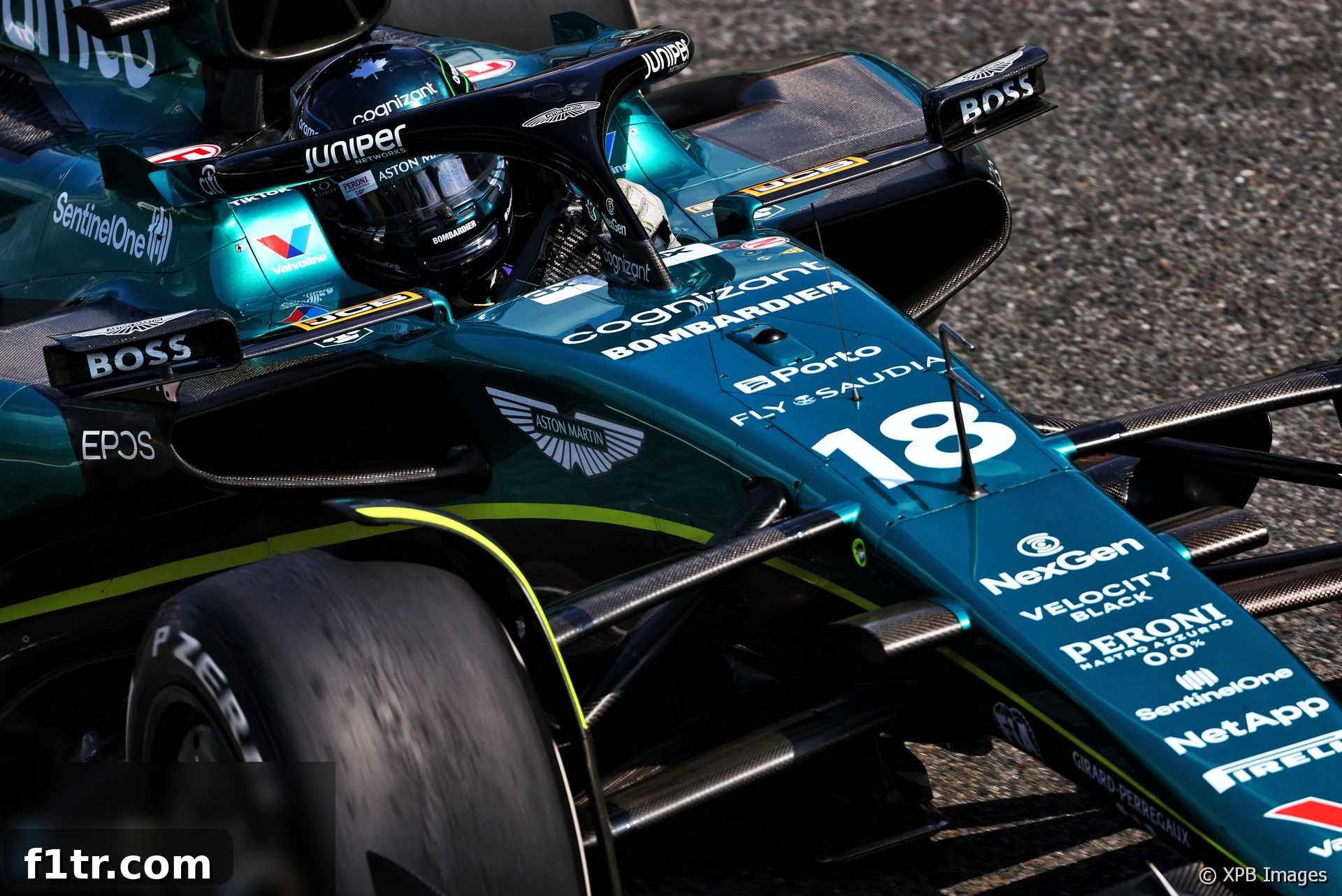
Lance Stroll’s Italian Grand Prix Nightmare: A Deep Dive into Aston Martin’s Q1 Exit
The Italian Grand Prix weekend at Monza, often dubbed the ‘Temple of Speed’, delivered an unexpected and deeply frustrating experience for Aston Martin driver Lance Stroll. Following a dismal qualifying performance that saw him eliminated in the first round (Q1) and relegated to the very back of the grid, Stroll candidly labeled the session as the “worst of his career.” This dramatic turn of events cast a shadow over Aston Martin’s aspirations at a circuit demanding absolute precision and confidence.
The stark contrast between Stroll’s performance and that of his highly experienced teammate, Fernando Alonso, amplified the team’s concerns. While Stroll languished at the bottom, Alonso effortlessly navigated Q1, lapping a significant eight-tenths of a second quicker. Alonso continued his strong run to reach Q3, ultimately securing a respectable 10th position on the grid. This disparity immediately highlighted underlying issues with Stroll’s car setup or his adaptation to the challenging Monza circuit.
A Weekend Plagued by Disruption: The Foundation of Stroll’s Struggle
Stroll’s struggle wasn’t an isolated incident during qualifying; it was the culmination of a weekend riddled with unfortunate disruptions. The challenges began even before he truly had a chance to familiarize himself with the high-speed demands of Monza. During the critical first practice session (FP1), Aston Martin opted to utilize one of their two mandatory sessions for inexperienced drivers, handing the reins of Stroll’s car to reserve driver Felipe Drugovich. While a common practice across the grid, this immediately put Stroll on the back foot, denying him crucial track time to fine-tune his car’s setup and his own driving lines.
The situation only worsened in second practice (FP2). Just as Stroll returned to the cockpit, an unforeseen technical glitch prematurely ended his session. A sudden loss of fuel pressure brought his car to a halt, preventing him from completing any meaningful running. For a driver heading into a race weekend at a unique circuit like Monza, losing both FP1 and FP2 is a significant blow. These sessions are vital for understanding tyre behavior, aerodynamic nuances, and driver comfort, especially on a low-downforce circuit where setup compromises are key.
Consequently, Stroll entered Saturday’s all-important qualifying session with only a single hour of practice from FP3 under his belt. This severely limited window for preparation is virtually unheard of for an experienced Formula 1 driver and undoubtedly compromised his ability to feel truly at one with his Aston Martin AMR23. The lack of consistent running meant he couldn’t gather sufficient data to optimize the car’s balance, nor could he truly push the limits with the confidence required for a strong qualifying lap.
Searching for Answers: Stroll’s Post-Qualifying Reflections
Following his disappointing Q1 exit, Stroll spoke to the media, including RaceFans, expressing his profound sense of unease with the car. “It was definitely tricky,” he admitted. “I’m just not feeling any grip in the car.” This sentiment of a lack of connection and control is particularly alarming for a racing driver, as it directly impacts their ability to extract performance. He confessed to being unsure whether the issue stemmed from his lost practice time or a more fundamental problem with the car’s setup during the session itself. “I’m not sure if it was no laps yesterday or just generally in the session, just not getting to grips with it, but we’ve got to look into what happened because worst session I think we’ve ever had,” he added, emphasizing the gravity of the situation.
While acknowledging his limited running on Friday, Stroll hinted at something more profound affecting his car’s performance. “I didn’t do a lot yesterday,” he conceded, “but I think it was still just there was something going on today in the car that didn’t make sense so we’ve got to look into it.” These comments suggest that despite the clear handicap of lost practice, Stroll felt there might have been an underlying issue with the car that prevented him from finding a rhythm or any semblance of pace. The team’s engineers would undoubtedly face a challenging task to diagnose and rectify whatever contributed to this “worst session.”
The Alternative Tyre Allocation (ATA) and its Impact
Adding another layer of complexity to the Italian Grand Prix weekend was the implementation of the Alternative Tyre Allocation (ATA) format. Under ATA rules, drivers are mandated to use specific tyre compounds for each qualifying segment: hard tyres in Q1, medium tyres in Q2, and soft tyres in Q3. For Stroll and the rest of the Q1 field, this meant running on the least grippy, most durable hard compound. While this format has been introduced in select races to promote sustainability and reduce tyre freight, it certainly alters the usual qualifying dynamic.
Despite the unique tyre challenge, Stroll remained unconvinced that the hard compound was the primary cause of his poor result. “Everyone’s on the hard tyre,” he pointed out, highlighting that all competitors faced the same restriction. However, he did note a difference in feel: “I definitely felt like the soft was much better in FP3 than the hard just now.” This perception of a superior soft tyre compound in practice, contrasted with the mandated hard compound in qualifying, might suggest a car that struggled more than others to generate warmth and grip in the less forgiving hard compound, especially without sufficient setup time.
Curiously, Stroll also observed a paradox: “But it looked like everyone, even on the hard tyre right now, was able to go a lot quicker than the soft in FP3. So I’m not really sure.” This observation suggests that other teams and drivers found a way to extract significant performance from the hard tyres in Q1, surpassing their own soft-tyre pace from earlier practice sessions. This further indicates that Stroll’s struggles were likely specific to his car and adaptation, rather than a universal challenge posed by the hard tyre compound. The ability to switch on and manage the hard tyre quickly, especially on a low-grip track, becomes crucial under ATA rules, and it appeared to be a puzzle Stroll couldn’t solve on the day.
A Daunting Race Day Outlook from the Back of the Grid
With his qualifying nightmare concluded, Lance Stroll faced the daunting prospect of starting the Italian Grand Prix from the very last position on the grid. His outlook for the race was understandably pessimistic. “We’re going to have to look into it,” he stated, referring to the team’s post-qualifying analysis, “but it’s going to be a hard race from 20th.”
Monza, while offering some overtaking opportunities due to its long straights and prominent DRS zones, remains a challenging circuit for making significant progress from the back. The high-speed nature means that even minor performance differences are magnified, and being stuck in dirty air behind slower cars can severely impact tyre degradation and aerodynamic efficiency. A successful recovery drive would require an exceptional strategy, flawless execution, and potentially a stroke of luck with Safety Car interventions or incidents ahead. For Aston Martin, the focus would shift from scoring significant points to damage limitation and gathering valuable data to understand the car’s behavior. The pressure will be on Stroll to demonstrate resilience and make up as many places as possible, turning a disastrous Saturday into a somewhat respectable Sunday.
Related Articles: 2023 Italian Grand Prix
- Despite close battles at Monza, F1 drivers want more powerful DRS
- Monza “frustrating” for Alonso but Aston Martin expect better form in coming races
- F1 changed rules to stop Mercedes in 2021 but we won’t ‘cry foul’ now – Wolff
- McLaren will bring ‘follow-up to Austria upgrade’ before focusing on 2024 car
- Magnussen explains why his driving style rarely works with the Haas VF-23
Browse all 2023 Italian Grand Prix articles