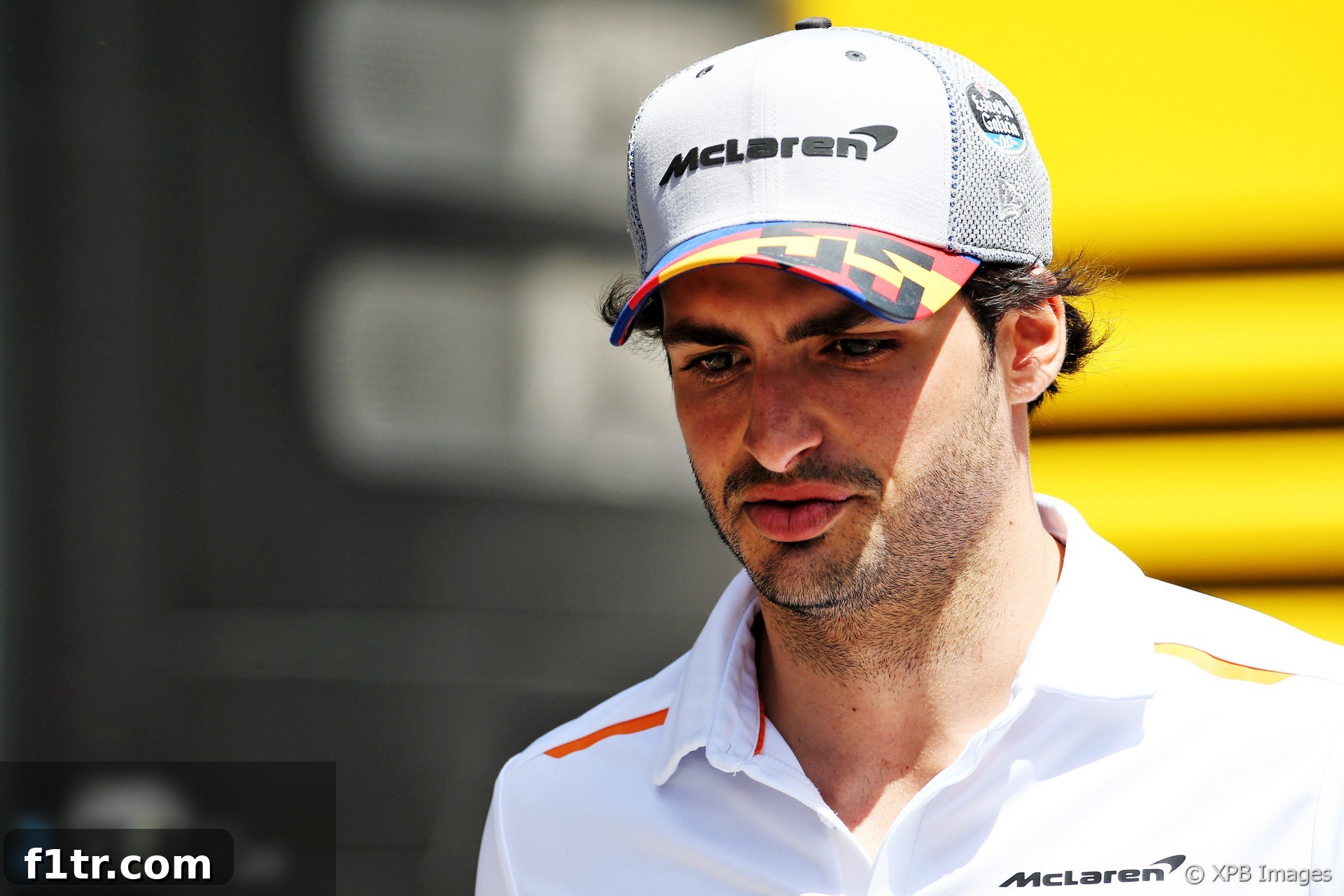
The Uncertain Future of the Spanish Grand Prix: Carlos Sainz Jnr’s Emotional Plea for Barcelona
The prestigious Circuit de Catalunya, a cornerstone of the Formula 1 calendar for nearly three decades, faces an uncertain future as its place on the 2020 schedule remains unconfirmed. Amidst swirling rumors of its potential omission to accommodate the return of the Dutch Grand Prix, Carlos Sainz Jnr, Spain’s sole representative on the F1 grid, has voiced profound concern. His impassioned plea highlights not only the personal significance of his home race but also the deep historical and economic value the event brings to Catalonia and Spain.
A Race on the Brink: The Precarious Position of the Spanish Grand Prix
As the 2020 F1 calendar begins to take shape, the Spanish Grand Prix finds itself in a precarious position. The Circuit de Catalunya is one of a handful of venues from the current season that has yet to secure its slot for the upcoming championship. This uncertainty has sparked considerable anxiety within the Spanish motorsport community and among fans globally, who have grown accustomed to Barcelona hosting one of the sport’s traditional European rounds.
The whispers of change suggest a broader strategy by Formula 1’s commercial rights holder, Liberty Media, to expand into new markets while also revisiting historic venues. This expansion often comes at the expense of long-standing races, particularly those in Europe which sometimes struggle to meet the escalating hosting fees and commercial demands. The potential departure of the Spanish Grand Prix underscores a pivotal moment in F1’s evolving global footprint, where heritage races must fiercely compete for their survival against ambitious newcomers and returning classics.
The Threat from Zandvoort: The Resurgence of the Dutch Grand Prix
A significant factor contributing to Barcelona’s predicament is the highly anticipated return of the Dutch Grand Prix. After an absence of over three decades, the legendary Zandvoort circuit is poised to make a comeback, driven by the immense popularity of Red Bull Racing’s superstar, Max Verstappen. The prospect of a home race for Verstappen in the Netherlands is an incredibly attractive proposition for F1, promising sell-out crowds and a vibrant atmosphere. While the addition of Zandvoort is celebrated by many, it inevitably creates a bottleneck on an already crowded calendar, putting pressure on existing races to justify their continuation. The direct implication is that for every new race added, another must likely be dropped to maintain a manageable number of events, and sadly, the Spanish Grand Prix has found itself squarely in the crosshairs of this strategic reshuffle.
Carlos Sainz Jnr: A Lone Voice for His Home Race
Following the retirement of two-time world champion Fernando Alonso at the end of last season, Carlos Sainz Jnr carries the torch as Spain’s sole representative in Formula 1. This mantle places an even greater weight on his shoulders when advocating for the future of his home Grand Prix. Sainz, whose roots in motorsport run deep within Spain, views the potential loss as a significant blow, not just to himself but to the entire nation. “Obviously for me would be a big loss in the calendar,” he stated, articulating the personal connection he and many Spanish fans feel towards the event.
Sainz highlighted the ongoing nature of negotiations, emphasizing that nothing has been definitively confirmed. He urged all involved institutions to work collaboratively towards a resolution, stressing the collective benefits of retaining the race. “I think it’s in the benefit of Barcelona, of Spain, of Formula 1,” he passionately declared. His words underscore the multifaceted importance of the Spanish Grand Prix, which extends far beyond merely a sporting event to encompass economic, cultural, and historical dimensions.
While acknowledging the gravity of the situation, Sainz also expressed a pragmatic understanding that a deal for 2020 might already be out of reach. “Hopefully agree something on the future,” he remarked, holding onto hope that even if next year proves too late, a long-term agreement could secure Formula 1’s presence in Spain for years to come. This sentiment reflects the complex and often protracted nature of F1 contract negotiations, where timing and financial terms play crucial roles.
The Enduring Legacy of the Circuit de Catalunya
The Circuit de Catalunya boasts a rich history in Formula 1, having hosted the Spanish Grand Prix almost continuously since 1991. Over these decades, it has become a staple of the F1 calendar, renowned for its challenging layout that tests both car and driver. Its diverse blend of high-speed corners, technical sections, and a long main straight makes it an ideal venue for car development and a favored track for pre-season testing. Many iconic moments in F1 history have unfolded on its tarmac, from thrilling overtakes to strategic masterclasses, etching its place in the sport’s folklore.
The circuit is not just a venue; it’s an institution. It has witnessed the rise of legends, the clash of titans, and countless memorable races that have contributed significantly to F1’s narrative. For a track with such a deep-seated connection to the sport, its potential removal is met with a sense of historical injustice by many purists and long-time fans. Sainz himself underlined this, stating, “I think the Spanish Grand Prix has a lot of history in Formula 1. I think this track has a lot of history in Formula 1 and it would be a big shame to lose it.” This sentiment echoes the broader feeling that some circuits are more than just asphalt and grandstands; they are an integral part of Formula 1’s identity.
Exploring Alternatives: Jerez’s Historical Claim to the Spanish Grand Prix
When questioned about alternative venues for the Spanish Grand Prix, specifically the Circuito de Jerez, Sainz affirmed his primary loyalty to Barcelona but also acknowledged Jerez’s credentials. Jerez de la Frontera previously hosted the Spanish Grand Prix in 1986 and 1990, and later the European Grand Prix from 1994 to 1997, marking it as a track with its own significant F1 heritage. “This city, this track, deserves to be in Formula 1,” Sainz said, referring to Barcelona. “If you could add Jerez then even better because I have two. And if you don’t keep Barcelona I wouldn’t mind having Jerez. So that’s pretty much my order of priority if you ask me now.”
Sainz’s preference reveals a desire to maintain Formula 1’s presence in Spain at all costs, highlighting the deep national pride associated with hosting a Grand Prix. While Barcelona offers the advantage of a major metropolitan area with established infrastructure and tourist appeal, Jerez, located in Andalusia, could provide a different flavor, potentially appealing to a new segment of fans within the country. The idea of having two Spanish Grands Prix, though perhaps ambitious given the current calendar pressures, speaks to the immense passion for motorsport within Spain and Sainz’s aspiration to see his country prominently featured on the world stage.
Video: A Journey Through Time – The Evolution of Circuit de Catalunya
To truly appreciate the legacy and changes of the Circuit de Catalunya, delve into its evolution since its inaugural Spanish Grand Prix in 1991. This visual journey highlights how the track has adapted over the years, maintaining its challenging character while meeting modern F1 standards.
Beyond the Track: The Broader Impact of Losing the Spanish Grand Prix
The potential loss of the Spanish Grand Prix extends far beyond the racing paddock. For Barcelona and the wider Catalonia region, the event is a significant economic driver. It attracts hundreds of thousands of visitors annually, boosting tourism, hospitality, and local businesses. The prestige of hosting a Formula 1 Grand Prix also elevates Barcelona’s international profile, positioning it as a global city capable of hosting world-class sporting events. Losing this would mean a considerable economic void and a reduction in international visibility, impacting jobs and local revenue streams.
Culturally, the Grand Prix is a celebration of Spanish motorsport heritage. It inspires young aspiring drivers and engineers, nurturing grassroots racing and fostering a sense of national pride. The event serves as a crucial link between the sport’s global spectacle and its local impact, reinforcing Spain’s contribution to Formula 1 talent and innovation. Its absence would undoubtedly be felt deeply within the national sporting identity.
Navigating F1’s Global Ambitions: The Challenge for Traditional European Venues
Formula 1, under Liberty Media’s stewardship, is actively pursuing a strategy of global expansion, targeting new and lucrative markets in Asia, the Middle East, and the Americas. This drive for new audiences and increased revenue streams places immense pressure on traditional European venues, which often face the challenge of modernizing facilities and meeting increasingly demanding financial terms. While Europe remains the heartland of motorsport, the commercial realities of F1 mean that historical significance alone is often not enough to secure a place on the calendar. Races must demonstrate strong financial viability, robust local government support, and significant fan engagement to compete in this evolving landscape. The Spanish Grand Prix’s situation is a stark reminder of this global balancing act, where the sport’s ambitions for growth often collide with the sentimental value of its long-standing events.
The Fan Perspective: Anxious Waits and Hopes for a Resolution
For the legions of Formula 1 fans in Spain and across Europe, the uncertainty surrounding the Spanish Grand Prix is a source of considerable anxiety. The race is a pilgrimage for many, an annual tradition that brings together families and friends to celebrate their shared passion for motorsport. The thought of losing this fixture is disheartening, stripping away a beloved event that has been a constant for decades. Fans are hopeful that a resolution can be found, allowing the Circuit de Catalunya to continue hosting the pinnacle of motorsport and providing future generations with the thrill and excitement of a home Grand Prix. Their voices, combined with those of drivers like Carlos Sainz Jnr, form a powerful call for the preservation of one of F1’s most iconic races.
Looking Ahead: A Future for Formula 1 in Spain?
As negotiations continue, the future of the Spanish Grand Prix hangs in the balance. While Carlos Sainz Jnr’s comments suggest that an agreement for the 2020 season might be a long shot, hope remains for a future arrangement. The immense history, economic contribution, and cultural significance of the Spanish Grand Prix make a compelling case for its continued presence on the Formula 1 calendar. Whether it’s Barcelona, Jerez, or a combination thereof, ensuring Spain retains its connection to F1 is paramount for the sport’s rich tapestry and for the passionate fans who call it home. The coming months will be critical in determining whether this storied race can secure its rightful place in the world of Formula 1 for years to come.
Become a RaceFans supporter and go ad-free
Related Articles: The 2020 F1 Season and Beyond
- Grosjean to make F1 test return tomorrow for first time since Bahrain horror crash
- Pictures: Wrecked chassis from Grosjean’s Bahrain fireball crash to go on display
- Bottas vs Rosberg: Hamilton’s Mercedes team mates compared after 78 races each
- F1 revenues fell by $877 million in Covid-struck 2020 season
- Hamilton and Mercedes finally announce new deal for 2021 season
Browse all 2020 F1 season articles