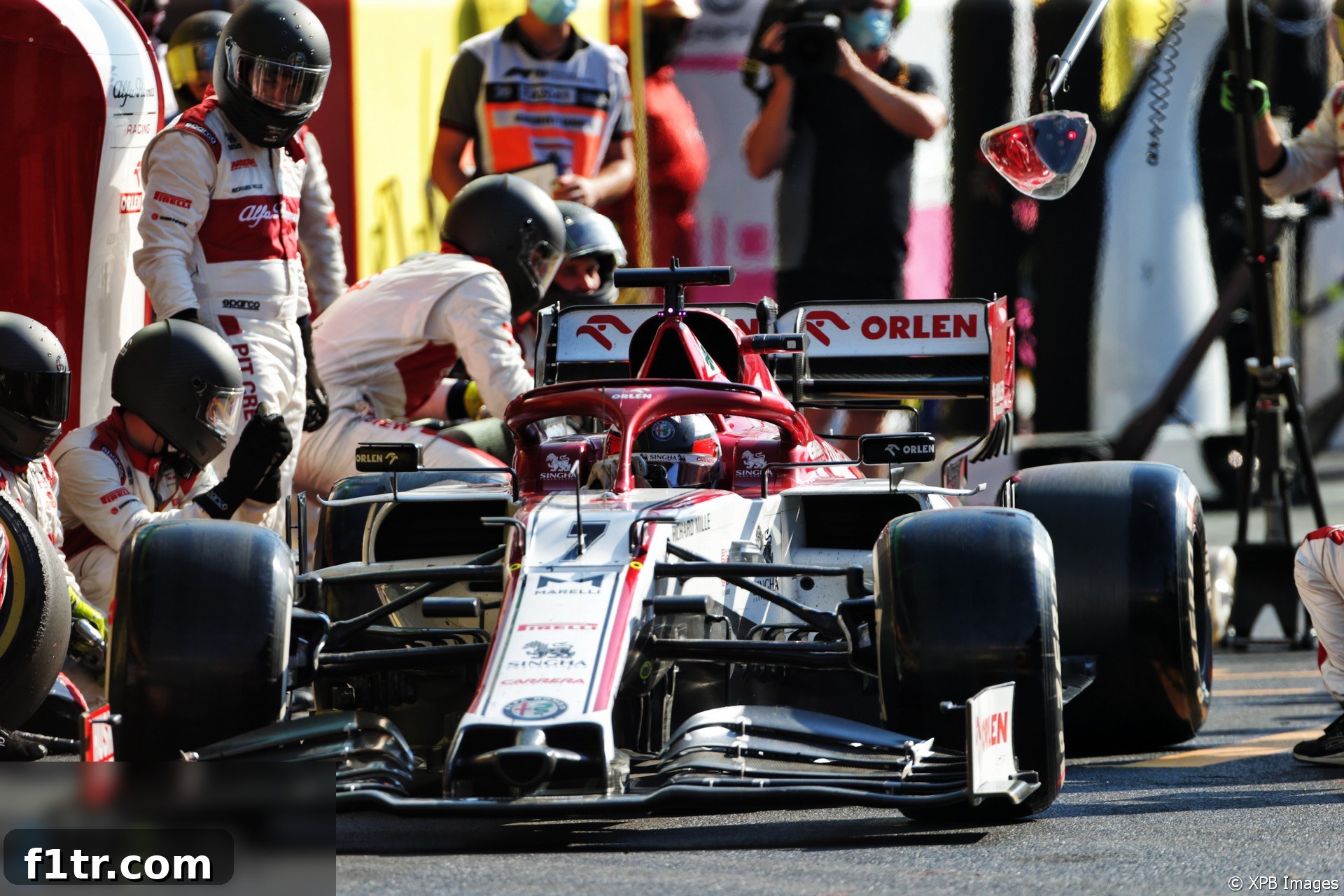
The picturesque and challenging Mugello circuit, making its eagerly anticipated debut on the Formula 1 calendar for the Tuscan Grand Prix, delivered a race filled with drama, high-speed action, and unexpected twists. Amidst the chaos of multiple safety car deployments and red flags, even the most seasoned drivers found themselves navigating treacherous waters, both on track and in the strategic decisions made off it. One such veteran, Kimi Räikkönen, the revered “Iceman” of Alfa Romeo Racing, became the subject of a post-race stewards’ inquiry, ultimately leading to a five-second time penalty that marginally altered his finishing position but sparked a wider discussion about instantaneous race decisions and the strict adherence to F1 regulations.
Insights & Analysis
The Fine Line of F1 Regulations
Kimi Räikkönen’s penalty at the Tuscan Grand Prix serves as a compelling reminder of the razor-thin margins that define success and failure in Formula 1. Every decision, from a driver’s instinct on track to a team’s strategic call, is scrutinised against a backdrop of complex regulations. Even under immense pressure and rapidly evolving race conditions, the rules governing pit lane entry, track limits, and safety car procedures are rigidly enforced. Räikkönen’s candid admission of crossing the line underscores the constant battle drivers face to balance split-second judgment with absolute compliance, often with significant consequences for their race results and championship points.
Räikkönen, who initially secured a commendable eighth place finish, saw his efforts slightly diminished as he was relegated to ninth following the imposition of the penalty. The stewards’ ruling centred on a specific infringement during his pit lane entry: a failure to maintain his car on the right-hand side of the white line, effectively turning into the pits later than the regulations permit. This seemingly minor infraction, often an unconscious action in the heat of battle, highlighted the relentless precision demanded at every single moment in a Formula 1 Grand Prix.
The veteran Finnish driver offered a candid explanation for his misstep, attributing it to a late, reactive decision to pit under rapidly changing circumstances. The incident occurred during one of the race’s several chaotic periods, specifically after Lance Stroll suffered a significant crash at Arrabbiata 2, prompting the deployment of the Safety Car. Räikkönen recounted approaching Bucine, the final corner of the Mugello circuit, when he first became aware of the incident.
“I crossed the line,” Räikkönen openly admitted, his characteristic directness shining through. “Obviously I knew the rules but I could see coming into the last corner there was dust or something so I could see somebody went off and I was expecting that the Safety Car was going to come out.” This split-second observation, a testament to a driver’s acute sensory awareness on track, immediately put him on alert for an impending safety car period, fundamentally altering his immediate race strategy. The decision to pit under a Safety Car is often a tactical masterstroke, allowing teams to change tyres without losing significant track position, making it an invaluable opportunity that drivers and strategists are constantly primed to seize.
He continued, describing the critical moments leading to his error: “I was kind of looking for the board when it comes on and once it came I just turned in. I realised straight away that I crossed the line.” This narrative vividly illustrates the immense pressure and the fractions of a second available to Formula 1 drivers to process information, make crucial decisions, and execute them perfectly. The Safety Car deployment, while offering a strategic window, also introduces an element of urgency, pushing drivers to react instinctively. For Räikkönen, that instinct, combined with the delayed visual confirmation of the Safety Car board, led to an instantaneous yet ultimately illegal pit entry maneuver.
Reflecting on the immediate aftermath of his mistake, Räikkönen revealed a fleeting thought of aborting the pit entry altogether. “I almost went back on the straight” instead of committing to the pit stop, he pondered. However, he quickly concluded that the outcome would likely have been the same regardless. “I think the end result would have been the same, once you go over,” he stated, acknowledging the unwavering enforcement of F1 rules by the stewards. This self-awareness, coupled with his vast experience, meant he understood the consequences of his actions even before the official notification arrived.
Ironically, any potential strategic advantage Räikkönen might have gained from pitting under the Safety Car was almost immediately nullified by yet another dramatic turn of events: a red flag. The race was promptly suspended, bringing all cars back into the pit lane. This crucial development effectively reset the strategic playing field, allowing all rival teams to change their tyres without any time penalty or loss of track position. What began as a timely, albeit flawed, strategic gamble for Räikkönen and Alfa Romeo transformed into a miscalculation entirely beyond their control. The red flag, an unusual occurrence, especially mid-race, eradicated the strategic differential that the Safety Car typically provides.
“In hindsight it cost us a place,” Räikkönen conceded with his characteristic pragmatism. “There was obviously the red flag so staying out would have worked much better.” This reflection perfectly encapsulates the unpredictable nature of Formula 1, where the best-laid plans can be undone by unforeseen circumstances, and tactical decisions, made under immense pressure, can either yield significant rewards or incur costly penalties. For a team like Alfa Romeo, fighting for every single championship point, the difference between eighth and ninth place, a single point, holds considerable value in the constructors’ standings.
The ‘Iceman’ also admitted to harbouring a fleeting hope that his infraction might have escaped the stewards’ attention amidst the swirling chaos of the Tuscan Grand Prix. The race was, by all accounts, one of the most action-packed and incident-laden of the season, featuring multiple Safety Cars, two red flags, and several crashes. “Sometimes you get away with it, sometimes not, so I hoped with all the hectic things going on they didn’t notice it,” he confessed. This sentiment resonates with the experiences of many drivers throughout F1 history, where the sheer volume of incidents in a chaotic race can sometimes lead to a lenient view from the stewards, or simply an oversight.
However, Räikkönen’s deep understanding of the regulations and his immediate self-awareness quickly dispelled any such hope. “But obviously I kind of knew straightaway when I turned in that I crossed the line and I knew the rule but it was a bit too late.” This statement underscores a fundamental aspect of professional motorsport: even when a mistake is instantly recognised, the high-speed environment of Formula 1 often leaves no room for correction. Once the wheel is turned and the line is crossed, the deed is done, and the consequences, as Räikkönen discovered, are unavoidable.
The Tuscan Grand Prix at Mugello will long be remembered for its relentless drama, its spectacular setting, and the sheer unpredictability that defined its running. For Kimi Räikkönen, it served as another vivid example of how fine the margins are in Formula 1 – a sport where a split-second decision under intense pressure, combined with unpredictable external factors like red flags, can profoundly impact a race outcome. His penalty, though minor in its direct impact on his championship standing, highlighted the unwavering scrutiny under which F1 drivers operate and the absolute necessity of adhering to every single letter of the sporting regulations, even when circumstances conspire to make such adherence incredibly challenging.
For a deeper dive into Formula 1 analysis, become a RaceFans supporter andgo ad-free
Related Formula 1 Articles & Insights
- F1 Stewards: Penalty Points Reserved for Serious Infringements, Not Minor Breaches
- Highlighting the Top Performers of the 2020 Russian Grand Prix
- AlphaTauri Boss Tost: “Slower” Ferrari Gained Edge from Q3 Tyre Rule
- Lewis Hamilton on Penalties: “I May Not Always Get It Right”
- Analysis: Stewards’ Controversial U-Turn on Hamilton’s Penalty at Russian GP
Explore All 2020 Russian Grand Prix News and Features