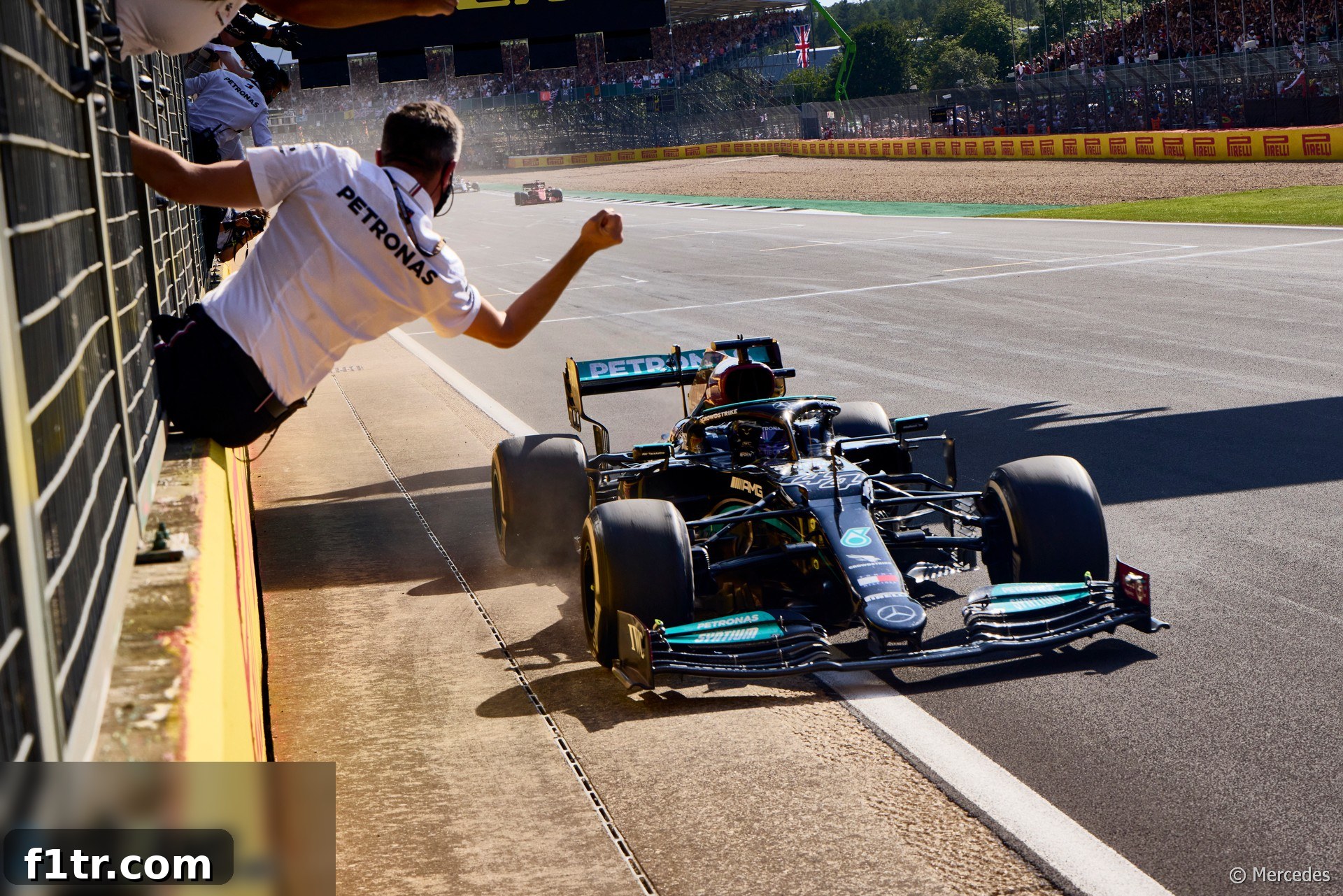
The 2021 Formula 1 season was defined by an unprecedented rivalry, a titanic struggle between two of the sport’s greatest talents: Lewis Hamilton and Max Verstappen. This epic battle reached a fever pitch at the British Grand Prix, where a dramatic collision between the two championship protagonists set the stage for one of the most talked-about races in recent memory. Following a controversial victory at his home race, Mercedes-AMG Petronas F1 Team Principal Toto Wolff stepped forward to unequivocally defend his star driver, Lewis Hamilton, amidst a storm of criticism from rivals Red Bull Racing.
The Silverstone circuit bore witness to an electrifying opening lap, culminating in a high-speed incident at the notorious Copse corner. Lewis Hamilton, challenging for the lead, made an aggressive move on Max Verstappen, resulting in contact that sent the Red Bull driver careening into the barrier at immense speed. The impact was severe, registering a staggering 51G, and brought Verstappen’s race to a premature and alarming end. While Verstappen was thankfully cleared of serious injury after medical checks, the incident immediately ignited a fierce debate within the paddock and among fans worldwide.
Advert | Become a Supporter & go ad-free
Despite being deemed predominantly at fault by the race stewards and subsequently handed a 10-second time penalty, Hamilton demonstrated remarkable resilience and pace. He continued his charge, meticulously navigating the remaining laps and executing a brilliant overtake on Charles Leclerc’s Ferrari in the closing stages of the race. This decisive move secured Mercedes’ first victory in six races, halting Red Bull’s dominant string of successes and injecting crucial momentum back into the Silver Arrows’ championship campaign. The win was not just a personal triumph for Hamilton but a vital strategic gain for Mercedes in both the drivers’ and constructors’ championships, significantly narrowing the gap to their fierce rivals.
The team’s success was further underscored by a strong performance from Valtteri Bottas, who finished third. Bottas played a pivotal role in the team’s strategy, allowing Hamilton past in the latter stages of the race to give his teammate the best possible chance to chase down the leading Ferrari. This display of teamwork and strategic execution highlighted Mercedes’ relentless pursuit of every available point in what was shaping up to be one of the most tightly contested seasons in Formula 1 history.
Reflecting on the team’s overall performance and the contentious nature of the win, Toto Wolff adopted a pragmatic stance. “A win is a win and a third is a third and we scored big points today and that’s it,” Wolff declared, emphasizing the critical importance of championship points. “We put it on the scorecard and move on to the next one.” This statement underscored Mercedes’ unwavering focus on the bigger picture: the relentless fight for both championship titles. Wolff acknowledged the intense pressure and the challenges faced throughout the season, noting, “It was always very intense because we are fighting with everything we have in order to hold on to this championship whilst knowing that we are not performing as [well as] Red Bull and Honda.” He further explained the volatile nature of the season’s points tally: “Therefore we’ve had big points losses in the past, and today we scored big points. So that is always balancing itself out.” This perspective highlighted the strategic ebb and flow of a long season, where every gain and loss carries significant weight.
Wolff’s defense of Hamilton went beyond merely acknowledging the points scored; he delved into the specifics of the incident itself, suggesting that the scale of the controversy was largely inflated by the dramatic consequence of Verstappen’s high-speed crash rather than the perceived severity of Hamilton’s driving infringement. “I think that if that would have been a low or mid-speed corner, then it wouldn’t have been a big debate, obviously, or what the consequence of that [whether] a five or 10-second penalty,” Wolff elaborated. He stressed the unique demands of Copse corner, a turn that “takes lots of guts to even take flat alone.” In a high-speed scenario involving two cars, he argued, the dynamics are inherently complex. “When two cars are trying to drive through it they need to leave each other space in order to make it through the corner. And that wasn’t the case and the stewards deemed 10 seconds as appropriate, I guess because both drivers were part of the accident, not one alone, it’s always much more nuanced.” Wolff’s analysis subtly shifted the narrative, implying shared responsibility and underscoring the complexities of racing at the absolute limit, particularly at a circuit as challenging as Silverstone.
The aftermath of the British Grand Prix saw a torrent of criticism directed at Hamilton, spearheaded by Red Bull Racing’s Team Principal Christian Horner and Max Verstappen himself. Horner was particularly vocal, accusing Hamilton of “dirty driving” and openly questioning how the seven-time world champion could derive any satisfaction from a victory achieved under such contentious circumstances. Verstappen, still shaken from his crash, also expressed his disappointment and strong opinions on Hamilton’s aggressive maneuver. In response to these pointed attacks, Wolff remained steadfast in his defense of his driver. “Everybody has an opinion and that’s okay,” he stated, acknowledging the highly charged atmosphere. “Of course, every team will have a certain bias towards incidents like that.”
However, Wolff was unequivocal in countering the accusations of “dirty driving.” “When you hear the comments about his driving and the incident, Lewis is the contrary of someone that ever drives dirty. I think he’s a sportsman.” This statement served as a powerful rebuttal, highlighting Hamilton’s long-standing reputation as a fair and principled competitor. Throughout his illustrious career, Hamilton has been lauded for his skill, aggression, and sportsmanship, rarely being genuinely accused of intentionally dangerous or unsporting behavior. Wolff’s defense aimed to protect his driver’s image and integrity, framing the incident as a racing skirmish rather than a deliberate act of malice, a common occurrence when two drivers are fighting for supremacy with such high stakes.
Advert | Become a RaceFans supporter andgo ad-free
The British Grand Prix became a flashpoint in the 2021 F1 season, intensifying an already scorching rivalry. It wasn’t just a race; it was a psychological battle, a strategic chess match, and a testament to the immense pressures at the pinnacle of motorsport. Toto Wolff’s articulate and unwavering defense of Lewis Hamilton underscored the profound loyalty and protection offered by a team principal to his star driver, especially when facing intense external scrutiny. This event further cemented the narrative of two exceptional teams and two extraordinary drivers pushing each other to their absolute limits, prepared to fight for every inch on and off the track. The implications of the Silverstone clash resonated throughout the remainder of the season, shaping strategies, fueling controversies, and adding yet another layer of drama to what would become one of Formula 1’s most memorable and contentious championship battles.
2021 British Grand Prix: Related Coverage
- Verstappen reveals “vision problems” since 2021 Silverstone crash with Hamilton
- Who was to blame for Verstappen and Hamilton’s collision at Silverstone?
- Hamilton penalty “harsh” for move within FIA’s overtaking guidance – Allison
- Why Hamilton “wasn’t seen as wholly to blame” for the Verstappen crash
- Sainz convinced he had pace to challenge for podium without British GP setbacks
Browse all 2021 British Grand Prix articles