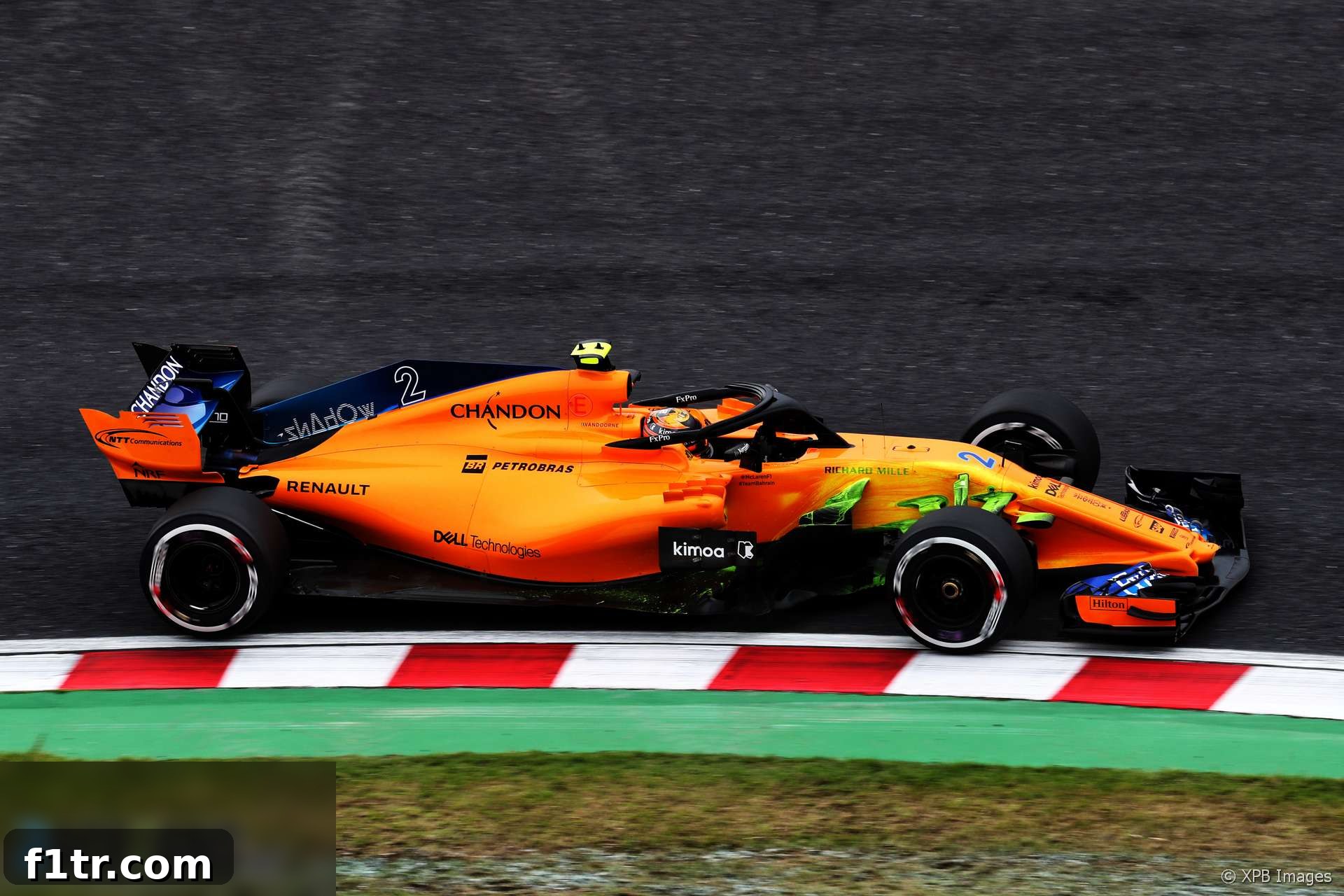
The Suzuka International Racing Course, home to the iconic Japanese Grand Prix, is a circuit revered for its high-speed corners, technical demands, and unforgiving nature. In the intensely competitive world of Formula 1, every strategic decision, no matter how minor, carries significant weight. For the 2018 Japanese Grand Prix, the McLaren Formula 1 team found itself under intense scrutiny following an unconventional tyre strategy that ultimately proved to be a misstep. This bold gamble, a stark deviation from the norm, ignited considerable discussion within the paddock and among motorsport enthusiasts, highlighting the fine margins that define success and failure in elite racing.
At the heart of the controversy was McLaren’s extraordinary selection of Pirelli tyre compounds for their two cars. Uniquely among all ten teams on the grid, McLaren opted for an unprecedented four sets of medium tyres for each of their drivers. This was twice as many as any other team, indicating a profound commitment to the harder compound. Conversely, their allocation of super-soft tyres was the absolute minimum, matching the fewest chosen by any competitor. This highly asymmetric choice immediately raised eyebrows, as it presented a stark contrast to the more balanced approaches adopted by rivals who typically sought a wider range of options to adapt to varying track conditions and potential race scenarios.
Advert | Become a Supporter & go ad-free
In the aftermath of the early practice sessions and heading into qualifying, the wisdom of McLaren’s tyre strategy quickly came into question. Sporting director Gil de Ferran, a highly respected figure in motorsport, offered an explanation for the team’s thinking when prompted by RaceFans. He articulated the initial rationale behind the seemingly audacious decision. “There was a general understanding that our car was working better with harder compounds,” de Ferran explained. He elaborated that, particularly on a circuit like Suzuka, renowned for its very high G-forces and complex sequences of corners that heavily punish tyres, the team believed a harder compound would be a more suitable and ultimately advantageous choice for their MCL33 chassis.
However, de Ferran’s candour continued as he openly admitted the team’s error. “I think quite frankly as it transpires we got it wrong,” he confessed, acknowledging the immediate and undeniable challenges faced by the team during the Grand Prix weekend. “We’ve been spending the whole weekend trying to deal with a non-optimal choice that we’ve made. And that’s all there is to it really.” This remarkably transparent admission underscored the significant difficulties McLaren encountered in extracting performance, confirming that their strategic gamble had not paid off as intended. It highlighted the pressure within a Formula 1 team to make split-second decisions that can have profound implications for an entire race weekend, and the willingness to accept accountability when those decisions don’t yield the desired results.
Despite the acknowledgement of a strategic misjudgment, de Ferran was quick to dismiss and firmly reject circulating claims suggesting that McLaren had failed to submit their tyre selection on time, thereby resulting in Pirelli assigning default quantities to the team. Such an administrative oversight would be a significant embarrassment for any professional outfit in Formula 1. De Ferran insisted unequivocally, “It was a deliberate selection. It was not – I read something in the press – that we forgot maybe the choice and therefore got a default choice from Pirelli, that’s not true.” This strong denial underscored that the team’s controversial tyre choice was a calculated, albeit flawed, strategic decision rather than a simple procedural error. It demonstrated McLaren’s ownership of the strategy, even in the face of its immediate negative consequences, reinforcing their commitment to strategic thinking, however misguided it may have appeared in retrospect.
The ramifications of McLaren’s tyre selection were immediately evident in their on-track performance, particularly during the crucial qualifying session. By opting for such a limited number of super-soft compounds, the team was unable to conduct any meaningful running on this softer, higher-grip tyre before qualifying began. This lack of data and track time on the super-softs left their drivers, Fernando Alonso and Stoffel Vandoorne, at a distinct disadvantage. Understanding the performance characteristics, degradation rates, and optimal operating windows of each tyre compound is fundamental for setting up a Formula 1 car and for a driver to extract its maximum potential. Without this crucial preparation, McLaren’s drivers struggled to find pace, ultimately qualifying a disappointing 18th and 19th. Their performance placed them ahead of only Marcus Ericsson, who crashed his Sauber during qualifying, highlighting the dire state of McLaren’s relative pace at Suzuka.
The Suzuka circuit, with its unique figure-of-eight layout and demanding corners like the Esses, Spoon Curve, and 130R, places immense strain on tyres and chassis alike. A sub-optimal tyre choice here can be particularly punishing, as precise grip and consistent performance are paramount for lap time. The lack of familiarity with the super-soft compound undoubtedly hampered their ability to extract the ultimate one-lap pace required for a strong qualifying position. It forced the team to compromise their setup, potentially sacrificing qualifying performance in the hope of a stronger race pace, a gamble that rarely pays off when starting so far down the grid in modern F1.
Despite the challenging circumstances, driver Stoffel Vandoorne offered a pragmatic perspective on the situation. While acknowledging the unconventional build-up to qualifying, he remained cautious about overstating the impact of the tyre choice on their ultimate performance. “I don’t think it changes the result today dramatically,” he commented, suggesting that the underlying performance deficit of the McLaren car might have been a more significant factor than the tyre strategy alone. He did concede, however, that “maybe it was not the perfect build-up towards the qualifying session.” A perfect build-up for qualifying typically involves systematically evaluating all available tyre compounds, understanding their peak performance window, and optimizing car setup to extract the maximum grip. This was clearly not achievable with their chosen allocation.
Intriguingly, Vandoorne also hinted at a potential silver lining, looking ahead to the race itself. He speculated, “With the amount of tyres we have available for tomorrow if for some reason it’s very hot and the blistering starts to become apparent than maybe it’s a good thing.” This statement points to the complex interplay of factors in race strategy. While the harder medium tyres might have compromised their qualifying pace, they could theoretically offer greater durability and resistance to degradation, particularly blistering, in hotter race conditions. This strategic foresight, common in Formula 1, aims to trade immediate pace for long-term consistency, though in McLaren’s 2018 context, starting from the back with limited overtaking opportunities, even a durable tyre would face an uphill battle to yield significant results.
Advert | Become a RaceFans supporter andgo ad-free
The 2018 season was a particularly challenging period for McLaren, as the team grappled with the performance of their Renault power unit and the aerodynamic limitations of their chassis. This specific tyre strategy at Suzuka became emblematic of the team’s struggles and their continuous, sometimes desperate, search for a competitive edge. Tyre strategy in Formula 1 is a delicate art, balancing raw speed with durability, and adapting to ever-changing track conditions and competitor strategies. A bold gamble can occasionally yield spectacular results, but more often, as McLaren found in Japan, it can expose fundamental weaknesses and exacerbate existing problems. The lessons learned from such experiences are invaluable, contributing to the iterative process of car development, strategic planning, and overall team performance improvement in the relentless pursuit of championship success.
Ultimately, McLaren’s unorthodox tyre selection for the 2018 Japanese Grand Prix serves as a compelling case study in Formula 1 strategy. It was a deliberate choice, born from a specific understanding of their car’s characteristics, yet it proved to be a significant misjudgment that severely hampered their weekend. The candid admission of error by Gil de Ferran, coupled with Stoffel Vandoorne’s measured assessment, painted a clear picture of a team grappling with complex performance issues and strategic challenges. In the high-stakes arena of Formula 1, where every hundredth of a second and every strategic call can dictate fortunes, the Suzuka episode underscored the unforgiving nature of the sport and the constant, challenging pursuit of optimal performance.
2018 F1 season
- F1 feared “death knell” for Drive to Survive after Ferrari and Mercedes snub
- McLaren staff told us we were “totally crazy” to take Honda engines in 2018 – Tost
- ‘It doesn’t matter if we start last’: How Red Bull’s junior team aided Honda’s leap forward
- Honda’s jet division helped F1 engineers solve power unit problem
- McLaren Racing losses rise after Honda split
Browse all 2018 F1 season articles