The Unforeseen Challenge: Istanbul Park’s Late Resurfacing and the Grip Dilemma at the Turkish Grand Prix
The highly anticipated return of Formula 1 to the iconic Istanbul Park circuit for the Turkish Grand Prix in 2020 brought with it an unexpected and significant challenge: a last-minute track resurfacing. This decision, made just weeks before the race weekend, caught many off guard, including the sport’s sole tyre supplier, Pirelli. Drivers, engineers, and fans alike were left grappling with unprecedentedly low grip levels, transforming what was expected to be a high-speed, technical race into a true test of adaptability and skill. The dramatic change in track conditions ignited debates about circuit preparation, communication breakdowns, and the very essence of competitive racing under extreme circumstances, ultimately shaping one of the most memorable races of the revised 2020 season.
The Grip Conundrum: Drivers Face Unprecedented Conditions
From the moment cars hit the track during Friday practice sessions, it became immediately clear that the newly laid tarmac at Istanbul Park presented a formidable hurdle. Drivers across the grid reported astonishingly low grip, often likening the surface to “driving on ice” or a “skating rink.” This wasn’t merely a slight reduction in grip; it was a fundamental shift that made generating optimal tyre temperature incredibly difficult, even for the purpose-built, high-performance Formula 1 machinery. Lap times were significantly slower than initially anticipated, and drivers struggled immensely to find any confidence, with cars sliding wildly through corners that were once revered for their high-speed demands and perfect rhythm, particularly the formidable Turn 8.
The pronounced lack of mechanical grip meant that drivers had to rely heavily on aerodynamics and their innate car control abilities, pushing the boundaries of what was thought possible with modern F1 cars. It stripped away much of the predictability that teams usually rely on, forcing engineers to think on their feet and devise creative setup solutions, while drivers had to adapt their techniques fundamentally, often resorting to aggressive steering inputs and delicate throttle control to maintain any semblance of control. While frustrating for those meticulously seeking optimal performance and consistent lap times, this extreme challenge inadvertently set the stage for one of the most unpredictable and thrilling races of the season, where raw driver talent, precision, and error management would be paramount over sheer pace alone.
Pirelli’s Perspective: A Cosmetic Choice with Major Implications
Mario Isola, Pirelli’s head of motor racing and Formula 1, provided valuable insights into the perplexing situation surrounding the resurfacing. He suggested that the decision to lay a completely new surface might have been driven more by aesthetic than pure performance considerations. “I believe that they wanted to be ready with a circuit, with a new image, and everything is in good condition,” Isola stated. This perspective highlights a potential disconnect between circuit promoters’ desires for a pristine venue and the highly specific operational demands of Formula 1, where track characteristics are absolutely crucial for tyre performance, vehicle dynamics, and race strategy planning.
Pirelli, with a factory situated conveniently close to the Istanbul circuit, had extensive historical knowledge of the track’s previous surface. This original tarmac, which was laid ahead of the last Turkish Grand Prix in 2011, had seen very little competitive use in the intervening nine years. Isola expressed his well-founded suspicion that the old surface, while certainly aged and perhaps showing signs of wear, was likely still perfectly adequate for racing and did not necessitate a complete replacement. “The Tarmac was for sure, quite old,” he acknowledged, “But this doesn’t mean that was not good for racing.” The implication was clear: the change, while perhaps well-intentioned for presenting a fresh, new look to the world, inadvertently created a significant and unforeseen technical headache for the entire F1 paddock, impacting everything from car setup to driver confidence.
It’s a well-known fact in motorsport that new tarmac surfaces are notoriously slippery in their initial phase. They contain volatile oils and bitumen that need to cure and be thoroughly “rubbered in” by continuous running before they can offer optimal grip. This natural process takes considerable time and sustained usage under race conditions, neither of which was available in abundance for the Turkish Grand Prix. The sudden, late decision to resurface left no room for the track to mature and develop a rubber-in layer, immediately creating the slick, low-grip conditions that caught everyone off guard.
The Tyre Selection Dilemma: A Fortuitous Hard Choice Amidst Uncertainty
Tyre selection for a Formula 1 Grand Prix is an intricate and meticulous process, typically planned many months in advance. It relies heavily on historical data from previous races at the venue, detailed track simulations, and careful analysis of the expected forces and stresses on the tyres. For Istanbul Park, Pirelli had brought its hardest selection of compounds – the C1 (the hardest available), C2 (medium-hard), and C3 (medium). This conservative choice was a direct consequence of the circuit’s well-known characteristics: its highly abrasive nature, which typically causes significant tyre wear, and the immense cornering forces generated, particularly through the famously challenging, multi-apex Turn 8.
However, Mario Isola unequivocally stated that had Pirelli been informed about the resurfacing decision in a timely manner, their compound selection would have been significantly different. He confirmed that they would have opted for a softer range – specifically the C2, C3, and C4 (medium-soft) compounds. The softer compounds are inherently designed to generate heat more easily and offer greater mechanical grip, which would have been far more suitable and forgiving for a low-grip, new tarmac surface. The fact that teams were forced to run the harder C1, C2, and C3 tyres on such a slick surface further exacerbated the grip issues, making it exceedingly difficult for them to get the tyres into their optimal operating window, where they provide peak performance. This unintended pairing of hard tyres on a low-grip surface, however, also inadvertently contributed to the extraordinary challenge and the compelling spectacle of the race weekend.
Communication Breakdown Amidst a Global Pandemic
The lack of timely and clear information regarding the resurfacing was identified as a critical factor contributing to the chaos. Mario Isola attributed this communication gap partly to the widespread disruption and logistical complexities caused by the global Covid-19 pandemic. The 2020 F1 season was heavily revised, with its original calendar largely scrapped and many new circuits added to the schedule at very short notice, often replacing cancelled events in rapid succession. This unprecedented logistical challenge strained communication channels and operational planning for every stakeholder involved in Formula 1, from teams and suppliers to the FIA and event promoters.
“I believe that it was a bit more difficult this year because of the new circuits and maybe the information flow was not so good,” Isola explained, offering context to the situation. “It was all organised in a rush, many circuits confirmed very late stage. Maybe also the promoter decided to resurface the track very late. So it is a bit of a particular situation, I would say the consequence of this Covid situation that is changing the balance in many areas also in the information flow.” This detailed explanation highlights the extraordinary and unique circumstances of the 2020 season, where the usual meticulous planning and transparent information-sharing processes were severely compromised, leading to unforeseen and dramatic consequences like the Istanbul Park resurfacing surprise, which had a profound impact on the entire race weekend.
Rain Amplifies the Challenge: Driving on a Soapy Surface
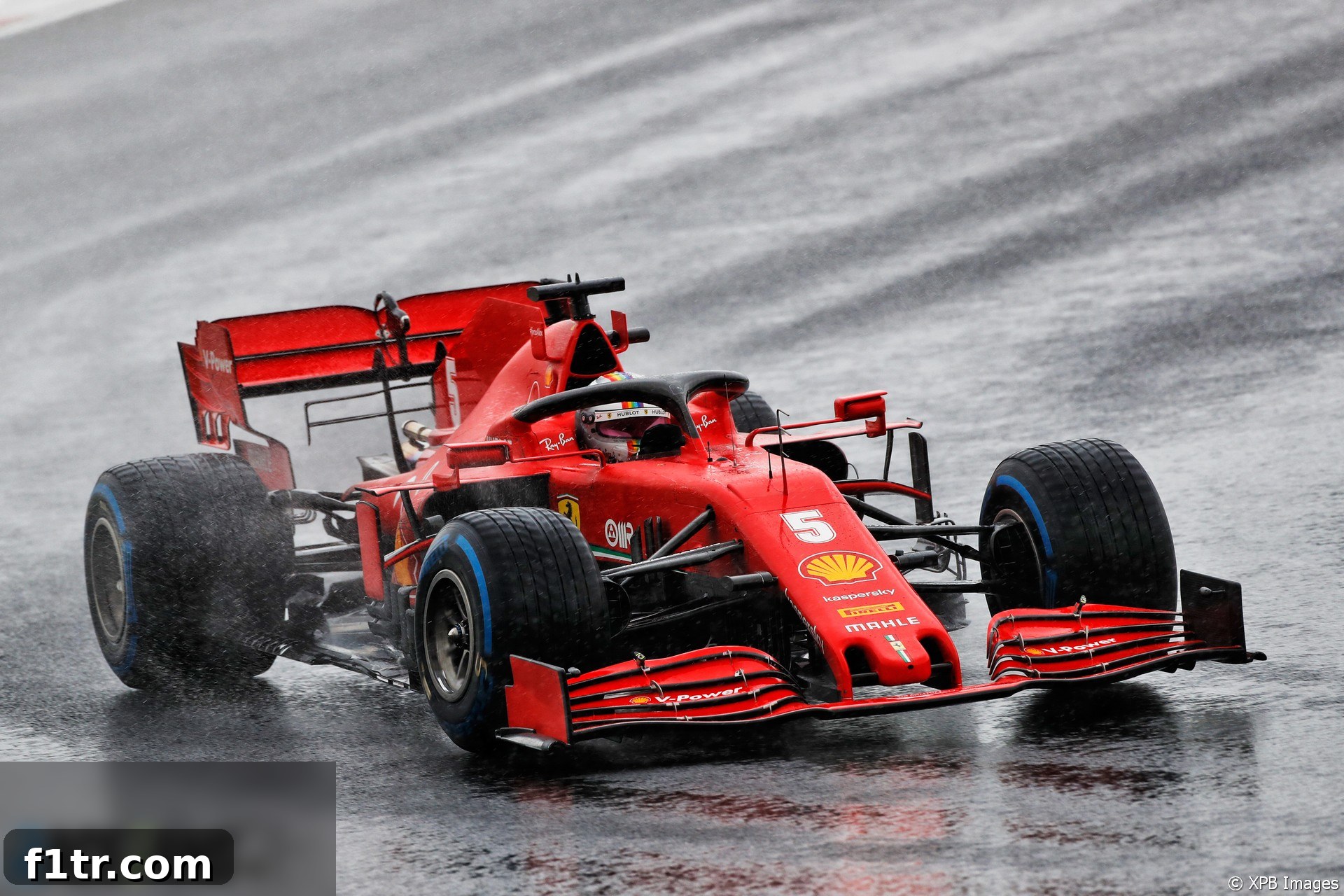
As if the new, already low-grip tarmac wasn’t enough of a challenge, the conditions at Istanbul Park were further exacerbated dramatically by rain that fell intermittently during final practice and qualifying on Saturday morning, and persisted into sections of the main race on Sunday. Rain on any racing track naturally reduces grip, making conditions trickier, but on a freshly laid tarmac, the effect is magnified to an astonishing degree. Mario Isola provided a clear and scientific explanation for this phenomenon: “When you have a new Tarmac there is oil in the Tarmac. Then when you have water going into the Tarmac the oil is going into the surface, coming from the surface and making the surface very slippery.”
This chemical reaction essentially turned the already slick track into what many drivers graphically described as a “soapy” or “greasy” surface. The combination of the virgin tarmac’s embedded oils being drawn out by the water and then mixing with standing water created an almost impossible scenario for generating any meaningful grip, pushing the limits of driver skill, car control, and engineering ingenuity to the absolute extreme. This added layer of complexity and danger ensured that the Turkish Grand Prix would be not only physically demanding but also an intense mental marathon for every competitor, where patience, precision, and quick thinking would be far more valuable than outright speed.
An Unpredictable Grand Prix: A Spectacle of Skill and Strategy
Despite the initial frustration, widespread complaints, and significant challenges presented by the unusual conditions, Mario Isola ultimately found a silver lining in the extraordinary circumstances. “The result is basically very little grip. It is not a drama, in my opinion, because it’s an additional challenge for drivers and it’s a bit of unpredictability for the engineer. So when you have this kind of situation, sometimes you have even better racing.” His words proved remarkably prophetic, as the race weekend unfolded.
The Turkish Grand Prix became a thrilling and unforgettable spectacle, defying all pre-race expectations. The consistently low grip and persistently wet conditions effectively leveled the playing field to a significant extent, allowing raw driver talent, adaptability, and strategic brilliance to shine brightest. Tyre management – knowing how and when to push, and when to conserve – along with astute strategy calls from the pit wall, and sheer, instinctual car control became the defining factors of success. Overtaking opportunities were abundant due to cars struggling for grip, but so too were costly mistakes, leading to a dynamic and constantly evolving race. It was a race where champions were truly tested under immense pressure, and the ability to adapt instantly to a constantly evolving, treacherous surface determined ultimate success. The unexpected resurfacing, while initially a source of widespread complaint and logistical headache, ultimately delivered a profoundly memorable and dramatic addition to the Formula 1 calendar, proving that sometimes, the greatest and most unforeseen challenges lead to the most captivating and unpredictable contests in motorsport history.
Related Content:
Browse all 2020 Turkish Grand Prix articles