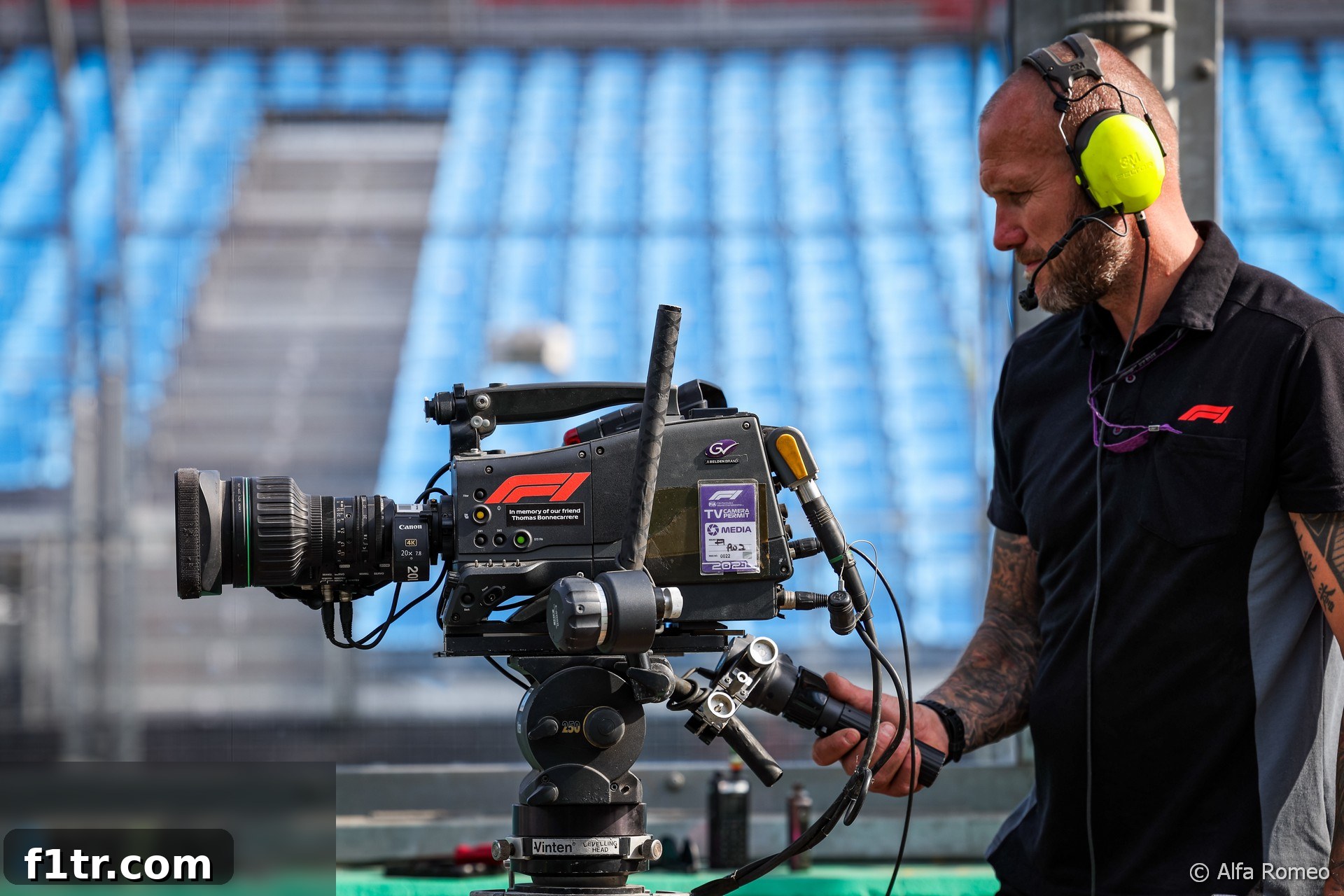
Formula 1 is set to revolutionize its digital viewing experience with the introduction of a new, highly anticipated “premium” tier for its official streaming service, F1 TV. This strategic move aims to deliver an unparalleled viewing experience, packed with innovative features designed to captivate the most dedicated Formula 1 enthusiasts and expand the global reach of the sport.
Advert | Become a Supporter & go ad-free
The forthcoming premium offering promises a significant upgrade, notably featuring stunning 4K footage for crystal-clear visuals, a range of new feed options providing deeper insights into race weekends, and the flexibility to watch across up to six different devices simultaneously. This enhanced functionality marks a pivotal moment for F1 TV, pushing the boundaries of what fans can expect from a dedicated motorsport streaming platform and establishing a new benchmark for live sports content delivery.
This premium tier is designed to complement the existing F1 TV packages, offering a clear upgrade path for fans seeking the ultimate immersion. Currently, F1 TV offers two primary options: F1 TV Pro, which provides live streams of every track session – from practice to qualifying and the Grand Prix itself – complete with onboard cameras, team radio, and real-time data; and F1 TV Access, which offers on-demand replays, documentaries, and historical content, but without live race feeds. While the exact pricing for this new top-tier service remains under wraps, it is expected to reflect its enhanced value proposition and position itself as a premium offering. To provide context, F1 TV Pro, which was accessible in 92 territories globally last year, was priced at approximately $84.99 (£67) annually in the United States, a key market for the sport’s digital growth. The introduction of a more expensive premium option indicates Formula 1’s confidence in its growing digital audience and their willingness to pay for superior content and features.
The strategic decision to launch a premium tier follows a period of remarkable growth for F1 TV. Formula 1 CEO Stefano Domenicali recently highlighted this success, confirming a substantial 15% increase in F1 TV subscriptions in 2024. This impressive growth underscores the increasing appetite for direct-to-consumer sports content and F1’s effective digital engagement strategies. Capitalizing on this burgeoning demand, Domenicali outlined the vision for the new tier last week, stating, “Capitalising on this success, we are launching a new higher-priced premium tier this year to target avid fans.” This statement underscores F1’s commitment to not only attracting new viewers but also deepening engagement with its most passionate followers, providing them with advanced features that justify a higher price point and further solidifying F1 TV’s position in the competitive streaming landscape.
Domenicali further elaborated on the specific enhancements that will define the premium experience. “It will offer enhanced functionality, including 4K ultra-high definition, multi-view, a virtual pit wall, and the ability to watch across up to six devices.” These features are not merely incremental improvements; they represent a fundamental shift in how fans can interact with and consume Formula 1 content, moving beyond passive viewing to a more immersive and personalized experience. The inclusion of 4K UHD will bring the vibrant colours, intricate details of the cars, and the intensity of the racing action to life with unprecedented clarity, making every moment on track feel more immediate and impactful. Multi-view options will allow viewers to customize their experience, perhaps watching the main race feed alongside a specific driver’s onboard camera, a live timing screen with detailed data, or a strategic overview of the entire grid. This level of control empowers fans to tailor their viewing to their specific interests, whether they’re focusing on their favorite driver, a particular team’s strategy, or the overall race dynamics. The “virtual pit wall” is particularly intriguing, promising a deeper dive into race strategy and team communications, potentially offering real-time data visualizations, strategic overlays, and even simulated scenarios, putting fans closer to the tactical nerve center of each Grand Prix than ever before. Furthermore, the ability to stream on up to six devices simultaneously is a significant convenience for households with multiple F1 fans or for individuals who prefer to watch across several screens—a laptop, tablet, and smartphone—offering unparalleled flexibility and ensuring that no one misses a moment of the action, regardless of their preferred device.
Formula 1 anticipates that this premium tier will catalyze further growth in subscriptions throughout the year, leading to a substantial increase in overall revenue for the organization. This tiered strategy allows F1 to cater to a broader spectrum of fans, from casual followers who enjoy the free-to-air broadcasts or basic access, to dedicated enthusiasts willing to invest in a superior digital experience. The United States continues to be the largest and most critical market for F1 TV, a testament to the sport’s rapid ascent in North America, largely fueled by initiatives like Netflix’s immensely popular *Drive to Survive* documentary series, which has introduced a new generation of fans to the drama and excitement of Formula 1. However, while direct-to-consumer streaming is a vital pillar of F1’s strategy, Formula One Management (FOM) also remains actively engaged in crucial negotiations with traditional broadcasters to secure wider reach. The current broadcast deal with ESPN in the USA is set to expire at the end of this year, setting the stage for significant discussions about the future of F1 broadcasting rights in the region and attracting considerable attention from various media entities.
The expiry of ESPN’s exclusive negotiation period with FOM without an agreement on new terms has naturally sparked considerable speculation within the industry and among fans. Whispers of F1 potentially striking a groundbreaking deal with major streaming players like Netflix have gained traction, given Netflix’s deep involvement with the sport through *Drive to Survive* and its massive global subscriber base. Yet, Stefano Domenicali moved to clarify the situation, confirming that FOM remains in active discussions with ESPN. His comments sought to dispel any notion of a negative relationship, emphasizing the long-standing partnership and mutual benefits. He stated, “With regard to ESPN and Formula 1, let me say that I can deny the sort of situation that is negative because, first of all, we need to be thankful for what ESPN is providing to us.” This gratitude highlights ESPN’s early belief in the Formula 1 project, especially during a period when the sport’s popularity in the US was not as widespread as it is today, underscoring their foundational role in building F1’s presence in the American market.
Advert | Become a RaceFans supporter andgo ad-free
Domenicali further elaborated on the ongoing dialogue, explaining, “We are very happy about the quality of the service. We need to always remember that they were first to believe in our project. So therefore, the fact that at the end of the exclusivity period, they have not put in place a formal offer, it doesn’t mean that the discussions are [not] going ahead. Actually, it’s the other way around. So there are still a lot of discussions to try to find the best solution.” This nuanced perspective suggests that while a formal offer wasn’t immediately tabled, the lines of communication remain open and productive. The implication is that negotiations are complex, involving multiple variables beyond simple financial bids, potentially encompassing broadcast reach, promotional efforts, integration with other sports content, and synergistic opportunities that could benefit both parties. Such protracted discussions are common in high-stakes media rights deals, reflecting the intricate balance between financial value and strategic partnership.
The current period is characterized by intense interest from various parties, as Domenicali acknowledged. “Of course, now, as we always said, is the month where other players are around the table. And we cannot deny the fact that there is a lot of interest around our product.” This competitive landscape is a significant advantage for Formula 1, underscoring the growing appeal of the sport globally and its transformation into a cultural phenomenon. F1 is in a strong negotiating position, fortunate enough to possess “compelling content and a growing fan base and a strong demand for different situations from various parties.” This combination of factors ensures that FOM has a multitude of options to consider, from traditional sports networks with vast linear TV audiences to innovative digital platforms capable of reaching tech-savvy demographics, each offering distinct advantages in terms of exposure, revenue, and technological integration.
Navigating these discussions involves a delicate balancing act, a point Domenicali repeatedly emphasized as crucial to Formula 1’s long-term strategy. “As we always said, there is the big point related to the fact that, from one side, we always want to maximise the monetisation of our media rights, but on the other side, we need to make sure that also, in terms of awareness, in terms of growth of our fan base, we need to try to find the best way in terms of reach.” This statement perfectly encapsulates the dual objectives of Formula 1’s media strategy: maximizing the financial value derived from its broadcast rights while simultaneously ensuring the widest possible audience reach to cultivate new fans and expand the sport’s global footprint. A high-value deal with a niche premium broadcaster might offer significant revenue but could potentially limit exposure to a broader audience, which is vital for sustained growth. Conversely, a broader partnership, even if slightly less lucrative financially, could significantly boost awareness and fan engagement, converting casual viewers into dedicated followers. These two critical considerations—maximizing revenue and maximizing reach—are currently at the forefront of FOM’s intense negotiations. “Therefore, these are the two questions, the two points that are on the table. We have a lot of players that we are discussing with.” The outcome of these pivotal discussions will undoubtedly shape the future accessibility and financial landscape of Formula 1 for years to come, impacting how millions of fans around the world experience the pinnacle of motorsport and influencing its trajectory as a global entertainment giant.
Miss nothing from RaceFans
Get a daily email with all our latest stories – and nothing else. No marketing, no ads. Sign up here:
Advert | Become a RaceFans supporter andgo ad-free
Formula 1 Digital Revolution: F1 TV’s Premium Tier and Future Broadcast Strategies
- Exploring the Depths of F1: Books, Biographies, and Controversies
- Revisiting Classic F1 Races: Debating the Greatest Moments in History
- Authenticity vs. Spectacle: Stefano Domenicali on Overtaking in F1
- Safety in Motorsport: The Ongoing Quest to Mitigate Risks in F1
- F1’s Global Expansion: Prospects for New Venues and Fan Engagement
Browse all Formula 1 articles