F1’s 2026 Revolution: FIA Sanctions Mule Car Testing Despite Pirelli’s “Impossible” Warning
Formula 1 is on the cusp of a significant technical overhaul with the introduction of the 2026 regulations, promising a new era of motorsport. Recognizing the monumental task ahead for teams and suppliers, the sport’s governing body, the FIA, has taken a proactive step. New rules have been officially approved, permitting teams to conduct vital testing with modified ‘mule cars’ to simulate the forthcoming technical specifications. This crucial development aims to give all stakeholders a head start in adapting to what is anticipated to be one of the most transformative rule changes in recent F1 history.
However, this approval arrives against a backdrop of considerable apprehension, particularly from F1’s long-standing official tyre supplier, Pirelli. The Italian manufacturer has previously voiced significant concerns, with its motorsport director Mario Isola stating that it will be “impossible” to effectively adapt current or recent F1 cars to genuinely simulate the characteristics of the vehicles that will compete under the 2026 rules. This stark warning highlights the profound challenges that lie ahead in preparing for a regulation set designed to revolutionize almost every aspect of an F1 car.
The Road to 2026: Understanding the Regulatory Shift
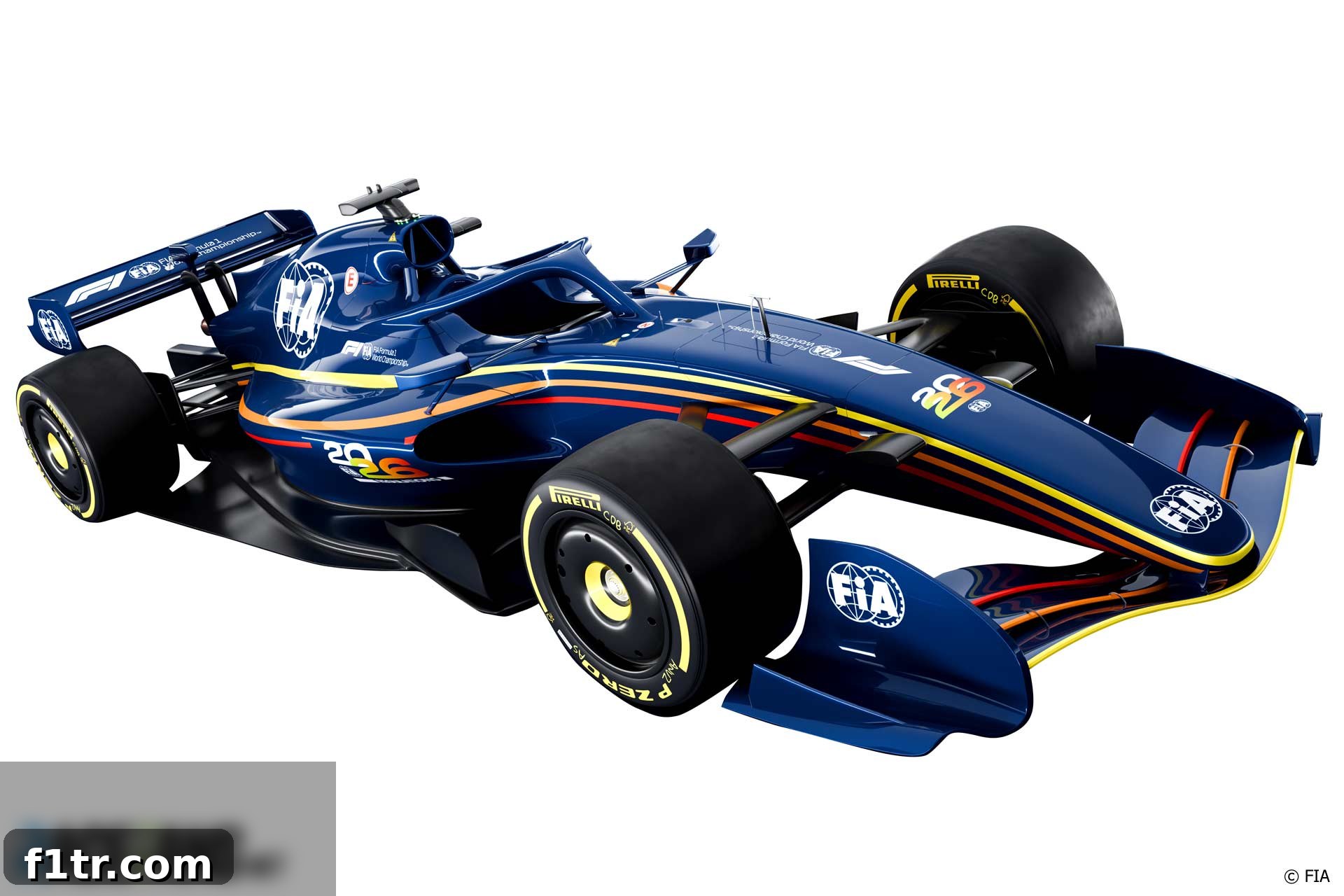
The 2026 Formula 1 regulations are engineered to address several core objectives: enhancing sustainability, promoting closer racing, and improving the overall spectacle for fans. Key changes include a significant reduction in car size and weight, the introduction of sophisticated active aerodynamics, and a completely revised power unit formula. The new power units will see an increased emphasis on electrical power, aiming for a near 50/50 split between internal combustion and electric energy, while also running on 100% sustainable fuels. These combined alterations present an unprecedented challenge for car design, chassis dynamics, and, critically, tyre performance.
The shift towards smaller, lighter cars is intended to make them more agile and improve racing dynamics on tighter tracks. Active aerodynamics, a technology not widely seen in F1 since the early 1990s, will allow wings to adjust in real-time, optimizing for different situations like straights (reduced drag) and corners (increased downforce). These changes are not incremental; they demand a fundamental rethink of how F1 cars are conceived, designed, and driven, making representative testing absolutely vital for all involved parties.
FIA’s New Framework for Mule Car Testing in 2024
To facilitate this complex transition, the FIA World Motorsport Council has formally approved an addition to the 2024 Sporting Regulations. This amendment specifically permits a total of 10 days of ‘mule car’ testing throughout the current calendar year. This allocation provides teams and Pirelli with a valuable window to gather preliminary data and begin to understand the implications of the upcoming rules, even if perfect simulation remains out of reach.
Under the new provisions, teams have considerable flexibility in choosing their base chassis for these mule cars. They are allowed to utilize chassis built to the technical regulations of any of the four preceding seasons – specifically from 2020 to 2023. This crucial allowance covers cars from both before and after the current ‘ground effect’ era, which commenced in 2022. The inclusion of pre-2022 models could be particularly significant, as those cars, with their simpler aerodynamic principles compared to the current ground effect machines, might offer a more adaptable platform for simulating certain aspects of the lighter, potentially less aerodynamically complex 2026 cars.
Defining ‘Testing of Mule Cars’ (TMC)
The new rule clearly defines the scope and purpose of this specialized testing. It states: “Testing of Mule Cars (TMC) shall be defined as any track running time, not part of a competition, in which a competitor entered in the championship participates (or in which a third party participates on behalf of a competitor or a supplier of a homologated power unit), using cars which were designed and constructed in order to comply with the technical regulations or with the technical regulations of any of the four calendar years falling immediately prior to the calendar year of the championship, but suitably modified for the purpose of providing the appointed tyre supplier with a means of track testing of its future products or for providing the FIA with a means of testing components or systems for future championship seasons.”
This definition underscores two primary objectives: first, to enable Pirelli to test and develop its future tyre compounds for the unique demands of the 2026 cars; and second, to allow the FIA itself to evaluate new components or systems intended for future championship seasons. This collaborative approach is essential for ensuring the stability and performance of the sport as it undergoes such a profound evolution.
Strict Guidelines for Fair Development
To maintain competitive fairness and prevent any team from gaining an undue advantage, the new rules also include stringent restrictions on the use and modification of these mule cars. The FIA’s regulations explicitly state: “No competitor may sell or make available any such car to any third party without the prior authorisation of the FIA.” This clause ensures that the technology developed through these tests remains within the approved channels and does not prematurely benefit external entities or potentially other racing series.
Furthermore, the extent of modifications permitted on these mule cars is tightly controlled: “Cars must include and are limited to the minimal modifications necessary for the purpose of testing development tyres or for testing components or systems on behalf of the FIA for future championship seasons, as determined by the FIA.” This prevents teams from extensively re-engineering existing chassis into full-blown 2026 prototypes, thereby preserving the spirit of the testing which is focused on specific component and tyre development, rather than a full car concept. The FIA will act as the arbiter, ensuring all modifications adhere strictly to the intended testing objectives.
Pirelli’s “Impossible” Task: The Unique Challenges of 2026
While mule car testing has a historical precedent in Formula 1, the scale and complexity of the 2026 regulations present a unique set of challenges. Pirelli’s motorsport director, Mario Isola, articulated these difficulties to RaceFans, stating: “It’s impossible, I would say, to create a mule car with similar characteristics.” His concern stems from the fundamental differences between current F1 cars and what is envisioned for 2026.
Isola highlighted several critical areas. Firstly, the forthcoming cars will be significantly smaller and lighter. While teams can partially simulate weight reduction by altering fuel loads for testing, achieving the full car size and mass reduction on an adapted older chassis is impractical. More critically, the introduction of active aerodynamics poses an insurmountable hurdle for current mule cars. Modern F1 cars rely on highly sophisticated, fixed aerodynamic surfaces. The dynamic, adjustable wings of 2026 cars will fundamentally alter the way air flows over and interacts with the tyres, creating forces that simply cannot be replicated by adding static, larger wings to older models.
The revised power units also contribute to this complexity. A drastically different power delivery curve and energy management system will place different demands on tyres, which cannot be accurately simulated with existing engine configurations. These multifaceted changes mean that any data gathered from mule cars, while helpful for initial compound development, will inevitably be an approximation, requiring Pirelli to rely heavily on advanced simulations and potentially more rudimentary testing methods until genuine 2026 prototypes are available.
Learning from the Past: The 2017 Mule Car Precedent
Formula 1 teams have utilized mule cars in the past to prepare for significant rule changes. A notable example occurred ahead of the 2017 season. On that occasion, the regulations were altered to increase the maximum car widths, and other rules were relaxed to allow teams to develop more powerful aerodynamic devices, generating considerably more downforce. Teams were able to effectively simulate these changes by modifying earlier chassis, primarily by adding larger wings to replicate the increased downforce levels.
However, the nature of the 2026 regulations is far more profound and intricate than the 2017 aerodynamic overhaul. The 2017 changes were predominantly focused on increasing dimensions and downforce, which could be reasonably simulated with bolt-on components. The 2026 rules, in contrast, demand a holistic transformation: reduced size and weight, the revolutionary concept of active aerodynamics, and entirely new power units. These interconnected changes make faithful simulation with adapted current cars exceptionally difficult. This is why the allowance for pre-2022 models might be strategic, as their less complex aerodynamic designs could potentially offer a more flexible base for certain types of experimental modifications, though still far from a perfect representation.
Navigating the Future: Anticipating 2026
The FIA’s approval of mule car testing is a necessary step, providing a crucial but inherently limited tool for preparing for the 2026 season. While teams and Pirelli will undoubtedly extract valuable data from these 10 days of running, the fundamental differences between the current and future generations of F1 cars mean that much will still need to be learned when purpose-built 2026 machinery takes to the track. The reliance on advanced computer simulations will likely be higher than ever, complementing the physical testing.
The transition to 2026 represents a pivotal moment for Formula 1, challenging engineers, designers, and suppliers to innovate within a new framework. The early mule car testing, despite its inherent limitations, offers a vital opportunity to identify potential pitfalls and begin laying the groundwork for what promises to be an exhilarating new chapter in the sport’s rich history. How teams and Pirelli navigate these initial hurdles will undoubtedly shape the competitive landscape of Formula 1 for years to come.