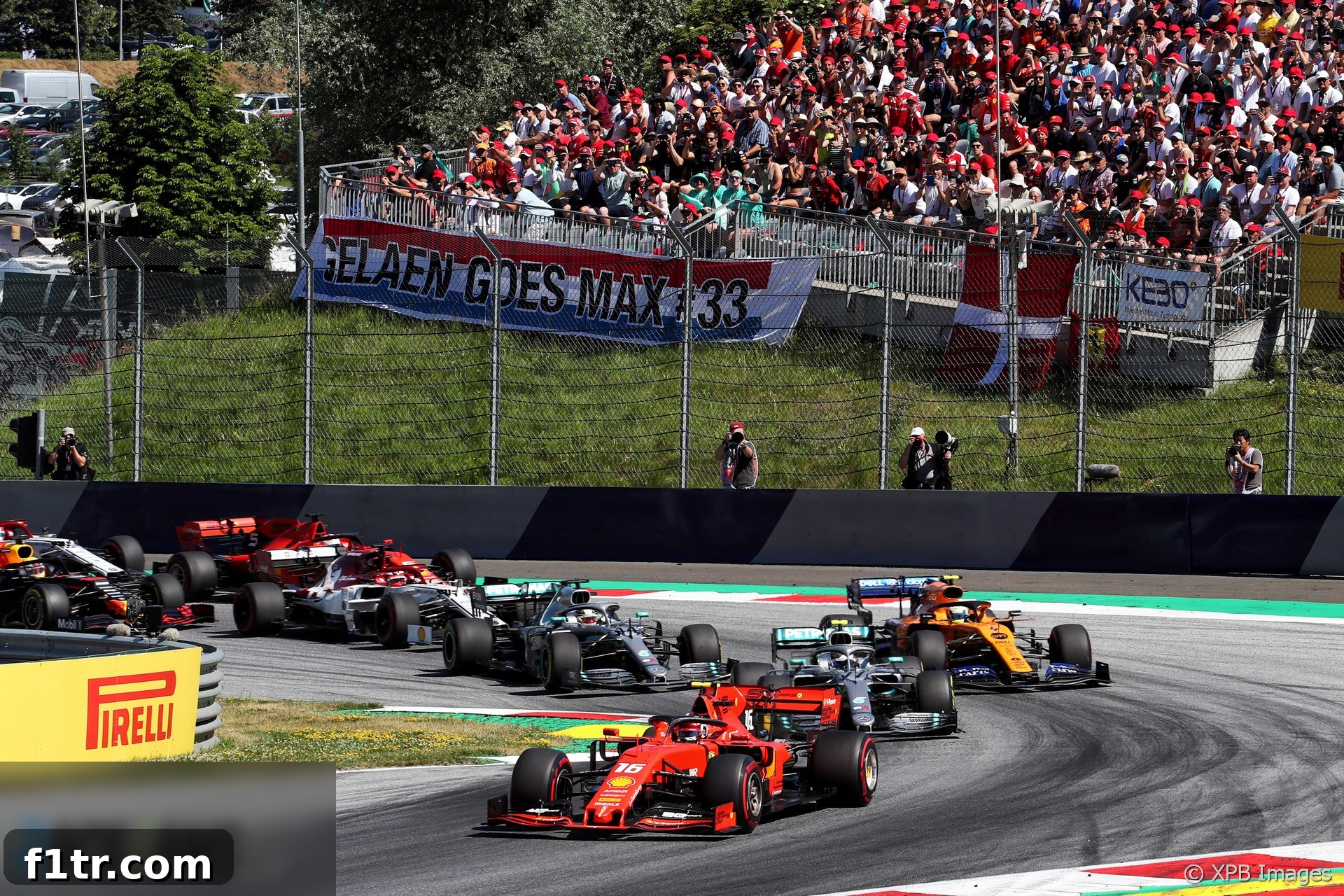
The exhilarating world of Formula 1, like countless other global sports and industries, faced an unprecedented challenge in 2020. The onset of a worldwide pandemic brought the thriving motorsport calendar to a screeching halt, leaving fans and participants in suspense. However, a beacon of hope emerged as Formula 1 officially unveiled the initial framework of its heavily revised 2020 schedule, signaling the sport’s determined return to competitive racing. This monumental effort was set to commence with the highly anticipated Austrian Grand Prix, marking a crucial step towards reviving the season.
The announcement brought with it a mix of excitement and stark reality. Chase Carey, then Chairman and CEO of Formula 1, confirmed that the initial rounds of the championship would proceed under extraordinary circumstances: “without fans.” This decision, necessitated by global health and safety protocols, meant that the roar of the engines would not be met by the traditional roar of the crowd. Despite this significant alteration to the quintessential F1 experience, there was a collective optimism within the sport that, as the season progressed and conditions improved, later races might see the return of passionate spectators to the grandstands, bringing back some semblance of normalcy.
Advertisement
Carey articulated the ambitious but carefully calculated plan for the initial stages of the revised season, stating, “We’re targeting a start to racing in Europe through July, August, and beginning of September, with the first race taking place in Austria on the 3rd-5th July weekend.” This commitment to a European launch provided a much-needed focal point for teams, drivers, and fans alike. The Red Bull Ring in Austria, a picturesque and challenging circuit nestled in the Styrian mountains, was chosen to kickstart this unique chapter in Formula 1 history. The selection of a single venue for the opening rounds was a strategic move, allowing for more controlled environments and simplified logistics in the face of ongoing travel restrictions and health concerns. The mere prospect of F1 cars once again battling wheel-to-wheel offered a powerful symbol of resilience and a much-needed distraction during challenging global times.
Prior to this official announcement, Carey had already hinted at the extensive and unavoidable revisions to the original 2020 schedule. The sheer scale of the global health crisis demanded flexibility and adaptability, leading to a complete re-evaluation of the championship’s structure. The objective was clear: to salvage a viable season while prioritizing the health and safety of everyone involved, from marshals and team personnel to media and essential support staff. This intricate balancing act meant that many beloved races would unfortunately fall victim to the pandemic, while others would seek new dates and slots in a rapidly evolving calendar.
The impact of the pandemic on the calendar was underscored by the recent confirmation that the French Grand Prix had become the tenth round of the championship to be either postponed or canceled. More definitively, the race at Circuit Paul Ricard was called off for the season, joining the prestigious Australian and Monaco Grand Prix events in cancellation. The cancellation of Monaco, in particular, sent a ripple through the motorsport community, as the iconic street race had been a staple of the F1 calendar since 1950, a symbol of glamour and tradition that few believed could ever be truly absent. While these three events were definitively scrapped, seven other race promoters across the globe were actively engaged in discussions with Formula 1, diligently working to find alternative dates to host their respective events later in the year. Their determination highlighted the collective desire within the F1 community to deliver as comprehensive a season as safely possible, minimizing the disruption caused by the unforeseen circumstances.
Advertisement
Amidst the cancellations and uncertainties, there was positive news regarding several key races integral to the championship. Bahrain, originally slated to host the second round of the world championship on March 22nd, was confirmed by Carey as one of the significant events that would indeed feature in the newly formulated schedule. The Sakhir circuit, known for its thrilling night races and challenging layout, was a welcome addition to the revised calendar, promising exciting racing under the desert stars. Furthermore, Carey affirmed that the majestic Yas Marina circuit in Abu Dhabi would retain its customary position as the season finale. This continuity provided a sense of tradition and a spectacular closing act for what was guaranteed to be an extraordinary and unforgettable season of Formula 1 racing, culminating in the dazzling lights of the UAE.
Elaborating on the ambitious global trajectory for the latter half of the season, Carey outlined the vision for racing beyond the European summer. “September, October and November would see us race in Eurasia, Asia and the Americas, finishing the season in the Gulf in December with Bahrain before the traditional finale in Abu Dhabi, having completed between 15-18 races. We will publish our finalized calendar as soon as we possibly can,” he stated. This comprehensive plan showcased Formula 1’s commitment to delivering a robust championship despite the immense logistical hurdles. The target of 15 to 18 races represented a remarkable achievement, demonstrating the sport’s resilience and determination to provide a full season of competition for its global fanbase, spanning diverse geographical regions and cultural landscapes. The inclusion of Bahrain as a penultimate race, followed by the grand finale in Abu Dhabi, would offer a familiar and thrilling conclusion to a season unlike any other.
However, F1’s leadership remained acutely aware of the unpredictable nature of the global pandemic. Carey pragmatically acknowledged that their meticulously crafted plans were inherently vulnerable to unforeseen developments and ongoing changes in the health crisis. The fluid situation meant that flexibility and continuous reassessment would be paramount throughout the season, with contingencies being developed to address any new challenges that might arise. This candid admission underscored the unprecedented context in which the 2020 Formula 1 season was attempting to unfold, with public health guidelines and government restrictions constantly shaping the sport’s ability to operate.
Reinforcing this cautious yet determined approach, Carey reiterated the inherent uncertainties: “All of our plans are obviously subject to change as we still have many issues to address, and all of us are subject to the unknowns of the virus.” This statement served as a crucial reminder that while Formula 1 was eager to resume, it would do so responsibly, adapting to the evolving global landscape. The health and safety of every individual involved, from the drivers and team members to the wider communities hosting the races, remained the absolute top priority. The emphasis was not just on getting back on track, but on doing so in the most secure and considered manner possible, acknowledging the delicate balance between sporting ambition and public health responsibility.
Beyond the logistical and operational complexities, there was a deeper, more profound message from Formula 1’s leadership. “We all want the world to return to the one we know and cherish, yet we recognise it must be done in the right and safest way,” Carey expressed. This sentiment resonated broadly, acknowledging the universal longing for normalcy while emphasizing the critical importance of caution and adherence to safety protocols. Formula 1 saw its return as more than just a sporting event; it was an opportunity to contribute positively to the global mood. “We look forward to doing our part by enabling our fans to once again safely share the excitement of Formula 1 with family, friends, and the broader community,” he concluded. This underlined the sport’s role as a source of entertainment, unity, and hope, offering a shared experience that could bring joy and a sense of collective purpose during a time when such elements were deeply valued worldwide. The 2020 season, therefore, promised not only thrilling racing but also a powerful narrative of resilience and adaptation in the face of adversity, making it a truly unique and memorable chapter in Formula 1 history.
Advertisement
More from the 2020 F1 season
- Grosjean to make F1 test return tomorrow for first time since Bahrain horror crash
- Pictures: Wrecked chassis from Grosjean’s Bahrain fireball crash to go on display
- Bottas vs Rosberg: Hamilton’s Mercedes team mates compared after 78 races each
- F1 revenues fell by $877 million in Covid-struck 2020 season
- Hamilton and Mercedes finally announce new deal for 2021 season
Browse all 2020 F1 season articles