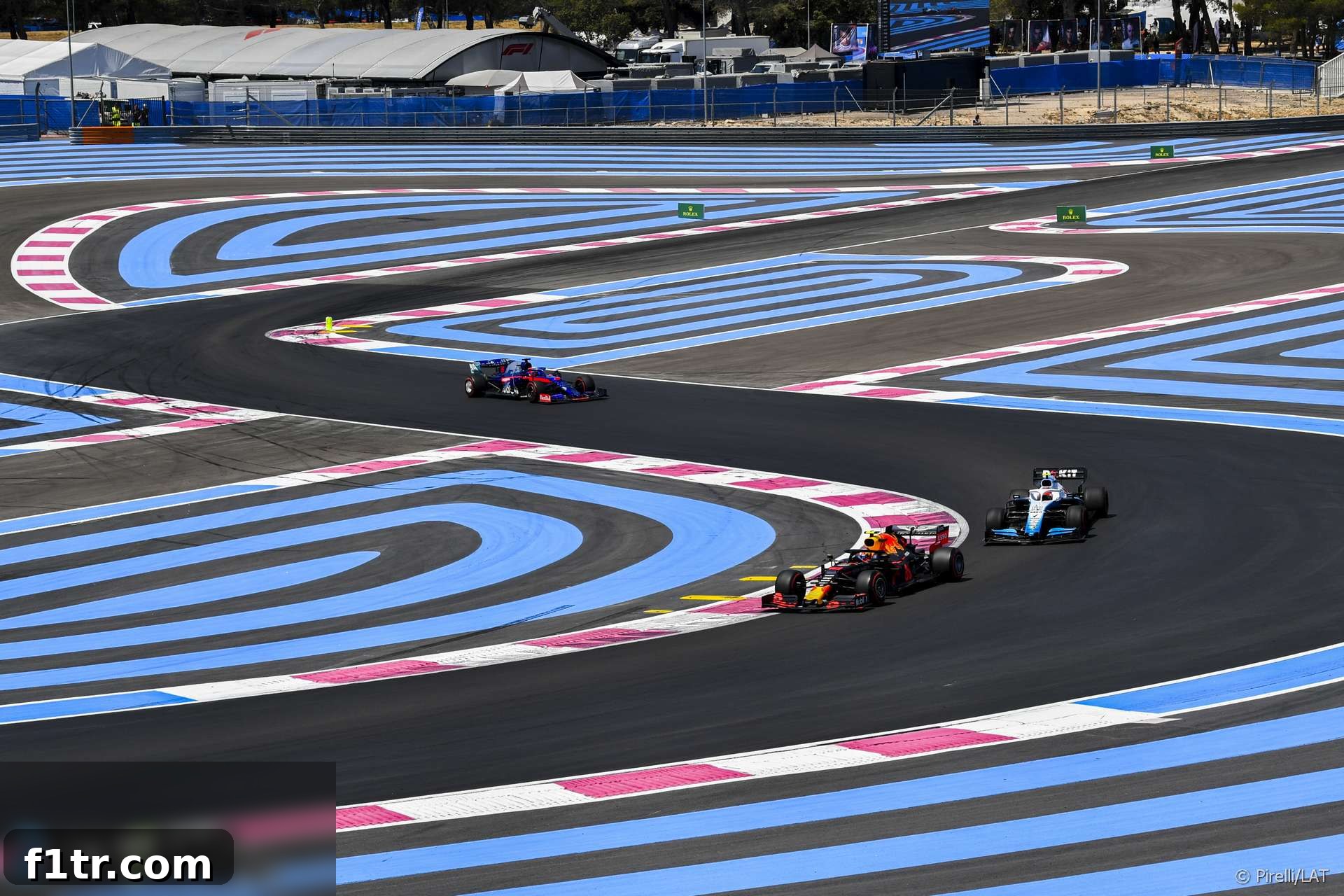
Paul Ricard Circuit Set for Strategic Enhancements to Boost French Grand Prix Excitement
The Circuit Paul Ricard, a distinctive venue known for its vibrant blue and red asphalt run-off areas and its highly versatile layout, has long been a subject of keen interest and discussion within the Formula 1 community. With its return to the F1 calendar, there has been a continuous push to optimize the circuit’s configuration to deliver the most thrilling and competitive racing possible. In an ongoing effort to elevate the spectacle and intensify on-track action, significant proposals for modifications, particularly concerning the famed Mistral chicane, have been under active review for future French Grand Prix events.
These contemplated revisions are part of a broader, collaborative initiative championed by both race promoters and Formula 1 management. Their collective objective is to fine-tune the circuit for maximum competitive engagement. A central tenet of this strategy is to cultivate an environment that encourages teams to adopt lower downforce setups on their cars. Such adjustments are anticipated to facilitate a greater number of overtaking maneuvers, thereby promising a more captivating and dynamic experience for fans attending the Grand Prix and those tuning in from around the globe.
Addressing the Overtaking Challenge at Paul Ricard
Since its reintroduction to the Formula 1 calendar, the Circuit Paul Ricard has frequently been met with criticism concerning the perceived scarcity of overtaking opportunities, particularly evident in some of its initial Grand Prix appearances. While the track undeniably presents a range of technical challenges and boasts impressive high-speed sections, the overall flow of racing and the ability for cars to follow closely and execute passes have been a recurring topic of debate among drivers, team strategists, and motorsport enthusiasts. This persistent dialogue has underscored the imperative for strategic interventions to fully unlock the circuit’s inherent potential for exhilarating, wheel-to-wheel combat.
A primary focal point of these extensive discussions has been the iconic Mistral Straight, which stands as one of the longest high-speed sections in Formula 1. Historically, this straight was run at its full, uninterrupted length, allowing cars to achieve staggering top speeds. However, the contemporary layout incorporates a specific chicane midway through this section. Over time, several prominent F1 drivers and influential figures within the sport have openly advocated for the removal of this chicane. Their argument posits that restoring the Mistral Straight to its original, uninterrupted configuration would intrinsically motivate teams to utilize less downforce on their cars. A reduction in downforce typically results in higher terminal speeds and potentially more pronounced slipstream effects—both critical elements for engineering successful and dramatic overtaking maneuvers.
The Complex Dilemma of the Mistral Chicane
While the suggestion to entirely remove the Mistral chicane holds considerable appeal for purists and those who champion raw speed, such a decision is fraught with its own unique complexities. It is widely understood that the race promoters have expressed a degree of reluctance to completely eliminate the chicane, primarily due to significant commercial considerations. A purpose-built grandstand, strategically positioned to offer prime viewing of this specific section of the track, represents a substantial investment and serves as a dedicated vantage point for a significant portion of the spectators. The complete removal of the chicane would undoubtedly diminish the relevance and appeal of this grandstand for a crucial part of the race action, potentially impacting ticket sales, visitor experience, and pre-existing commercial agreements established around the current circuit layout.
However, the ongoing conversation is far from a simplistic ‘chicane or no chicane’ binary. Jarno Zaffelli, the esteemed owner of Dromo Circuit Design – a firm globally recognized for its profound expertise in circuit development and the architect behind the proposed revisions at Paul Ricard – has confirmed that a comprehensive array of potential alterations to the chicane’s layout have been formally submitted to the Fédération Internationale de l’Automobile (FIA) for their rigorous review and ultimate approval. This revelation signifies a highly nuanced and sophisticated approach, striving to substantially enhance the quality of racing without necessarily resorting to a drastic overhaul that might undermine existing infrastructure or commercial frameworks.
Dromo’s Vision: Precision Engineering for Enhanced Racing Dynamics
Jarno Zaffelli provided further insight into the overarching philosophy guiding Dromo Circuit Design’s meticulous proposals: the deliberate aim to “ease some of the corners” and, in essence, to make the track quicker while simultaneously refining its racing dynamics. This specific philosophy resonates perfectly with the objectives of the dedicated Formula 1 working group, which is currently spearheaded by Craig Wilson at FOM (Formula One Management). This group is actively engaged in a mission to continually elevate the quality of racing spectacle across the entire F1 calendar, making every Grand Prix more thrilling and unpredictable.
Zaffelli elaborated on this collaborative endeavor, stating, “The current working group led by Craig Wilson at FOM is pushing very hard and with the same principle that we took it on board and we made a proposal to FIA. So it is definitely making quicker but there are different options that we are evaluating and they are evaluating now.” This profound spirit of cooperation among circuit designers, F1 management, and the governing body underscores a collective, unwavering commitment from all stakeholders to continually refine the sport’s fundamental infrastructure for maximum positive impact on the racing product.
The intense focus on the Mistral chicane is particularly notable. “They need to evaluate on the chicane because the chicane is going to stay, but not necessarily in the current configuration,” Zaffelli clarified. This statement is of paramount importance, as it definitively confirms the intention to retain a chicane within that specific section of the track, yet it simultaneously opens the door to a multitude of innovative alternative designs. The Circuit Paul Ricard is inherently unique in its extraordinary modularity, already boasting the remarkable capability for approximately 160 distinct corner combinations. This flexibility is achieved through a cleverly designed plethora of alternative routes and seamlessly connectable sections at various points around the circuit. This intrinsic adaptability allows for highly sophisticated experimentation and bespoke tailoring of the track’s configuration to meet specific, evolving racing requirements and strategic objectives.
The spectrum of possible configurations for the Mistral chicane is exceptionally vast. Consequently, the FIA, working in close collaboration with the circuit designers and FOM, is meticulously evaluating which specific options would prove to be the most feasible, effective, and beneficial in achieving their stated objectives. Critical factors such as uncompromising safety standards, the precise impact on lap times, the genuine creation of viable overtaking zones, and the overall harmonic flow of the circuit are all subjected to rigorous assessment. Zaffelli added, “There are a lot of possible configurations there and they are evaluating what would be more feasible and do-able according to their needs. That’s why I’m not sure yet which kind of configuration will be approved.” This intricate and iterative process vividly illustrates the rigorous nature of modern circuit design and the delicate balance required to attain truly optimal results that benefit all aspects of Formula 1 racing.
Beyond the Chicane: A Track with Endless Possibilities and Future Potential
While the Mistral chicane deservedly occupies a central position in these discussions, the broader scope of potential improvements at Paul Ricard extends well beyond this single section of the track. Zaffelli thoughtfully hinted at the exciting possibility of constructing entirely new corners, which would further augment the circuit’s already impressive and diverse versatility. “There is the potential of doing some other configurations,” he stated, suggesting a visionary, long-term perspective for the circuit. This forward-looking approach envisions a track that could continuously adapt and evolve, not only to host a diverse range of premier motorsport events but also to perpetually serve as a world-class facility for rigorous testing, driver training, and thrilling competitive racing.
The initial timeline for these prospective works was notably ambitious, with an aim for completion well in advance of the anticipated French Grand Prix. “It’s something that we will know in the next few weeks because the works will be done in advance of the Formula 1 event. We are targeting March and to complete in April,” Zaffelli indicated. Such a tightly constrained schedule underscored the inherent urgency and profound commitment underpinning these proposed enhancements, with a clear objective to have them fully ready for immediate implementation and impact on the racing season.
The Unchanging Nature of Paul Ricard’s Distinctive Run-off Areas
Despite the extensive and detailed discussions surrounding various track layout modifications, one exceptionally distinctive feature of the Circuit Paul Ricard is slated to remain entirely unaltered: its universally recognizable all-asphalt, blue and red-coloured run-off areas. These uniquely engineered run-offs are not merely for aesthetic appeal; they are meticulously designed with varying levels of friction. The darker blue sections offer a deliberately lower coefficient of friction, while the brighter red sections provide a distinctly higher friction level. This sophisticated design acts as an inherent, natural deterrent for drivers who might exceed track limits, offering a consequence for errors without the immediate, race-ending impact of traditional gravel traps or unforgiving grass verges.
While these innovative run-off areas have garnered their share of proponents, who argue that they empower drivers to push the absolute limits more aggressively and consistently, they have also attracted critics. These critics sometimes contend that such run-offs can inadvertently dilute the severity of punishment for minor errors, potentially encouraging drivers to exploit the very boundaries of the track more frequently. Irrespective of this ongoing debate, Zaffelli emphatically confirmed that these signature elements of Paul Ricard’s advanced safety infrastructure would not undergo any changes, thereby preserving a core aspect of the circuit’s unique identity and its foundational safety philosophy.
Paul Ricard Mistral Chicane: Exploring a Spectrum of Variations
The intrinsic design genius of the Circuit Paul Ricard allows for an extraordinary degree of flexibility, particularly evident in the multiple configurations available for the Mistral chicane. The circuit maps graphically illustrate up to eight distinct track configurations specifically for this section alone, presenting race organizers with a wide and adaptable array of strategic options. Historically, for the Formula 1 Grand Prix races since the circuit’s celebrated re-inclusion on the calendar, ‘Version C’ of the Mistral chicane has been the adopted layout. This specific configuration was chosen to strike a pragmatic balance between maintaining high speeds and introducing a viable, albeit challenging, overtaking zone.
It is noteworthy that ‘Version A,’ which would completely bypass the chicane and effectively restore the Mistral Straight to its full, uninterrupted length, has not been utilized for Formula 1 events in recent years. This strategic decision is entirely consistent with the promoters’ stated reluctance to remove the chicane entirely, as it represents a careful balancing act between the desire for increased outright speed and the vital need to maintain established spectator viewpoints, alongside crucial safety considerations that are paramount for the performance characteristics of modern F1 cars. The continuous and meticulous evaluation of different chicane layouts vividly demonstrates a proactive and adaptive approach to fine-tuning the circuit without sacrificing its core identity or its robust, established infrastructure.
The Future of Racing at Circuit Paul Ricard
The proposed and anticipated enhancements to the Circuit Paul Ricard signify a substantial and forward-looking step towards thoroughly optimizing one of Formula 1’s most unique and technologically advanced venues. By concentrating on strategic and precise modifications, particularly those affecting the iconic Mistral chicane and potentially other critical sections of the track, the overarching objective is to craft a more dynamic, action-packed, and ultimately more memorable French Grand Prix. The profound collaboration between Dromo Circuit Design, FOM, and the FIA unequivocally underscores a shared, unwavering commitment to perpetually improving the spectacle and competitive integrity of Formula 1 racing, ensuring that every circuit on the calendar contributes its utmost in terms of excitement and competitive drama.
As the evaluations progress and specific track configurations receive official approval, the global motorsport community eagerly awaits to witness how these meticulously planned changes will translate into real-world racing performance and excitement. The compelling promise of facilitating easier overtaking opportunities, encouraging diverse lower downforce strategies, and achieving an overall quicker track layout strongly suggests a brighter, more thrilling future for the French Grand Prix at Paul Ricard. These strategic enhancements aim to solidify its distinguished place as a profoundly challenging and engaging circuit for elite drivers and an utterly captivating experience for passionate fans worldwide.
Further Reading
- Understanding Modern F1 Aerodynamics and Downforce Strategies
- The Evolution of Formula 1 Circuit Design and Safety Standards
- Analyzing the Impact of Track Layout Changes on Overtaking Opportunities
- Innovations in Motorsport Circuit Safety and Driver Experience
- Circuit Paul Ricard: A Rich History of Technological Innovation and Racing