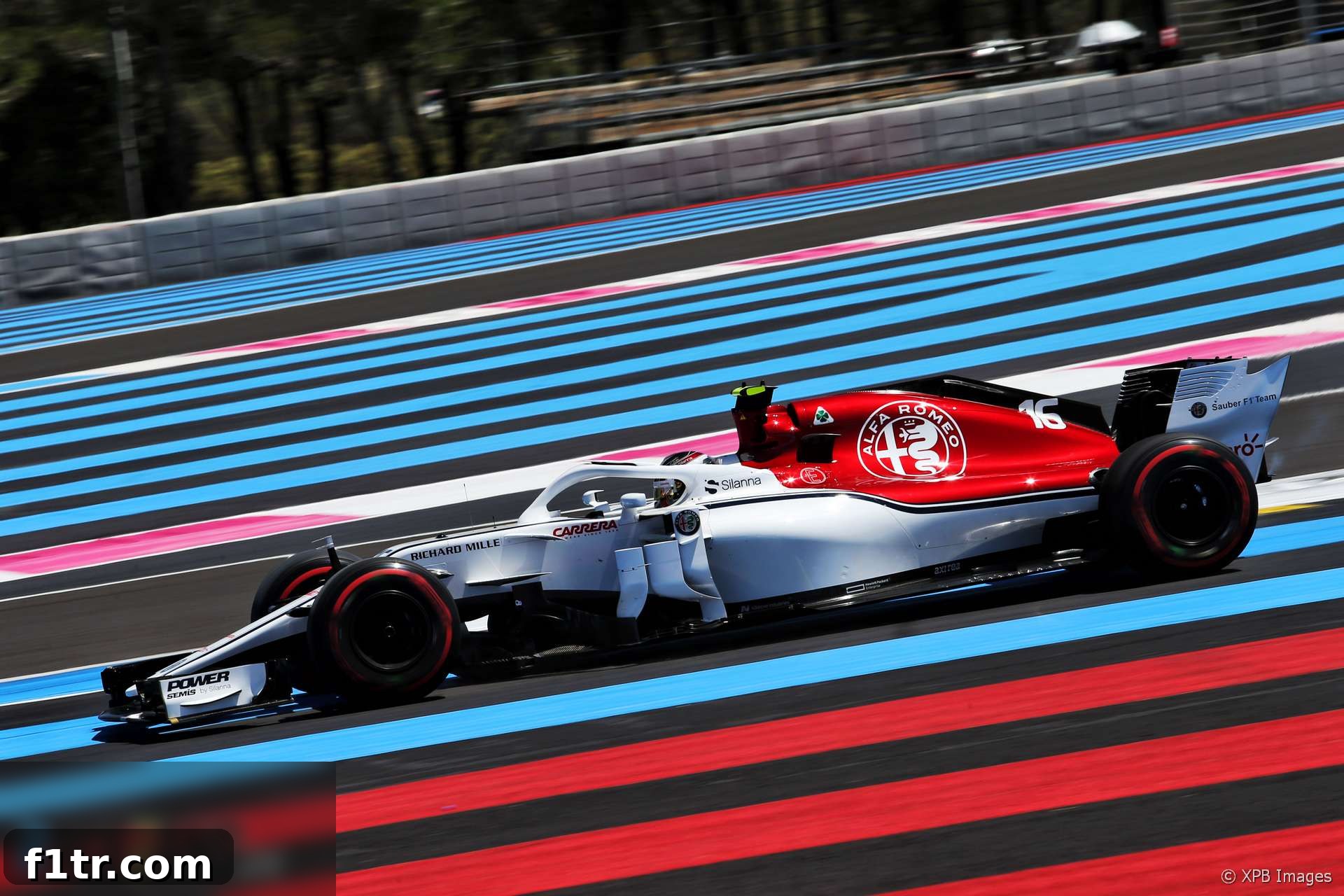
In a significant moment for both driver and team, Charles Leclerc delivered a standout qualifying performance that propelled the Sauber F1 team to its most competitive starting position since 2015. This impressive display quickly established Leclerc as a rising star in Formula 1, capturing the attention of fans and pundits alike. Sauber team principal Frederic Vasseur was effusive in his praise, underscoring the importance of this achievement for the young Monegasque driver and the entire outfit.
“It’s a great result for us,” Vasseur revealed in an exclusive interview with RaceFans, highlighting the collective effort. Beyond Leclerc’s brilliance, Vasseur also acknowledged the solid contribution of his teammate. “And also the fact that Marcus [Ericsson] did Q2 after a tough Friday,” he added, emphasizing the team’s ability to recover and improve across the weekend. This dual success showcased Sauber’s growing strength and resilience, setting a positive tone for their season.
Sauber’s Resurgence: A Collective Effort on Track
The qualifying session marked a pivotal turnaround for the Sauber team, demonstrating their capacity to overcome early weekend challenges. Vasseur lauded the collective recovery, stating, “It’s a good recovery for Marcus and for the team because Charles was a bit nowhere [on Friday]. Very happy for the team, for the good job done compared to yesterday. It’s the first Q3, it’s another step.” This sentiment perfectly captured the morale boost and the sense of accomplishment felt throughout the garage. For a team striving to climb the competitive ladder of Formula 1, securing a Q3 spot, especially with a rookie driver, signifies immense progress and validates the hard work invested by every member.
The transformation from Friday’s struggles to Saturday’s success underlined the team’s meticulous approach to data analysis, car setup, and strategic adjustments. While Friday sessions often serve as testing grounds, identifying and rectifying issues overnight requires seamless collaboration between engineers, mechanics, and drivers. The ability of both Leclerc and Ericsson to extract more performance from their C37 chassis demonstrated the team’s enhanced understanding of the car and its potential. This was not merely an individual triumph but a testament to Sauber’s improving technical capabilities and operational efficiency.
Charles Leclerc: Navigating the Leap from F2 to F1
Frederic Vasseur noted that Charles Leclerc had made rapid progress following what he described as a difficult start to his inaugural Formula 1 season. Leclerc arrived in F1 with a stellar reputation, having dominated the junior series with a commanding Formula 2 championship title. However, as Vasseur pointed out, the transition to the pinnacle of motorsport presents a unique set of challenges that extend far beyond raw driving talent.
“For sure he has a brilliant [performance] in the junior series. But the step between the Formula Two and F1 is a big one, not so much on driving but the fact that you have to manage more things in the car and much more outside of the car,” Vasseur explained. This insightful observation delves into the multifaceted demands placed upon F1 drivers. In Formula 1, drivers must master complex steering wheel controls, fine-tuning engine modes, brake bias, and differential settings lap by lap. They are also integral to intricate race strategies, managing tire degradation, fuel consumption, and communicating effectively with their race engineers. Off-track, the media obligations, sponsor engagements, and intense public scrutiny add layers of pressure that are largely absent in junior categories.
Initially, Leclerc “struggled a bit at the beginning of the season to put everything together,” a common experience for many rookies adapting to the unforgiving world of F1. The sheer speed, power, and aerodynamic sophistication of an F1 car, combined with the extreme competitiveness of the field, can be overwhelming. Yet, Leclerc showcased his innate ability to learn and adapt quickly. “But step by step he is doing the job, improving. I think today was a huge one,” Vasseur affirmed, recognizing the significance of this particular qualifying session as a watershed moment in Leclerc’s developmental journey. This consistent improvement, driven by relentless dedication and a sharp analytical mind, quickly marked him as a driver with an exceptionally bright future.
The Indispensable Role of Confidence in a Driver’s Performance
Vasseur firmly believes that Charles Leclerc’s burgeoning confidence has been the most crucial factor behind his recent string of impressive results. In the high-stakes environment of Formula 1, where margins are infinitesimally small and pressure is constant, a driver’s mental state can be as decisive as their physical skill. Confidence acts as a powerful catalyst, enabling drivers to push limits, make split-second decisions, and extract every ounce of performance from their machinery.
“It’s not coming from one single thing. I think that he has to build up his own confidence step by step,” Vasseur articulated, underscoring that confidence is not an instant trait but a quality meticulously cultivated through experience and success. The distinction between merely knowing one possesses the ability and actually executing it under pressure is profound. Many talented drivers possess the theoretical skill, but true champions are those who can consistently deliver when it matters most, fueled by an unwavering belief in their capabilities.
The Baku Grand Prix, a chaotic and unpredictable street circuit race, served as a defining moment in Leclerc’s confidence-building process. “In Baku the result was a great one. For sure the first stint I think he was fighting with I think Raikkonen and Ricciardo, for the confidence it was a huge step forward,” Vasseur recalled. Engaging in wheel-to-wheel combat with seasoned veterans like Kimi Räikkönen, a former world champion, and Daniel Ricciardo, renowned for his aggressive overtaking, was an invaluable experience. Not only did Leclerc hold his own, but his ability to compete at such a high level provided tangible proof of his potential, solidifying his self-belief. This direct validation against top-tier competitors transformed his internal self-perception, transitioning from a promising rookie to a credible challenger.
Furthermore, Vasseur highlighted the symbiotic relationship between confidence and understanding of the car. “Then also the fact that now has a much better understanding of the car [and] how he wants to get the car.” As a driver’s confidence grows, they become more assertive in providing feedback to engineers, articulating their preferences for car setup, and pushing the limits of the vehicle with greater assurance. This deep understanding allows for a more harmonious connection between driver and machine, unlocking performance that might otherwise remain untapped. Leclerc’s increasing confidence empowered him to mould the car to his driving style, thereby maximizing its potential and his own.
Sauber’s Strategic Vision: Nurturing Talent for Future Success
Charles Leclerc’s early success was not just a personal triumph but also a significant validation of Sauber’s long-term strategic vision. Historically, Sauber has been renowned as a talent incubator, providing a crucial stepping stone for future champions. The team’s commitment to nurturing young drivers like Leclerc aligns perfectly with their broader ambition to climb the F1 Constructors’ Championship standings and re-establish themselves as a competitive force.
A strong rookie performance, especially one that includes Q3 appearances, serves multiple critical purposes for a team like Sauber. Firstly, it significantly boosts team morale, creating a positive and motivated working environment where engineers and mechanics see their efforts translate into tangible results. Secondly, it enhances the team’s appeal to potential sponsors, demonstrating their capacity for competitive performance and providing a compelling narrative of growth and success. Attracting new investment is vital for a privateer team in F1, enabling further development and improvement.
Moreover, Leclerc’s performance underscored Sauber’s astute talent scouting and development programs. Identifying and signing a driver of his caliber, then providing the platform and support for him to flourish, speaks volumes about the team’s infrastructure and mentorship. This approach not only secures immediate on-track results but also positions Sauber as an attractive destination for other promising young drivers, creating a virtuous cycle of talent acquisition and performance enhancement. Leclerc’s journey at Sauber showcased the team’s dedication to building a foundation for sustainable future success, proving that with the right talent and strategy, they could compete effectively against better-resourced rivals.
The Broader Impact and Leclerc’s Ascending Trajectory
The stellar qualifying performance by Charles Leclerc, praised so highly by Frederic Vasseur, was more than just a single-race highlight; it was a strong indicator of an ascending trajectory for a driver destined for greatness. This early success in his rookie season laid the groundwork for what would become one of the most exciting careers in modern Formula 1.
Leclerc’s ability to quickly adapt, learn, and then perform at such a high level, particularly in the unforgiving environment of F1, resonated deeply within the motorsport community. It cemented his reputation as a “special talent,” validating the hype that had surrounded him since his junior formula days. Such impactful performances are crucial for young drivers, as they not only secure their immediate position but also open doors to future opportunities with top-tier teams.
His impressive showings with Sauber demonstrated a rare combination of raw speed, intelligent racecraft, and a mature approach to development. This blend of attributes made him an irresistible prospect for larger teams looking to invest in future champions. Ultimately, this significant qualifying effort, coupled with his consistent improvements throughout his rookie season, set the stage for his eventual move to Ferrari, fulfilling a childhood dream and launching him into the elite ranks of Formula 1 drivers. The journey started with these crucial steps at Sauber, under the watchful and supportive eye of Frederic Vasseur, proving that talent, when nurtured correctly, can truly soar.
2018 F1 season
- F1 feared “death knell” for Drive to Survive after Ferrari and Mercedes snub
- McLaren staff told us we were “totally crazy” to take Honda engines in 2018 – Tost
- ‘It doesn’t matter if we start last’: How Red Bull’s junior team aided Honda’s leap forward
- Honda’s jet division helped F1 engineers solve power unit problem
- McLaren Racing losses rise after Honda split
Browse all 2018 F1 season articles