Welcome to Sunday’s comprehensive motorsport round-up, meticulously curated to bring you the latest insights, discussions, and highlights from the world of racing. As the dust settles on another action-packed weekend, we delve into the opinions shaping the sport, significant team debriefs, thrilling junior series moments, and historical milestones. From the strategic challenges of Monaco qualifying to the evolving landscape of fan engagement, this edition covers the breadth and depth of racing excitement.
The Great Monaco Qualifying Debate: Traffic or Tradition?
The iconic streets of Monaco never fail to spark conversation, and this weekend was no exception, particularly concerning the qualifying format. Carlos Sainz Jnr of Ferrari openly voiced his desire for a revised qualifying structure, aiming to mitigate the notorious traffic issues that plague the tight circuit. His suggestion reflects a growing sentiment among some drivers and fans that the current format, while historic, might not be fully showcasing the drivers’ abilities or the pure speed potential of modern Formula 1 cars on this unique track.
Monaco’s qualifying has always been a tightrope walk, often defined as much by traffic management as by raw pace. While Carlos Sainz Jnr’s call for a new format stems from understandable frustrations, veteran observer @StefMeister offers a compelling counter-argument rooted in historical context and current capabilities. StefMeister points out that the fundamental challenge of navigating the tight circuit remains “the same for everyone,” a defining characteristic of Monaco that, for many, is part of its charm and unpredictability.
The core of StefMeister’s argument lies in effective traffic management rather than a wholesale format change. He advocates for simple, yet impactful, measures: mandating that drivers not on a fast lap must “stay off the racing line” and ensuring they are “kept more informed of when cars on fast laps are coming up behind them.” These aren’t new concepts, but their strict enforcement could significantly alleviate congestion. He powerfully reminds us that Formula 1 used to operate with “more cars on track in qualifying for the entire one-hour session,” and notably, “without the timing/tracking systems, full circuit team radio coverage and the better circuit coverage with the onboards and CCTV camera access that they have on the pit wall today.” This historical perspective underscores the idea that with today’s advanced technology and real-time data, managing traffic should, in fact, be *easier* and more precise than it was two decades ago.
The debate surrounding Monaco’s qualifying isn’t just about traffic; it touches on the very essence of the Grand Prix. Should tradition take precedence, or should the sport adapt to ensure the most thrilling and equitable competition? StefMeister’s viewpoint suggests that the existing framework, when managed optimally, still holds immense potential. It highlights that the onus might be less on changing the rules and more on leveraging the available tools and enforcing existing regulations with greater diligence. This perspective invites further discussion on whether simple operational improvements could indeed solve the perceived problems, allowing the unique challenge of Monaco to endure without sacrificing fairness or spectacle.
@StefMeister
The conversation around Monaco’s format is a microcosm of broader discussions within F1, balancing historical reverence with the demands of modern racing. While a different format might address specific pain points, the sentiment shared by @StefMeister emphasizes that robust enforcement of track etiquette and sophisticated use of available data could yield significant improvements, preserving the legendary status of Monaco without compromising the integrity of the competition.
Insights from the Pit Lane: Team Debriefs and Motorsport Headlines
Beyond the debates, the weekend provided a wealth of news and insights directly from the teams and across the motorsport spectrum. Here’s a deeper look at the key takeaways from official debriefs and other significant headlines:
Aston Martin’s Monaco Prowess: Maximizing Potential
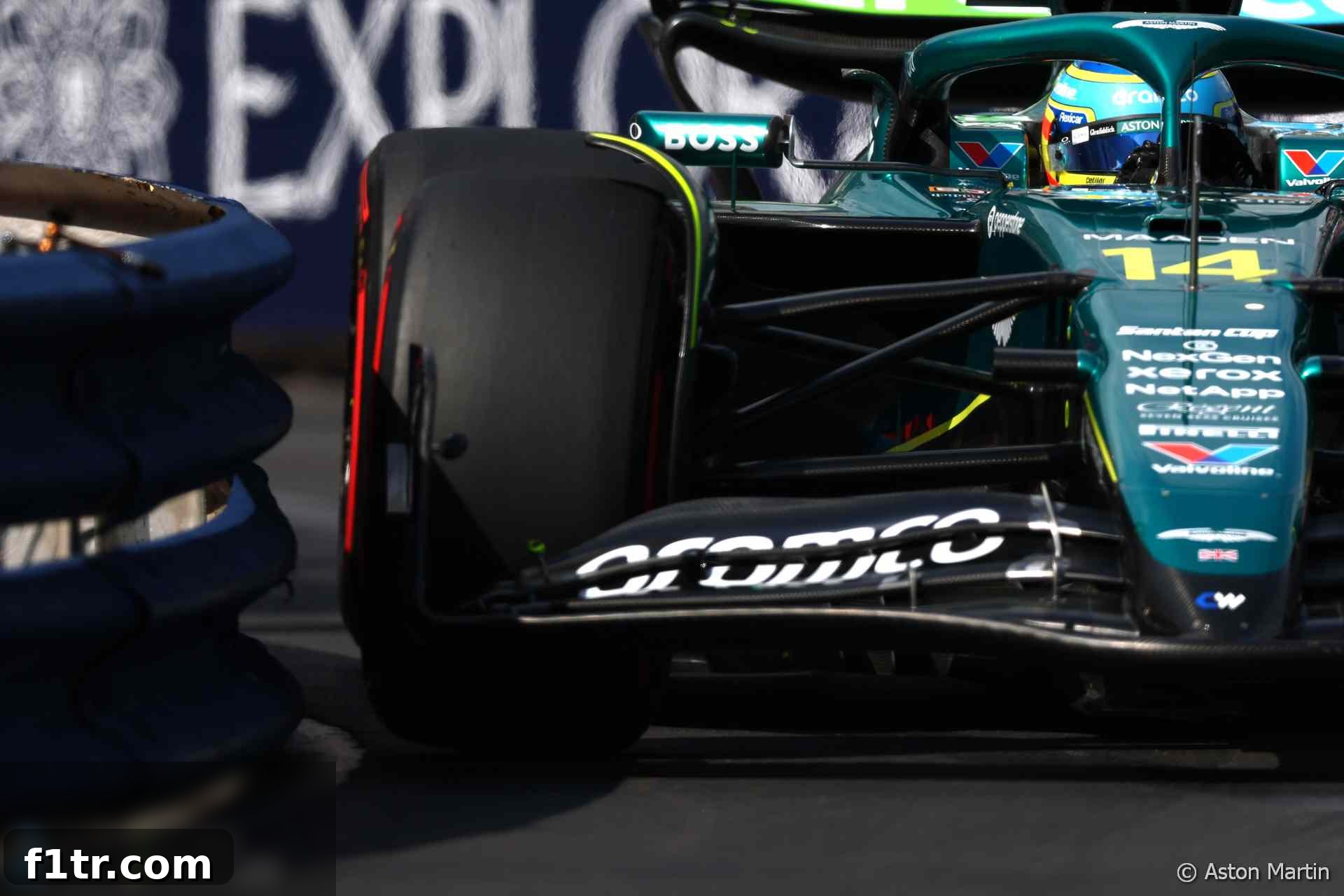
Fernando Alonso, a master of the Monaco circuit, expressed immense satisfaction with his seventh-place finish in qualifying for Aston Martin. His comments reflect the unique demands and rewards of the principality: ‘I’m very happy with (seventh) in qualifying and I think we did the best job possible. It’s such a high adrenaline circuit here and you have to take a huge amount of risk around the lap, but this is what makes it the best Saturday of the year.’ Alonso’s ability to extract every ounce of performance from his car, often described as ‘Alonso magic,’ is particularly evident on tracks like Monaco where driver skill can bridge performance gaps. For Aston Martin, P7 represents a strong result, demonstrating their capacity to compete at the sharp end even when outright pace might be challenging. It underscores the critical balance between aggression and precision required to navigate the barrier-lined streets, a challenge Alonso consistently thrives upon. His joy isn’t just about the position, but the sheer exhilaration of mastering the ultimate street circuit, highlighting the emotional connection drivers have with this iconic event.
Williams’ Tyre Conundrum: The Elusive Q3 Pace
Alexander Albon of Williams faced a puzzling challenge during Monaco qualifying, highlighting the delicate art of tyre management. He noted: ‘My Q2 lap was half a second quicker than my Q3, so we need to understand why. We were in a really good rhythm from FP1 to FP3 and then in qualifying it seemed that the tyres were not working properly throughout, and they were inconsistent.’ This disparity between Q2 and Q3 performance is a significant concern for any team, especially on a track where qualifying position is paramount. Tyre temperature and operating window are notoriously tricky in Monaco, and even minor inconsistencies can have profound effects. For Williams, who showed promising pace earlier in the weekend, this drop-off in Q3 suggests an underlying issue that demands immediate investigation. Understanding whether it was a setup tweak, ambient conditions, or driver technique that caused the tyres to fall out of their optimal window will be crucial for their future performance, particularly as the team strives to climb the constructor standings.
Haas’ Strategic Masterclass: Guiding the Next Generation
Ayao Komatsu, Team Principal at Haas, provided an intriguing glimpse into the strategic decisions made during qualifying, particularly concerning rookie driver Ollie Bearman. Komatsu explained: ‘On Ollie’s lap, we told him to back off and we discussed it before. It was tricky to manage but we got it spot on, as Ollie ended one tenth behind Esteban in Q1, and that’s what we wanted to do.’ This comment reveals the meticulous planning and communication involved in navigating Q1 traffic at Monaco, especially for a driver like Bearman who is gaining experience. Guiding a young talent through the complexities of the principality, ensuring a clean lap while managing track position, speaks volumes about the team’s strategy. Finishing just one tenth behind a more experienced driver like Esteban Ocon is a testament to both Bearman’s potential and Haas’s effective execution of their qualifying strategy, setting a solid foundation for his development.
Formula 2 Sprint Race: Maini’s Dominance and Mid-Pack Drama
The Formula 2 Sprint Race in Monte Carlo delivered both dominant performance and intense on-track battles. Kush Maini secured a masterful lights-to-flag victory, demonstrating impeccable control and pace on the challenging circuit. However, the race was not without its moments of high drama further down the field. The report detailed a pivotal incident: ‘Into Mirabeau, Lindblad attempted a pass on Jak Crawford for third but contact between the two allowed Browning back past for fourth and ahead of the American. The Campos driver emerged from the tangle in third but was later handed a 10-second time penalty for causing a collision.’ This incident highlights the fine line between aggressive racing and causing an avoidable accident, a common theme in the junior categories as drivers push for every advantage. The resulting penalty significantly altered the final standings, underscoring the FIA’s commitment to maintaining fair play and penalizing hazardous maneuvers, even when the immediate outcome might seem beneficial to the offending driver.
Formula 3 Sprint Race: Stenshorne’s Triumph Amidst Early Chaos
The Formula 3 Sprint Race also provided its share of excitement and early drama, culminating in a dominant victory for Stenshorne. The race was immediately disrupted by a significant multi-car collision on the opening lap: ‘The Safety Car was deployed at the end of the opening lap as James Hedley, Nicola Lacorte, Santiago Ramos, and Ivan Domingues collided at turn eight, with all four drivers’ cars needing to be cleared up.’ Turn eight, a challenging part of the Monaco circuit, often sees drivers pushing the limits, and a multi-car pile-up on the first lap is a stark reminder of the circuit’s unforgiving nature and the high stakes involved for young drivers. The subsequent Safety Car period neutralised the race, providing a temporary lull before Stenshorne could resume his charge to victory. Such incidents are crucial learning experiences for the young talents in F3, emphasizing the importance of spatial awareness and disciplined driving in close quarters, especially on a circuit with zero margin for error.
IndyCar’s Demographic Shift: A Boost in Younger Fan Engagement
Beyond the European single-seater series, positive news emerged from across the Atlantic, with IndyCar reporting encouraging trends in its viewership. Racer.com highlighted this significant development: ‘It’s very clear more young people are watching our races. Digitally, we’ve seen more engagement for quite some time, but it’s especially encouraging to see our millennial and Gen Z fan base begin to tune-in with higher frequency.’ This increase in younger fans is a vital indicator of the sport’s health and future sustainability. In an era where sports compete fiercely for audience attention, particularly among younger demographics, IndyCar’s success in attracting millennials and Gen Z suggests effective outreach and content strategies. Digital platforms and social media engagement are undoubtedly playing a crucial role in this growth, allowing a new generation to connect with the sport’s high-octane action, charismatic drivers, and diverse racing calendar. This trend bodes well for IndyCar’s long-term appeal and commercial viability, demonstrating that strategic efforts to engage a younger audience can yield substantial returns.
RaceFans always endeavours to credit original sources. Want to share a relevant motorsport link with us? Send it in via the contact form.
Advert | Become a RaceFans supporter andgo ad-free
- Find more official F1 accounts to follow in the RaceFans F1 social media directory
Happy Birthday!
Celebrating milestones in our racing community: Happy birthday to Sumedh and Joe Papp! We hope you have a fantastic day.
On This Day in Motorsport History: Lauda’s Zolder Triumph
- Fifty years ago today, motorsport witnessed a pivotal moment as the legendary Niki Lauda secured a dominant victory at the Belgian Grand Prix in Zolder for Ferrari. This win on May 25, 1975, was not merely another race victory; it marked a significant turning point in Lauda’s burgeoning career and Ferrari’s resurgence in Formula 1. The 1975 season was the year Lauda truly announced his arrival as a championship contender, and Zolder was a testament to his supreme talent and the rapid development of the Ferrari 312T.
- The Zolder circuit, known for its fast, flowing sections interspersed with chicanes, demanded both bravery and precision from drivers. Lauda, starting from pole position, controlled the race from the outset, demonstrating an impressive blend of aggression and intelligent tyre management. He navigated the challenging layout with characteristic precision, outpacing his rivals and crossing the finish line comfortably ahead. This victory, coming early in the season, solidified his position as the man to beat and laid the groundwork for his eventual first World Championship title.
- Lauda’s triumph at Zolder wasn’t just a personal victory; it symbolised Ferrari’s return to championship-winning form after several lean years. The combination of Lauda’s meticulous approach to racing and the technical brilliance of the 312T, designed by Mauro Forghieri, created a formidable package that would dominate the mid-1970s. This specific race is remembered as a classic example of Lauda’s clinical efficiency and his ability to extract maximum performance from his machinery, qualities that would define his storied career and earn him a place among Formula 1’s all-time greats. The win at Zolder showcased the relentless pursuit of perfection that became Niki Lauda’s hallmark, forever etching this date into the annals of Formula 1 history.
Advert | Become a RaceFans supporter andgo ad-free