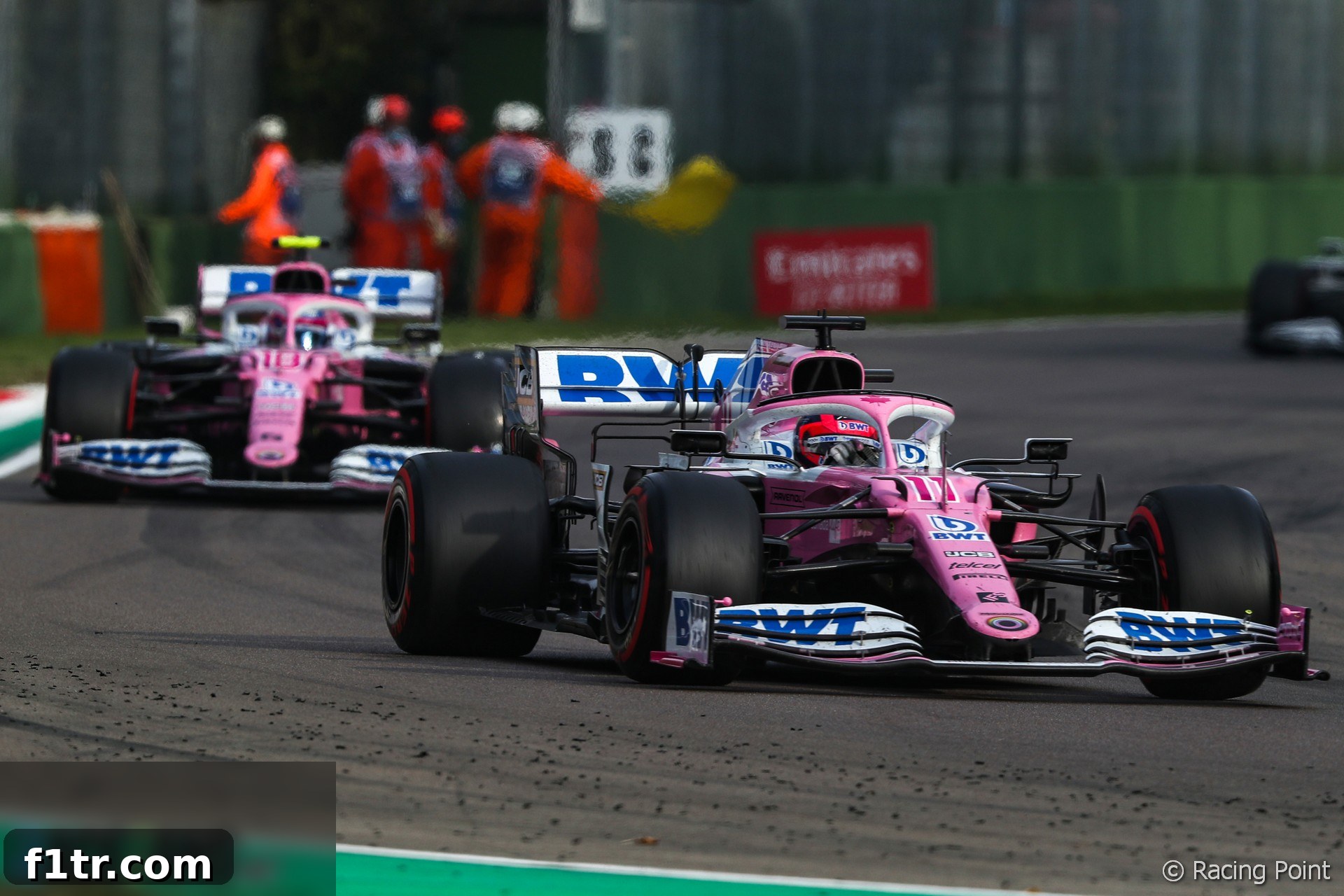
In a span of just over a year, the trajectory of Sergio Perez’s career at Racing Point underwent a dramatic and highly scrutinized shift. From securing a fresh, three-season contract extension in 2019, the Mexican driver found himself without a seat by late 2020, making way for four-time world champion Sebastian Vettel. This decision ignited considerable debate within the Formula 1 community, as many viewed it as a stark example of commercial interests overriding on-track performance.
Sergio Perez: A Season of Unrivaled Consistency Amidst Uncertainty
The 2020 Formula 1 season was an extraordinary year for Sergio Perez, albeit one overshadowed by the looming uncertainty of his future. Despite facing numerous challenges, including missing two races due to testing positive for Covid-19, Perez delivered a career-best performance, solidifying his reputation as one of the grid’s most consistent and formidable drivers. He not only bounced back from the health setback with remarkable resilience but also outperformed his team mate, Lance Stroll, for the sixth consecutive year.
Perez’s ability to manage tyres, extract maximum performance from midfield machinery, and consistently deliver points has long been his hallmark. In 2020, with the highly competitive RP20 at his disposal – a car affectionately dubbed the “Pink Mercedes” due to its striking resemblance to the championship-winning W10 – Perez truly shone. He consistently demonstrated exceptional race craft, strategic acumen, and an unwavering commitment to securing strong results, often punching above the car’s perceived weight against formidable competitors.
The Controversial Departure: From Contract Extension to Unexpected Exit
The timeline of Perez’s contract saga is a peculiar one that highlights the complex interplay of sport, finance, and personal ties in Formula 1. In August 2019, Racing Point proudly announced a new, long-term deal with Perez, securing his services until the end of 2022. This seemed a logical move, rewarding a driver who had consistently delivered for the team (then Force India) through challenging financial times.
However, the landscape of Formula 1 shifted dramatically in 2020. Lawrence Stroll, part-owner of Racing Point and father of Lance Stroll, spearheaded the rebranding of the team to Aston Martin for the 2021 season. This ambitious project aimed to elevate the team’s profile and challenge at the front of the grid. Simultaneously, Sebastian Vettel, a driver with immense pedigree but struggling at Ferrari, became available. The allure of a globally recognized brand and a driver of Vettel’s stature proved too strong for the team to resist. Consequently, in September 2020, Perez was informed that his services would no longer be required, a decision that sent shockwaves through the paddock and left many questioning the fairness of the sport.
The RP20: A Champion’s Car and Perez’s Masterclass
The Racing Point RP20 was undeniably one of the standout cars of the 2020 season. Its controversial design, which mirrored Mercedes’ 2019 championship winner, granted the team a significant competitive advantage, enabling them to regularly contend for podiums and strong points finishes. This exceptional machinery provided Perez with the platform to truly showcase his refined skills.
Throughout the season, Perez consistently demonstrated his ability to maximize the car’s potential, often delivering performances that belied the team’s midfield status. His consistent points scoring was crucial in Racing Point’s battle for third place in the constructors’ championship, a fight they ultimately lost to McLaren, partly due to a 15-point deduction for brake duct infringements. Despite this setback, Perez’s individual contribution remained stellar, highlighting his adaptability and profound understanding of how to manage a demanding F1 car over a full race distance.
Perez’s 2020 Season Highlights: Overcoming Adversity and Delivering Podium Finishes
The 2020 season for Sergio Perez was a testament to his mental fortitude and physical resilience. His absence from the British and 70th Anniversary Grands Prix after contracting COVID-19 was a significant blow, costing him valuable championship points and disrupting his rhythm. Yet, upon his return, Perez quickly regained his formidable form, demonstrating a remarkable ability to reintegrate and perform at the highest level.
Beyond the headline-grabbing victory, Perez’s season was dotted with other standout performances. His second-place finish in the Turkish Grand Prix, a chaotic race held in treacherous wet conditions, underscored his exceptional tyre management and strategic prowess. Consistently finishing in the points, Perez often found ways to navigate through challenging races and climb up the order, turning potential mid-table finishes into top-tier results. His composure under pressure and intelligent decision-making were critical factors in his ability to repeatedly deliver for Racing Point.
The Sakhir Grand Prix: A Maiden Victory and Career Defining Moment
The pinnacle of Perez’s 2020 season, and indeed his Formula 1 career to that point, arrived at the penultimate race: the Sakhir Grand Prix. Starting from fifth on the grid, his race seemed to unravel on the very first lap following an incident with Charles Leclerc and Max Verstappen, which sent him to the back of the field. What followed was a masterclass in recovery, strategy, and sheer determination.
Perez meticulously carved his way through the field, showcasing incredible pace and tire longevity. As Mercedes fumbled their pit stops for both George Russell and Valtteri Bottas, the door opened for Perez. He seized the opportunity with both hands, taking the lead and holding it confidently to secure his first-ever Formula 1 victory in his 190th Grand Prix start. This emotional win was not just a personal triumph but a powerful statement, proving beyond doubt his capability to win races at the highest level, making the team’s decision to drop him even more bewildering to many.
Lance Stroll’s Tumultuous Year: Flashes of Brilliance and Lingering Questions
Lance Stroll’s 2020 season was a mixed bag, characterized by moments of brilliance interspersed with periods of inconsistency and misfortune. Like Perez, Stroll also faced a health challenge, sitting out the Eifel Grand Prix due to illness, later revealed to be COVID-19. His return to racing seemed to coincide with a dip in form, suggesting the virus may have had a more significant impact on his performance in the immediate aftermath.
Despite these challenges, Stroll demonstrated flashes of his potential. He secured a memorable podium finish at the Italian Grand Prix, benefiting from a chaotic race and a well-timed red flag. However, it was his performance at Istanbul Park that truly stood out, offering a glimpse of the talent many believe he possesses. Yet, throughout the season, questions about his overall consistency and raw pace relative to his experienced team mate persisted.
Istanbul Park: A Glimmer of Stroll’s Potential
The Turkish Grand Prix at Istanbul Park was Lance Stroll’s moment in the sun. In a chaotic, rain-affected qualifying session, Stroll produced a stunning lap to claim his maiden pole position in Formula 1. It was a remarkable achievement that highlighted his skill in challenging conditions and his ability to seize opportunities when they arose. He then led a significant portion of the race, holding off more experienced rivals and demonstrating impressive composure.
However, his pace eventually dropped off, a development the team attributed to damage to his front wing, necessitating an unscheduled pit stop. This setback allowed Perez to move ahead and ultimately secure second place. While Stroll’s pole and early race lead were undoubtedly impressive, the inability to convert it into a stronger race result added to the narrative of his fluctuating form. Perez, for his part, might have challenged Stroll for pole in Q3 had he not been impeded by Antonio Giovinazzi on his final flying lap, further illustrating the fine margins separating the two.
The Qualifying Battle: Perez’s Dominance Over Stroll
One of the most telling metrics of intra-team performance is the qualifying head-to-head battle, and in 2020, Sergio Perez maintained a clear advantage over Lance Stroll. Having comprehensively beaten Stroll 18-2 in 2019, Perez extended his dominance with a 10-4 margin in 2020, even with both drivers missing races.
More concerning for Stroll was the trend observed throughout the season: the lap time gap between the two drivers often widened, particularly in the latter half of the year. This counterintuitive performance, where the gap to a more experienced team mate grows rather than shrinks, eerily echoed Stroll’s debut season in Formula 1. In 2017, towards the end of the year, his then-team mate Felipe Massa was noticeably quicker in qualifying, suggesting a consistent pattern that Stroll needed to address to truly establish himself as a top-tier F1 talent.
Race Day Dynamics: A More Balanced Picture, But Still Favoring Perez
While Perez held a distinct advantage in qualifying, the race day dynamics between the two Racing Point drivers presented a more nuanced picture. In a season heavily impacted by reliability issues and incidents, both drivers struggled to reach the chequered flag consistently. Out of 17 races, only eight times did both Perez and Stroll manage to complete the race, a reflection of the team’s disrupted season.
In terms of who finished ahead when both completed the race, they were tied at 4-4. However, this statistic somewhat flatters Stroll. For instance, in the Spanish Grand Prix, Stroll finished ahead only due to a post-race penalty applied to Perez. Additionally, Perez could point to races like the Italian Grand Prix, where the timing of a red flag significantly swung the balance in Stroll’s favour, allowing him to capitalize on circumstances. Despite these specific instances, Perez’s overall race craft, consistency, and ability to recover from setbacks often saw him emerge as the stronger performer on Sundays, consistently maximizing his points haul.
The Aston Martin Vision: Why Vettel Over Perez?
The decision to replace Sergio Perez with Sebastian Vettel was, at its core, a strategic move driven by the Aston Martin brand’s ambitious re-entry into Formula 1. While Perez’s on-track performance in 2020 was undeniably superior to Vettel’s struggles at Ferrari, the rationale extended beyond mere lap times. Aston Martin sought a driver with global superstar recognition, a multi-world champion who could embody the prestige and ambition of the iconic British marque.
Sebastian Vettel brought with him an unmatched level of experience, engineering feedback, and a proven track record of leading championship-winning teams. For a new factory team aiming to eventually challenge Mercedes and Red Bull, the marketing pull and brand association with a name like Vettel were perceived as invaluable, potentially outweighing the immediate performance advantage offered by Perez. This decision underscored the commercial realities of modern Formula 1, where a driver’s marketability and stature can sometimes play as significant a role as raw speed in team line-up choices.
A Pattern Emerges: Racing Point’s History of Discarding Top Talent
The replacement of Sergio Perez by Sebastian Vettel was not an isolated incident but rather the second instance in three years where Racing Point (and its previous incarnation, Force India) showed the door to its top-performing driver. In 2018, Esteban Ocon, who had convincingly out-qualified Perez 16-5, was ousted to make way for Lance Stroll after his father, Lawrence Stroll, purchased the struggling team. This move highlighted the undeniable influence of family ties and commercial considerations within the team’s driver selection process.
The pattern is clear: irrespective of a driver’s consistent performance and ability to outscore their team mate, the team has been willing to make changes driven by ownership interests and strategic branding. Racing Point built the third-quickest car in 2020, yet finished fourth in the constructors’ championship. This raises a pertinent question: how can a team aspire to consistently compete at the highest level and reverse its championship standing if it repeatedly chooses to part ways with its most consistent and quickest driver, prioritizing other factors over pure sporting merit?
Conclusion: A Legacy of Performance and an Uncertain Future for Team Dynamics
Sergio Perez’s 2020 season at Racing Point stands as a remarkable chapter in his Formula 1 career. It was a year where he navigated unprecedented challenges, delivered a career-defining victory, and consistently outperformed expectations, yet ultimately found himself without a seat. His departure was a stark reminder of the often-unforgiving nature of Formula 1, where talent and dedication don’t always guarantee job security.
For Racing Point, now Aston Martin, the decision to bring in Sebastian Vettel was a calculated risk, aiming to elevate their brand and long-term aspirations. However, it came at the cost of losing a proven and consistent points scorer who had been instrumental in the team’s success for many years. The legacy of Perez’s tenure is one of unwavering performance and resilience, leaving a significant void that the incoming driver would need to fill. The future would reveal whether Aston Martin’s bold strategy, prioritizing brand and experience over established in-house performance, would ultimately prove to be a championship-winning formula or a missed opportunity.