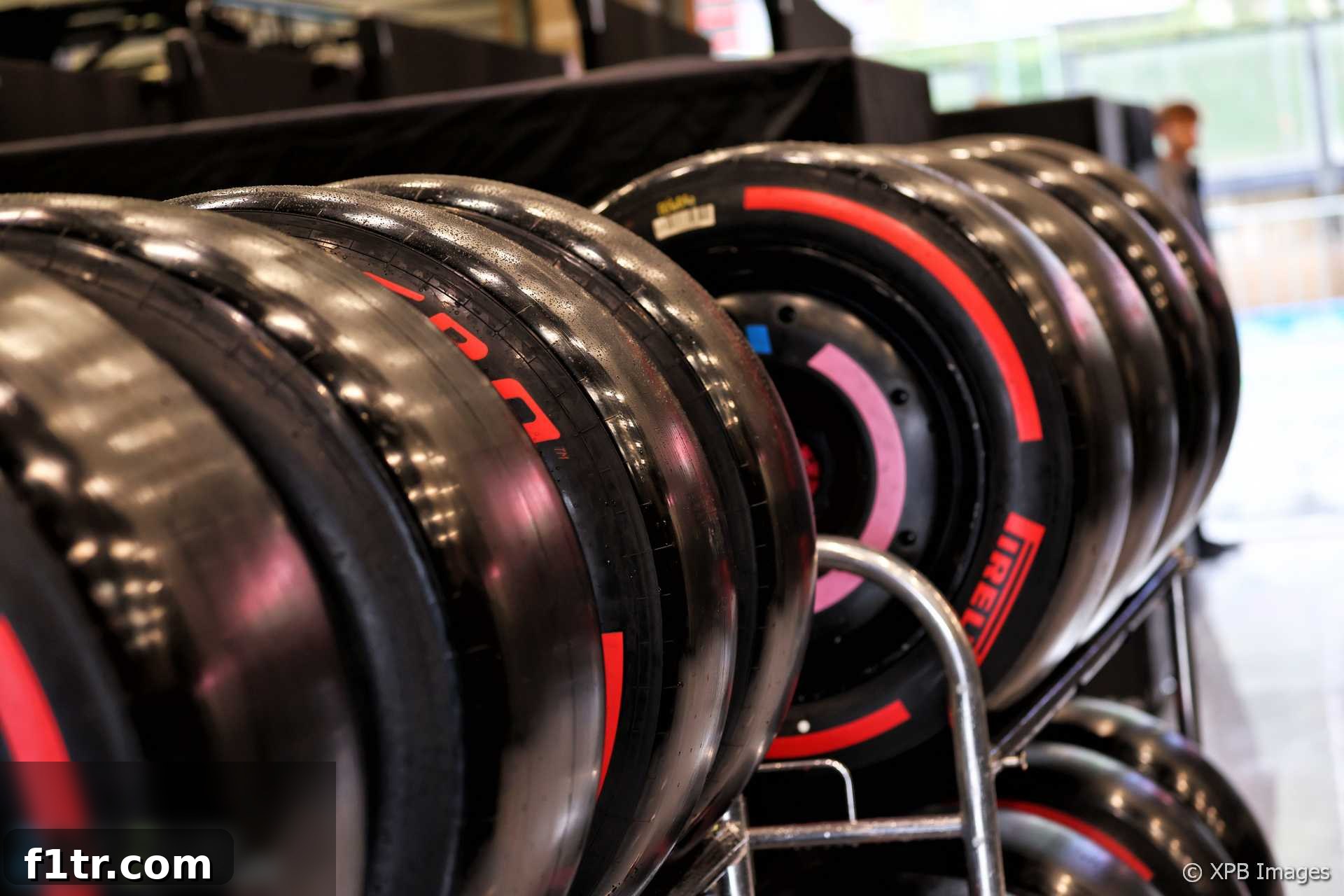
The highly contentious debate surrounding the use of tyre warmers in Formula 1 has once again reached an impasse, as teams collectively voted against a proposed ban on these crucial heating devices for the 2024 season. This decision marks another chapter in F1’s persistent, yet thus far unsuccessful, efforts to phase out tyre blankets, underscoring the complex challenges of balancing ambitious environmental objectives with the paramount concerns of safety and sporting integrity.
Advert | Become a Supporter & go ad-free
F1’s Green Ambitions and the Tyre Warmer Predicament
Formula 1 has set an ambitious target to become a net-zero carbon emitter by 2030, a goal that permeates every aspect of the sport’s operations, from logistics to vehicle technology. The push to ban tyre warmers is a significant component of this sustainability strategy. Tyre blankets, along with the extensive equipment required to power them – including large generators and associated power distribution systems – represent a considerable energy drain and logistical burden.
Transporting these bulky and heavy electrical systems, along with numerous sets of tyre blankets for each car, around the globe for every race weekend contributes substantially to F1’s carbon footprint. By eliminating tyre warmers, F1 aims to significantly reduce the volume and weight of freight it carries worldwide, thereby lowering its fuel consumption for transportation, cutting energy use at race venues, and ultimately decreasing its overall carbon emissions. The projected savings in both environmental impact and operational costs for teams and the sport as a whole are considerable, aligning perfectly with F1’s long-term environmental and financial sustainability objectives.
Safety First: Drivers’ Concerns Take Precedence
Despite the clear environmental benefits, the proposed ban faced strong opposition, primarily from drivers who voiced profound concerns over safety implications. Extensive testing conducted with Pirelli’s development tyres, specifically designed to operate effectively without pre-heating, revealed critical issues. Many drivers reported that these tyres necessitated higher operating pressures and temperatures to achieve optimal performance from cold, leading to significant challenges in handling and predictability.
The core of the safety concern lies in the behaviour of cold tyres, which inherently offer less grip and are less stable, particularly during crucial out-laps or after safety car restarts. Drivers warned that the changes required to make tyres functional without blankets could lead to a narrower operating window, making them more difficult to manage and significantly increasing the risk of sudden grip loss or unpredictable behaviour. This unpredictability could translate into higher chances of accidents, especially in demanding F1 machinery operating at the absolute limits of performance. Furthermore, drivers expressed fears that such conditions would negatively impact the quality of racing, forcing them to adopt a more cautious approach and reducing opportunities for aggressive overtakes, thus diminishing the spectacle for fans.
Pirelli’s Development Prowess and the Tyre Challenge
Pirelli, Formula 1’s official tyre supplier, has been at the forefront of this developmental challenge. The company has dedicated extensive resources and testing days over the past seasons to engineer tyres capable of performing optimally without the need for pre-heating. Pirelli’s efforts have already yielded success with full wet weather and intermediate tyres, which are now designed for immediate use without blankets and will continue to be implemented in races.
However, developing dry weather tyres that offer consistent performance, durability, and safety from cold presents a far greater technical hurdle. Dry tyres operate within a much narrower and more sensitive temperature window. While the FIA stated that Pirelli’s development tyres had met “the requested target specifications” – suggesting that the tyres themselves could technically function as intended – the broader implications for driver confidence, car setup, and overall racing dynamics remained a sticking point. The postponement indicates that while the technical aspects of the tyre might be resolved, the sport’s stakeholders, particularly the teams and drivers, are not yet convinced that the transition can be made without compromising safety or the competitive integrity of Formula 1.
Advert | Become a RaceFans supporter andgo ad-free
The F1 Commission’s Decision and Future Outlook
The decision to postpone the tyre blanket ban for dry tyres in 2024 was made during a meeting of the F1 Commission, a crucial body comprising representatives from the FIA, Formula 1 Management (FOM), and all ten teams. The Commission’s vote reflects a consensus that, despite the technical readiness of the tyres, the concerns raised by teams and drivers regarding safety and sporting impact are too significant to ignore for immediate implementation.
The FIA’s statement confirmed the postponement, indicating that while the change “can be implemented to the requested target specifications for 2024,” the decision was made to delay it, with discussions and further testing now extending into 2025. This deferral provides an additional year for Pirelli to refine the tyres, for teams to conduct more extensive simulations and real-world testing, and for all parties to build greater confidence in a blanket-free future. It also allows for continued analysis of “other potential future changes to the regulations that can improve the environmental sustainability of the sport,” suggesting a holistic approach to F1’s green agenda rather than a singular focus on tyre warmers.
A Recurring Theme: The History of Failed Bans
This recent vote is far from the first time Formula 1 has attempted, and failed, to ban tyre warmers. The concept has been debated and dismissed on multiple occasions throughout the sport’s history, with previous proposed bans in 2008, 2014, and 2018 all failing to garner sufficient support from teams. Each instance faced similar arguments revolving around safety concerns, the financial implications of developing new tyres, and the potential impact on performance and competitive balance. The cyclical nature of this debate highlights the inherent tension between technological advancement, sporting tradition, and the pursuit of sustainability within the high-stakes environment of Formula 1.
The resistance stems from the intricate relationship between tyres, car performance, and driver skill. Teams invest heavily in understanding and optimizing tyre performance within very specific operating windows. Removing a tool as fundamental as tyre warmers without absolute certainty of equivalent performance from cold-start tyres introduces too many variables and perceived risks, which F1 teams are inherently reluctant to accept without comprehensive, irrefutable proof of concept.
Lessons from Other Motorsports: WEC and IndyCar
Formula 1 is not alone in grappling with this issue. Many other leading motorsport series, such as IndyCar, have long forbidden the use of tyre warmers. IndyCar racing features different chassis, tyre compounds, and racing characteristics, which allows them to manage cold tyres more effectively, often incorporating longer out-laps for drivers to bring tyres up to temperature gradually.
A more recent and particularly pertinent example comes from the World Endurance Championship (WEC), which introduced a ban on tyre warmers at the start of the 2023 season. This ban was, however, temporarily lifted for the prestigious Le Mans 24 Hours race following a series of high-profile crashes attributed, in part, to drivers struggling with cold tyres, especially in varied conditions and after pit stops. The immediate return of the ban for the subsequent round at Monza showcased the cautious approach taken by governing bodies when safety is jeopardized. The WEC experience serves as a stark reminder of the potential real-world consequences and validates the safety concerns raised by F1 drivers and teams, reinforcing the necessity for meticulous preparation and driver adaptation before such a radical change can be fully implemented in a series as demanding as Formula 1.
The contrasting experiences demonstrate that while a ban on tyre warmers is feasible in some series, the unique demands of Formula 1—with its extreme speeds, sophisticated aerodynamics, and highly sensitive tyre compounds—make the transition significantly more challenging. The margin for error is simply too small.
Impact on Race Strategy and Driver Adaptation
Should a tyre warmer ban eventually come into effect, it would fundamentally alter several aspects of Formula 1 racing. Race strategy would become even more intricate, with particular emphasis on managing the crucial out-laps after pit stops. Drivers would need to adapt their techniques significantly, learning to bring the tyres into their optimal operating window quickly and safely, without the benefit of pre-heating. This could lead to longer pit stop windows to allow for more gentle tyre warming or might create thrilling, yet potentially perilous, moments as drivers push to generate heat rapidly. Car setups would also need to be re-evaluated to better accommodate tyres starting from ambient temperatures, potentially influencing suspension settings and aerodynamic balance. Ultimately, a successful ban would place a greater premium on driver skill and car design flexibility, adding another layer of challenge to the pinnacle of motorsport.
The Road Ahead: Balancing Innovation, Safety, and Sustainability
The decision to postpone the tyre warmer ban underscores the inherent complexities of Formula 1’s journey towards sustainability. While the sport remains committed to its net-zero carbon target, the safety of its drivers and the integrity of the racing spectacle cannot be compromised. The delay provides a vital window for further research, development, and, critically, for building consensus among all stakeholders. The road to a blanket-free Formula 1 is clearly longer and more challenging than initially anticipated, requiring a delicate balancing act between environmental innovation, driver safety, and the thrilling competitive essence that defines the sport.
2023 Belgian Grand Prix
- Haas drivers fear losing battle for seventh after “grim weekend” in Spa
- Mercedes optimistic they’re “in the right place for winter” with development plan
- Ferrari not convinced by call to equalise engines: ‘Renault is not so far away’
- Ferrari staying “calm” amid swings in performance from race to race
- Pirelli proposes new “super-intermediate” to address wet weather tyre problems
Browse all 2023 Belgian Grand Prix articles