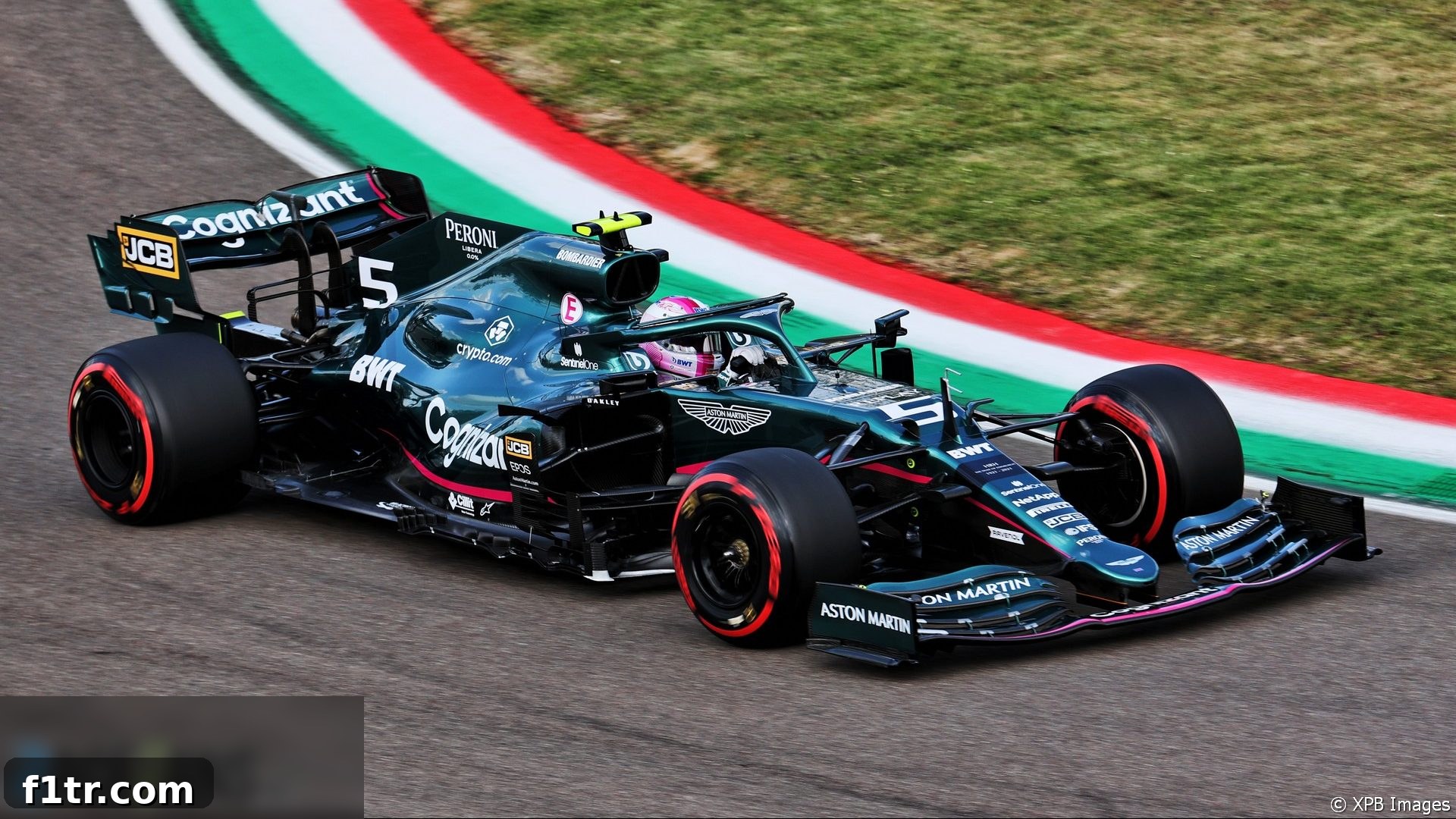
In the high-stakes world of Formula 1, where every millisecond counts, regulatory changes can ignite fierce debate and potentially reshape the competitive landscape. A significant controversy erupted during the early stages of the 2021 F1 season, centering on the revised aerodynamic rules. Aston Martin CEO Otmar Szafnauer vehemently expressed his team’s dismay, arguing that the alterations to the rear floor dimensions had disproportionately penalized teams running a low-rake car philosophy, including Aston Martin and Mercedes.
Szafnauer’s complaints were far from subtle. He described the impact as a “deficit that was imposed on us by the FIA through their regulation change,” suggesting that the governing body’s decisions had directly hampered his team’s performance. The Aston Martin boss even went as far as to hint at potential legal action against the FIA if the regulations were not re-evaluated or adjusted. This bold stance underscored the severity of the perceived disadvantage and the frustration brewing within the Silverstone-based outfit.
The core of the issue revolved around changes made to the cars’ rear floor for the 2021 season. Specifically, regulations introduced for the new season mandated cuts to the rear floor area, which significantly impacted how air flows over and under the car. For teams like Aston Martin and Mercedes, which traditionally operate with a lower rake angle – meaning the car’s nose is not as dramatically lowered compared to its rear – these changes were particularly detrimental. A lower rake design typically relies on a larger floor area to generate downforce, and reducing this area stripped away a crucial element of their aerodynamic efficiency.
Szafnauer asserted that these changes were introduced without adequate consideration for their disproportionate impact. “I think the right thing to do is have the discussion with the FIA and find out exactly what happened and why and then see if there’s something that can be done to make it more equitable,” he stated, highlighting his desire for urgent dialogue and potential revisions to restore a level playing field. He emphasized the dual approach Aston Martin was taking: working tirelessly to mitigate the impact of the changes internally, while simultaneously lobbying the FIA for a fairer resolution. The suggestion of legal action, while a last resort, underscored the gravity of the situation for Aston Martin, signaling their determination to protect their competitive interests.
However, Szafnauer’s strong critique was met with dismissive remarks from Red Bull’s team principal, Christian Horner, who labeled the complaints as “naive.” Horner’s team, renowned for its high-rake aerodynamic philosophy, was perceived by many to have benefited from the very rule changes that Aston Martin found so crippling. High-rake cars typically run with a more pronounced angle, raising the rear of the car to manipulate airflow and generate downforce differently, making them less reliant on the specific floor area affected by the new regulations.
Horner’s skepticism was rooted in several points. He argued that it was too early in the season to draw definitive conclusions about the impact of the rules, given the limited sample size of races. “First of all, we’ve had a sample of one [circuit]. Mercedes won that race with what you would classify a low-rake car. They’ve had absolutely equal, maybe better tyre degradation than we had in Bahrain. They’ve looked mighty impressive here and we’ve only run at one [other] circuit so far,” Horner pointed out, referencing Mercedes’ victory at the opening round in Bahrain despite running a low-rake concept.
Beyond the performance argument, Horner also highlighted the procedural aspects of regulation changes. He asserted that the 2021 aerodynamic rules were agreed upon and passed through the appropriate channels with the unanimous support of all teams. “There is a process for regulations to be introduced and they were voted through unanimously through the different regulations that Aston Martin or Racing Point would have had to vote for before being passed through the Formula 1 Commission and the World Motor Sport Council,” Horner explained, refuting any suggestion of a unilateral imposition. He further drew parallels with past rule changes that had adversely affected Red Bull, such as a front wing alteration a few years prior, which his team had voted against but ultimately had to accept.
The contradiction between Szafnauer’s claim that “three teams voted against” the rules and Horner’s insistence on “unanimous” approval brought to light the complexities of F1’s regulatory process. It was later clarified that while teams might have expressed dissent in an “indicative vote,” the rule changes for 2021 were primarily introduced on safety grounds. When safety is cited as the primary reason for a regulation change, the FIA’s power to implement it is significantly enhanced, and the unanimous approval of all teams is not strictly required. This nuance meant that despite any team’s objections, the FIA could push through changes deemed essential for safety, even if those changes had significant competitive implications.
The philosophical divide between low-rake and high-rake car concepts has been a fascinating aspect of modern Formula 1 aerodynamics. Mercedes, and subsequently Aston Martin (inheriting much of Mercedes’ design philosophy), successfully mastered the low-rake approach, capitalizing on a longer car floor and specific diffuser geometries to generate immense downforce. Red Bull, under the guidance of Adrian Newey, perfected the high-rake concept, utilizing the angle of the car to create a more effective “seal” along the underbody, maximizing the ground effect from a shorter floor. The 2021 rule changes, by trimming the floor area, effectively targeted the low-rake concept more directly, disrupting the delicate balance these teams had engineered. This technical advantage shift fueled Szafnauer’s anger, as it felt like an arbitrary redistribution of performance rather than a natural evolution of competition.
The ongoing debate underscores the delicate balance the FIA must strike between ensuring safety, promoting competitive racing, and allowing for technological innovation. Rapid rule changes, even with the best intentions, can lead to substantial financial burdens for teams who must adapt their car designs and production processes. For smaller teams like Aston Martin, which do not possess the same vast resources as giants like Mercedes or Red Bull, such unforeseen setbacks can have a more profound impact on their development curve and championship aspirations. The call for equity from Szafnauer was not just about the immediate season’s performance, but also about the integrity and fairness of the regulatory framework within Formula 1.
Ultimately, the discussion surrounding the 2021 aerodynamic rules highlights a recurring tension in Formula 1: the conflict between stability and evolution. While the sport thrives on innovation, frequent and impactful rule changes can disrupt established pecking orders, leading to frustration and accusations of unfair play. The saga involving Aston Martin and Red Bull serves as a potent reminder of how technical regulations, seemingly minor on paper, can unleash a torrent of debate, legal threats, and philosophical clashes among the sport’s leading figures.
As the season progressed, teams adapted to the new regulations, attempting to claw back lost performance through relentless development. Whether the FIA would revisit these specific rule changes or offer any concessions remained a significant question. The controversy undoubtedly added another layer of intrigue to the 2021 Formula 1 season, reminding fans and participants alike that the battles off-track, in the boardrooms and technical offices, are often as intense and critical as those waged on the asphalt.
2021 Emilia-Romagna Grand Prix
- Poor Imola pace was “100% tyres”, says Bottas
- Bottas says Imola crash is “history” after reading George Russell’s apology
- ‘Lewis and Valtteri are team mates to me as Nicholas is’ says Russell after ‘private’ Wolff talks
- ‘Hamilton didn’t break the rules by reversing’ shouldn’t be a story
- 2021 Emilia-Romagna Grand Prix Star Performers
Browse all 2021 Emilia-Romagna Grand Prix articles