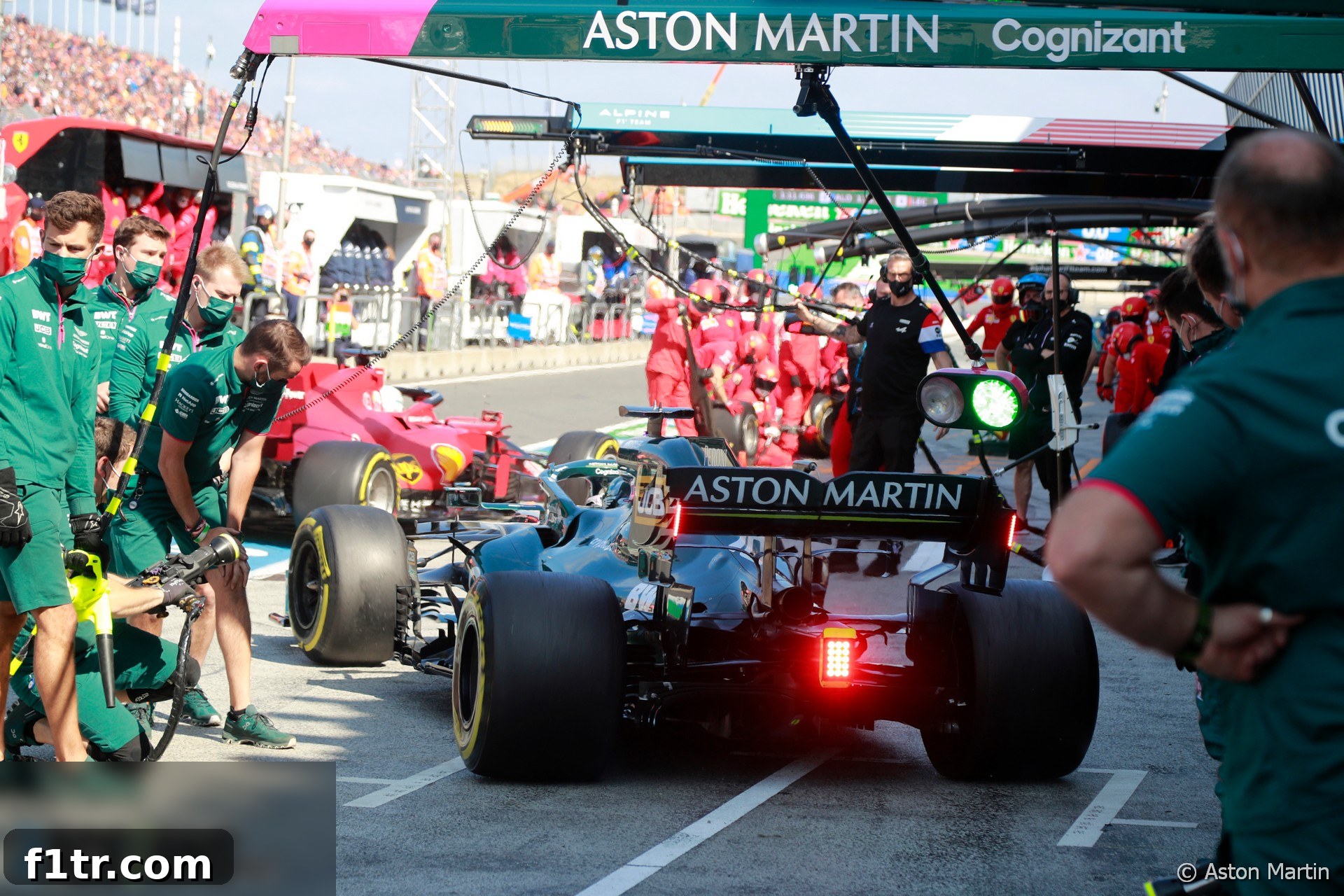
Zandvoort’s Tight Pit Lane: A Unique F1 Challenge and Strategic Minefield
The return of Formula 1 to the iconic Circuit Zandvoort brought with it not just the thrilling banking corners and passionate Dutch crowds, but also a specific, often overlooked challenge: its notoriously cramped pit lane. While the track itself has earned a reputation for catching out drivers with its narrow confines and unforgiving nature, an entirely different, high-stakes test awaits teams and drivers during the race weekend’s crucial pit stops.
Advert | Become a Supporter & go ad-free
The Squeeze: Understanding Zandvoort’s Unique Pit Lane Constraints
Despite extensive renovations and upgrades undertaken to bring Zandvoort up to modern Formula 1 standards for its much-anticipated return to the calendar, the fundamental limitations imposed by the available land area meant that the pit lane simply could not be significantly enlarged. This geographical constraint has resulted in a pit lane that stands out as the most spatially challenged on the entire Formula 1 schedule, posing a distinct operational puzzle for every team.
Comparisons are often drawn to Monaco, a temporary street circuit renowned for its tight and difficult pit lane. However, Zandvoort, a permanent purpose-built facility, manages to be even more restrictive. McLaren team principal Andreas Seidl highlighted this critical difference: “It’s the tightest pit lane in the entire year. In Monaco we have around 60 metres in a pit stop position, here we have only 40 metres.” This 20-meter reduction per pit box represents a substantial decrease in working space, amplifying the complexity and precision required for every pit stop operation. The restricted dimensions mean less room for pit equipment, less maneuverability for the crew, and a heightened risk profile for all personnel involved.
Precision Driving: Navigating the Confined Spaces
The reduced dimensions present immediate difficulties for drivers. Guiding a Formula 1 car, which measures over five meters in length and two meters in width, into a pit box with just 40 meters of space, while ensuring it remains perfectly aligned for the pit crew, demands unparalleled precision. Drivers must hit their marks with absolute accuracy to allow the crew ample space to perform tyre changes and other essential services efficiently and safely. Exiting the pit box is equally challenging. Drivers must navigate out of their designated spot without encroaching too closely on rival teams’ areas, especially if other cars are simultaneously preparing for or completing their own pit stops. The margins for error are minuscule, and any misjudgment could lead to penalties, lost time, or even dangerous contact with other cars or personnel.
“We prepared for that challenge as much as we could,” explained Andreas Seidl, emphasizing the proactive approach taken by teams. “We practiced with trying different scenarios together with the pit crew and the drivers.” This meticulous preparation includes simulating various entry and exit angles, practicing quick adjustments, and ensuring seamless communication between the driver and the pit wall. The objective is to engrain these complex maneuvers into muscle memory, allowing for instinctual, error-free reactions when under immense race pressure. Teams invest heavily in perfecting these intricate dances, knowing that a fraction of a second gained or lost, or a single mistake, can dictate the outcome of a race.
The Safety Car Dilemma: A Strategic Minefield
While routine pit stops are inherently tricky, the real test of Zandvoort’s pit lane comes with the deployment of a Safety Car or Virtual Safety Car. Such an event has the potential to trigger a mass influx of cars into the pit lane, as teams seize the opportunity to change tyres under neutralised conditions without losing significant track position. This ‘double stack’ or ‘triple stack’ scenario, where multiple cars from different teams, or even the same team, attempt to pit simultaneously, elevates the risk profile exponentially. The constricted space means that a rapid succession of cars can quickly create a chaotic bottleneck.
“If all the cars are coming in together, that can cause issues,” Seidl presciently warned. We witnessed the potential for chaos in Hungary, a circuit with a more typical, spacious pit complex, where Kimi Raikkonen and Nikita Mazepin unfortunately collided when approximately half the field dove into the pits ahead of a restart. The prospect of similar incidents occurring in Zandvoort, with its drastically reduced space, is a genuine concern. Pit crews, already operating with extreme speed and precision, would find their margins for error even tighter, and the potential for blocked exits, unsafe releases, or contact between cars would be significantly amplified. This scenario places immense pressure on race control, pit marshals, and team personnel to manage the flow of traffic and ensure safety, all while the clock is ticking.
The ‘Stacking’ Stratagem: Risk vs. Reward for Teams
For teams running two cars, the concept of ‘stacking’ – pitting both drivers in quick succession – becomes an even greater strategic quandary at Zandvoort. In a conventional pit lane, a well-executed double stack can be a race-winning move during a Safety Car period, allowing both cars to benefit from fresh tyres without sacrificing track position. However, in Zandvoort’s cramped environment, if one driver has to wait even momentarily behind their teammate for the pit box to clear, the time loss could be crippling. This factor introduces a delicate balancing act for strategists: do they risk a double stack to gain track position for both cars, or do they split their strategy, potentially sacrificing one car’s immediate advantage to ensure both have clean, unimpeded pit stops?
The decision of whether to pit when other cars are also expected to, or even when the Safety Car is out, will weigh heavily on team principals and strategists. The potential for a bottleneck, for cars blocking each other, or for an unsafe release penalty looms larger here than anywhere else on the calendar. This unique challenge could profoundly influence tactical decisions, potentially leading to more varied and unpredictable pit stop strategies throughout the race, adding another layer of intrigue to the Dutch Grand Prix. Teams might opt for longer stints, or unconventional tyre choices, to avoid the high-pressure pit lane scenarios altogether.
Advert | Become a RaceFans supporter andgo ad-free
Maintaining Composure: The Human Factor Under Intense Pressure
In such a high-pressure environment, the human element becomes paramount. Drivers, pit crews, and strategists alike must maintain exceptional composure and a clear head amidst the potential chaos. As Daniel Ricciardo wisely predicted, “If everyone comes in at once you’re going to have a lot of tense people.” Yet, the seasoned Australian driver also saw it as a potential opportunity, emphasizing the importance of a calm mindset. “I think the main thing really is, for sure there could be chaos in terms of lots of cars and confusion, so just stay cool and try to stay calm.” This philosophy extends beyond the driver, influencing the entire team.
Ricciardo’s insights underscore the psychological battle that accompanies these physical challenges. A driver’s ability to remain calm, execute precise maneuvers, and communicate effectively with their team can significantly impact the outcome, both in terms of speed and safety. He further explained the ripple effect of composure: “That kind of reinforces a little bit of confidence into the pit crew because obviously they’re the ones standing out in pit lane and in that situation, they’re putting themselves at risk. So I think just if you stay calm, then the group around you remains calm.” The pit crew members are in an incredibly vulnerable position, working mere inches from high-speed cars. Their safety, and the efficiency of the pit stop, rely heavily on precise communication, flawless execution, and a collected demeanor from everyone involved, from the driver to the lollipop man.
Enhanced Safety Protocols: The Reduced Pit Lane Speed Limit
Acknowledging the inherent risks associated with Zandvoort’s tight pit lane, race organizers and the FIA implemented an additional safety precaution: a reduced speed limit. In line with practices at other circuits with particularly constrained pit lanes, the speed limit for drivers was lowered to 60 kph, a noticeable reduction from the standard 80 kph found at most other venues. This measure aims to mitigate the dangers of rapid vehicle movement within such a confined and potentially crowded area, providing drivers with more reaction time and reducing the severity of any potential incident. Even a small reduction in speed can make a significant difference in preventing collisions or minimizing their impact in a tight space.
Mercedes team principal Toto Wolff commented on this necessity, stating, “Obviously it’s not the standard from a new-build circuit. But it’s equally challenging. You need to be careful what happens in the pit lane and I’m sure the drivers will know that and adapt accordingly.” His remarks highlight that while the circuit’s layout isn’t ideal by modern design standards, the challenge is very real, and drivers are expected to demonstrate their professionalism and adaptability. This reduced speed limit adds another layer of complexity to pit stops, as drivers must carefully manage their entry speed and braking points to stay within the regulations while still minimizing lost time, an ever-present concern in the ultra-competitive world of Formula 1.
Broader Implications for Race Strategy and Excitement
The unique characteristics of Zandvoort’s pit lane extend beyond mere operational difficulties; they profoundly influence the broader strategic landscape of the Dutch Grand Prix. The heightened risk associated with pit stops could encourage teams to explore alternative strategies, such as longer stints on a single set of tyres, or a greater reluctance to make opportunistic stops under Virtual Safety Car conditions if the perceived risk outweighs the potential reward. This could lead to a more diverse range of tactical approaches on race day, potentially shaking up the established pecking order and creating unexpected race narratives.
Furthermore, the increased pressure on drivers and pit crews during these crucial moments adds another layer of drama and excitement for spectators. Every pit stop becomes a spectacle, a potential moment of triumph or disaster, demanding perfect synchronization and unwavering focus. The unforgiving nature of the Zandvoort pit lane ensures that precision, quick thinking, and a cool head are not just desirable traits, but absolute necessities for anyone hoping to succeed at this thrilling and demanding circuit. It’s a testament to the evolving challenges of Formula 1, where even the smallest details of track infrastructure can have a profound impact on the grand spectacle.
Advert | Become a RaceFans supporter andgo ad-free
Relive the Action: 2021 Dutch Grand Prix Highlights
The 2021 Dutch Grand Prix truly delivered on the promise of thrilling racing and strategic intrigue, with its unique pit lane challenges playing a silent yet significant role in the unfolding drama. For those who want to delve deeper into the events of that memorable weekend, explore related articles that capture the essence of Zandvoort’s return to the Formula 1 calendar:
- “So many people love him”: Raikkonen’s rivals pay tribute to retiring champion
- Alonso studied junior series, not IndyCar, for Zandvoort banking clues
- 2021 Dutch Grand Prix Star Performers
- Paddock Diary: Dutch Grand Prix part two
- Verstappen makes the Netherlands 12th country to produce a home F1 winner
Browse all 2021 Dutch Grand Prix articles