The 2018 Formula 1 season kicked off with an electrifying Australian Grand Prix in Melbourne, a race that promised high drama and delivered on every front. As the dust settled at Albert Park, two names resonated as the standout performers of the weekend, showcasing exceptional skill and determination: Lewis Hamilton and Kevin Magnussen. However, the season opener also brought unexpected challenges and disappointing outcomes for several top contenders. This comprehensive driver performance review dissects the triumphs, tribulations, and critical moments that shaped the opening chapter of the 2018 F1 season.
Australian Grand Prix Stars: Defining Moments of Excellence
Every Grand Prix produces its heroes, and Melbourne 2018 was no exception. Despite varying outcomes, these drivers demonstrated the pace, precision, and raw talent that mark them as the weekend’s true stars.
Lewis Hamilton: Pole Dominance and a Twist of Fate
Lewis Hamilton arrived in Melbourne radiating confidence, and his qualifying performance was nothing short of spectacular. He unequivocally stamped his authority on Saturday, storming to pole position with a breathtaking lap that put him a massive six-tenths of a second clear of his nearest rival, Sebastian Vettel. It was a display of sheer dominance that left the paddock in awe, and Hamilton himself couldn’t resist a playful jab at Vettel, joking about ‘wiping the smile off his face’. Yet, the unpredictable nature of Formula 1 often dictates that moments of perceived hubris can be met with an ironic twist of fate.
Indeed, 24 hours later, the broad grin belonged to Vettel. While Hamilton drove a controlled race, confidently leading from the front, a cruel turn of events under a Virtual Safety Car (VSC) period ultimately snatched victory from his grasp. The VSC deployment, triggered by the unfortunate retirement of Romain Grosjean’s Haas, coincided perfectly with Vettel’s pit window. Mercedes’ strategic calculations, based on a presumed delta gap to the Ferrari, proved to be critically misjudged. Hamilton, though initially unaware of the unfolding drama, was largely powerless to avert this outcome.
Questions arose about whether Hamilton could have been closer to Vettel when the VSC was deployed, potentially allowing him to retain his lead after the Ferrari pitted. Analysis suggested it was highly probable. However, the team’s internal calculations indicated that their current gap was sufficient, and pushing the car any harder was deemed unnecessary, conserving vital engine and tyre life. This strategic misstep, rather than any deficiency in Hamilton’s driving, cost him the win. Despite the disappointing result, Hamilton’s raw pace and control throughout the weekend solidified his status as a formidable contender for the championship, demonstrating that even when luck isn’t on his side, his performance remains exceptional.
Kevin Magnussen: A Blazing Start Halted by Heartbreak
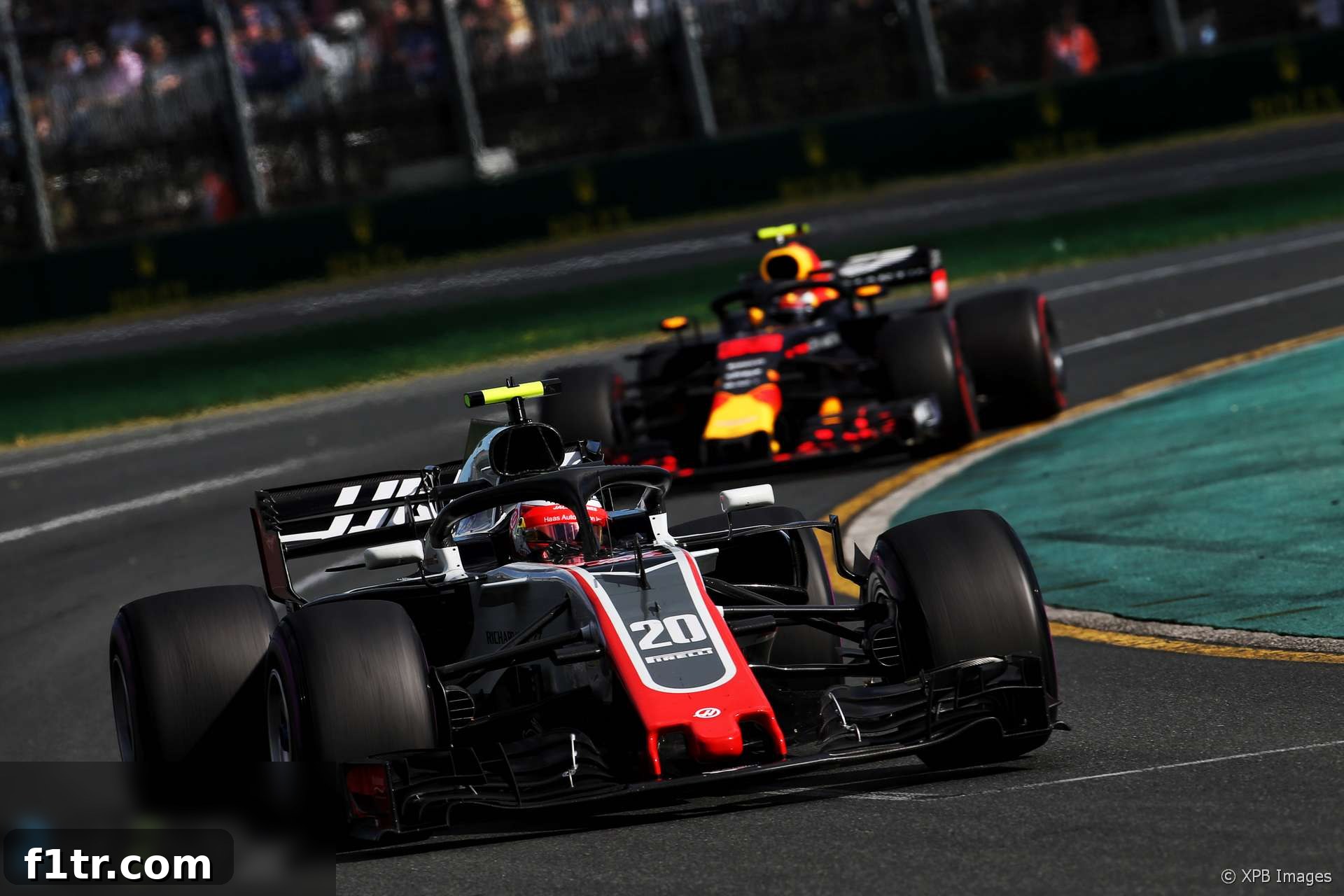
The Haas F1 Team emerged as a dark horse in the early stages of the 2018 season, and both their drivers delivered impressive performances in Australia. Among them, Kevin Magnussen particularly shone, demonstrating a blend of raw speed and aggressive race craft that marked him as a definite star of the weekend, albeit one whose story ended in bitter disappointment. Magnussen’s qualifying session was nothing short of brilliant, securing a spot in the top ten despite his Friday running being significantly hampered by persistent niggling mechanical problems. This ability to extract maximum performance under pressure underscored his talent.
His race start was equally remarkable. Displaying superb opportunism and aggressive precision, Magnussen made a decisive move on Max Verstappen into the first corner, a bold maneuver that put him firmly in contention for significant points. He settled into a strong fourth place, holding his own against the sport’s elite, and showcasing the true potential of the Haas VF-18. The American team looked set for their best-ever Formula 1 result, with both cars running in the top six.
However, the cruel hand of fate intervened during the pit stops. In a shocking double blow for Haas, both Magnussen and his teammate Romain Grosjean were forced to retire shortly after their tyre changes due to wheels not being correctly fitted. For Magnussen, who had been driving flawlessly and was in a fantastic points-scoring position, it was a particularly devastating outcome. The incident sparked immediate investigation and left the team heartbroken. It was a classic case of “what might have been,” with Magnussen’s stellar performance ultimately overshadowed by a preventable pit lane error. Despite the retirement, his speed and racecraft throughout the weekend were undeniable, solidifying his position as a star performer.
Australian Grand Prix Strugglers: Where Fortunes Faltered
Not every driver enjoys a perfect weekend, and the Australian Grand Prix exposed vulnerabilities for even the sport’s most promising talents. These individuals found themselves battling not just their rivals, but also misfortune and, at times, their own errors.
Valtteri Bottas: A Weekend to Forget for Mercedes
For Valtteri Bottas, the start to his second season with Mercedes was an unmitigated disaster, certainly not the impression he wanted to make with a contract for 2019 hanging in the balance. His weekend began precariously with several minor offs during Friday practice, hinting at a struggle to find the car’s limit. The situation escalated dramatically in qualifying when, pushing hard on his final Q3 run, he lost control and crashed heavily into the wall at Turn 2. The incident not only destroyed his car but also left him mired in a disappointing 15th place on the grid after a gearbox change penalty.
From that point, Bottas’s race became an uphill battle on a circuit notoriously difficult for overtaking. Despite his best efforts, he struggled to make significant progress through the midfield pack. The need to manage his engine and temperatures, combined with the inherent challenges of the Albert Park layout, meant he frequently had to back off, preventing him from truly unleashing the Mercedes’ potential. He ultimately finished a distant eighth, failing to provide the crucial support Mercedes needed.
Perhaps the most damning aspect of Bottas’s weekend was the tangible cost to his team. Mercedes could justifiably feel that the absence of their second car at the sharp end of the grid directly contributed to losing the race victory. A two-pronged attack could have provided strategic flexibility and pressure on Ferrari, potentially altering the outcome of the VSC period. With expectations high and a new contract on the line, Bottas desperately needs to bounce back from this forgettable start and consistently deliver performances worthy of a top team.
Max Verstappen: Self-Inflicted Challenges and Lost Opportunities
High hopes were placed on Max Verstappen and Red Bull Racing for the 2018 season, but the Australian Grand Prix proved to be a frustrating and error-strewn affair for the young Dutchman. Verstappen admitted to a “small mistake” during qualifying, a momentary lapse that potentially cost him the opportunity to out-qualify one of the Ferraris and start closer to the front. This seemingly minor error would prove to have significant ripple effects throughout his race.
At the start of the Grand Prix, Verstappen was actively trying to find a way past the Ferraris ahead when Magnussen, exploiting a gap, darted past him with an aggressive but clean move. This initial loss of position seemed to derail Verstappen’s composure. His race took a significant turn for the worse when he endured a lurid moment at Turn 12, losing the rear of the car and bouncing violently over the kerbs. This incident inflicted crucial diffuser damage, severely compromising the aerodynamic balance and overall handling of his Red Bull.
The damaged diffuser then directly contributed to a costly spin at Turn 1, an unforced error that saw him lose a further three places and plunge him deeper into the midfield pack. Battling a compromised car and heavy traffic, Verstappen then suffered more misfortune due to the Virtual Safety Car. He was unfortunate to lose another place to the wily Fernando Alonso, who skillfully capitalized on the VSC period’s timing. While the VSC was a stroke of bad luck, it was Verstappen’s own preceding errors and the consequent damage that left him vulnerable in that unenviable position. A weekend of missed opportunities and frustrating mistakes for a driver usually celebrated for his aggressive brilliance.
And the Rest: A Grand Prix of Varied Fortunes
The 2018 Australian Grand Prix was a tapestry of diverse performances, with drivers experiencing everything from unexpected glory to crushing disappointment. **Sebastian Vettel** was the man who inherited the victory, benefitting immensely from the timing of the Virtual Safety Car. While his Ferrari teammate Kimi Räikkönen often appeared to have superior pace earlier in the race, particularly on the softer compounds, Vettel expertly managed his tyres and capitalized on the strategic opportunity. His final stint on the soft tyres saw him look completely at home, consolidating a win that, while fortunate, underscored Ferrari’s ability to seize any advantage.
**Daniel Ricciardo** endured a challenging home Grand Prix weekend, starting with a grid penalty carried over from practice. Despite losing out to teammate Max Verstappen in qualifying, the Australian hero salvaged a commendable fourth place. His drive was a testament to his fighting spirit, highlighted by a superb and aggressive overtake on **Nico Hulkenberg**, a moment that stood out as one of the race’s highlights.
**Fernando Alonso** stealthily made his way to an impressive fifth place. While he benefited from retirements and the VSC, his drive demonstrated improved performance from McLaren with their new Renault power units. Alonso had looked strong for a Q3 spot until the very final runs in Q2, indicating promising pace. His teammate, **Stoffel Vandoorne**, mirrored this resurgence, consistently shadowing Alonso and delivering a solid performance, securing a double points finish for McLaren. The pair were separated on track by a consistent **Nico Hulkenberg**, who drove a clean and steady race to claim seventh for Renault, showcasing the team’s growing competitiveness.
**Carlos Sainz Jnr** also faced an unusual challenge during the race. The Renault driver suffered from a broken drinks bottle, leading to dehydration and feeling nauseous throughout the demanding Grand Prix. This affliction undoubtedly hampered his performance, preventing him from converting his potential into a stronger points finish.
The **Force India** drivers found themselves outside the points on this occasion. **Sergio Perez** expressed that he felt he had wrung every ounce of performance from his car in qualifying, indicating the team’s struggle with outright pace. Teammate **Esteban Ocon**, however, made a decisive move on **Lance Stroll** on lap one, taking advantage of the Williams driver being in the wrong engine mode. This highlighted the struggles of the Williams team, who endured a dismal weekend. Rookie **Charles Leclerc** also capitalized on the Williams’ woes, executing a clean pass on Stroll as he made his F1 debut for Sauber. At the very rear of the pack, **Brendon Hartley**’s race was compromised almost immediately, as he was forced to pit on lap one after locking a wheel heavily at the start, leading to excessive vibrations and a lengthy stop.
**Romain Grosjean**, before his heartbreaking retirement alongside teammate Magnussen, was eager to point out that he had been quicker than Kevin Magnussen at various points in the race. However, he was out-qualified by his teammate in the cooler conditions of Saturday, adding another layer to the ‘what if’ scenario for Haas. Other early retirements included **Pierre Gasly** for Toro Rosso, **Marcus Ericsson** for Sauber, and **Sergey Sirotkin** for Williams. Sirotkin’s retirement was particularly bizarre, caused by a right-rear brake failure which his team suspected was triggered when the brake duct ingested a stray plastic bag, a testament to the unpredictable nature of street circuits and high-speed racing.
The 2018 Australian Grand Prix served as a thrilling and often surprising curtain-raiser, setting the stage for what promised to be an enthralling season. From Hamilton’s dominant qualifying to Vettel’s opportunistic win, and the heartbreaking exits for Haas, the race delivered a full spectrum of emotions and storylines. The performances in Melbourne offered crucial insights into the pecking order and highlighted the fierce competition awaiting in the races to come.
Over to You: Who Impressed You Most?
The varied fortunes of the 2018 Australian Grand Prix sparked intense debate among fans. Now it’s your turn to weigh in! Cast your vote for the driver who impressed you most last weekend and discover if other RaceFans share your perspective:
- Vote for your 2018 Australian Grand Prix Driver of the Weekend
More from the 2018 Australian Grand Prix
- Top ten pictures from the 2018 Australian Grand Prix
- 2018 Australian Grand Prix Star Performers: In-depth Analysis
- Vettel can’t ignore Mercedes’ superior speed after lucky win
- McLaren equal best result of last Honda era in first race with Renault
- Vote for your 2018 Australian Grand Prix Driver of the Weekend
Browse all 2018 Australian Grand Prix articles