F1 Sprint Qualifying: Driver Reactions and the Quest for Closer Racing
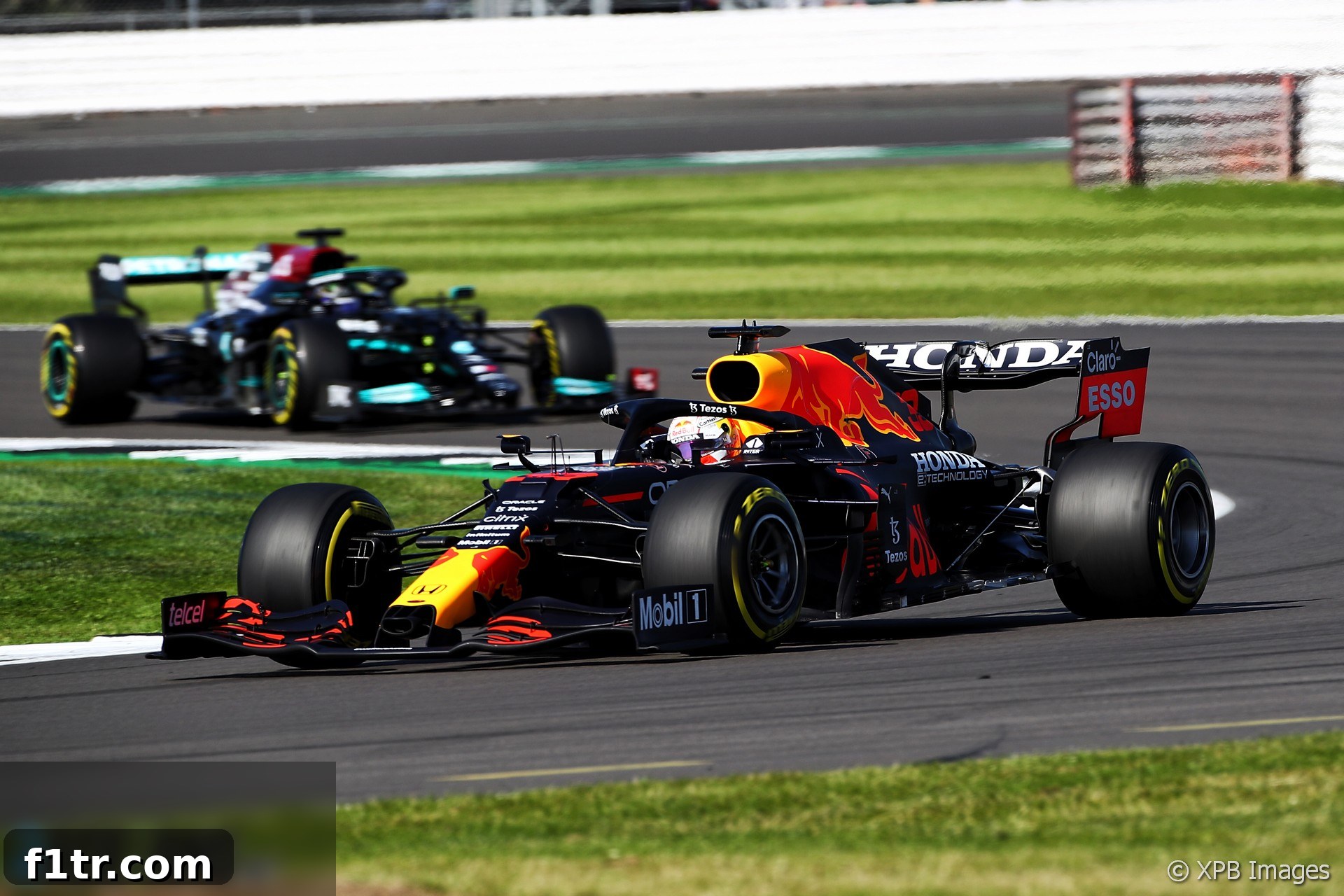
The inaugural Formula 1 sprint qualifying at the British Grand Prix ignited considerable discussion among drivers, teams, and fans alike. While designed to inject more excitement into race weekends, its debut offered a mixed bag of results and opinions. For Mercedes driver Lewis Hamilton, the experience of trailing Max Verstappen during the 17-lap dash felt strikingly similar to previous 2021 grand prix encounters, highlighting persistent challenges in F1’s aerodynamic landscape.
Key Takeaways from the Silverstone Sprint
Hamilton Struggles to Overtake Despite Sprint Format Advantages
Advert | Become a Supporter & go ad-free
Lewis Hamilton started F1’s sprint qualifying session from pole position, a testament to his blistering pace in traditional qualifying on Friday. However, his initial advantage was quickly nullified as championship rival Max Verstappen surged ahead off the line. Verstappen then maintained his lead to clinch victory in the Saturday sprint race, leaving Hamilton to battle with the familiar frustrations of following closely behind another car.
Despite the sprint format introducing free tire choice and a significantly lower fuel load compared to a full-length grand prix, Hamilton observed that the fundamental difficulty of overtaking remained unresolved. “It was very much the same as the last races in terms of just following behind Max,” Hamilton explained, articulating a sentiment that has echoed throughout the paddock regarding the current generation of F1 cars.
He elaborated on the stark contrast between the thrill of traditional qualifying and the challenges of the sprint race. “Friday was a more enjoyable day in terms of qualifying. It’s very hard to follow, naturally, in this car. So it wasn’t the most exciting, but hopefully it was for the fans.” Hamilton’s comments underscore a critical point of discussion in modern Formula 1: while these cars are incredibly fast, their aerodynamic characteristics – particularly the turbulent air generated for the following car – often impede wheel-to-wheel racing, even in a shorter, more intense format designed to encourage it. The sprint race, for Hamilton, merely amplified a season-long struggle to overcome the aerodynamic disadvantage when running in dirty air.
Vettel Emphasizes Fan Feedback as Ultimate Measure of Sprint Success
Sebastian Vettel, known for his thoughtful and often philosophical takes on the sport, weighed in on the sprint qualifying debate by redirecting the focus from drivers to the spectators. Vettel argued that drivers, by their very nature, are biased towards any format that involves actual racing action over practice sessions. Therefore, he believes their opinions might not be the most accurate gauge for the format’s overall success.
“I think it’s not so much us; you should go out and ask the people what they think,” Vettel stated. “In the end, we do this format for them. So ask the people at home and ask the people in the stands if they liked it. I think for us, we like racing, so free practice is not as exciting as a race, [so] you have your answer.”
Vettel’s perspective highlights the delicate balance Formula 1 aims to strike: creating an engaging spectacle for its global audience while maintaining the core competitive integrity of the sport. His comments serve as a reminder that format changes, like sprint qualifying, are ultimately consumer-driven initiatives, and their long-term viability will depend heavily on fan reception and perceived entertainment value. Whether the sprint format genuinely enhanced the overall weekend experience or simply added an extra session without significant impact on the drama remains a key question that, according to Vettel, only the fans can truly answer.
Raikkonen’s Soft Tyre Gamble Yields Gains, But Limited Advantage
Alfa Romeo veteran Kimi Raikkonen demonstrated his seasoned racecraft during the sprint qualifying session, making a notable ascent from 17th on the grid to secure 13th for Sunday’s grand prix. His performance was particularly interesting given his strategic tire choice.
Raikkonen was one of only five drivers, including esteemed competitors like Valtteri Bottas and Fernando Alonso, who opted for the softer compound tires for the sprint race. This decision was a calculated gamble, hoping for superior grip off the line and early-race performance. However, Raikkonen downplayed the direct impact of the soft tires on his initial acceleration. “It’s always a bit better, but I doubt that there’s a lot between the two tires at the start,” he remarked. “It’s more if you get it right or wrong; it’s so easy to get it wrong.”
His sentiment suggests that a clean, precise start, rather than the absolute tire compound, was the paramount factor. Raikkonen’s ability to navigate the opening laps successfully allowed him to gain four crucial positions, proving his skill in navigating the chaotic midfield. Despite picking up some damage to his car’s floor early in the race, which could have compromised performance, Raikkonen continued to push. “I got some damage on the floor, I think it was at the beginning of the race. But we tried to fight – we were a bit too slow on the straights, but we made some improvements, obviously.” This resilience and adaptive driving highlight the demanding nature of F1 racing, where drivers must constantly adjust to unforeseen challenges while extracting maximum performance from their machinery. Raikkonen’s sprint offered a masterclass in midfield race management and strategic decision-making.
Advert | Become a RaceFans supporter andgo ad-free
Social Media Buzz: Voices from the Paddock and Beyond
A round-up of notable posts from Twitter, Instagram, and more, offering a glimpse into the broader motorsport narrative and driver sentiments following the sprint qualifying session at Silverstone:
A day that got complicated very early in the race. We hit our lowest point, but tomorrow we have a whole new chance.
We’ll work together with the entire team to recover and minimize the damage!#britishgp #nevergiveup pic.twitter.com/zELouwQVUU— Sergio Pérez (@SChecoPerez) July 17, 2021
Red Bull Racing’s Sergio Pérez reflected on a challenging day at Silverstone, acknowledging a difficult start to the race weekend but expressing determination for Sunday’s main event. His tweet captures the spirit of resilience often seen in motorsport, where setbacks fuel the drive for recovery.
It was the closest thing to traveling through time. Driving the Ferrari 375 F1 with whom @ScuderiaFerrari won the 1st GP at Silverstone in 1951 is an unforgettable experience #BritishGP @Formula1 @Ferrari pic.twitter.com/3ROhxxJWnk
— Marc Gené (@marc_gene) July 17, 2021
Ferrari ambassador Marc Gené shared an unforgettable experience of driving the iconic Ferrari 375 F1, the car that secured Scuderia Ferrari’s first-ever Grand Prix win at Silverstone in 1951. This tweet beautifully connects F1’s rich heritage with its present, celebrating the sport’s enduring legacy at one of its most historic circuits.
RACE UPDATE:
Due to causing a collision, @1JessicaHawkins receives a 20s time penalty, moving her down from P10 to P16.#WSeriesSilverstone 🇬🇧 #WSeries #F1 pic.twitter.com/y43omW2oNE
— W Series (@WSeriesRacing) July 17, 2021
The W Series official account provided a crucial race update regarding Jessica Hawkins, who incurred a 20-second time penalty for causing a collision. This alteration significantly impacted her finishing position, moving her from tenth to sixteenth, highlighting the strict officiating and competitive nature of the all-female racing series, which often runs alongside F1 weekends.
- Find more official F1 accounts to follow in the F1 Twitter Directory
Further Insights: Motorsport Links of Interest
Dive deeper into the world of motorsport with these compelling articles, offering diverse perspectives and news from across the racing spectrum:
Pourchaire was ‘pushing like a crazy guy’ on return from injury in sprint race 1 (source)
Theo Pourchaire’s tenacious return to Formula 2 after an injury showcased his incredible determination. The young driver candidly discussed the mental and physical toll of his recovery, revealing the extent to which his preparation was affected and his burning desire to perform despite limitations. His fighting spirit in the sprint race underlined the sheer will required to compete at the highest levels of junior motorsport.
Red Bull chief Christian Horner reveals how he beat Mercedes to Max Verstappen as F1 star targets first world title (Sun)
Christian Horner, Red Bull Racing’s team principal, offered intriguing insights into the pivotal moment when Red Bull secured Max Verstappen’s signature. He recounted discovering Verstappen’s raw talent during a Formula 3 race at Silverstone, highlighting the then-young driver’s extraordinary leap from karting to F3 and immediate success. This exclusive look behind the scenes sheds light on the strategic decisions that brought one of F1’s most exciting talents to Red Bull, setting the stage for his current championship aspirations.
George Russell eager for Lewis Hamilton Mercedes shot to test himself against F1’s GOAT (Express)
George Russell openly expressed his ambition to potentially join Mercedes and race alongside Lewis Hamilton, whom he unequivocally described as “probably the greatest of all time.” Russell conveyed his excitement at the prospect of challenging himself against such a formidable benchmark, emphasizing Hamilton’s enduring strength and significance to the sport. His comments reflect the aspirations of a rising star eager to prove his mettle against the very best.
We always endeavour to credit original sources. If you have a tip for a link relating to single-seater motorsport to feature in the next RaceFans round-up, please send it in via the contact form.
Advert | Become a RaceFans supporter andgo ad-free
Community Voice: The Day’s Top Comment on Sprint Qualifying
The introduction of F1’s sprint qualifying format sparked extensive debate among the fan community. Here’s a compelling comment that perfectly encapsulates the nuanced reactions:
It was strange. It sort of worked and failed at the same time.
I think the potential is there. It didn’t really work, but it’s just held back by these cars struggling to follow. With the 2022 cars, it could be really good. It’s a format that needs close racing, being tried by cars that struggle to race closely.
There was a good risk v reward element where bravery came in and mistakes could be brutally punished. Arguably there was more to lose than gain.
But perhaps controversially, I think it was actually too long. (Again, based on these cars, the 2022 cars could well change that entirely)
Drivers just ended up being fairly cautious, getting stuck behind slower cars who jumped them on the opening lap, then when they got past, they were totally out of touch from the cars in front with not enough time to catch back up.
And on the flip side, the drivers that did some ballsy moves in slower cars, threw softs on etc and gained multiple places ended up having that risk not really rewarded because they had to hold on too long and ended up losing most the places again anyway. In reality, the first few laps were pretty good, the last seven or eight laps ended up being fairly irrelevant as a spectacle.
It’s not a disaster, and will be good to see if they refine it in further trials.
I wouldn’t say it’s added much to the show but for a first go, it also showed enough to suggest its worth a few more shots at it.
@Mrcento
Happy Birthday to Our Community Members!
Warmest wishes go out to Wizardofoz, Icemangrins, Bill Niehoff, and Gruntr18 on their birthdays!
If you’d like a birthday shout-out in our next round-up, please let us know your birth date via the contact form or by adding it to our list here.
On This Day in Motorsport History
- Exactly 40 years ago today, John Watson triumphantly ended McLaren’s four-year victory drought. His win, achieved on home turf at Silverstone, marked a significant milestone as it was also the team’s first victory under the visionary leadership of Ron Dennis.