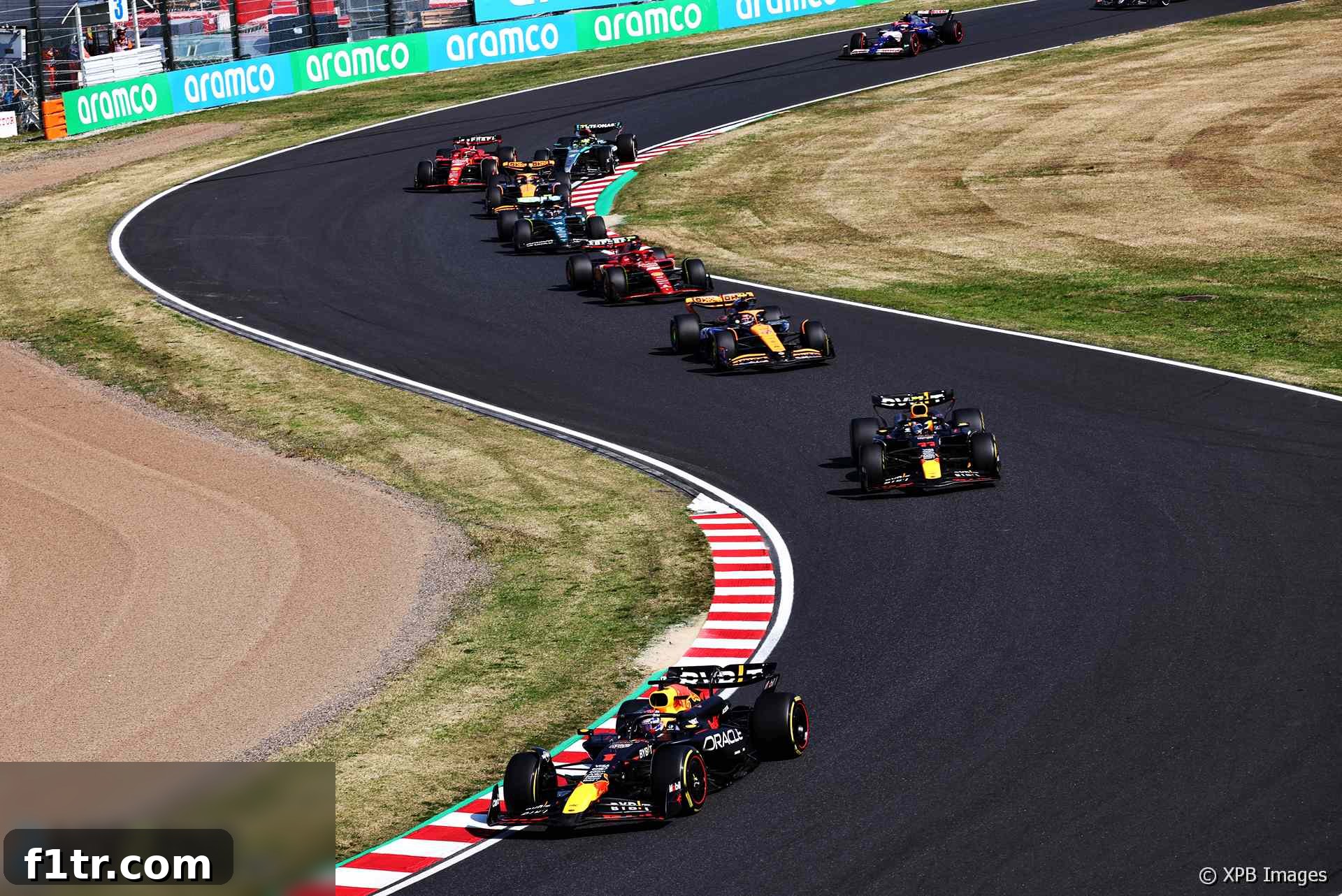
The Suzuka Circuit, revered for its challenging layout, is a true test of skill and nerve in Formula 1. Its unique figure-of-eight design, featuring iconic corners like the high-speed Esses, Degner, and 130R, pushes drivers and cars to their absolute limits. Mistakes are heavily penalized, making thrilling performances and unexpected dramas a hallmark of the Japanese Grand Prix. The recent event was no exception, delivering a captivating display of talent, strategy, and resilience from across the grid. While some drivers showcased their mastery, others found themselves grappling with the unforgiving nature of this legendary track.
As the Formula 1 season progresses, the battle at both ends of the grid continues to unfold with distinct separation between the top and bottom five teams. This dynamic often brings out the best in seasoned campaigners and highlights emerging talents. Following another intense weekend of racing, we delve into the individual performances that defined the Japanese Grand Prix. Here are RaceFans’ detailed driver ratings for the Suzuka weekend, offering insight into who truly excelled and who struggled under pressure.
A Comprehensive Guide to RaceFans’ Driver Ratings System
At RaceFans, our driver ratings system offers a holistic assessment of each competitor’s performance across the entire Grand Prix weekend, encompassing all three crucial days. While naturally, performances during competitive sessions – namely qualifying, sprint races (where applicable), and the main Grand Prix – are given the most significant weight, we also factor in other critical elements.
For instance, a driver’s performance in free practice sessions can substantially influence their overall weekend rating. A major error, such as a significant crash, or a consistent string of mistakes throughout practice, will inevitably detract from their score. Conversely, a driver who demonstrates exceptional and consistent speed in all free practice sessions relative to their teammate may see their rating enhanced, reflecting a strong preparatory phase for the weekend’s main events.
Our sophisticated system also meticulously considers the relative performance capabilities of each driver’s machinery and the expected outcomes given that equipment. This nuanced approach means that a driver who secures a dominant victory in a car that is clearly superior to the rest of the field might not necessarily achieve a higher rating than a driver who expertly extracts a lower points finish from a less competitive midfield car. The focus remains on maximizing potential within the given circumstances.
Furthermore, our ratings endeavour to account for mitigating factors that are genuinely beyond a driver’s control. If a driver is forced to miss considerable track time due to unforeseen car problems, becomes an innocent victim of being blocked during a crucial qualifying lap, finishes significantly lower than anticipated due to a heavily botched pit stop by their team, or suffers any other misfortune that they could not reasonably be expected to control, their rating will not be unfairly penalised. We aim for a fair and comprehensive evaluation.
RaceFans evaluates each driver’s complete weekend performance on a clear and consistent scale from 0 to 10. A score of ‘5’ is established as the benchmark, representing a typically average weekend performance from an average Formula 1 driver. This provides a tangible reference point for all ratings.
Below is a detailed guide to what each possible score signifies:
N/A – Not Applicable – No rating is assigned when a driver has not participated sufficiently in the competitive sessions of the weekend.
0 – Disqualified – Reserved for the most extreme instances where a driver’s conduct leads to their disqualification from participation in the event.
1 – Appalling – An utterly dreadful display that immediately raises serious questions about a driver’s fundamental competency and suitability.
2 – Awful – A profoundly poor performance, characterised by repeated significant errors and almost entirely devoid of any redeeming qualities.
3 – Very Bad – A weekend heavily skewed by far more negatives than positives, leaving the driver with significant reasons for disappointment.
4 – Underperformance – The driver failed to meet the basic expected standard of performance for a Formula 1 competitor.
5 – Acceptable – The standard, expected level of performance that one should anticipate from a competent Formula 1 driver.
6 – Good – A solid and decent overall performance across the weekend, though not quite reaching the pinnacle of the field.
7 – Very Good – A strong and commendable performance throughout the weekend, one that any driver should be justifiably proud of.
8 – Brilliant – A truly exceptional weekend where the driver’s prowess made them stand out as one of the very best performers in the entire field.
9 – Exceptional – An outstanding performance that is considered among the best, if not the absolute best, seen throughout the entire season.
10 – Legendary – One of those rare, all-time greatest performances by a driver, etching their name into the illustrious history of Formula 1.
Max Verstappen – 8/10
Qualified: Pole (+1 place ahead of team mate, -0.066s)
Start: Held position
Strategy: Two-stop (M-M-H)
Finished: Winner (+1 place ahead of team mate)
▲ Quickest in every practice session he participated in
▲ Secured pole position despite admitting to imperfect final sector
▲ Retained lead at the start, losing it only after pitting
▲ Controlled pace to win by over 12 seconds from team mate
Another weekend, another dominant victory for the reigning world champion, Max Verstappen, at the demanding Suzuka Circuit. The only session where car number one wasn’t atop the time sheets was the second practice session, which he conspicuously sat out. Despite what appeared to be an unstoppable performance, Verstappen, ever the perfectionist, was the first to admit that his final qualifying lap wasn’t executed to his absolute best, especially in the challenging final sector. As critical as it may seem, this slight imperfection, acknowledged by the driver himself, prevents this performance from matching his truly legendary outings of recent seasons. Nonetheless, his control over the race, managing pace and strategy to finish over 12 seconds ahead of his teammate, was a clear demonstration of his unparalleled skill.
Sergio Perez – 7/10
Qualified: 2nd (-1 place behind team mate, +0.066s)
Start: Held position
Strategy: Two-stop (M-M-H)
Finished: 2nd (-1 place behind team mate)
▲ Secured front row start less than a tenth from team mate
▲ Passed both Mercedes through 130R after first stop, then Norris
▲ Overtook Norris a second time and Leclerc to reclaim second place
▶ Finished second, 12 seconds behind team mate
Sergio Perez delivered a performance at Suzuka that perfectly embodied what Red Bull desires from their second driver, and it certainly wasn’t the first time in 2024 he has done so. Although he ultimately couldn’t quite match Max Verstappen’s blistering pace, Perez presented a consistently strong showing throughout the three days of running. This performance served as a powerful exorcism of the demons from his less-than-stellar race at Suzuka last season. He executed several confident and decisive overtakes on rivals after his pit stops, navigating the challenging circuit with precision. His only notable misstep was a brief wide moment at the exit of the Degners, costing him around a second. Overall, it was a weekend that Perez and Red Bull could be very pleased with, cementing his position as a strong contender at the front.
Advert | Become a RaceFans supporter andgo ad-free
Lewis Hamilton – 5/10
Qualified: 7th (+2 places ahead of team mate, -0.242s)
Start: Held position
Strategy: Three-stop (M-H-H-M)
Finished: 9th (-2 places behind team mate)
▶ Out-qualified team mate for first time all season to line up seventh
▶ Suffered minor front wing endplate damage from contact with Leclerc at restart
▶ Allowed team mate through early on while suffering with understeer
▶ Finished less than three seconds behind team mate in ninth
Lewis Hamilton experienced yet another frustrating weekend in Japan, struggling to extract any more performance from his Mercedes W15 than what was inherently available. While he notably out-qualified George Russell on Saturday – a first this season – and had a minor excuse for his Sunday pace due to slight front wing endplate damage from contact with Charles Leclerc at the restart, this damage was truly minimal and cannot fully account for his performance deficit. He also conceded position to his teammate early in the race while grappling with understeer. This was by no means a bad performance from Hamilton; he drove cleanly and consistently within the car’s limitations. However, it lacked the standout moments or exceptional pace that would typically impress, falling squarely into the ‘acceptable’ category given the circumstances.
George Russell – 6/10
Qualified: 9th (-2 places behind team mate, +0.242s)
Start: Held position
Strategy: Three-stop (M-H-H-M)
Finished: 7th (+2 places ahead of team mate)
▶ Out-qualified by team mate to line up ninth after mistake on final lap
▼ Ran wide at turn two at restart, losing a place to Tsunoda
▶ Allowed through by team mate during long opening stint on hards
▲ Made late final stop for mediums, catching and passing Piastri on final lap for seventh
▶ Cleared by stewards of forcing Piastri off track in post-race investigation
Considering the overall package, George Russell’s Sunday race at Suzuka was quite decent. He skillfully gained two positions from his starting grid slot to finish in seventh place. While this result might not be celebrated as ‘great’ by Mercedes’ lofty standards, it likely served as a fair reflection of his team’s true performance level at this particular circuit. His Saturday qualifying session wasn’t his finest, marked by a mistake on his final lap that saw him out-qualified by his teammate. However, Russell’s resilience shone through on Sunday. He masterfully executed his team’s three-stop strategy, culminating in a dramatic late charge to catch and pass Oscar Piastri on the very last lap, securing seventh. This determined effort earned him considerable credit, despite a post-race investigation where he was cleared of forcing Piastri off track. It was a commendable recovery drive after a mixed start to the weekend.
Advert | Become a RaceFans supporter andgo ad-free
Charles Leclerc – 6/10
Qualified: 8th (-4 places behind team mate, +0.104s)
Start: Held position
Strategy: Two-stop (M-M-H)
Finished: 4th (-1 place behind team mate)
▼ Qualified only eighth after admitting his final lap was as good as he could do
▲ Showed good pace to make a long early stint on mediums last
▼ Lost a place to Perez running wide at Degner-2
▶ Allowed his team mate through for third late on, finishing fourth
Charles Leclerc was refreshingly candid in admitting his dissatisfaction with his Japanese Grand Prix weekend. From the outset, he never quite seemed as comfortable or dialled into the Suzuka circuit as his teammate, Carlos Sainz Jnr. This slight lack of pace on Saturday proved costly, relegating him to eighth on the grid and several positions behind Sainz. However, Leclerc’s Sunday performance showcased his renowned racecraft. He executed an impressive single-stop strategy after the early red flag restart, demonstrating excellent tyre management on his medium compound to make it last for a remarkably long stint. This strategic masterclass allowed him to climb through the field and secure a strong fourth-place finish. Despite losing a place to Perez with a wide moment at Degner-2 and ultimately letting his teammate through for the podium, anything less than fourth would have been a significant disappointment given the potent pace of the Ferrari SF-24.
Carlos Sainz Jnr – 7/10
Qualified: 4th (+4 places ahead of team mate, -0.104s)
Start: Held position
Strategy: Three-stop (M-M-M-H)
Finished: 3rd (+1 place ahead of team mate)
▲ Out-qualified team mate to take fourth on grid
▶ Used late final stop to have pace advantage in closing laps
▲ Overtook Norris and team mate to take final podium position in third
Following his spectacular victory in the previous round in Melbourne, Carlos Sainz Jnr delivered another emphatically strong performance at the Japanese Grand Prix, once again proving to be the standout Ferrari driver. His pace ensured that the dominant Red Bulls weren’t simply allowed to disappear into the distance without a fight. Sainz expertly out-qualified his teammate, securing a crucial fourth place on the grid. After navigating a lengthy middle stint, his aggressive strategy in the closing laps truly paid off. Benefitting from fresher tyres following a late final stop, he demonstrated superb racecraft by first overtaking Lando Norris, and then being allowed through by Charles Leclerc to seize the final podium position. This marked his third podium finish of the year, showcasing his consistent ability to extract maximum performance from the Ferrari and challenge at the sharp end of the grid.
Lando Norris – 7/10
Qualified: 3rd (+3 places ahead of team mate, -0.271s)
Start: Held position
Strategy: Two-stop (M-H-H)
Finished: 5th (+3 places ahead of team mate)
▲ Highest non-Red Bull qualifier in third
▶ Ran third until losing place to two-stopping Leclerc
▶ Minor off at second Degner on lap 37
▶ Unable to keep Sainz behind, finishing fifth, three seconds behind Leclerc
It’s genuinely challenging to envision how Lando Norris could have secured a higher finishing position at Suzuka, given the outright pace advantage of the teams ahead. With both Red Bulls and both Ferraris demonstrating superior performance, the rest of the field was effectively vying for fifth place, a position Norris commendably achieved. His qualifying performance was nothing short of excellent, placing his McLaren as the highest non-Red Bull car in third on the grid. He was undoubtedly the stronger of the two McLaren drivers throughout the weekend. While he maintained third for a significant period, he eventually succumbed to the superior strategy and pace of the two-stopping Charles Leclerc, and later, Carlos Sainz. A minor off at the second Degner on lap 37 was one of few imperfections. Had Norris somehow managed to find a way to beat even one of the Ferraris, his rating would have undoubtedly been elevated, but fifth was realistically the maximum for McLaren on this occasion.
Oscar Piastri – 6/10
Qualified: 6th (-3 places behind team mate, +0.271s)
Start: Held position
Strategy: Two-stop (M-H-H)
Finished: 8th (-3 places behind team mate)
▶ Out-qualified by team mate to line up sixth on grid
▶ Ran behind Alonso for majority of the race
▲ Largely matched team mate’s pace after second stint
▼ Lost seventh to Russell on final lap after error into chicane
Returning to the circuit where he secured his maiden Formula 1 podium last September, Oscar Piastri was unfortunately unable to replicate that stellar performance this time around. While his overall weekend was decent, it didn’t quite reach the same impressive level as his teammate, Lando Norris. Based on the McLaren’s car performance, Piastri arguably should have been able to run ahead of Fernando Alonso for more of the race. He put in a solid effort and was on the cusp of holding off George Russell for seventh place until a crucial, unfortunate error at the chicane on the very last lap left him vulnerable, allowing Russell to sweep past. Despite this late setback, his performance remained above average, showcasing flashes of the talent that impressed last season, but ultimately highlighted areas for fine-tuning.
Advert | Become a RaceFans supporter andgo ad-free
Fernando Alonso – 8/10
Qualified: 5th (+11 places ahead of team mate, -0.77s)
Start: Held position
Strategy: Two-stop (S-M-H)
Finished: 6th (+6 places ahead of team mate)
▲ Secured fifth on the grid after running top five in every qualifying phase
▶ Took both starts on soft tyres and retained position
▲ Ran ahead of Piastri for majority of race
▶ Tried to help Piastri stay in DRS range to defend against Russell, finishing ahead of him
Fernando Alonso was undeniably one of the standout drivers of the field at the Japanese Grand Prix. His qualifying performance was nothing short of brilliant, securing an astonishing fifth place on the grid, impressively outpacing a McLaren and a Ferrari. This incredible Saturday showing set the tone for his equally strong race pace on Sunday. Driving an Aston Martin that, in reality, didn’t possess the raw speed to genuinely challenge the Red Bulls or Ferraris ahead, Alonso maximized every ounce of potential. His team readily agreed that sixth place was the absolute best possible result achievable under the circumstances. Throughout the race, he maintained a masterful control, running ahead of Oscar Piastri for the majority and even attempting to use strategic DRS to help defend against George Russell’s late charge. It goes without saying these days that he appeared to be driving a completely different car from his teammate, underscoring his extraordinary skill.
Lance Stroll – 4/10
Qualified: 16th (-11 places behind team mate, +0.77s)
Start: +1 place
Strategy: Four-stop (S-S-M-H-S)
Finished: 12th (-6 places behind team mate)
▶ Fined for exceeding pit lane speed limit in practice by 0.9kph
▼ Eliminated from Q1 to start 16th
▲ Made several passes around the outside of turn six
▼ Passed Bottas and Magnussen for 11th late, but overtaken by Hulkenberg on final lap
Lance Stroll’s Japanese Grand Prix weekend, while free of crashes or penalty points, was fundamentally undermined by a consistent lack of pace. In a race where every car from the top five teams successfully finished, a tenth-place points finish should have been the bare minimum expectation for an Aston Martin. Instead, despite no significant damage or major setbacks, Stroll finished a staggering minute behind his teammate, Fernando Alonso, frequently caught in a frustrating DRS train that hindered his progress. His elimination in Q1 to start 16th put him on the back foot from the outset. While he did manage to execute several strong overtakes, particularly around the outside of the challenging Turn 6, and briefly climbed to 11th, being re-overtaken by Nico Hulkenberg on the final lap solidified a disappointing P12 finish. These decisive passes helped prevent his rating from dropping even further, but it was still a weekend well below the expected standard.
Advert | Become a RaceFans supporter andgo ad-free
Pierre Gasly – 5/10
Qualified: 17th (-2 places behind team mate, +0.308s)
Start: +3 places
Strategy: Three-stop (S-H-M-H)
Finished: 16th (-1 place behind team mate)
▶ Knocked out of Q1, three tenths behind team mate
▶ Picked up damage in inadvertent clash with team mate at restart
▶ Ran at the back for most of the race to finish 16th, behind team mate
Pierre Gasly’s weekend in Japan was by no means a disaster, but neither did he deliver any standout performances despite the Alpine A524’s current limitations. He was eliminated in Q1, conceding three tenths to his teammate. Gasly openly admitted that he hadn’t achieved a “completely clean lap” during qualifying, which contributed to his struggles. During the chaotic restart, he picked up damage in an inadvertent clash with Esteban Ocon. While the stewards deemed it a racing incident, it certainly hampered both Alpines’ races. For the majority of the Grand Prix, Gasly found himself running at the back of the field, ultimately finishing 16th, one place behind his teammate. His performance was largely overshadowed by Ocon, indicating a weekend of solid but uninspired driving, unfortunately compounded by the early race incident.
Esteban Ocon – 6/10
Qualified: 15th (+2 places ahead of team mate, -0.308s)
Start: +2 places
Strategy: Three-stop (S-H-H-M)
Finished: 15th (+1 place ahead of team mate)
▲ Escaped into Q2 to qualify 15th
▶ Suffered damage in clash with team mate at the restart, dropping from field ahead
▲ Finished 14 seconds ahead of team mate in 15th
As Alpine continues to struggle at the very bottom of the constructors’ standings, Esteban Ocon consistently emerges as the stronger of the team’s two drivers, and Suzuka was no exception. He continued to deliver strong qualifying laps, impressively making it into Q2 and securing 15th place on the grid, a full three tenths faster than his teammate Pierre Gasly. This consistent speed over Gasly was evident for most of the weekend. Unfortunately, his race was compromised early on when he sustained damage in a clash with his teammate during the chaotic restart. This incident, while a racing touch, effectively dropped him out of contention with the cars ahead. Despite the setback, Ocon still managed to finish 15th, a significant 14 seconds ahead of Gasly, highlighting his ability to push the struggling Alpine to its limits even with compromised performance.
Alexander Albon – 6/10
Qualified: 14th (+5 places ahead of team mate, -0.176s)
Finished: Retired (Crash – L1)
▲ Reached Q2 despite admitting not being comfortable with car
▶ Crashed out on opening lap after contact with Ricciardo
Alexander Albon was remarkably candid throughout the Suzuka weekend about his struggles to find comfort and confidence in his Williams car. Despite these admitted difficulties, his talent shone through in qualifying, where he impressively managed to escape Q1 and secure 14th place on the grid, significantly ahead of his teammate. This strong qualifying performance positioned him perfectly to be a key factor in the intense battle for the final points-scoring positions, showcasing his knack for extracting performance even from a challenging car. Unfortunately, his race was brought to a premature end on the very first lap following contact with Daniel Ricciardo, leading to a crash. Critically, the stewards deemed Albon not to be at fault for the accident, ensuring his rating isn’t unfairly penalised for an incident beyond his control. A promising start cut short by circumstances.
Logan Sargeant – 3/10
Qualified: 19th (-5 places behind team mate, +0.176s)
Start: +2 places
Strategy: Four-stop (S-H-H-M-S)
Finished: 17th (+3 places ahead of team mate)
▼ Crashed in first practice, missed second practice and lost upgraded parts
▼ Eliminated from Q1 in 19th
▶ Decent opening stint on hard tyres but caught out by rivals ahead pitting
▼ Lost over 20s with mistake at second Degner, finishing last
After being controversially sidelined for the Australian Grand Prix, Logan Sargeant arrived in Japan with a crucial opportunity to demonstrate to Williams that their decision in Melbourne was misguided. Regrettably, the weekend unfolded in a manner that only reinforced perceptions of him as one of the weakest drivers on the current grid. His troubles began early, as he wrecked his upgraded car during first practice with a costly and unnecessary mistake, forcing him to miss the entirety of second practice and compromising his weekend. He subsequently failed to follow his teammate, Alexander Albon, into Q2, being eliminated in 19th. While he showed a decent opening stint on hard tyres in the Grand Prix and suffered some bad luck with the pit cycle, he compounded his problems with an unforced error at the second Degner corner, losing over 20 seconds and relegating him to last place. It was, unfortunately, another profoundly disappointing weekend for Sargeant.
Advert | Become a RaceFans supporter andgo ad-free
Yuki Tsunoda – 7/10
Qualified: 10th (+1 place ahead of team mate, -0.055s)
Start: -2 places
Strategy: Three-stop (M-S-H-H)
Finished: 10th (+9 places ahead of team mate)
▲ Beat team mate to take final spot in Q3
▶ Lost places at the start but regained many at the restart
▶ Gained three places in pits thanks to rapid stop
▲ Resisted pressure from Stroll for several laps before pulling clear
▲ Ran strong in final stint to secure first home GP point in tenth
For the second consecutive race, Yuki Tsunoda emerged as the most outstanding driver from the lower five teams on the grid, delivering a truly memorable performance at his home Grand Prix. He once again demonstrated superior pace over his teammate Daniel Ricciardo, undoubtedly benefiting from comprehensive dry practice time on Friday. Tsunoda brilliantly secured the final spot in Q3, electrifying the home crowd. While he initially lost positions at the start, he masterfully regained many during the frantic restart. His team played a crucial role, executing rapid pit stops that propelled him three places up the order. Once in tenth position, Tsunoda displayed remarkable composure and skill, fiercely resisting sustained pressure from Lance Stroll for several laps before ultimately pulling clear. His strong final stint culminated in a popular points finish, marking his first ever home Grand Prix point and solidifying a well-deserved 7/10 rating.
Daniel Ricciardo – 5/10
Qualified: 11th (-1 place behind team mate, +0.055s)
Finished: Retired (Crash – L1)
▶ Sat out first practice for Ayumu Iwasa, then had no dry laps in second practice
▲ Missed out on Q3 by just over half a tenth to qualify 11th
▶ Crashed out on opening lap after contact with Albon
Daniel Ricciardo’s Japanese Grand Prix weekend once again saw him overshadowed by his teammate, Yuki Tsunoda. His preparations were significantly hampered as he sat out first practice to allow Ayumu Iwasa track time, followed by a second practice session with no meaningful dry running. Despite these major disadvantages, Ricciardo displayed resilience in qualifying, missing out on Q3 by a mere half-tenth, securing a respectable 11th place. This was a decent result considering his limited track time. However, his race was abruptly cut short on the opening lap due to contact with Alexander Albon, which led to a crash. While stewards ultimately deemed Ricciardo to bear slightly more blame for the incident, they correctly classified it as one of those unavoidable, split-second lap-one occurrences that are so common in Formula 1. A frustrating end to a challenging, compromised weekend.
Valtteri Bottas – 6/10
Advert | Become a Supporter & go ad-free
Qualified: 13th (+7 places ahead of team mate, -0.541s)
Start: +2 places
Strategy: Two-stop (S-H-H)
Finished: 14th (+4 places ahead of team mate)
▲ Equalled best qualifying of season in 13th
▲ Made several overtakes after early stop but lost two during third stop
▶ Passed by Hulkenberg late to drop to 14th where he would finish
Valtteri Bottas delivered one of the standout Saturday performances at Suzuka, impressively equalling his best qualifying result of the season by securing 13th place on the grid and significantly outperforming his teammate. His strong showing left him confident about fighting for points on Sunday. Indeed, his race pace appeared decent throughout the Grand Prix, and he executed several crucial overtakes after an early pit stop. However, his progress was hampered during the final pit lane rush, where he lost two valuable positions. Despite spending nearly 20 consecutive laps within DRS range of Kevin Magnussen, Bottas was ultimately unable to find a way past. He then succumbed to Nico Hulkenberg’s late charge, dropping to 14th where he eventually finished. While a decent overall performance, it missed the critical execution needed in the final stages to convert his strong qualifying into a points finish.
Zhou Guanyu – 5/10
Qualified: 20th (-7 places behind team mate, +0.541s)
Start: +2 places
Strategy: Two-stop (M-S-H)
Finished: Retired (Gearbox – L12)
▶ Missed the final part of final practice with a problem
▼ Eliminated slowest in Q1
▶ Forced to retire early with a gearbox problem
Zhou Guanyu will undoubtedly be eager to put his fruitless Japanese Grand Prix weekend behind him as he looks ahead to his historic first-ever home Grand Prix. While his performance at Suzuka was not on par with his teammate Valtteri Bottas, Zhou at least had a multitude of technical problems over Saturday and Sunday that offered a significant mitigating excuse. He missed the crucial final part of final practice due to an issue, directly impacting his preparation for qualifying. He was subsequently eliminated as the slowest driver in Q1, highlighting the difficulties he faced. His race was then brought to an early conclusion on lap 12 when he was forced to retire with a gearbox problem. These compounding issues meant he was never truly able to demonstrate his potential, making it a weekend to forget for the Chinese driver.
Nico Hulkenberg – 6/10
Qualified: 12th (+6 places ahead of team mate, -0.31s)
Start: +2 places
Strategy: Two-stop (S-H-H)
Finished: 11th (+2 places ahead of team mate)
▲ Easily reached Q2 to take 12th on the grid
▼ Lost seven places at restart after falling into anti-stall
▲ Pitted early for hards and passed several cars before second stop for hards
▲ Overtook Bottas, Magnussen and Stroll in final stint to finish 5s away from points
Nico Hulkenberg, after a consistently impressive weekend at Suzuka where he significantly out-performed his teammate Kevin Magnussen in qualifying, truly deserved a top-ten points finish. He comfortably reached Q2, securing an excellent 12th place on the grid. However, a significant misstep at the race restart severely undermined his efforts: he fell into anti-stall, losing a painful seven positions. This costly error meant he spent the remainder of the race in recovery mode. To his immense credit, Hulkenberg did an exceptional job of clawing his way back. An early pit for hard tyres allowed him to undercut and pass several cars, and his final stint was a masterclass in aggressive driving, where he decisively overtook Valtteri Bottas, Kevin Magnussen, and Lance Stroll. Ultimately, he finished a mere five seconds shy of the points, a testament to his recovery drive despite the early setback. A weekend of brilliant recovery marred by a single crucial mistake.
Kevin Magnussen – 6/10
Qualified: 18th (-6 places behind team mate, +0.31s)
Start: +2 places
Strategy: Two-stop (M-M-H)
Finished: 13th (-2 places behind team mate)
▼ Failed to follow team mate into Q2
▶ Passed damaged Gasly and Ocon before first stop
▲ Long final stint on hard tyres, passed by team mate in later laps to finish 11s behind
Kevin Magnussen’s race engineer, Mark Slade, rightly congratulated his driver after the chequered flag, acknowledging a gutsy and determined performance at Suzuka. Despite a disappointing qualifying session where he failed to progress to Q2, lagging behind his teammate Nico Hulkenberg, Magnussen showcased strong racecraft. He effectively capitalized on the damaged Alpines of Gasly and Ocon early in the race. His strategy featured a remarkably long final stint on hard tyres, which saw him battling on the cusp of the points-scoring positions for the latter part of the Grand Prix. While he eventually had to surrender position to a hard-charging Hulkenberg, who was on much fresher tyres in the closing laps, Magnussen still managed to finish 13th, eleven seconds behind. It wasn’t his finest performance of the season, but it was certainly a respectable and tenacious effort, demonstrating his characteristic resilience in race conditions.
Over to You: Your Japanese Grand Prix Driver of the Weekend
The 2024 Japanese Grand Prix delivered an array of compelling performances, from dominant victories to gritty recovery drives and strategic masterclasses. Each driver faced unique challenges and moments of brilliance or frustration at the iconic Suzuka Circuit. Now it’s your turn to have your say! We invite you, our valued readers, to cast your vote for the driver who impressed you the most during this thrilling weekend of Formula 1 action. Share your insights and see if your top pick aligns with the broader RaceFans community.
- Vote for your 2024 Japanese Grand Prix Driver of the Weekend
More from the 2024 Japanese Grand Prix
- “Am I in a race here or what?”: How Ferrari aced their Suzuka strategies
- Suzuka showed Mercedes “have a more stable platform” now
- Ferrari’s strategy gains in 2024 are “purely down to the car” – Sainz
- Tsunoda ‘at Verstappen and Alonso’s level’ with Suzuka performance – Marko
- Japan was first race where Red Bull’s winning margin was bigger than last year
Browse all 2024 Japanese Grand Prix articles