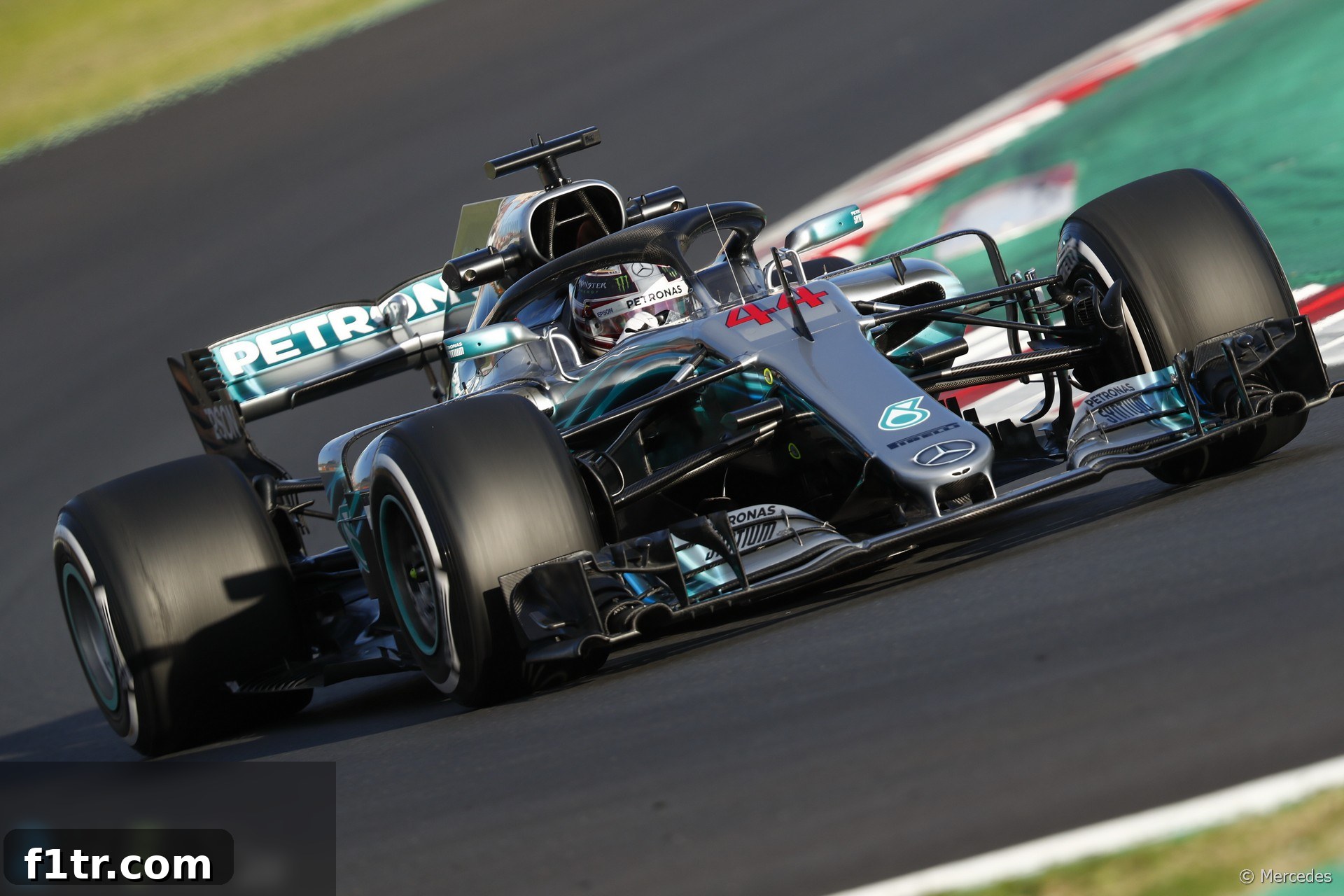
In the high-octane world of Formula One, where milliseconds dictate glory and defeat, the pursuit of perfection is a constant, almost mythical quest. Yet, for a titan of the sport like Lewis Hamilton, a multiple world champion, the concept of a flawless lap remains an elusive dream. Hamilton candidly admits he has never driven a truly perfect lap in Formula One, offering a fascinating perspective into the minds of elite athletes operating at the pinnacle of motorsport.
The Unattainable Ideal: Lewis Hamilton on the Quest for a Perfect Lap
During a revealing pre-season media session, RaceFans had the opportunity to ask Lewis Hamilton, the then four-time world champion, whether he believed he had ever achieved a ‘perfect’ lap in his illustrious Formula One career. His immediate and unequivocal response was a simple “no.” What followed was an enlightening discussion that delved deep into the very essence of elite competition and the relentless pursuit of improvement, explaining why, in his expert view, “you’re never going to get perfect” in F1.
“There’s nothing above Formula One. There’s no other class that’s better than this. If I was to perfect it, it would really suck, and I’d have to stop,” Hamilton articulated, highlighting the intrinsic motivation that drives him. This statement underscores a profound truth about top-tier sports: the challenge itself is the primary motivator. The day a competitor achieves absolute perfection is the day the sport loses its allure for them, as there would be no more room for growth or improvement. For a driver of Hamilton’s caliber, the unending quest for marginal gains and the continuous evolution of the sport are what keep him engaged and performing at an elite level.
The inherent dynamism of Formula One further complicates the pursuit of perfection. “But the great thing is you’re always challenged, the car is always evolving through the year. We pack on a couple of seconds in development through the year. Different weather, different weekends, different emotions, good days, bad days, right side of the bed, wrong side of the bed, all these different things are going on,” he elaborated. This paints a vivid picture of the multifaceted nature of F1. It’s not just about the driver or the car in isolation, but a complex interplay of engineering advancements, environmental factors, and even the human psychological state. A car’s performance profile can shift dramatically with upgrades, requiring drivers to constantly adapt their style. Weather conditions, from scorching sun to torrential rain, demand immediate adjustments in technique and strategy. Furthermore, a driver’s mental state – their emotions, their focus, their overall well-being – can subtly, yet significantly, impact their performance. Every variable creates a new permutation, ensuring that no two laps, even on the same circuit, are ever truly identical.
Delving into the specifics of driving, Hamilton emphasized the impossibility of executing every single part of a lap flawlessly. “You’ll never do a corner perfect. There’s not one corner in a pole lap that you’ve done perfect. You can always do it better. You look in the data and it’s like ‘damn, if I’d braked a little bit earlier, picked up my minimum speed, on the power earlier, I would have been ahead.’ But I strive to find that perfect lap, pole laps particularly those are the ones I’ve tried to get close. And it’s a great feeling when you get close. But then you get frustrated when you find out you could have been better.” This insight reveals the meticulous detail with which F1 drivers analyze their performance. Data telemetry provides an unfiltered, objective record of every input, every micro-adjustment. It’s a tool that consistently highlights areas for improvement, no matter how minute. The battle for pole position, often decided by fractions of a second, exemplifies this. A tiny adjustment in braking pressure, a fraction of a degree more steering lock, or a millisecond earlier on the throttle can collectively shave off critical hundredths. This eternal cycle of striving, achieving near-perfection, and then immediately identifying areas for further enhancement, is the essence of a Formula One driver’s existence. It’s a journey filled with the paradoxical blend of immense satisfaction from a strong performance and the immediate frustration of knowing that an even better outcome was just within reach, fueling the desire to return to the track and push the boundaries once more.
Gear Up for the 2018 F1 Season with RaceFans: Unprecedented Coverage
The anticipation is palpable; the long winter break is finally drawing to a close. Motorsport enthusiasts worldwide are buzzing as the 2018 F1 season is set to burst into life this weekend, commencing with the prestigious Australian Grand Prix at the iconic Albert Park circuit. This season holds particular excitement for us at RaceFans, promising a level of insight and engagement never before offered.
At RaceFans, our excitement for the dawn of the new Formula One season is at an all-time high, and for excellent reason. This year marks a significant milestone: for the very first time, we will have our own dedicated journalist on-site at almost every round of the championship. This strategic enhancement to our coverage promises readers a more intimate, immediate, and in-depth look into the paddock, the racing action, and the stories unfolding behind the scenes. Having a journalist physically present allows for direct observation, exclusive interviews, and a nuanced understanding that remote reporting, however diligent, simply cannot fully replicate. This is a testament to our unwavering commitment to bringing you the most comprehensive and engaging Formula One content possible, moving beyond headlines to deliver the true pulse of the sport.
However, the ambition to cover a globe-trotting sport like Formula One, with its 21-round world championship and additional testing sessions, comes with substantial logistical and financial challenges. “Why not the full season?” is a question we often encounter, and the answer is solely a matter of costs. The sheer magnitude of airfare and hotel fees involved in following the championship across multiple continents is astronomical. On top of these primary expenses, there are numerous other operational costs that RaceFans, as an independent publication, must diligently cover. This reality often necessitates difficult decisions regarding which races we can and cannot attend physically. Unfortunately, this situation applies to this weekend’s highly anticipated Australian Grand Prix. While we would ideally love to be on the ground for every single race, allocating the significant budget required to cover this one opening round would, regrettably, force us to miss multiple other crucial Grands Prix later in the year, impacting our overall season coverage. Our aim is to maximize our on-site presence across the calendar, even if it means making tough choices for certain events.
Despite these budgetary constraints for the Australian Grand Prix, rest assured that RaceFans remains fully committed to providing you with unparalleled coverage. We will still bring you all the breaking news, captivating insights, and stunning pictures directly from the paddock, leveraging our extensive network and resources. Our intention is to provide more and better coverage than ever before, ensuring you stay connected to every twist and turn of the 2018 Formula One season. Naturally, our overarching future goal is to grow and expand to the extent that we no longer have to make these kinds of challenging decisions. The encouraging news is that an ever-increasing number of you are reading, sharing links to, and supporting RaceFans. This growing community engagement and direct support are invaluable, fueling our confidence that we will indeed reach our goal of comprehensive, unhindered coverage in the very near future. Thank you for being a vital part of the RaceFans journey.
Daily F1 News Digest: Insights from Across the Web
Stay updated with our curated daily digest, featuring essential F1 news, insightful views, engaging features, and much more, sourced from hundreds of reputable sites across the web. Here’s a snapshot of today’s top stories that are shaping discussions in the Formula One world:
Grosjean eyes 2018 Le Mans seat, NASCAR drive ’50:50’ (Racer)
Formula One drivers often harbor ambitions beyond the Grand Prix circuit. Romain Grosjean is one such driver, actively exploring opportunities in endurance racing and even American stock car racing. His openness to tackling the legendary 24 Hours of Le Mans in 2018 highlights the diverse interests and challenges that appeal to these elite athletes, even amidst a demanding F1 schedule.
“Yes, Le Mans 24 Hours is one that I’m looking at. If there’s a great opportunity I may just jump in (this year). It would be five weekends in a row or something like that, but I’ve got to train for a triathlon first.”
Williams: Wrong to assume Kubica outperformed race drivers (Motorsport)
The return of Robert Kubica to an F1 car for testing sparked considerable excitement, leading to speculation about his performance relative to Williams’ contracted drivers, Lance Stroll and Sergey Sirotkin. This article from Motorsport.com addresses the complexities of interpreting test data, cautioning against drawing simplistic conclusions about driver performance based solely on lap times, especially during pre-season sessions where programs vary widely.
“I think you can look at the timesheet and go ‘wow, Mercedes are at the top’. That’s probably about right.”
STR: Honda letting us do things others wouldn’t (Autosport)
The partnership between Scuderia Toro Rosso and Honda for the 2018 season was one of the most talked-about developments. Autosport reports on the unique level of collaboration and flexibility Honda is offering STR, a stark contrast to previous engine supplier relationships where teams often had less input into power unit development and mapping. This close working relationship could be a significant factor in STR’s performance.
“Before, we got the mappings, everything was in a black box and we couldn’t do anything. Even if we said ‘maybe this is better’ they said ‘take it and that’s it’.”
McLaren: We Won’t Follow Ferrari, Corvette Into the Electric Future (Bloomberg)
As the automotive industry pivots towards electrification, many traditional sports car manufacturers are exploring hybrid and fully electric powertrains. McLaren, however, is taking a more conservative stance, as reported by Bloomberg. This piece delves into McLaren’s philosophy on performance, tradition, and the emotional connection customers have to the sound and feel of conventional combustion engines, setting them apart from some rivals in their future product strategy.
“To be quite frank, whatever thoughts I’ve got will be quite uneducated. I’m a traditionalist. I love to hear the sound of an engine going around a track. Formula E doesn’t provide that.”
Boycotting Russian Grand Prix not an option for Formula One teams (The Times)
Sport often finds itself entangled in geopolitical events, and the 2018 Russian Grand Prix was no exception amidst rising international tensions. The Times covers the difficult position Formula One teams faced regarding a potential boycott, highlighting the commercial and contractual obligations that often outweigh political pressures for global sporting entities. It explores the broader implications of such events on major international sports competitions.
“Formula One is bracing itself for a storm of criticism as the row over the Salisbury poisonings threatens to overshadow Russia’s summer of sport. The World Cup has already become embroiled in the diplomatic argument, with Britain warning that no government ministers or royalty will follow the England team to Russia.”
Got a valuable tip for a link you think should feature in the next RaceFans round-up? We’d love to hear from you!
- Contact RaceFans here with your suggestions
Social Media Spotlight: Engaging with the F1 World
Social media platforms like Twitter and Instagram are crucial for real-time engagement and sharing key moments from the world of Formula One. Here’s a notable post that captured attention:
The opportunity of a lifetime! Introducing the young boys and girls who will make history as the first ever #F1 Grid Kids at the 2018 #AusGP. pic.twitter.com/RBgJdZ102P
— F1 Australian Grand Prix (@ausgrandprix) March 18, 2018
This heartwarming tweet from the F1 Australian Grand Prix account introduces the inaugural “Grid Kids,” a significant change from the long-standing “Grid Girls” tradition. This initiative aimed to provide young motorsport enthusiasts with an unforgettable experience, allowing them to stand alongside their racing heroes on the grid, thus inspiring the next generation of F1 talent and fans.
- Looking for more official F1 accounts to follow and deepen your social media engagement? Explore our comprehensive F1 Twitter Directory for a curated list of top accounts.
Comment of the Day: Force India’s Enduring Rivalry
Intra-team rivalries are a classic element of Formula One, often providing as much drama as the championship battle itself. One of the most talked-about duos was the Force India pairing. The question remains: have the Force India drivers learned to ease up on each other during the off-season, or will their competitive spirit ignite once more?
“I think the Force India drivers will still be at it this season. Maybe not to the extent of squeezing each other in to walls and throwing away points for the team, as I think they’ve both matured from those experiences, but I expect Canada 2017 kind of races between them.
They’ll both be pressurising the team for orders and different strategies to beat each other, and there is no way they would do each other any favours. There will still be a lot of off-track tensions between the two.”
@Todfod
This insightful comment from @Todfod perfectly encapsulates the nuanced dynamics of teammates who are fierce competitors. While maturity might prevent outright collisions, the underlying drive to outperform each other – through strategic requests, aggressive on-track maneuvers, and subtle off-track tensions – is a powerful force that adds an extra layer of excitement to their races. It’s a delicate balance for any team principal to manage, ensuring healthy competition doesn’t devolve into detrimental conflict.
Now, it’s your turn! Share your predictions and give your verdict on the season ahead here:
- The 2018 F1 season in 20 questions
From the RaceFans Forum: Attending the Bahrain Grand Prix
Our forum is a vibrant community where F1 fans connect, share experiences, and get advice. We often hear from those attending popular races, but the Bahrain Grand Prix attendees are a bit rarer. If you’re planning to be there, we’d love to hear from you!
- We seldom hear from anyone attending the Bahrain Grand Prix, so if you’re attending do let us know here and share your anticipation and plans!
Happy Birthday! Celebrating with RaceFans
Today, our RaceFans community doesn’t have any recorded birthdays. However, we love to celebrate with our readers!
If you’d like a birthday shout-out in our daily round-up, make sure to tell us when yours is via the contact form or by adding your details to our dedicated list here. Don’t miss out on your special day being highlighted in the F1 world!
On This Day in F1 History: Keke Rosberg’s Unforgettable Win
Looking back through the annals of Formula One history, we often uncover fascinating stories and pivotal moments. Today marks a significant anniversary in the sport’s rich past:
- Keke Rosberg, the formidable Finnish driver, secured a memorable victory in the non-championship BRDC International Trophy on this very day in 1978. Driving a Theodore in exceptionally challenging, very wet conditions, Rosberg showcased his immense talent and car control. He expertly navigated the treacherous track to claim the top spot, while legendary Brazilian driver Emerson Fittipaldi finished a commendable second for Copersucar, marking a notable result for the underdog team in a truly demanding race. This event serves as a reminder of the diverse and often unpredictable nature of early Formula One racing, where non-championship events played a vital role.