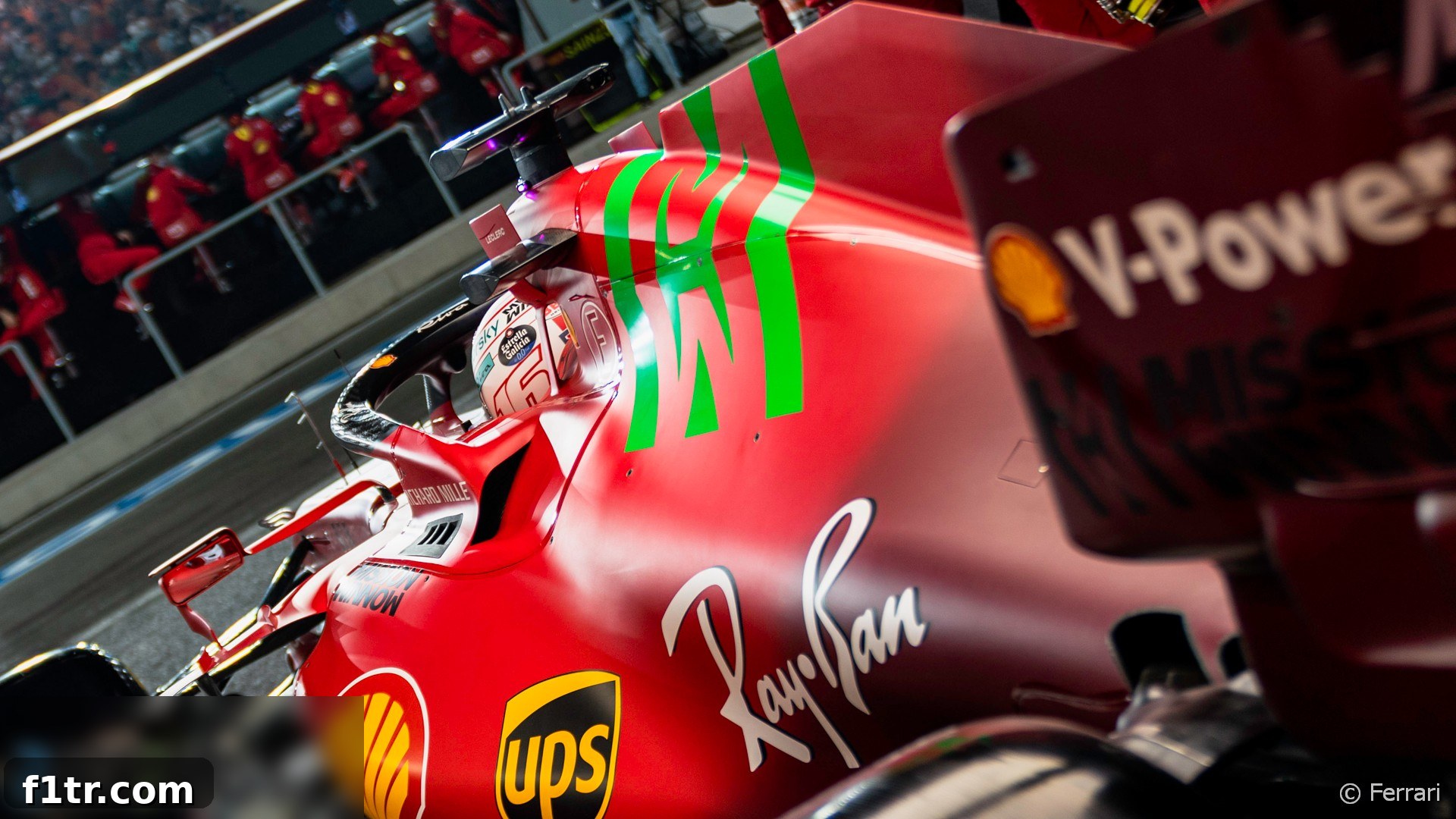
In the dynamic and often speculative world of Formula 1, few partnerships are as storied and enduring as that between Scuderia Ferrari and Philip Morris International (PMI). For decades, this alliance, evolving from the iconic Marlboro branding to the more contemporary Mission Winnow initiative, has been a cornerstone of Ferrari’s commercial operations. However, as their latest agreement approached its conclusion this year, widespread speculation erupted regarding its future, prompting a direct inquiry to Scuderia Ferrari CEO Mattia Binotto after the Brazilian Grand Prix.
Advert | Become a Supporter & go ad-free
Binotto’s response, carefully phrased yet immediately prone to misinterpretation, ignited a flurry of dramatic headlines across various media outlets. He stated, “We are still discussing with PMI. It is very likely PMI will remain, [but] maybe not as a title sponsor. So maybe, let’s see. It can depend on what do you mean by Mission Winnow, on the car or not. You mentioned stickers, so we’re discussing [activation] rights. It will be announced as soon as we are ready to do it.”
This nuanced statement was quickly distorted by some quarters, particularly by those not present at the conference, who ‘scraped’ the quotes without the benefit of context. This led to exaggerated claims of Ferrari facing a monumental loss of up to $125 million in annual income, plastered across headlines like ‘Ferrari to lose historic Philip Morris sponsorship.’ Such interpretations, however, demonstrably misrepresented Binotto’s calm and collected assessment, which hinted at continued discussions and a likely, albeit potentially restructured, future for the partnership.
The True Value of the Ferrari-PMI Partnership Beyond the Headlines
Industry insiders and those familiar with the intricacies of high-level F1 commercial deals suggest that the Ferrari-PMI agreement is valued closer to $100 million per year. More importantly, the nature of this partnership has evolved significantly over time. Since 2011, PMI has leveraged its prestigious association with Ferrari not primarily for direct consumer marketing – a strategy increasingly constrained by advertising regulations on tobacco products – but as a powerful business-to-business (B2B) platform. This involves using the relationship to foster connections and provide hospitality opportunities for key trade customers in various allied fields.
‘Mission Winnow’ itself is a testament to this evolution. It is a corporate initiative, a message about progress, innovation, and pushing boundaries, rather than a direct product slogan. There are compelling reasons why these invaluable B2B benefits, crucial for PMI’s broader corporate strategy, could and should continue irrespective of explicit branding on the F1 car. Modern sponsorship in Formula 1 has transcended mere sticker marketing; its primary benefits are often derived from deep-seated personal relationships and strategic business platforms cultivated over years of collaboration.
The concept of title sponsorship in F1 has also undergone a gradual transformation. While once ubiquitous, the degree to which a team’s name is directly linked to a commercial entity has diminished. Currently, only a third of the grid bears a commercial entity’s name in its official team title, excluding instances of proprietary ownership such as Red Bull or Haas, where the company directly owns the team. This reflects a broader trend where the value proposition for sponsors is no longer solely tied to prominent nomenclature.
A Rich History: The Evolution of F1 Title Sponsorship and Ferrari’s Iconic Alliance
Commercial title sponsorship first appeared in Formula 1 in 1968, pioneered by Team Gunston, a local cigarette brand, in South Africa. This innovation was swiftly adopted by other teams, most notably Gold Leaf Team Lotus, named after a British tobacco label. For decades, tobacco products were the most prominent beneficiaries of F1’s global reach, using the sport as an unparalleled platform to put their brands before billions of eyeballs worldwide. However, as global legislative scrutiny intensified and outright bans on tobacco advertising proliferated, the prevalence of naming rights tied to such products inevitably decreased. Similar regulatory pressures have also impacted sponsorships from liquor and other regulated industries.
Advert | Become a RaceFans supporter andgo ad-free
The Ferrari-PMI relationship, spanning over 30 years, stands as the oldest and arguably most iconic partnership on the F1 grid. While formalised as a title deal in 1997, their ties trace back to the early eighties, cementing its legendary status within both Formula 1 and the wider sporting landscape. This longevity and mutual benefit underscore a relationship far more profound than a simple financial transaction, making the prospect of its outright termination highly unlikely.
The question of how Ferrari could even begin to replace such an iconic title deal with another brand, or what the impact of any income reduction might be, whether from a new PMI deal or a different entity, often arises. However, it’s crucial to acknowledge that Ferrari, as a publicly listed company, operates with meticulous financial planning. The team has long been aware of the potential for the partnership not to be extended in its current form and would have undoubtedly made robust contingency plans for such an eventuality. Anything less would constitute a severe breach of fiduciary duty. Indeed, Ferrari’s cautionary statements regularly highlight the inherent commercial risks associated with Formula 1, indicating a proactive approach to potential changes.
The Budget Cap: Ferrari’s Shield Against Revenue Fluctuations
Perhaps the most significant, yet frequently overlooked, factor in this entire discussion is the advent of Formula 1’s budget cap. Introduced this year, the budget cap fundamentally reshapes the financial landscape of the sport, rendering any reduction in sponsorship income significantly less impactful on on-track performance than in previous eras. Before the cap’s introduction, top teams like Ferrari operated with annual budgets nearing $500 million, encompassing racing operations, marketing, hospitality, and power unit development. Of this colossal sum, approximately $300 million was directly allocated to the racing operation.
Under the 2021 financial regulations, the operational budget for racing has plummeted to $145 million, with further reductions planned to $140 million in 2022 and $135 million in 2023. These drastically reduced budgets more than compensate for any potential loss or restructuring of sponsorship revenues, which could, in any event, be replaced by other partnerships. The strategic cushioning against potential sponsorship losses was a primary driver behind the implementation of the budget cap, a measure that Ferrari itself agreed to. The upcoming 2022 season is poised to demonstrate the wisdom and foresight of such financial precautions, proving that a diversified and reduced budget makes teams far more resilient to commercial fluctuations.
Indications of Ferrari’s proactive approach to sponsorship diversity can also be seen in recent developments, such as the signing of Amazon subsidiary AWS as a partner. This raises intriguing possibilities for future branding – could we see ‘Scuderia Ferrari AWS’ in 2022? While ‘Mission Winnow’ may well cease to be the title partner next year, and Ferrari might even revert to its traditional scarlet hue instead of what has become known as ‘Marlboro Red’, the notion that Ferrari’s performance will suffer directly as a result is a significant overstatement. Even entering the season as simply ‘Scuderia Ferrari’ remains a distinct possibility, a testament to the brand’s intrinsic power and appeal.
Advert | Become a RaceFans supporter andgo ad-free
In conclusion, while the shifting landscape of sponsorship deals in Formula 1 naturally attracts considerable attention and speculation, Ferrari’s long-standing partnership with Philip Morris International is undergoing an evolution, not an evaporation. Mattia Binotto’s statements, when properly understood, point towards a continued relationship, albeit potentially in a revised form. Crucially, the implementation of the budget cap has fundamentally altered the financial dynamics of F1, providing a robust buffer against any income changes. Ferrari’s strategic planning, combined with the sport’s new financial regulations, ensures that the legendary Scuderia is well-prepared for the future, with its on-track performance insulated from the commercial adjustments of its longest-standing partner.
News Focus
- No happy ending for Ricciardo’s made-for-Netflix redemption arc
- No ‘two alphas’ for Red Bull as team forms its longest-running driver line-up
- Will Mercedes come to the rescue of Ocon’s career a third time?
- How the midfield’s hottest team mate rivalry boiled over
- Petty officialdom or deserved decisions? Five drivers stripped of wins in 2024
Browse all News Focus articles