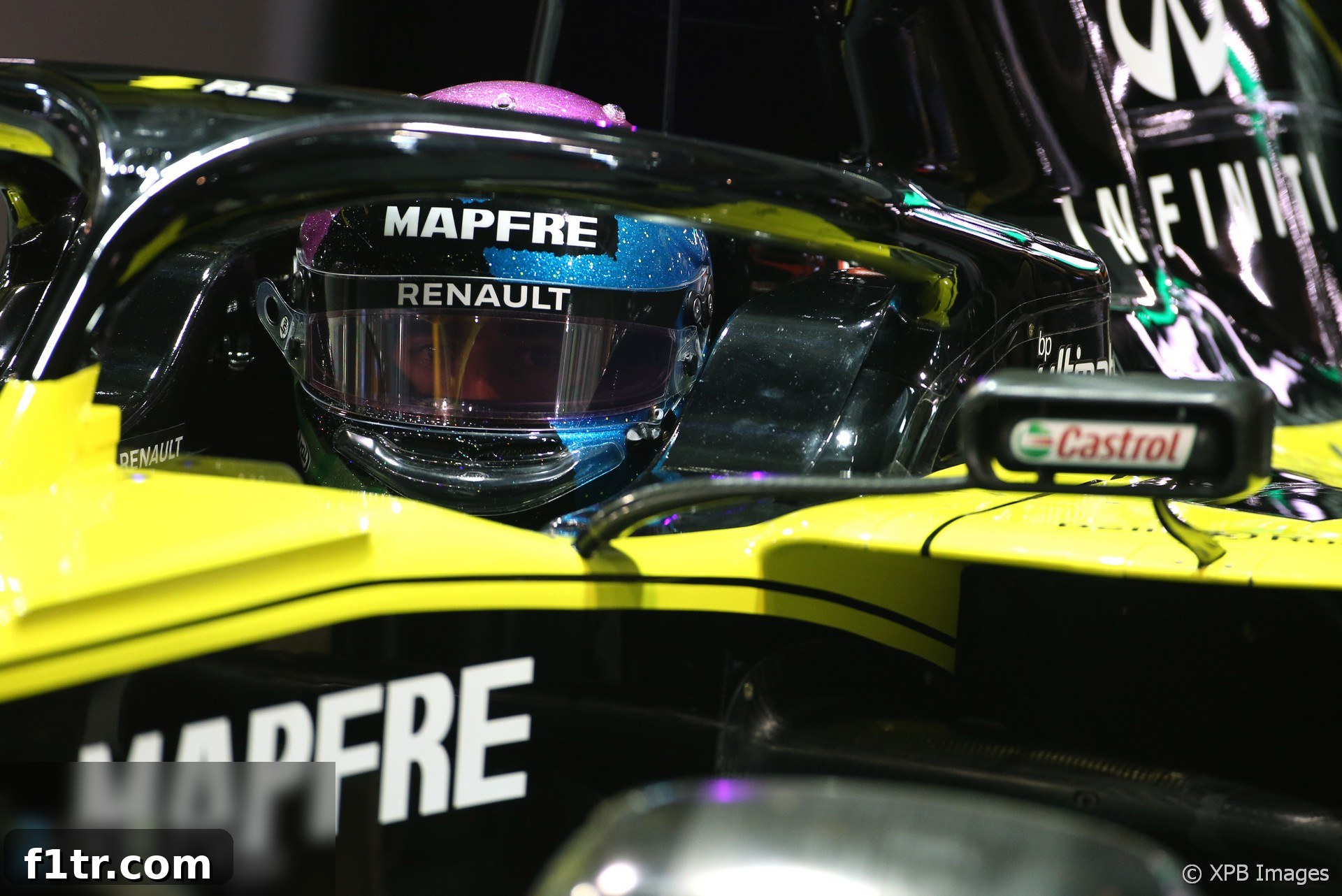
The Disgrace of Singapore: Daniel Ricciardo’s Frustration with F1’s Unyielding MGU-K Rule
The world of Formula 1 is a relentless arena where precision, power, and adherence to intricate regulations dictate success. In 2019, the Singapore Grand Prix weekend became a stark reminder of this unforgiving reality for Daniel Ricciardo. The popular Australian driver, then competing for Renault, faced a crushing disqualification from qualifying results, a decision that left him feeling “disgraced” and profoundly disillusioned with the sport’s stewarding.
The incident unfolded during the high-stakes qualifying session, where Ricciardo had demonstrated strong pace, initially securing a respectable position on the grid. However, post-session scrutiny revealed a technical infringement related to his car’s MGU-K (Motor Generator Unit – Kinetic). The stewards ruled that his MGU-K had momentarily exceeded the maximum permitted power delivery during his second-fastest lap in Q2. This seemingly minor infraction triggered a severe penalty: immediate disqualification from qualifying and a forced start from the very back of the grid for the demanding Singapore street race.
For Ricciardo, the news was a bitter pill, leading to “a very restless night’s sleep.” Reflecting on the penalty, he questioned its severity: “Trying to go through it in my head why a penalty would be so harsh,” Ricciardo told reporters. His core argument revolved around the nature of the infringement itself, emphasizing its fleeting and isolated character. “For me, it happened on one occurrence on one lap. If it was happening on the same corner every lap for the whole session I would not complain at all.”
This perspective highlighted a common source of frustration among drivers and teams regarding technical regulations versus on-track racing incidents. Ricciardo drew a parallel to track limits, a more easily understood offense where gaining an advantage typically results in the deletion of the specific lap time. “But it’s like track limits you go off, gain an advantage, delete that lap. We didn’t even gain an advantage from this yet they delete the whole session. So I was disgraced by that and voiced my opinion, I’ll keep voicing it.”
His exasperation was palpable as he contrasted the FIA’s approach to racing incidents with their technical enforcement. “They’re doing great things on track, letting us race and all that. But then what’s the point of not giving penalties on track for then giving a massive penalty for something that’s out of my control?” This sentiment underscored a deeper debate within Formula 1: the balance between fostering exciting racing and maintaining the strict technological parity mandated by the rulebook.
Renault’s investigation into the matter corroborated Ricciardo’s feeling that no material advantage was gained. The team attributed the excess power delivery to contact with a kerb, a common occurrence on street circuits like Singapore. Astonishingly, the infringement lasted an almost incomprehensibly brief duration: a mere 0.000001 seconds. Despite the minute nature of the technical breach, the regulations left no room for interpretation or leniency. Renault considered an appeal but ultimately decided against it, feeling that the stewards were unwilling to listen. Ricciardo lamented, “They said it was like they were talking to people that didn’t care to listen, so they didn’t think it was worth appealing.” This indicated a perceived inflexibility within the regulatory body, leaving the team with little recourse.
The repercussions for Ricciardo were immediate and profound. “The decision literally ruined my weekend,” he stated, reflecting the immense psychological toll. Starting from the very back of the grid on a circuit notorious for its difficulty in overtaking meant his chances of scoring points were virtually extinguished before the race even began. He ultimately finished a frustrating 14th, a testament to the limited opportunities available when handicapped by such a severe penalty. His sardonic remark, “I feel like they should pay for my business class ticket back. So anyway it’s a bit of a waste of time coming here now,” perfectly encapsulated his utter disappointment and the feeling of a weekend effectively sabotaged by a technicality.
This incident ignited a wider discussion about the interpretation and enforcement of Formula 1’s technical regulations. While the sport prides itself on being the pinnacle of automotive technology, pushing boundaries and demanding absolute precision from its competitors, incidents like Ricciardo’s raise important questions about proportionality and fairness. Should a microsecond-long, accidental power spike, especially one confirmed by the team to offer no discernible performance benefit, warrant such a devastating penalty? The FIA’s stance, historically, has been to maintain zero tolerance for technical breaches to prevent teams from seeking even the slightest grey areas for performance gain. This uncompromising approach ensures a level playing field but can occasionally lead to outcomes that feel harsh to those directly affected.
The MGU-K, a complex component of the hybrid power unit, is designed to recover kinetic energy during braking and convert it into electrical energy, which can then be deployed for extra power. Its operation is intricately linked to numerous sensors and control systems. An unexpected jolt from a kerb could, in theory, cause a momentary surge or glitch, pushing it fractionally beyond its permitted limits without a driver or even the team having direct, real-time control to prevent it. This highlights the double-edged sword of advanced technology in F1: while it propels the sport forward, it also creates an environment where microscopic anomalies can have colossal consequences.
Ricciardo’s frustration echoed a sentiment often felt by drivers who find their efforts undone by technical minutiae beyond their direct influence. Unlike a driving error, which is directly attributable to the driver, a technical infraction stemming from a split-second mechanical or electronic glitch can feel particularly unjust. It pits the human element of racing, the driver’s skill and effort, against the unyielding, binary nature of technical compliance. The consistency of stewarding in F1 is a perennial topic of debate, and while on-track incidents often generate heated discussions, technical disqualifications like this one provide a different dimension to the argument, focusing on the literal interpretation of highly complex rules.
Ultimately, Daniel Ricciardo’s disqualification at the 2019 Singapore Grand Prix remains a poignant example of the uncompromising nature of Formula 1 regulations. It underscored the fine line between innovation and compliance, the immense pressure on teams to operate within the strictest parameters, and the profound impact a seemingly minor technicality can have on a driver’s weekend, morale, and even their season. While the sport continues to evolve, the debate surrounding the severity and application of such technical penalties is likely to endure, ensuring that the human element of frustration remains as much a part of the F1 narrative as the pursuit of ultimate speed.
2019 F1 Season Insights & Related Articles
- Crying in the Melbourne car park at 2019 grand prix was my career low – Ocon
- McLaren Racing reports reduced £71 million loss in 2019
- Kvyat: Hockenheim podium last year was “my biggest achievement” so far
- How the FIA’s new encrypted fuel flow meter targets Ferrari’s suspected ‘aliasing’ trick
- “He smashed my office door”: 23 must-see moments from ‘Drive to Survive’ season two
Browse all 2019 F1 season articles