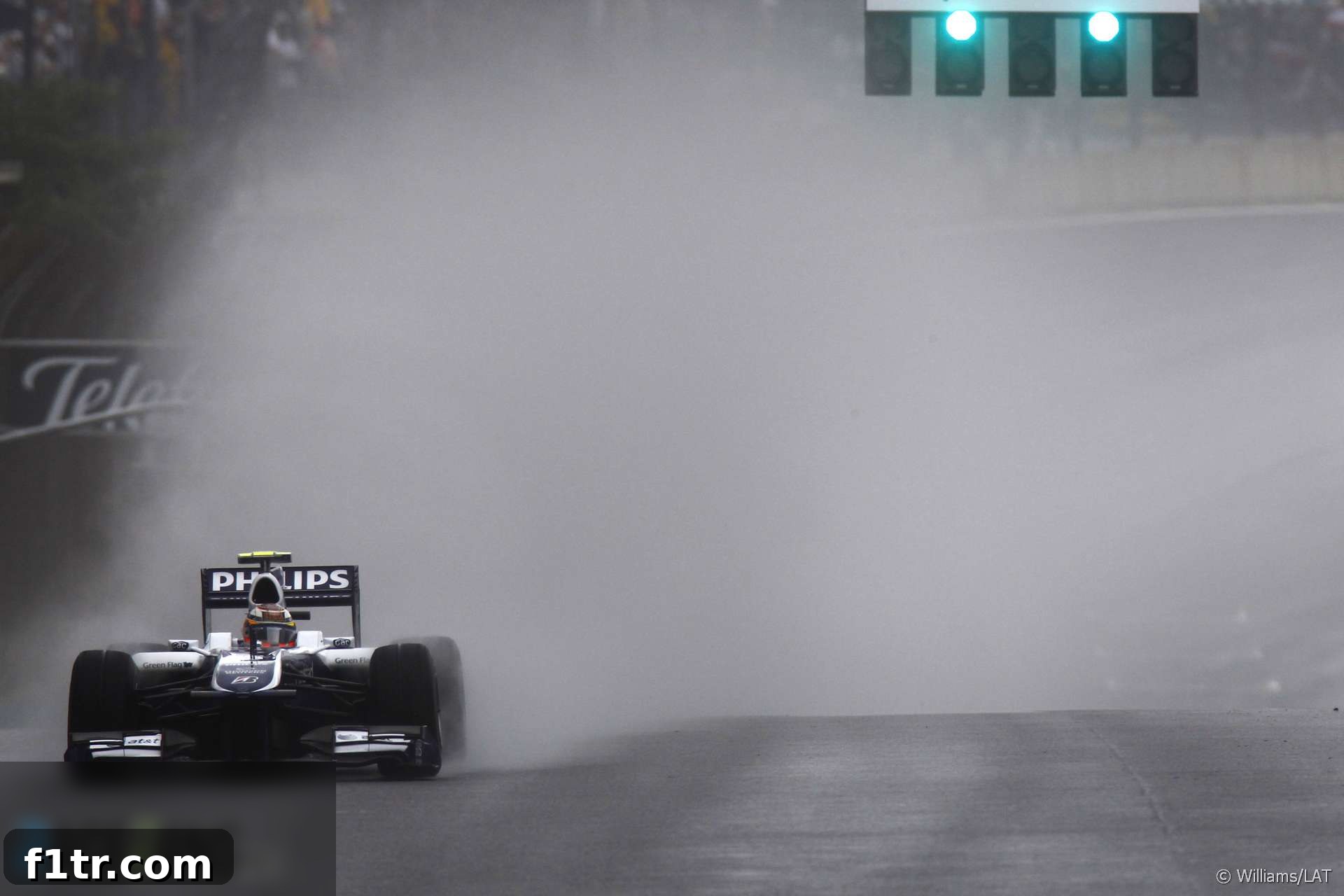
In a qualifying session that unfolded with dramatic shifts in track conditions, Nico Hulkenberg delivered a performance for the ages at the Brazilian Grand Prix. His maiden pole position was not merely a display of raw speed but a masterclass in timing and adaptation, perfectly exploiting the evolving conditions to etch his name into Formula 1 history. This unexpected triumph, especially for a rookie driver and the Williams team, sent shockwaves through the paddock and set the stage for a thrilling race weekend.
Advert | Become a Supporter & go ad-free
A Qualifying Masterclass: Timing and Precision
The third qualifying segment (Q3) at Interlagos was defined by a rapidly drying track. With every passing minute, the asphalt offered progressively more grip, and crucially, it became easier for drivers to maintain optimal tyre temperatures. It was a high-stakes gamble for all competitors, but Nico Hulkenberg, in only his 18th Grand Prix start, played his hand with breathtaking precision.
The young German began his final, decisive lap with mere seconds remaining on the session clock – a strategy that demanded nerves of steel and impeccable execution. Yet, the truly astonishing aspect of his performance was that even his penultimate lap, a blistering 1’15.462, was quick enough to secure pole position. This demonstrates a consistent and profound understanding of the conditions, rather than a single fluke.
This perfectly timed final run goes a long way in explaining his colossal 1.1-second advantage over second-placed Sebastian Vettel. To put this into perspective, the Williams FW32 had been struggling significantly in dry practice sessions, often lagging behind the front-runners by a similar margin. Hulkenberg’s ability to unlock such pace when it mattered most underscored his exceptional talent in tricky conditions. It wasn’t just about being fast; it was about being fast at precisely the right moment on a rapidly improving circuit.
The Championship Contenders’ Conundrum
While Hulkenberg’s audacious approach paid dividends, the championship protagonists faced a different calculus. With the title fight finely balanced, drivers like Sebastian Vettel, Mark Webber, Lewis Hamilton, and Fernando Alonso simply couldn’t afford the same level of risk. A single misstep, a spin, or a compromised lap could have seen them relegated to the middle of the top ten, potentially derailing their championship aspirations before the race even began. Their strategy, while still pushing the limits, likely involved a degree more caution, ensuring a solid grid position rather than gambling for outright pole in such volatile conditions.
However, none of this diminishes the sheer brilliance of Hulkenberg’s achievement. It was an absolutely top-drawer performance from the young driver. Further illustrating his dominance, his seasoned teammate, Rubens Barrichello – a veteran of countless Interlagos races and known for his wet-weather prowess – was a significant 1.733 seconds slower in Q3. This stark contrast highlights that Hulkenberg’s performance transcended mere car capability; it was a testament to his innate skill and ability to extract every ounce of performance from his machinery in challenging circumstances.
Unraveling the Wet Weather Setup Theory
The immediate question that arose was whether Hulkenberg’s Williams was equipped with a specialized wet-weather setup that gave him an unfair advantage. However, this theory appears highly unlikely when examining the progression of the qualifying sessions. Q1 and Q2 were considerably wetter than the decisive Q3. If a dedicated wet setup were the primary factor, Hulkenberg would surely have demonstrated a similar, if not greater, advantage in the earlier, much wetter phases of qualifying. His more moderate performance in Q1 and Q2, followed by a dramatic leap in Q3, points away from a static setup advantage and towards his incredible ability to adapt and perform as the conditions transitioned from full wet to damp/drying. It suggests a masterful command of the car on intermediate tyres on a circuit offering variable grip levels, a scenario that rewards driver intuition and adaptability above all else.
Qualifying Times in Full: A Detailed Look at the Grid
| Driver | Car | Q1 | Q2 (vs Q1) | Q3 (vs Q2) | |
| 1 | Nico Hulkenberg | Williams-Cosworth | 1’20.050 | 1’19.144 (-0.906) | 1’14.470 (-4.674) |
| 2 | Sebastian Vettel | Red Bull-Renault | 1’19.160 | 1’18.691 (-0.469) | 1’15.519 (-3.172) |
| 3 | Mark Webber | Red Bull-Renault | 1’19.025 | 1’18.516 (-0.509) | 1’15.637 (-2.879) |
| 4 | Lewis Hamilton | McLaren-Mercedes | 1’19.931 | 1’18.921 (-1.010) | 1’15.747 (-3.174) |
| 5 | Fernando Alonso | Ferrari | 1’18.987 | 1’19.010 (+0.023) | 1’15.989 (-3.021) |
| 6 | Rubens Barrichello | Williams-Cosworth | 1’19.799 | 1’18.925 (-0.874) | 1’16.203 (-2.722) |
| 7 | Robert Kubica | Renault | 1’19.249 | 1’18.877 (-0.372) | 1’16.552 (-2.325) |
| 8 | Michael Schumacher | Mercedes | 1’19.879 | 1’18.923 (-0.956) | 1’16.925 (-1.998) |
| 9 | Felipe Massa | Ferrari | 1’19.778 | 1’19.200 (-0.578) | 1’17.101 (-2.099) |
| 10 | Vitaly Petrov | Renault | 1’20.189 | 1’19.153 (-1.036) | 1’17.656 (-1.497) |
| 11 | Jenson Button | McLaren-Mercedes | 1’19.905 | 1’19.288 (-0.617) | |
| 12 | Kamui Kobayashi | Sauber-Ferrari | 1’19.741 | 1’19.385 (-0.356) | |
| 13 | Nico Rosberg | Mercedes | 1’20.153 | 1’19.486 (-0.667) | |
| 14 | Jaime Alguersuari | Toro Rosso-Ferrari | 1’20.158 | 1’19.581 (-0.577) | |
| 15 | Sebastien Buemi | Toro Rosso-Ferrari | 1’20.096 | 1’19.847 (-0.249) | |
| 16 | Nick Heidfeld | Sauber-Ferrari | 1’20.174 | 1’19.899 (-0.275) | |
| 17 | Vitantonio Liuzzi | Force India-Mercedes | 1’20.592 | 1’20.357 (-0.235) | |
| 18 | Adrian Sutil | Force India-Mercedes | 1’20.830 | ||
| 19 | Timo Glock | Virgin-Cosworth | 1’22.130 | ||
| 20 | Jarno Trulli | Lotus-Cosworth | 1’22.250 | ||
| 21 | Heikki Kovalainen | Lotus-Cosworth | 1’22.378 | ||
| 22 | Lucas di Grassi | Virgin-Cosworth | 1’22.810 | ||
| 23 | Christian Klien | HRT-Cosworth | 1’23.083 | ||
| 24 | Bruno Senna | HRT-Cosworth | 1’23.796 |
Advert | Become a RaceFans supporter andgo ad-free
Intra-Team Battles and Driver Comparisons
Beyond Hulkenberg’s stellar performance, the qualifying session revealed several interesting intra-team dynamics and individual struggles.
At Mercedes, the balance of power appeared to tip in Michael Schumacher’s favour for a change, with the seven-time world champion out-qualifying his teammate Nico Rosberg. However, an unhappy Rosberg later claimed he was impeded by Sebastien Buemi in Q2, which could explain some of his deficit. This incident potentially had significant ramifications for Rosberg’s grid position, forcing him to start further down the field than his pace might have otherwise allowed.
Felipe Massa, competing in front of his home crowd, had a particularly challenging session. He should perhaps count his lucky stars that Rosberg encountered traffic, as it may have been the very reason he scraped into Q3. Even so, the huge gap between Massa and his Ferrari teammate Fernando Alonso made for grim reading. This performance disparity at such a crucial point in the championship, especially at Massa’s home race, raised questions about his form and confidence.
Further down the grid, Christian Klien made a notable return to HRT, managing to out-qualify Bruno Senna. Senna, however, reported a peculiar strategy decision: he did not use a new set of intermediate tyres later in Q1. This seemed a strange choice, especially as tomorrow’s race was largely expected to be dry, negating any perceived need for the team to save a set of intermediates for race day. Such a decision could have significantly hampered Senna’s ability to progress beyond the first session.
| Team | Driver | Lap time | Gap | Lap time | Driver | Round |
| McLaren | Jenson Button | 1’19.288 | +0.367 | 1’18.921 | Lewis Hamilton | Q2 |
| Mercedes | Michael Schumacher | 1’18.923 | -0.563 | 1’19.486 | Nico Rosberg | Q2 |
| Red Bull | Sebastian Vettel | 1’15.519 | -0.118 | 1’15.637 | Mark Webber | Q3 |
| Ferrari | Felipe Massa | 1’17.101 | +1.112 | 1’15.989 | Fernando Alonso | Q3 |
| Williams | Rubens Barrichello | 1’16.203 | +1.733 | 1’14.470 | Nico Hulkenberg | Q3 |
| Renault | Robert Kubica | 1’16.552 | -1.104 | 1’17.656 | Vitaly Petrov | Q3 |
| Force India | Adrian Sutil | 1’20.830 | +0.238 | 1’20.592 | Vitantonio Liuzzi | Q1 |
| Toro Rosso | Sebastien Buemi | 1’19.847 | +0.266 | 1’19.581 | Jaime Alguersuari | Q2 |
| Lotus | Jarno Trulli | 1’22.250 | -0.128 | 1’22.378 | Heikki Kovalainen | Q1 |
| HRT | Christian Klien | 1’23.083 | -0.713 | 1’23.796 | Bruno Senna | Q1 |
| Sauber | Nick Heidfeld | 1’19.899 | +0.514 | 1’19.385 | Kamui Kobayashi | Q2 |
| Virgin | Timo Glock | 1’22.130 | -0.680 | 1’22.810 | Lucas di Grassi | Q1 |
Advert | Become a RaceFans supporter andgo ad-free
Ultimate Laps: Unlocking True Potential
The concept of an ‘ultimate lap’ provides fascinating insight into a driver’s potential. It is calculated by combining a driver’s fastest sector times from across all their laps in a session. In essence, it represents the theoretical best lap a driver *could* have achieved if they had strung together their quickest individual sections.
Another key aspect of Hulkenberg’s extraordinary performance was the remarkable consistency and proximity of his actual lap time to his ultimate lap. All three of his sector times were either his absolute best or incredibly close to it. His fastest Q3 lap of 1’14.470 was within a mere hundredth or so of his theoretical ultimate lap of 1’14.454. This minuscule deficit of 0.016 seconds indicates an almost flawless, perfectly executed lap, extracting virtually every ounce of performance available on that particular run.
In contrast, the championship contenders behind him all showed larger deficits between their actual qualifying times and their ultimate laps. This suggests that while they possessed the raw speed to go quicker (as evidenced by their ultimate lap times), they were unable to string together a perfectly clean, optimal lap under the immense pressure and rapidly changing conditions. Their greater conservatism or slight errors on their final runs meant they left more time on the table than Hulkenberg, further highlighting the sheer perfection of the rookie’s pole effort.
| Position | No. | Driver | Ultimate lap | Gap | Deficit to best | Actual position |
| 1 | 10 | Nico Hulkenberg | 1’14.454 | 0.016 | 1 | |
| 2 | 5 | Sebastian Vettel | 1’14.763 | 0.309 | 0.756 | 2 |
| 3 | 6 | Mark Webber | 1’14.866 | 0.412 | 0.771 | 3 |
| 4 | 2 | Lewis Hamilton | 1’15.142 | 0.688 | 0.605 | 4 |
| 5 | 8 | Fernando Alonso | 1’15.629 | 1.175 | 0.360 | 5 |
| 6 | 9 | Rubens Barrichello | 1’15.927 | 1.473 | 0.276 | 6 |
| 7 | 11 | Robert Kubica | 1’16.047 | 1.593 | 0.505 | 7 |
| 8 | 3 | Michael Schumacher | 1’16.348 | 1.894 | 0.577 | 8 |
| 9 | 7 | Felipe Massa | 1’16.616 | 2.162 | 0.485 | 9 |
| 10 | 12 | Vitaly Petrov | 1’17.074 | 2.620 | 0.582 | 10 |
| 11 | 4 | Nico Rosberg | 1’18.936 | 4.482 | 0.550 | 13 |
| 12 | 1 | Jenson Button | 1’19.246 | 4.792 | 0.042 | 11 |
| 13 | 23 | Kamui Kobayashi | 1’19.246 | 4.792 | 0.139 | 12 |
| 14 | 22 | Nick Heidfeld | 1’19.494 | 5.040 | 0.405 | 16 |
| 15 | 16 | Sebastien Buemi | 1’19.545 | 5.091 | 0.302 | 15 |
| 16 | 17 | Jaime Alguersuari | 1’19.557 | 5.103 | 0.024 | 14 |
| 17 | 15 | Vitantonio Liuzzi | 1’19.939 | 5.485 | 0.418 | 17 |
| 18 | 14 | Adrian Sutil | 1’20.685 | 6.231 | 0.145 | 18 |
| 19 | 24 | Timo Glock | 1’21.958 | 7.504 | 0.172 | 19 |
| 20 | 18 | Jarno Trulli | 1’22.134 | 7.680 | 0.116 | 20 |
| 21 | 19 | Heikki Kovalainen | 1’22.281 | 7.827 | 0.097 | 21 |
| 22 | 25 | Lucas di Grassi | 1’22.781 | 8.327 | 0.029 | 22 |
| 23 | 20 | Christian Klien | 1’23.007 | 8.553 | 0.076 | 23 |
| 24 | 21 | Bruno Senna | 1’23.527 | 9.073 | 0.269 | 24 |
Advert | Become a RaceFans supporter andgo ad-free
The Significance of a Rookie Pole
Nico Hulkenberg’s pole position at the 2010 Brazilian Grand Prix was more than just a qualifying statistic; it was a powerful statement. For a rookie, it demonstrated immense natural talent, incredible composure under pressure, and a remarkable ability to read and react to rapidly changing conditions – qualities that often take years for drivers to hone. For the Williams team, it was a much-needed morale boost and a testament to their enduring spirit and ability to occasionally punch above their weight, even in a season where they weren’t consistently challenging for top honours. This pole position provided a fascinating twist to the championship battle, placing a dark horse at the very front of the grid, capable of influencing the race’s outcome and potentially throwing a spanner in the works for the title contenders. It reminded everyone that in Formula 1, especially in unpredictable conditions, anything is truly possible.
2010 Brazilian Grand Prix Coverage:
- 2010 Brazilian Grand Prix: the complete F1 Fanatic race weekend review
- Red Bull win teams title but risk throwing drivers championship away
- Alonso loses the battle but he’s winning the war
- Poor pace spells end of McLaren’s title hopes
- Hulkenberg eighth after pole position
- Mercedes seal fourth in constructors’ championship
- Brazil sees most race finishers since 1952
- Force India fall behind Williams in teams’ title
- Kubica frustrated by Hulkenberg’s defence
- Kobayashi chases Kubica home
Browse all 2010 Brazilian Grand Prix articles