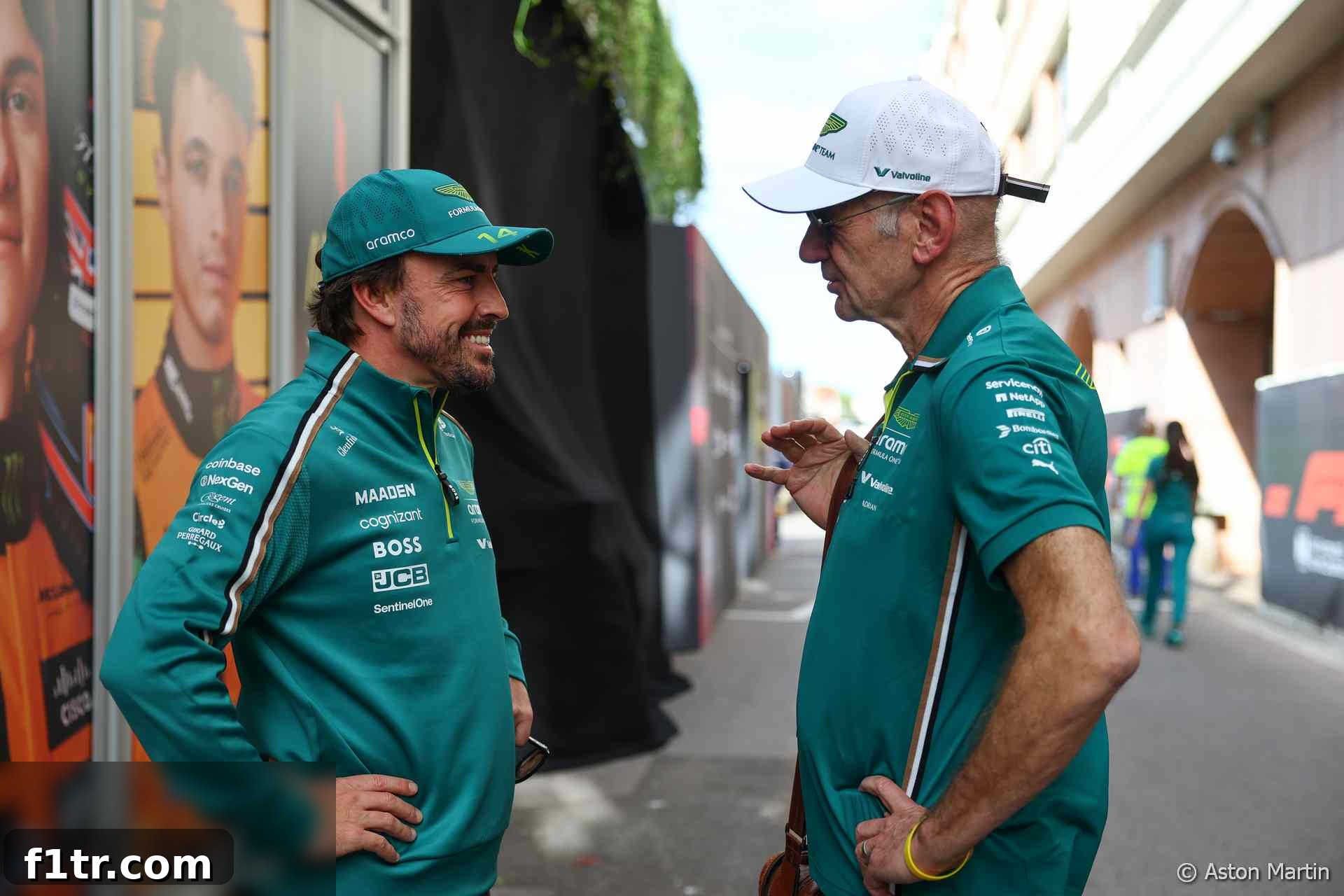
In the high-stakes world of Formula 1, every strategic move, especially within a team’s management, sends ripples across the paddock. Aston Martin, a team with audacious championship aspirations, has been at the epicenter of recent discussions following a significant management shake-up. The most prominent news involved the legendary Adrian Newey taking on the pivotal role of Team Principal for the eagerly anticipated 2026 F1 season, a move that immediately signaled the team’s unwavering commitment to reaching the pinnacle of motorsport.
This seismic shift in leadership has naturally ignited a flurry of speculation, including whispers about the potential arrival of former Red Bull team principal Christian Horner. However, two-time world champion Fernando Alonso, a central figure in Aston Martin’s on-track efforts and a keen observer of the sport’s dynamics, has moved to temper these suggestions. Alonso firmly believes that Aston Martin’s current leadership structure, reinforced by Newey’s appointment, is robust and fully equipped for the challenges ahead, rendering any further high-profile management additions unnecessary.
The announcement confirming Adrian Newey’s new role saw him replace Andy Cowell, who is set to transition into the crucial position of Chief Strategy Officer. This internal restructuring occurred amidst earlier reports suggesting that Cowell’s shift was intended to create an opening for Christian Horner. Horner, a figure synonymous with Red Bull Racing’s era of dominance, shared a remarkable 19-year tenure with Newey until the revered designer’s departure from the Milton Keynes outfit last season. The prospect of such a formidable duo reuniting at Aston Martin naturally fueled considerable excitement and conjecture within the F1 community, pondering the potential impact of their combined strategic and technical prowess.
When pressed on the possibility of Horner still joining the Silverstone-based squad in an alternative capacity, Fernando Alonso offered a measured yet definitive response. “I don’t know, I don’t think that’s a question for me at the moment,” he remarked to Sky Sports, skillfully deflecting the direct inquiry. He quickly pivoted to expressing his profound confidence in the existing framework: “But I think with Adrian taking the role now, Andy taking different responsibilities as well and he’s very capable of doing good things, Lawrence [Stroll’s] a great leader, determined, [giving] maximum commitment always, things like that, I don’t think that we need any more people in the management. But obviously it’s not my decision.” Alonso’s comments underscore a perceived stability and satisfaction with the current leadership ensemble, highlighting the strengths of Lawrence Stroll’s unwavering vision and commitment, complemented by the fresh strategic insights from Cowell and the unparalleled technical genius of Newey. This collective strength, in Alonso’s view, is more than sufficient to steer the team towards its ambitious goals.
The internal changes at Aston Martin extend beyond Newey and Cowell. Mike Krack, who previously held the team principal role, transitioned to Chief Trackside Officer when Cowell initially took the reins at the start of the current season. This intricate dance of leadership roles demonstrates a calculated effort by Aston Martin to optimize its operational and strategic capabilities, ensuring that seasoned expertise is leveraged across various critical departments. The careful positioning of these experienced individuals suggests a well-thought-out plan to build a cohesive and highly effective management team, rather than an urgent need for external, high-level recruitment. This internal promotion and reshuffling strategy aims to maintain institutional knowledge while injecting new perspectives where needed.
Adrian Newey’s signing, officially confirmed in September of the previous year, marked a pivotal moment for Aston Martin. The sheer weight of Newey’s reputation as Formula 1’s most successful car designer instantly elevated the team’s standing and aspirations. Fernando Alonso readily acknowledged the profound impact of Newey’s arrival, articulating a widely held sentiment within the sport: “I think having Adrian in the team attracts talent. That’s for sure.” This observation is not merely hyperbole; Newey’s track record, spanning championship-winning designs for Williams, McLaren, and Red Bull, has made him an almost mythical figure, a magnet for engineers and strategists seeking to collaborate with and learn from the sport’s foremost aerodynamicist. His presence signifies an unparalleled commitment to engineering excellence.
Alonso further elaborated on Newey’s drawing power, stating, “Everyone would like to work with Adrian Newey and learn from him and all this kind of stuff. So him being a team principal, I’m sure we will have even more people dreaming of joining the team, so that’s good news for us.” This talent attraction aspect is critical for any team aiming for long-term success in Formula 1. Beyond the immediate impact on car design, Newey’s presence signifies a commitment to engineering excellence that can inspire and elevate an entire organization. It creates a virtuous cycle: Newey’s presence attracts top talent, which in turn fosters innovation and performance, further solidifying Aston Martin’s appeal and positioning them as a premier destination for motorsport professionals.
However, with the elevation to Team Principal, concerns naturally arise about Adrian Newey’s bandwidth. The role of a modern Formula 1 team principal is multifaceted, demanding not only a deep understanding of technical aspects but also significant involvement in administrative duties, media engagements, sponsor relations, and intricate political maneuvering within the sport. Fernando Alonso, ever pragmatic, voiced a hope that Newey’s invaluable technical acumen would not be diluted by these broader responsibilities. The challenge lies in balancing his engineering genius with the demanding leadership requirements of the role.
“I think he has all the skills, to be honest, to make a fast car,” Alonso affirmed, leaving no doubt about Newey’s core strength. He then delicately touched upon the evolving nature of the team principal role: “Then the role of team principal is a little bit different nowadays and you have to deal with other things, other stuff: media commitments or sponsors or something like that.” Alonso’s wish is clear: “I hope Adrian doesn’t need to do all of those and concentrate more in the important stuff.” This “important stuff” unequivocally refers to his genius in car design and development, the very skill set that has made him a legend and the primary reason Aston Martin sought his expertise. Allowing him to focus on the technical side will arguably yield the greatest benefit for the team’s performance.
Despite these reservations about the administrative burden, Alonso expressed profound confidence in Newey’s overarching leadership qualities. “But he knows how to operate a team and how everyone should focus in one direction so he’s a great leader and I’m happy with this announcement,” he concluded. This statement highlights Newey’s proven ability to unite and direct highly skilled individuals towards a common goal, a crucial attribute for any successful team principal, regardless of their primary focus. His long history of fostering environments where innovation thrives speaks volumes about his leadership capabilities and his deep understanding of what it takes to build a winning team.
Aston Martin’s pursuit of Adrian Newey, and his eventual acceptance of the Team Principal role for 2026, is a bold declaration of intent. It signals a deep-seated ambition to move beyond midfield contention and squarely challenge for world championships. The 2026 technical regulations, which will introduce significant changes to power units and aerodynamics, represent a golden opportunity for teams to leapfrog their rivals. With Newey at the helm, Aston Martin positions itself uniquely to exploit these rule changes, leveraging his unparalleled ability to interpret and innovate within new regulatory frameworks, potentially giving them a decisive edge in the next era of Formula 1.
Lawrence Stroll’s investment in Aston Martin is not just financial; it’s a profound commitment to building a legacy. From establishing a state-of-the-art factory to attracting top talent like Fernando Alonso and now Adrian Newey, every decision reflects a meticulous strategy aimed at creating a championship-winning organization. The existing management structure, including figures like Andy Cowell with his strategic oversight and Mike Krack’s trackside experience, provides a robust foundation. Newey’s arrival is designed to integrate seamlessly into this structure, providing a synergistic effect rather than creating a void that needs filling by external hires like Christian Horner. This holistic approach emphasizes internal growth and strategic alignment.
The speculation surrounding Christian Horner’s potential move to Aston Martin, while intriguing, seems to be dissipating in the wake of Newey’s confirmed appointment and Alonso’s clear perspective. Aston Martin appears to be building its dream team internally, strategically allocating roles to maximize the strengths of its current, highly experienced personnel. The focus now firmly shifts to the monumental task of designing and developing a championship-contending car for the 2026 season, a challenge for which Adrian Newey is uniquely qualified, and one that Fernando Alonso is undoubtedly eager to embrace from behind the wheel. The clarity in leadership and direction bodes well for the team’s future endeavors.
In essence, Aston Martin is sending a clear message to the Formula 1 world: they are assembling all the necessary components for a serious title challenge. With a visionary owner, an experienced and cohesive management team, a legendary designer-turned-principal, and a two-time world champion driver, the pieces are falling into place. The path to championship glory is arduous, but with Adrian Newey leading the technical charge and the support of a dedicated management structure, Aston Martin’s ambitions for 2026 and beyond appear more credible than ever. Fernando Alonso’s dismissal of further high-profile management additions only solidifies the confidence within the team that they already possess the necessary ingredients for success, reinforcing the belief in their chosen direction and personnel.